


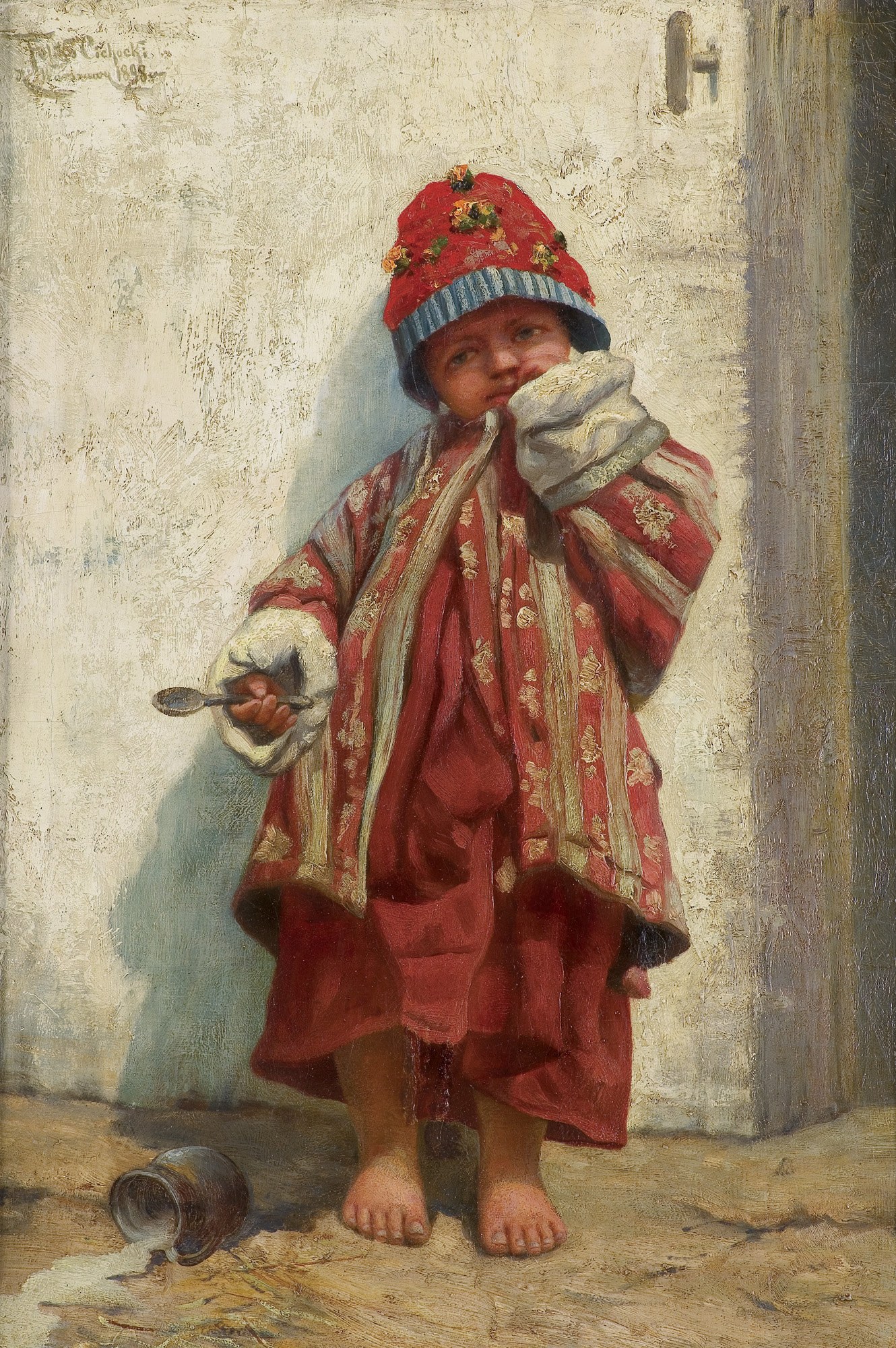
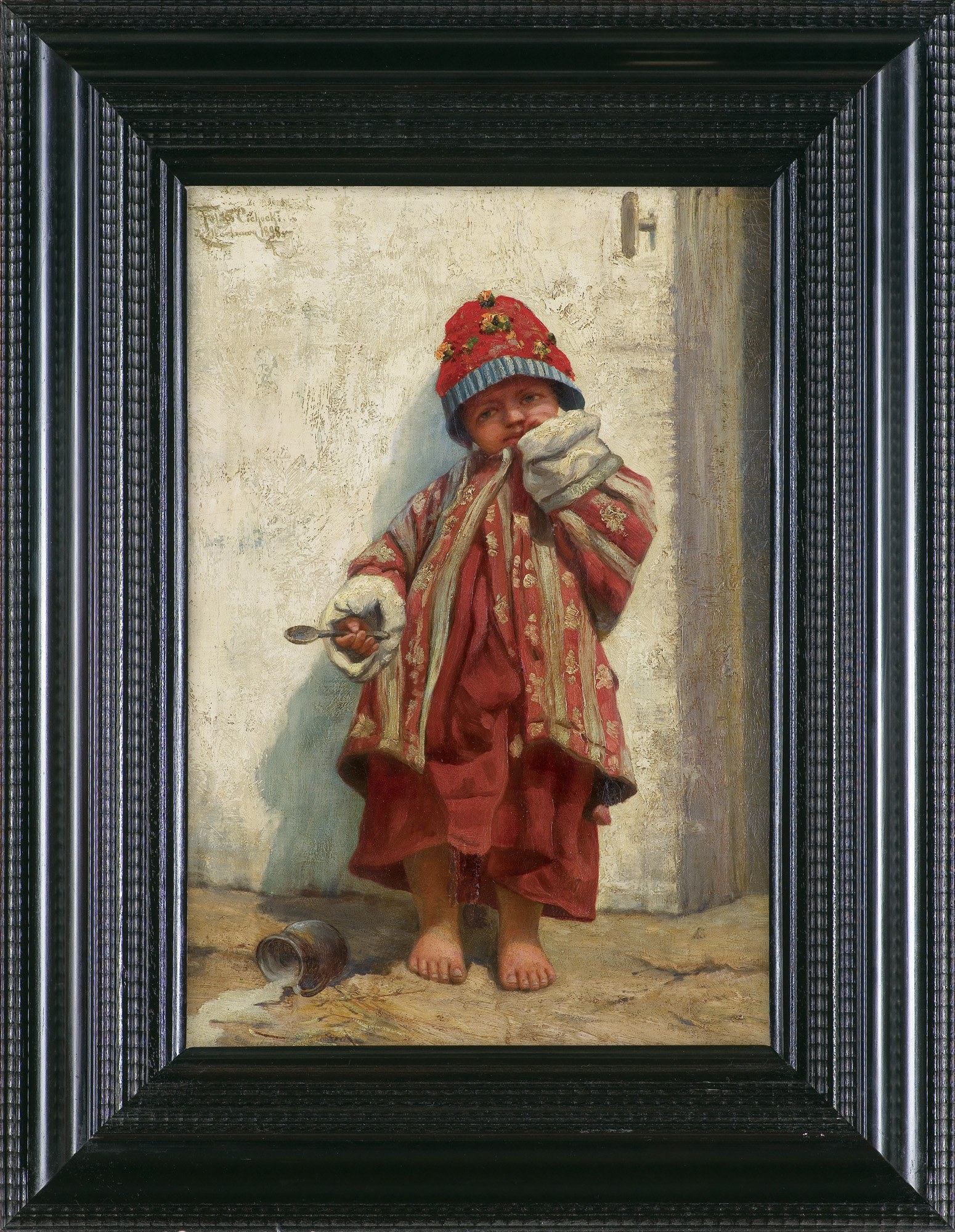
53.3 x 37.8 cm - oil, canvas
Signed l.g.: Feliks Cichocki | from Warsaw 1898
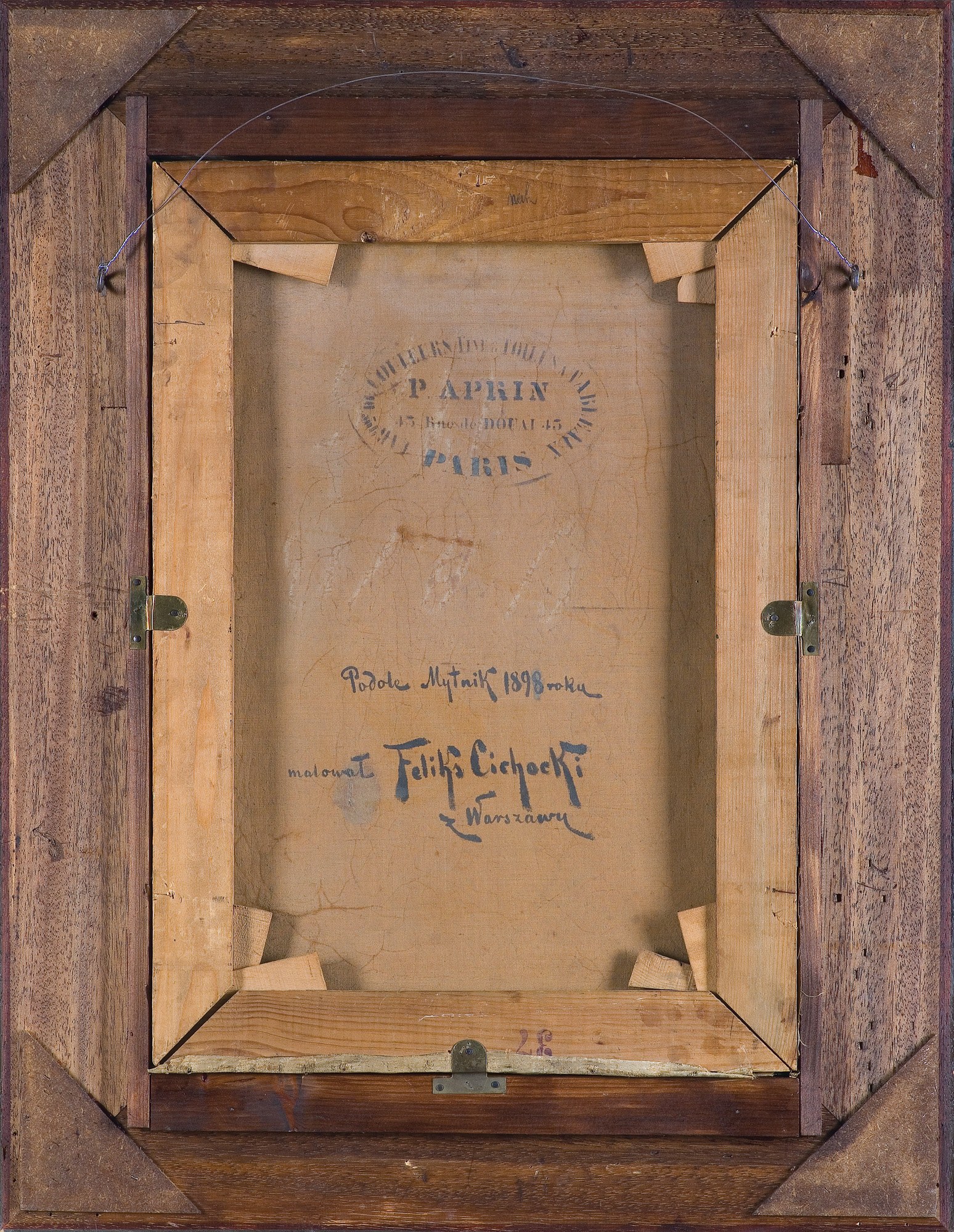
On the reverse: oval stamp of P. Aprin's store of painting supplies in Paris; below (in black paint): Podole Mytnik 1898 | painted by Feliks Cichocki | from Warsaw; also, on the lower frame strip, a stamp with a number referring to the size of the sub-painting: 37.
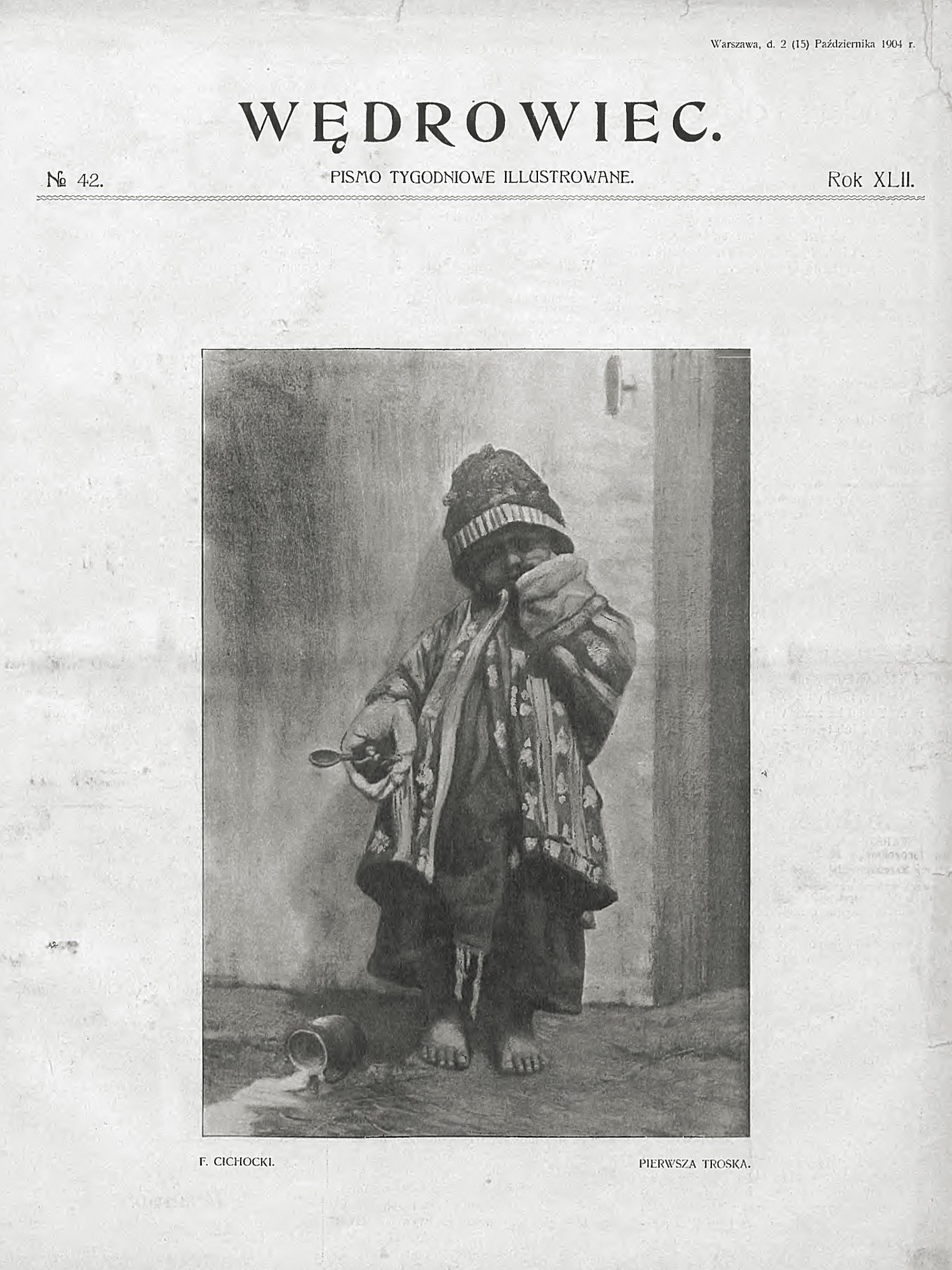
Reproduced painting:
- "Wanderer", 1904, no. 42, p. 301 (First Care).
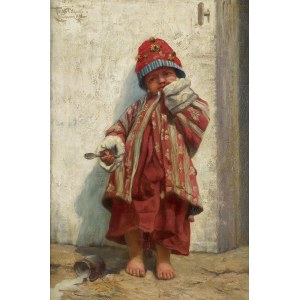
Feliks Nałęcz Cichocki, a respected representative of Polish realism of the late 19th century, received a thorough education at the academies of fine arts in Krakow, Munich and Paris. His work is dominated by genre painting, and an excellent example of this is First Concern from 1898. This work, which depicts a scene from everyday life with humanistic fervor and emotional depth, focuses on an intimate moment. It depicts a moment of reflection or concern, expressed through the subtle gaze and gesture of a tiny character who is learning responsibility.
First Concern presents the typical characteristics of Cichocki's painting: small format, precise drawing, realistic composition, soft chiaroscuro and the narrative nature of the scene. The recognition Cichocki enjoyed in his era is confirmed by the reproduction of First Concern in the Warsaw weekly Wędrowiec in 1904 and the presence of the work in the digital collection of the National Museum in Warsaw. Although the artist remained somewhat in the shadow of his better-known contemporaries of Realism and Academicism, his works, such as First Concern, are an important example of Polish artists of the late 19th century taking up social and psychological themes in an intimate yet universal way, promoting values related to family, emotionality and everyday life.
Feliks Nałęcz Cichocki (Warsaw 1861 - Warsaw 1921) came from a family of painters who created paintings for churches in the Opatów area. He studied in Warsaw at the Drawing Class of Gerson and Kaminski in 1880-1884, then took up studies in Cracow at the School of Fine Arts under Leopold Löffler, and in 1885-1888 at the Munich academy under J. C. Herterich and O. Seitz, from where he went to Paris to the Akademie Julian, where he studied under A. W. Bourguereau and T. Robert-Fleury. After returning to Poland in 1891, he settled in Warsaw, from where he traveled to Podolia to paint folk scenes and portraits of the local people. He usually painted small-format paintings, genre scenes, portraits, paintings with religious content, but also murals for churches in Pultusk and drawings for reproductions in "Tygodnik Ilustrowany".













Viimeksi katsotut
Kirjaudu sisään nähdäksesi kohdeluettelon
Suosikit
Kirjaudu sisään nähdäksesi kohdeluettelon