


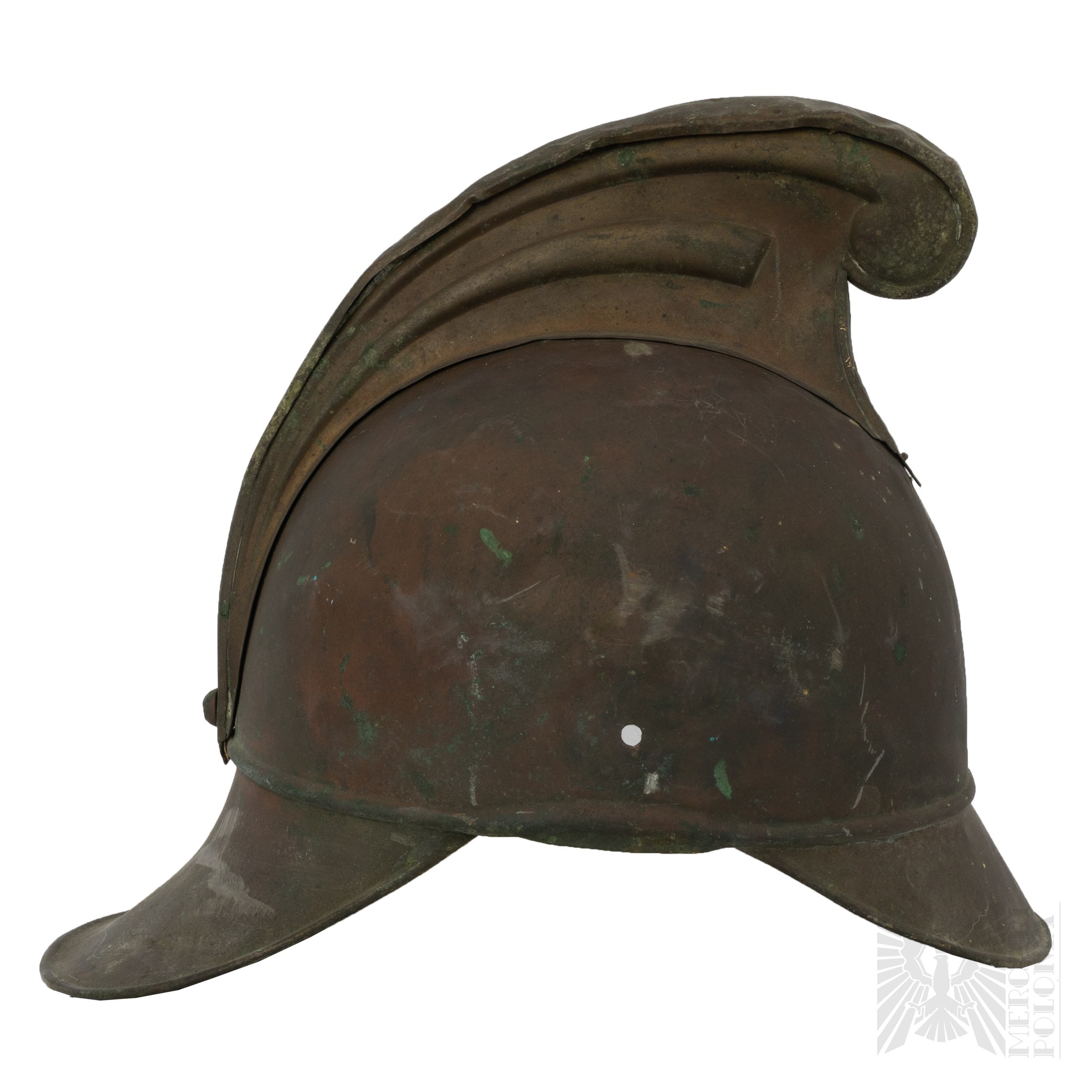
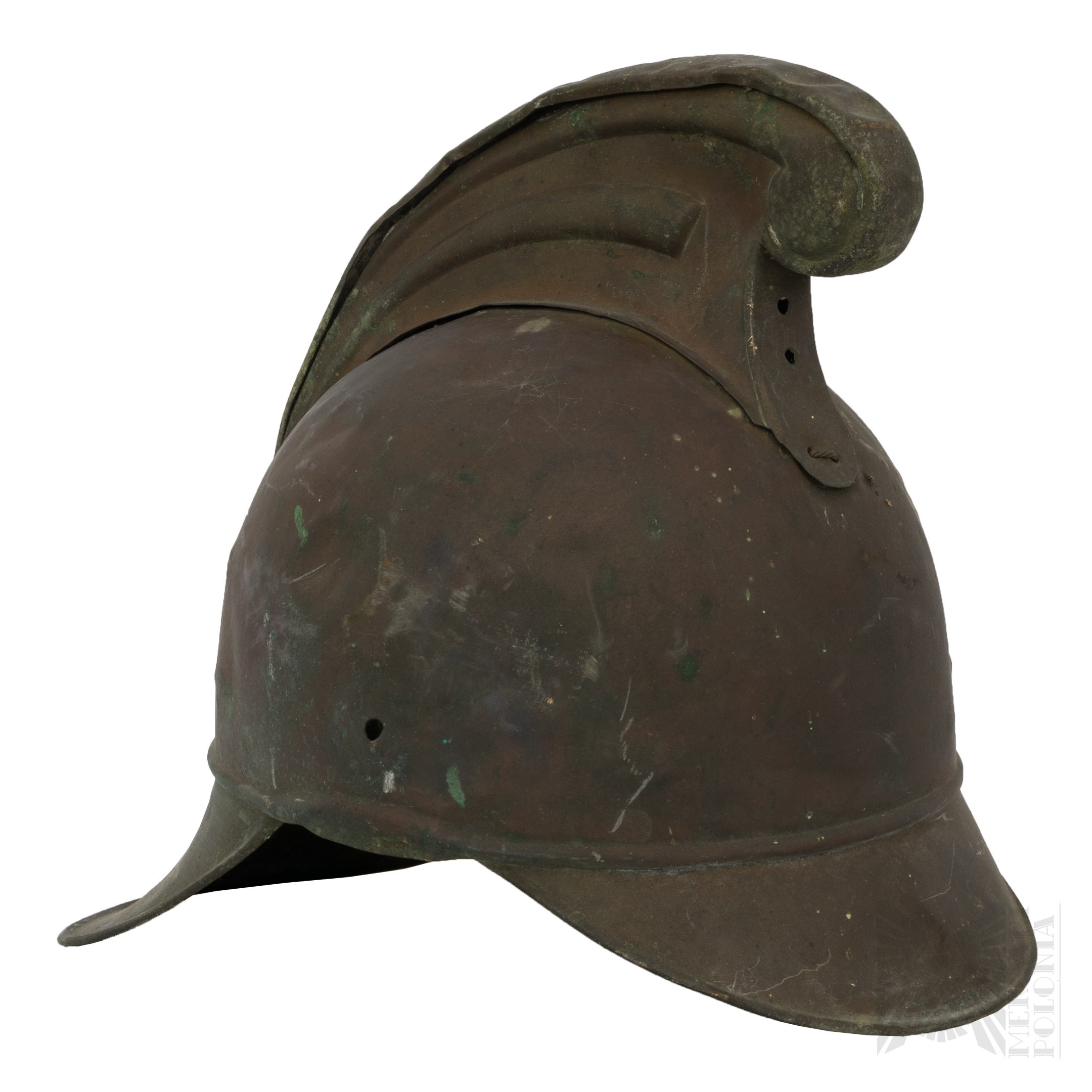
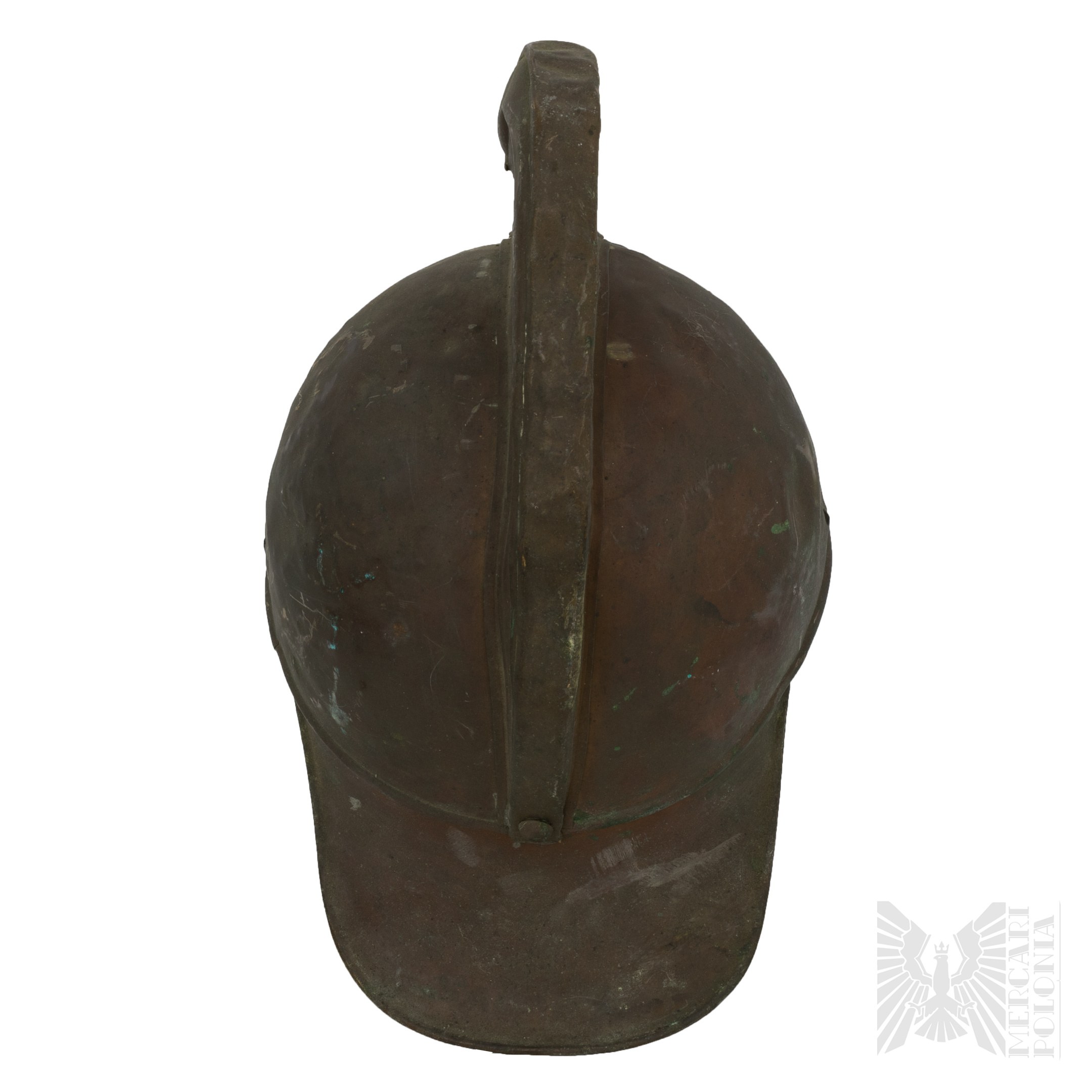
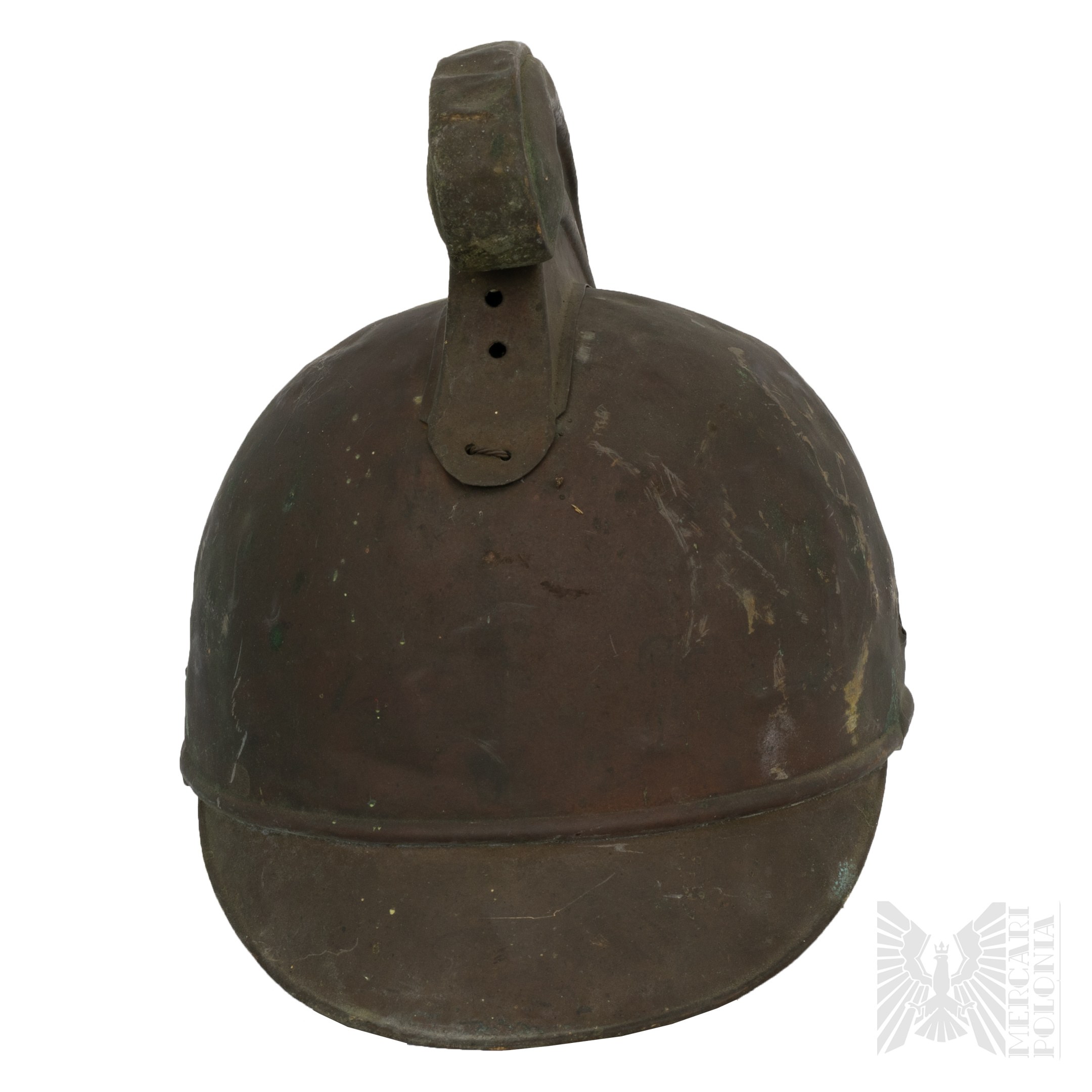
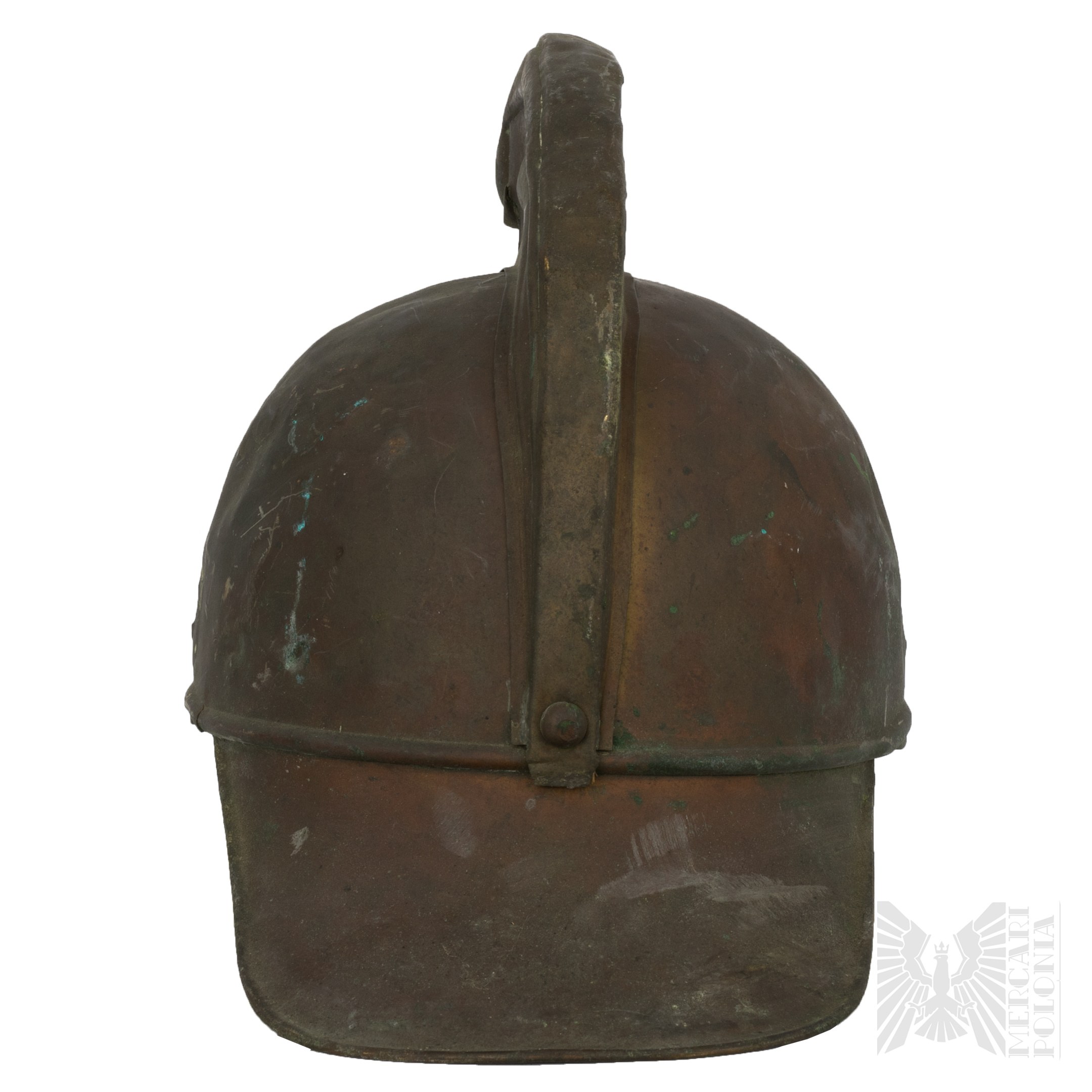
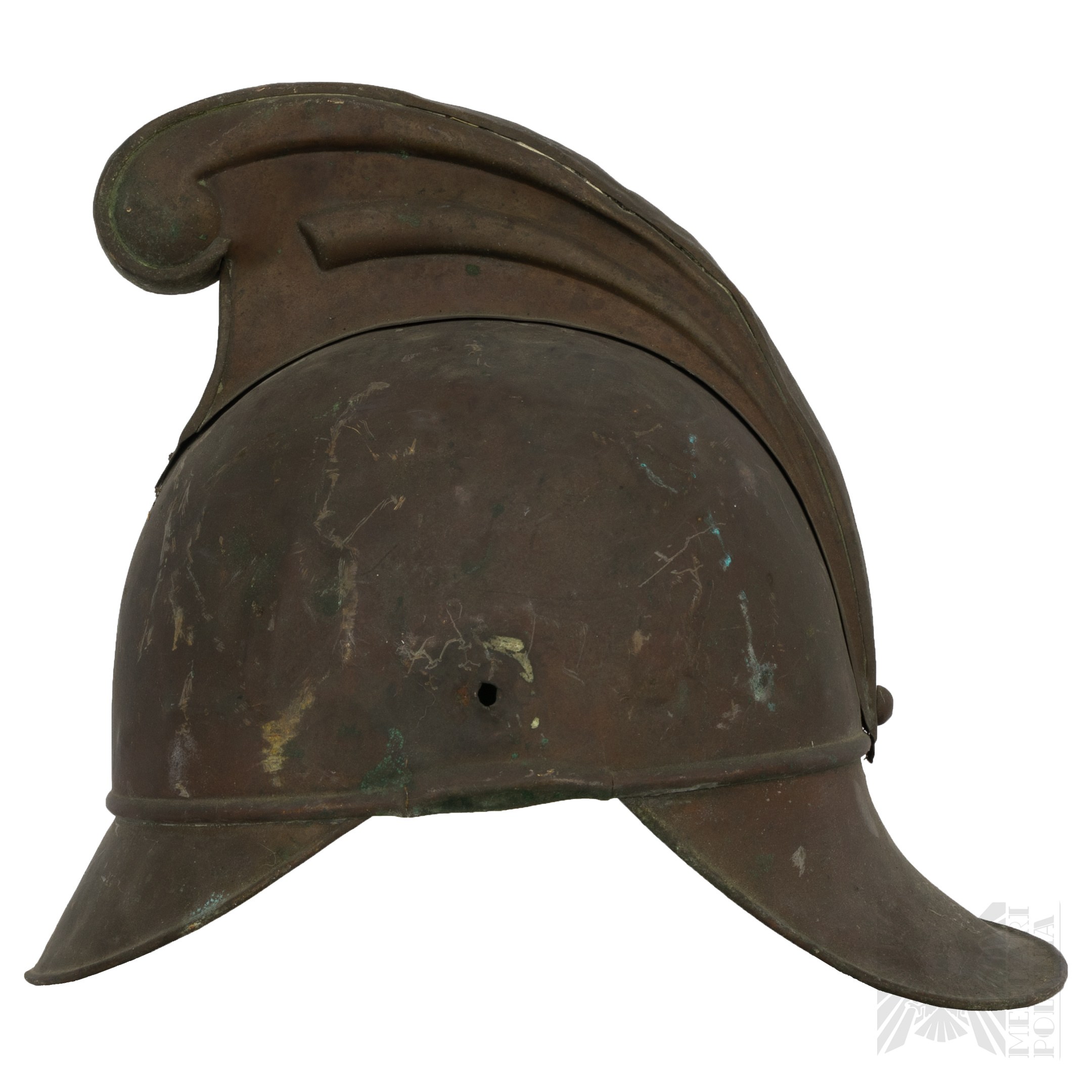
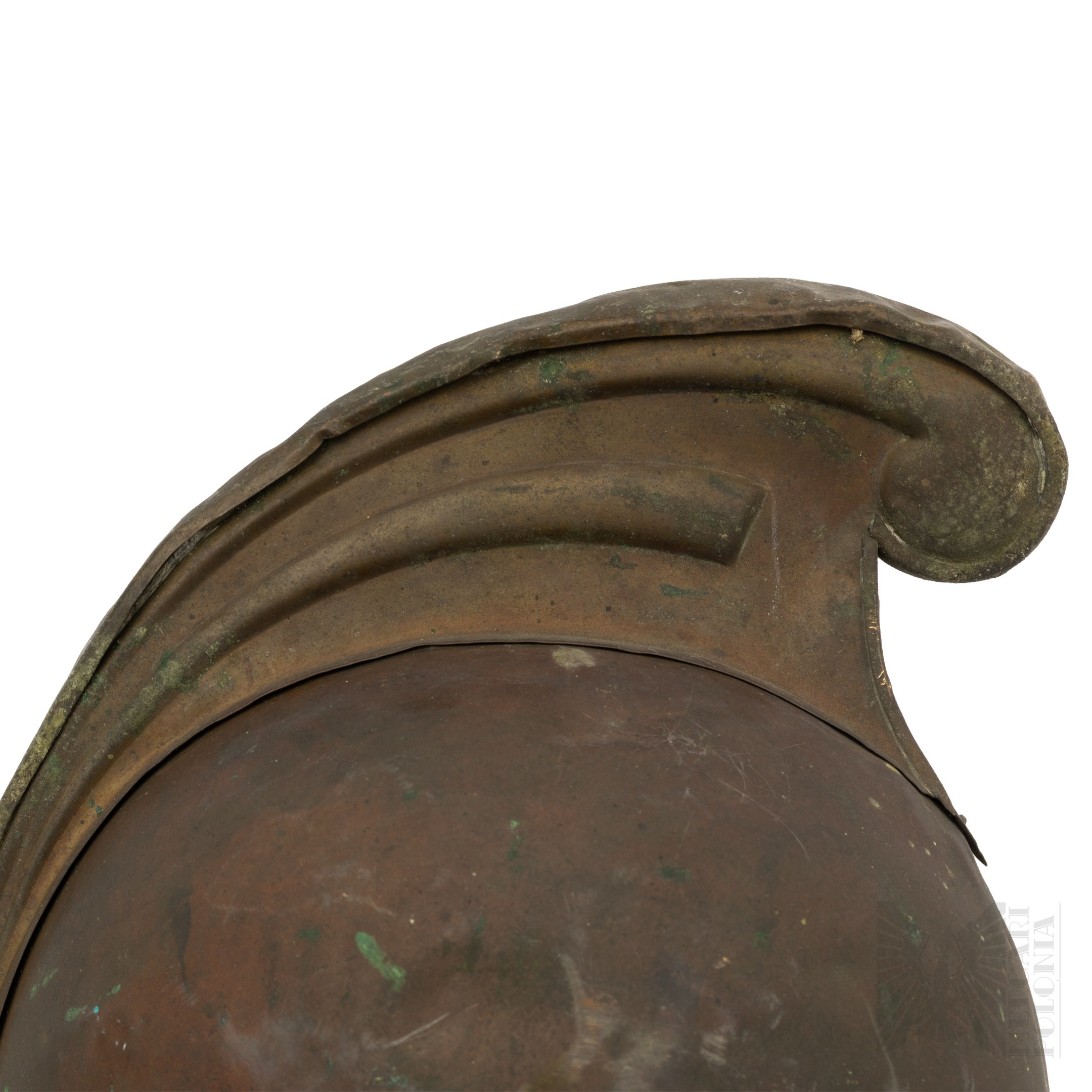
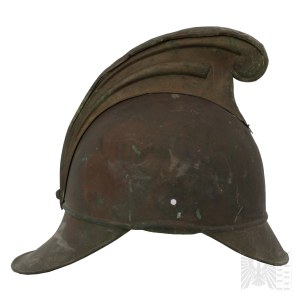
Polish firefighter helmets from the turn of the 19th and 20th centuries.
In the second half of the 19th century, Polish fire departments developed rapidly across all three partitions. The primary purpose of these organizations was, on the one hand, to fight fires; on the other hand, they served as vehicles for Polish civic and patriotic ideals. Most often formed by local Polish representatives and equipped with their own uniforms, banners, regulations, and command structures, they served as a sort of substitute for Polish uniformed services, while also evoking obvious associations with military units. This trend was most evident in the relatively liberal Austrian partition, where in 1902 Polish fire brigades were permitted to wear an emblem in the form of a “falcon” with the letters “SO” (“Fire Department”) on their chests. Among Franz Joseph’s Polish subjects, it was no secret that the fire department’s “falcon” was a falcon in name only—a way to circumvent regulations—and was in fact a variation of the Polish eagle. Interestingly, this emblem remained unchanged after 1918. To meet the needs of Polish fire departments, the production of helmets began in the territories of the three partitioning powers, based on designs adopted in each respective partitioning state. After regaining independence in 1918, the helmets left over from the partitions remained in use, often fitted with new, Polish insignia. Production of “old-style” helmets in many different variations also continued in Poland until the 1930s. In the 1930s, the need arose to modernize the Polish fire departments and standardize the appearance of firefighters, which led to the gradual introduction of a new type of helmet, manufactured at the Ludwików Steelworks. In practice, however, until 1939—and even after the end of World War II—many fire departments continued to use the old-style helmets.
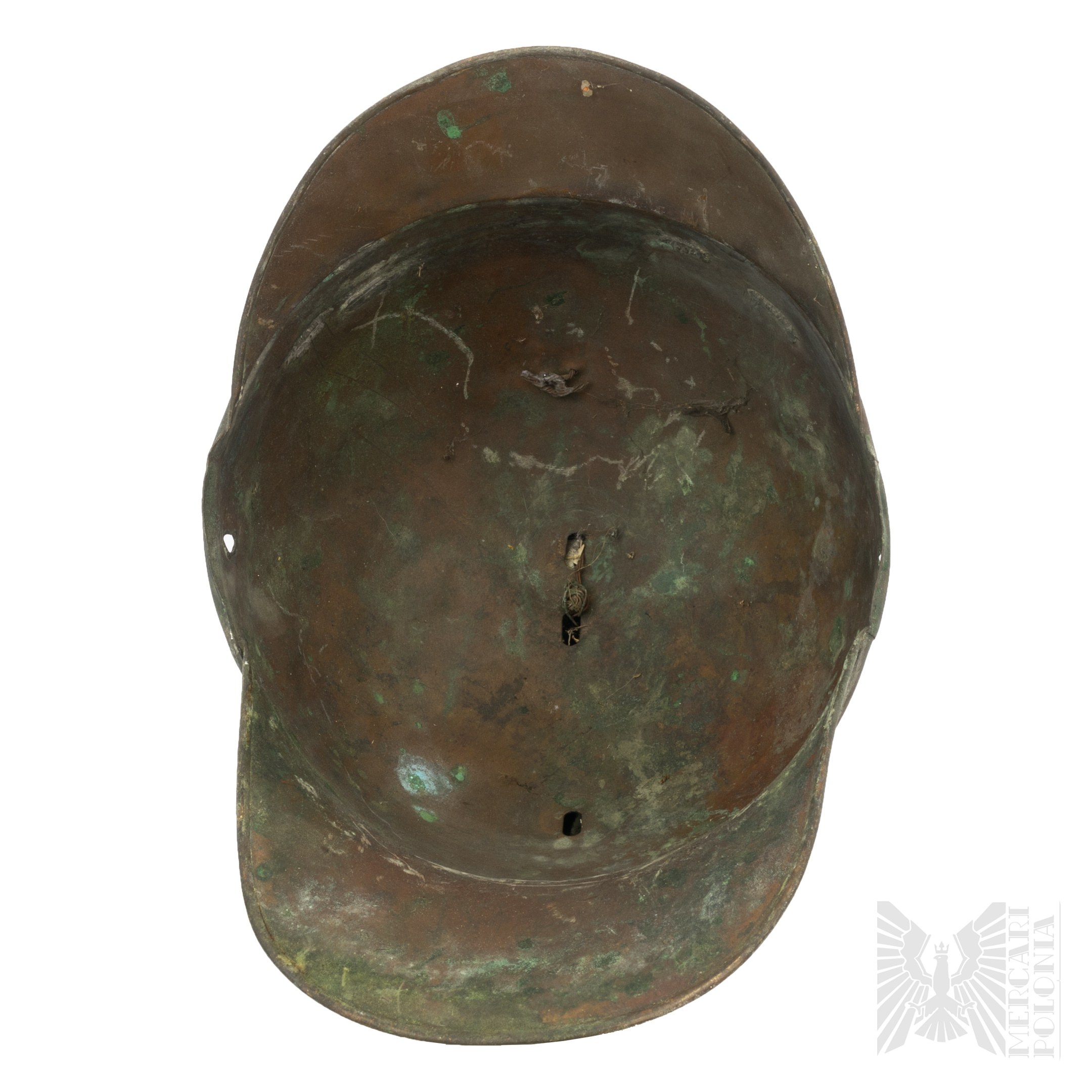
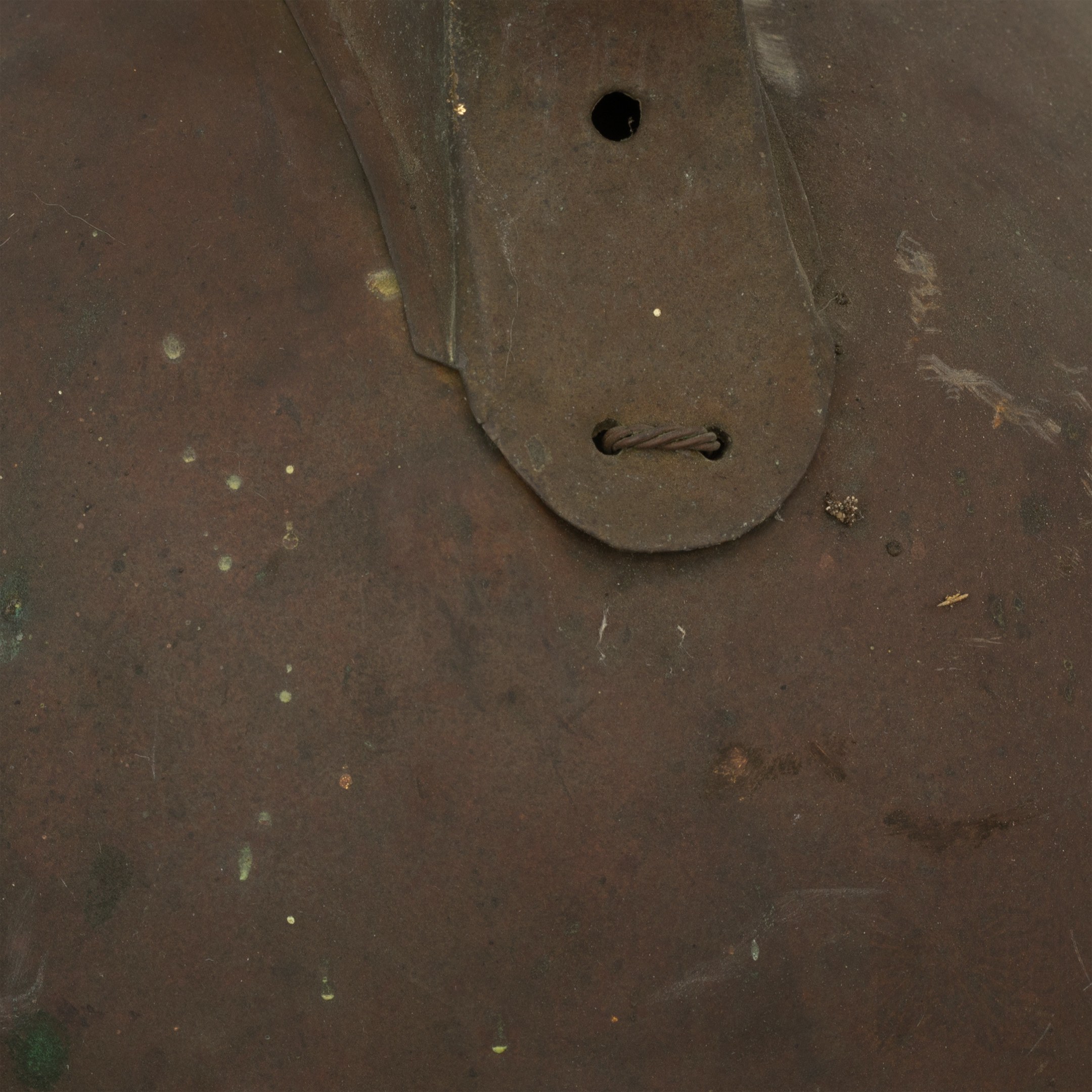
The piece offered here is an “old-style” helmet, a model designed for non-commissioned officers of the Polish fire departments. This model was adopted in the Russian partition and was manufactured before World War I. Stamped from brass sheet metal. Natural patina. Dimensions: 24.5 x 28 x 18 cm. The item’s condition is shown in the attached photos.











Viimeksi katsotut
Kirjaudu sisään nähdäksesi kohdeluettelon
Suosikit
Kirjaudu sisään nähdäksesi kohdeluettelon