


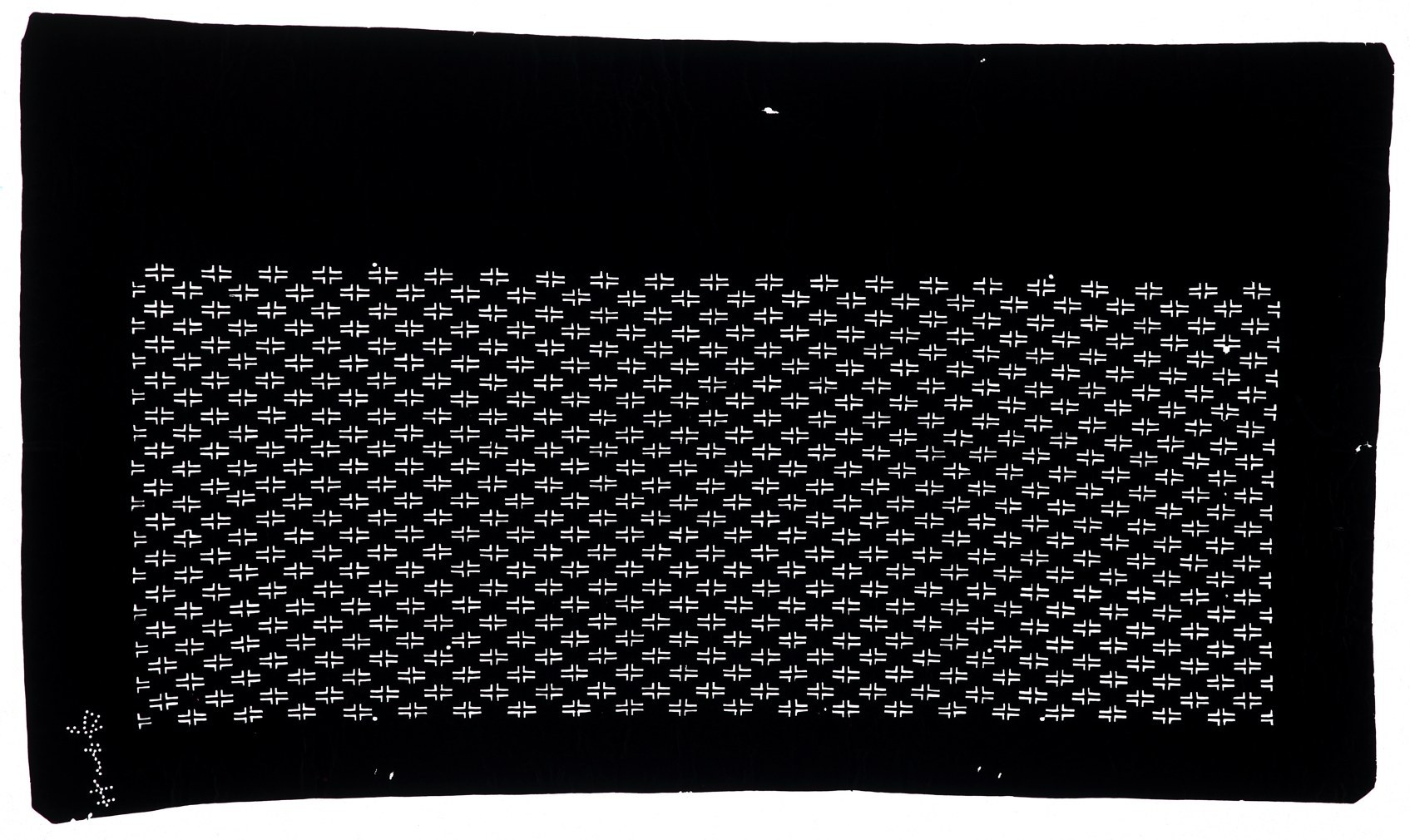
Mulberry paper, smoked, impregnated; dimensions: 22 x 39 cm.
Condition of preservation: unevenness of paper.
Katagami (kata - form, stencil and kami - paper) are dye stencils cut in long-fiber mulberry paper, soaked in persimmon juice and then smoked. These treatments gave it the desired properties: resistance to tearing and shrinking, non-absorbent, which allowed the same stencil to be used over and over again. Horishi (literally, sculptor) simultaneously cut extremely precise, fanciful patterns in several stitched sheets, using five different techniques: kiribori, tsukibori, dōgubori, hikibori, shimabori, differing in the shape of the blade used and the way the tool was guided. Extremely filigree and delicate designs were further strengthened after cutting by delaminating the stencil and pasting a silk web (itoire) inside, which was replaced after 1922 by a gauze mesh, the so-called shabari. Katagami have been used in Japan for a very long time, not only for coloring kimonos, but also ceramics, leather or even Japanese pastries (the oldest surviving stencil dates to 1694, but items of clothing and weaponry decorated with this technique date back as far as the 12th and 13th centuries). In 1952, katagami was counted among Japan's Intangible Cultural Monuments.












Viimeksi katsotut
Kirjaudu sisään nähdäksesi kohdeluettelon
Suosikit
Kirjaudu sisään nähdäksesi kohdeluettelon