


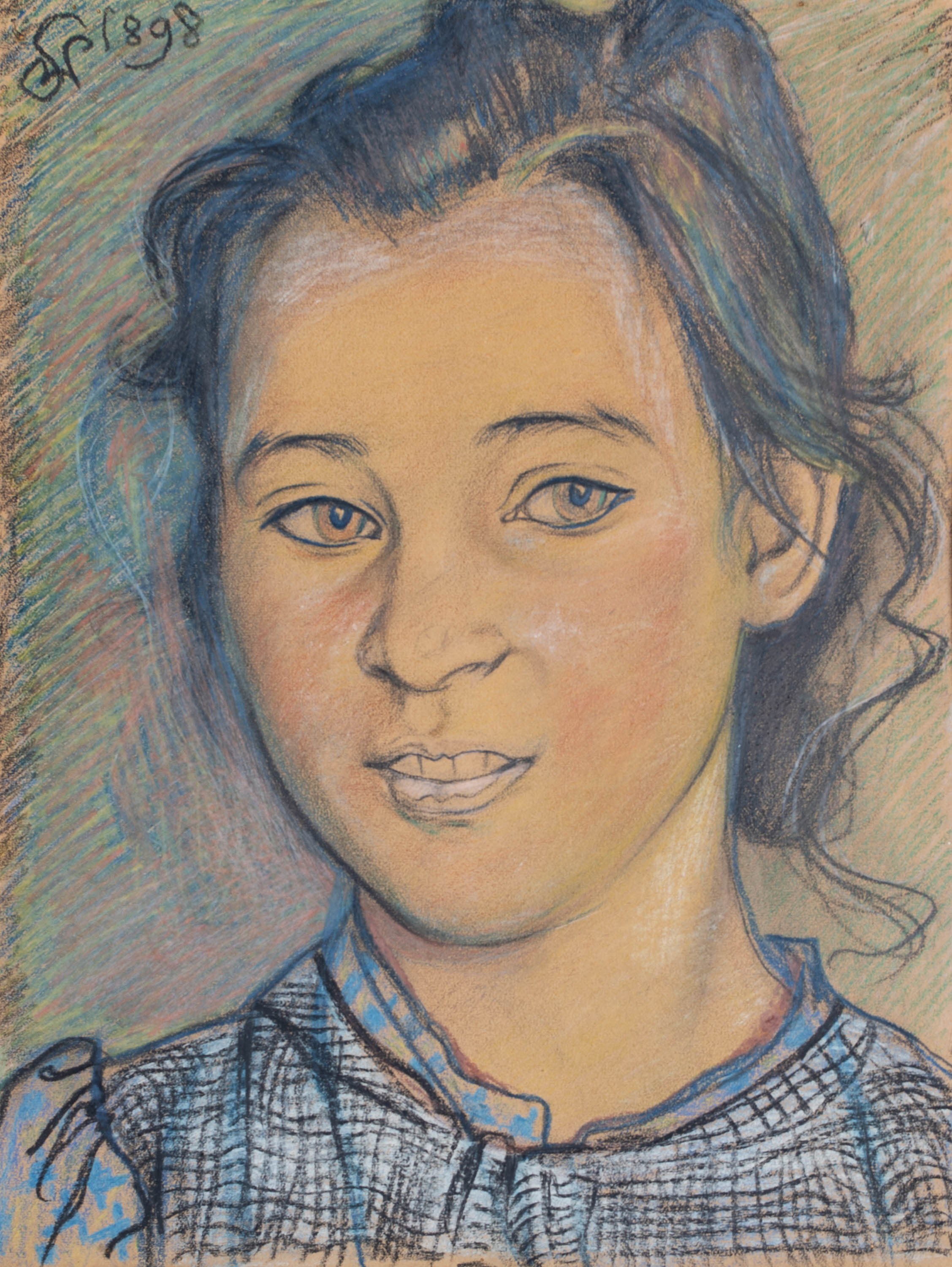
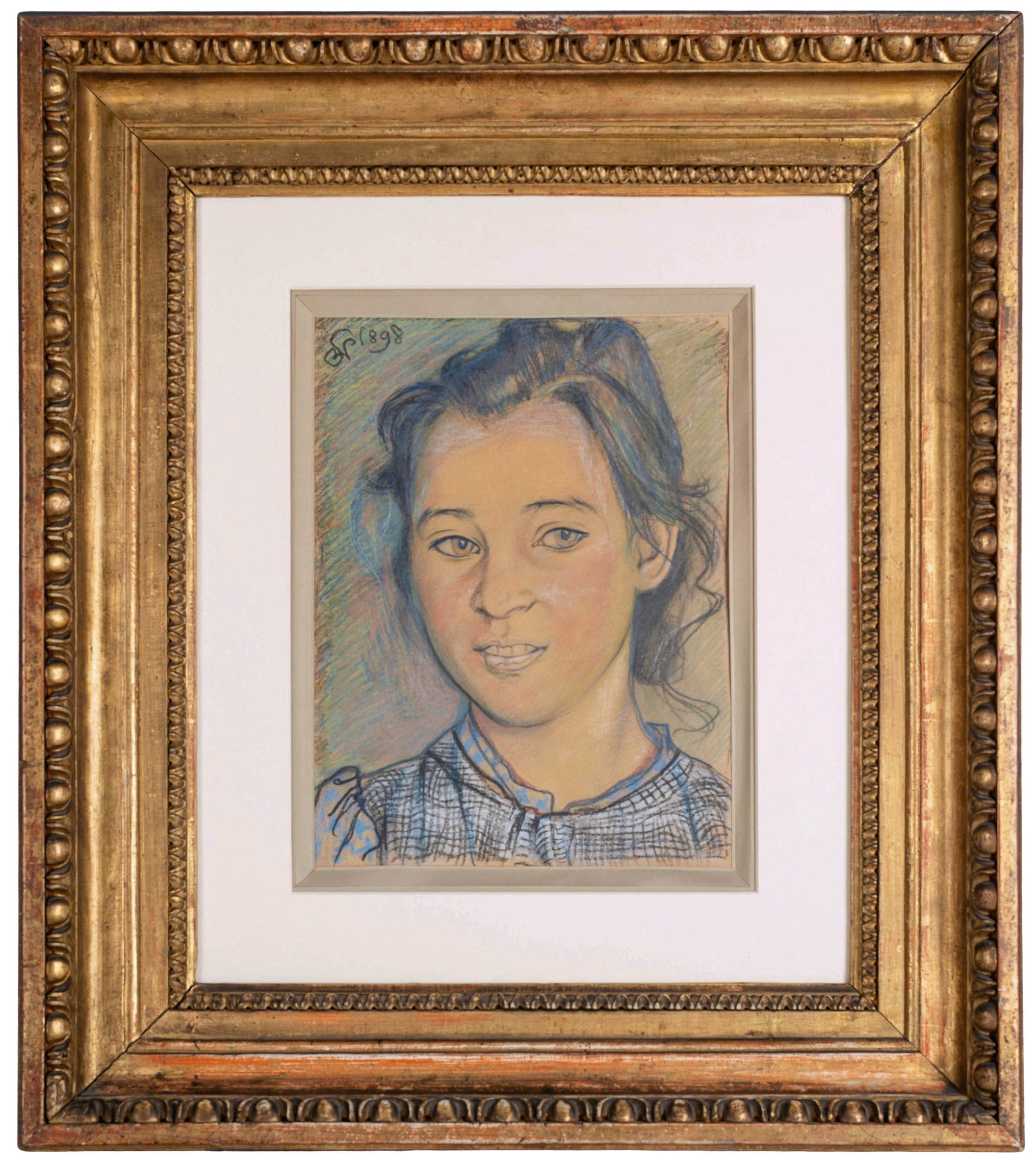
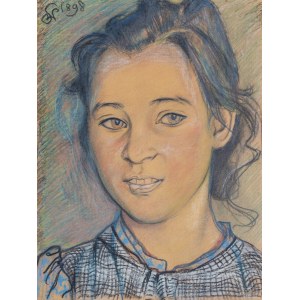
(Other titles: Girl's Head / Study of a Girl)
pastel, crayon, paper, 30.5 × 23.5 cm (inside the mat)
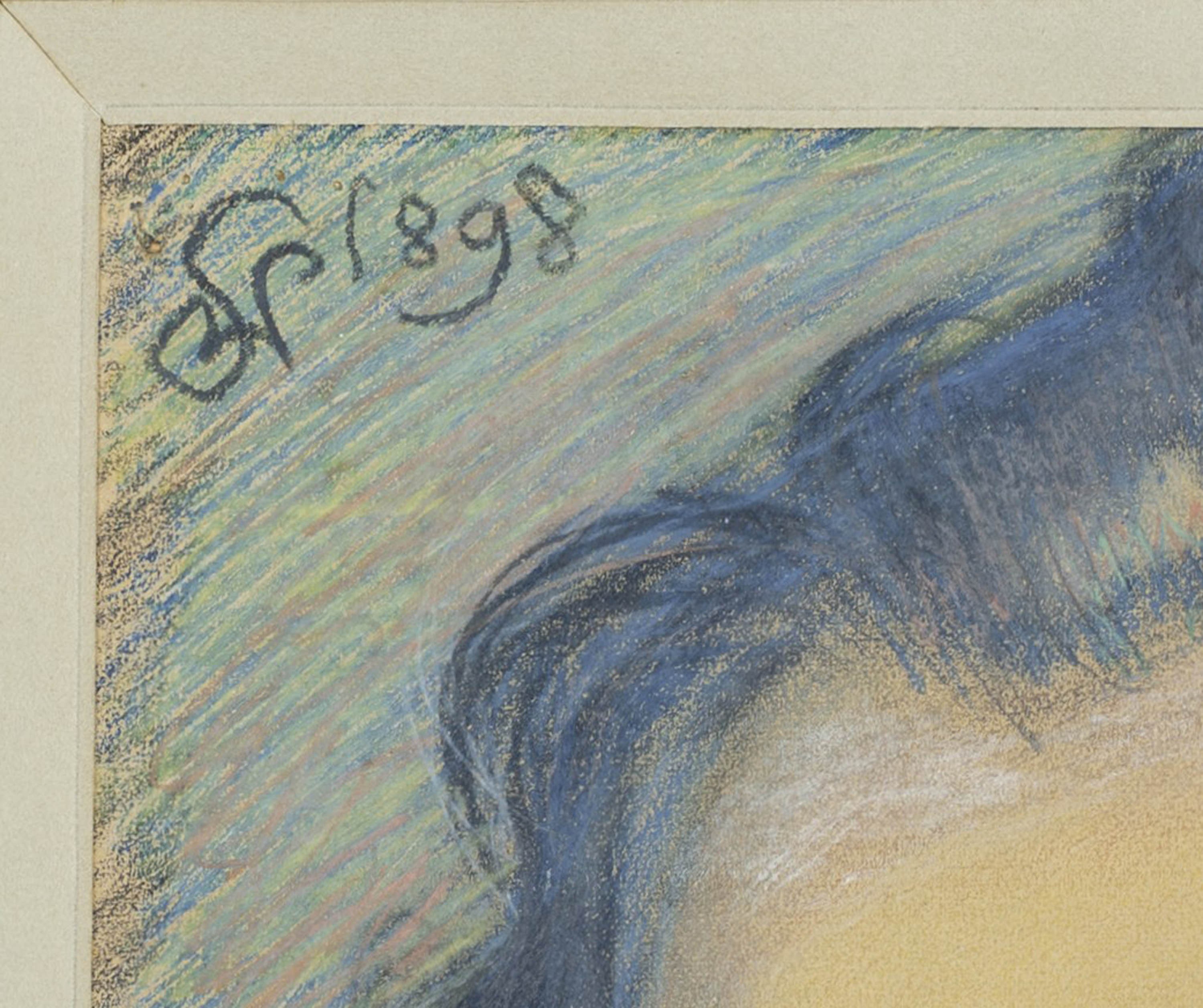
signed with a linked monogram on the lower left: “SW 1898”
Provenance:
– Kraków Bronowice, collection of Prof. Dr. Wincenty Łepkowski (1866–1935), a Kraków professor of dentistry and founder of Poland’s first Institute of Dentistry at the Jagiellonian University in Kraków. He was also the founder of the Polish Dental Association. Privately, he was an art collector and a great friend of artists. His estate in Bronowice Wielkie was frequently visited by the social elite, including numerous artists, among them Leon Wyczółkowski, with whom Wincenty shared a special friendship.
– Kraków, Irena Łepkowska Collection
– National Museum in Kraków
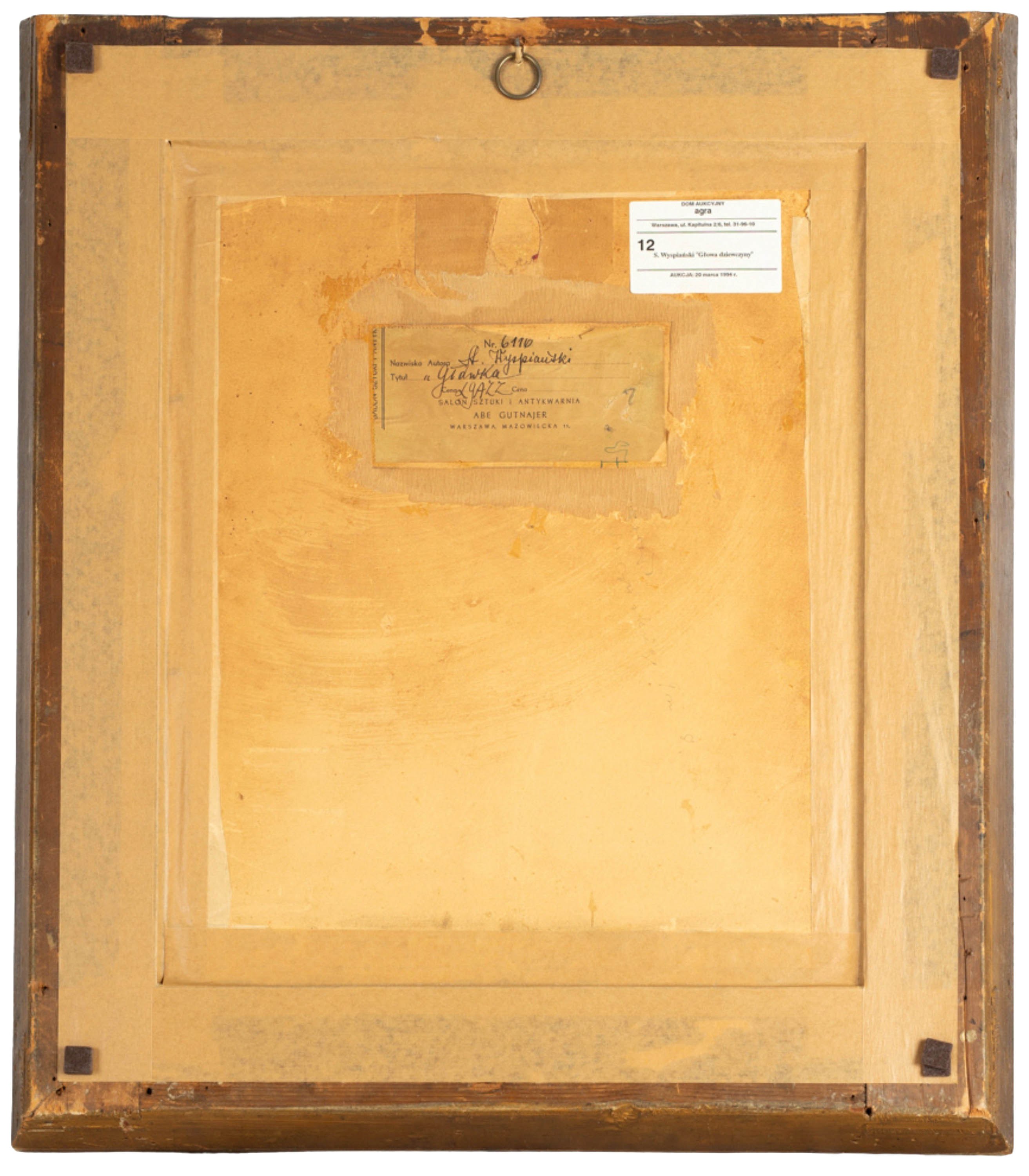
– Warsaw, Abe Gutnajer’s antique shop
– Agra Art Auction House, auction of March 20, 1994, lot 12.
– Poland, private collection
– Polswiss Art Auction House, auction on May 29, 2018, lot 19
– Poland, private collection
Exhibited:
– National Museum in Kraków, Stanisław Wyspiański: Anniversary Exhibition 1907–1957, Kraków, December 1957–November 1958.
Reproduced in:
– “Stanisław Wyspiański 1869–1907. Jubilee Exhibition 1907–1957,” Kraków 1958, p. 145, lot 17.
Described in:
– Przybyszewski, S., Żuk-Skarszewski, T., Świerz, S., “Stanisław Wyspiański. Paintings,” Biblioteka Polska, Kraków, Warsaw, Bydgoszcz 1925, p. 117, no. 288 (listed as “Head of a Girl”)
– “Stanisław Wyspiański 1869–1907. Jubilee Exhibition 1907–1957,” Kraków, 1958, p. 49, no. 34 (listed as “Study of a Girl”)
Portraits constitute a significant part of Wyspiański’s artistic legacy, representing a unique branch of his work. These works belong to the canon of 19th- and 20th-century Polish art and constitute one of the most valuable elements of his body of work. Among the numerous portraits painted and drawn by the artist, depictions of children are among the most recognizable themes in his oeuvre. Portraits of children—paintings in which the young models are treated with particular tenderness and an understanding of their world, concerns, and sensitivities—stand out in a special way within his body of work. They directly reveal the artist’s adoration for children. Antoni Waśkowski, a relative of the artist, emphasized in his memoirs that Wyspiański “loved in children not only the model; he loved every thought of theirs, every smile and sadness, their exuberant enthusiasm and fearful crying, their delight and terror [...] all of this he evidently always observed and committed to memory [...] and later he always painted that beloved and understood little child’s soul with delight.” (A. Waśkowski, “From My Memories of Stanisław Wyspiański,” Miejsce Piastowe, 1934). Initially, Wyspiański created snapshot portraits of children he met by chance while traveling through Europe—little onlookers watching him sketch. But the portraits of the artist’s own children, the children of his friends, or casual acquaintances enjoy particular recognition and esteem among successive generations familiar with reproductions of Wyspiański’s works. Portraits of anonymous models also frequently appear in his body of work. “ (…) I live in a distant suburb on the right bank of the Oder in a small house, and I’m so at peace here. A German family lives next door—they have a whole bunch of kids who, naturally, visit me every day, so I always have a crowd of guests over whenever I’m home. They look through all my books and drawings and take great delight in them. I’ve grown so accustomed to life here that I’ll be sorry to leave. You wouldn’t believe how much pleasure I get from these children, being able to draw them all the time.” (From a letter to Tadeusz Stryjeński, Wrocław, September 19, 1890, [in:] W. Okoń, “Stanisław Wyspiański,” Wrocław 2001, p. 61) The artist most often used pastels, though he also readily employed charcoal and pencil. His depictions of models are excellent examples of psychological studies, typically distinguished by the absence of an elaborate background. The artist focused primarily on the face—the essence of a portrait—while depicting the body with only a few strong lines or patches of color. He deliberately omitted narrative elements, concentrating his attention on the personality of the subject. Drawn with a distinctive Art Nouveau line, the “Portrait of a Girl” from 1898 is an example of Wyspiański’s masterful technique. The work was executed with the expressive, decisive line characteristic of the artist, who deliberately avoided an excess of detail that might distract the viewer. The portrait is depicted in a close-up, using a specific framing that allows the viewer to focus primarily on the model’s face. Its Art Nouveau-inspired lines lend it a unique softness, and the simplicity of the composition—free of unnecessary decorative elements—makes the work captivating to the viewer.










Viimeksi katsotut
Kirjaudu sisään nähdäksesi kohdeluettelon
Suosikit
Kirjaudu sisään nähdäksesi kohdeluettelon