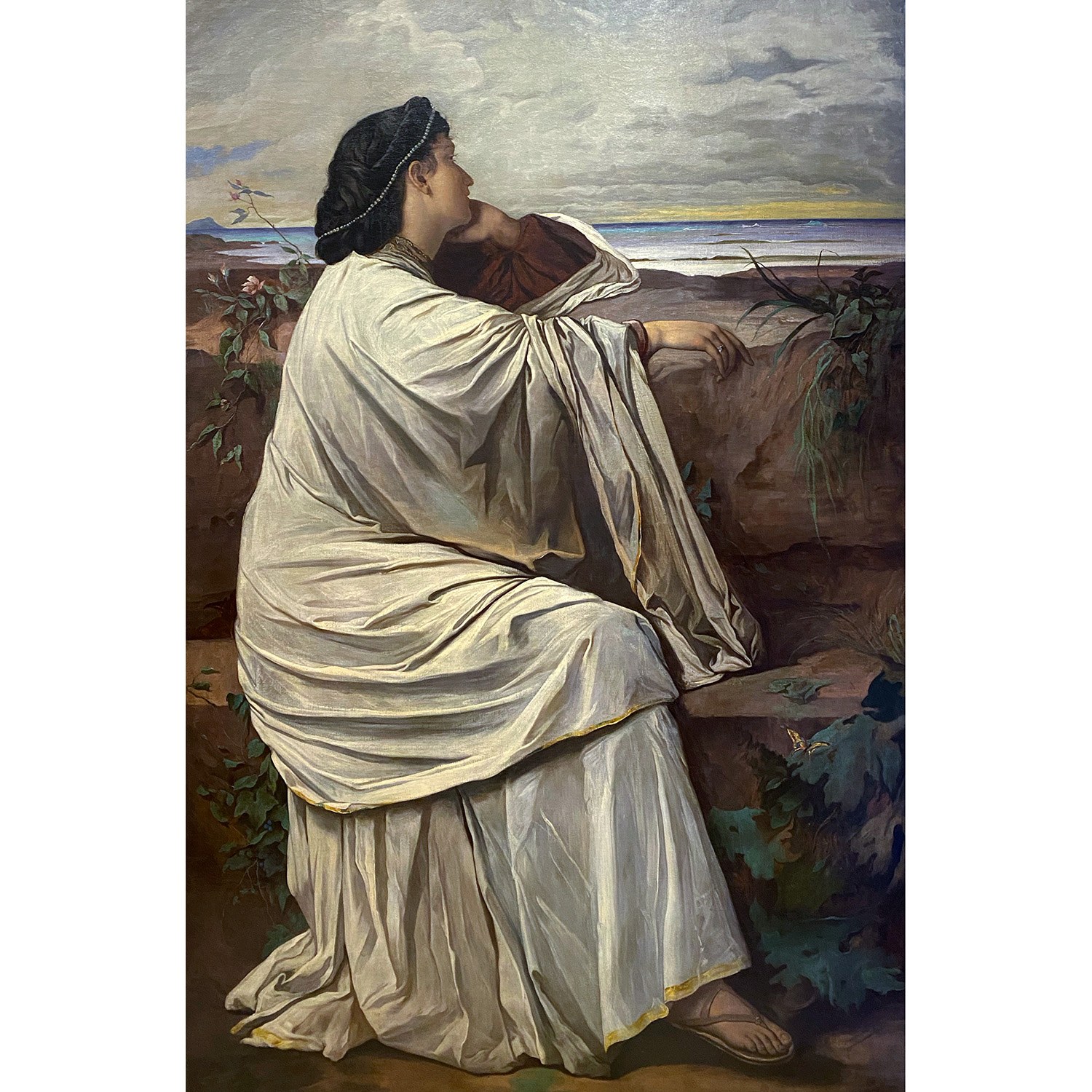

Oil/canvas, 193 x 128 cm
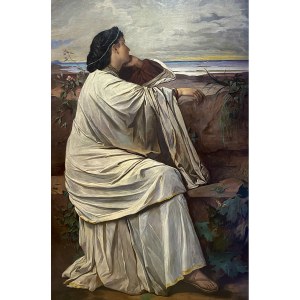
Anselm Feuerbach painted "Iphigenia" in 1871. The painting is in the Staatsgalerie Stuttgart (inventory number 770).
Iphigenia, the daughter of Agamemnon and Clytemnestra, was to be sacrificed to the goddess Artemis so that the Greek fleet could set sail for Troy. However, the goddess, taking pity on her, took her from the altar at the last moment and moved her to the remote island of Taurida. There Iphigenia became a priestess in the temple of Artemis, where she was required to sacrifice all foreign visitors. Years later, her brother Orestes and his friend Pylades, sent by the Delphic oracle to retrieve the statue of Artemis and atone for the murder of their mother, ended up on Taurida. Iphigenia, not recognizing her brother, prepared him for death, but in time they discovered their true identities. Thanks to cunning and divine help, the siblings, along with Pylades, escaped from the island, taking the sacred statue of the goddess with them. Their return to Greece brought an end to the curse on the Atreides family, and Iphigenia, according to some versions of the myth, became a priestess of Artemis at Delphi.
Model Lucia Brunacci was shown in a grand pose like an ancient sculpture, soul-searching for the land of the Greeks. Maintained in grays with few color accents, the color palette refers to ancient frescoes. Constructed like a theatrical stage, the work became a symbol of unfulfilled longing and one of the most frequently reproduced motifs of the entire era. Brunacci inspired Feuerbach to create further versions of the Iphigenia motif.
In December 1868, Feuerbach wrote to his stepmother Henriette:
The day before yesterday evening I completely finished your Iphigenia. I do not want it to become public; I wish it to remain with us. The painting is so wonderfully delightful in its simplicity that one can sit in front of it for days, just as it captivates me, drawing me to the armchair.
Anselm Feuerbach (1829-1880) was a German painter, considered a leading representative of Neoclassicism in the 19th century. His work was inspired by ancient and Renaissance art, as seen in his harmonious compositions and idealized figures. One of his best-known works is Iphigenia, depicting a figure in a monumental classical pose. Although he did not receive wide recognition during his lifetime, after his death his art became a symbol of German academism and was eagerly reproduced.