


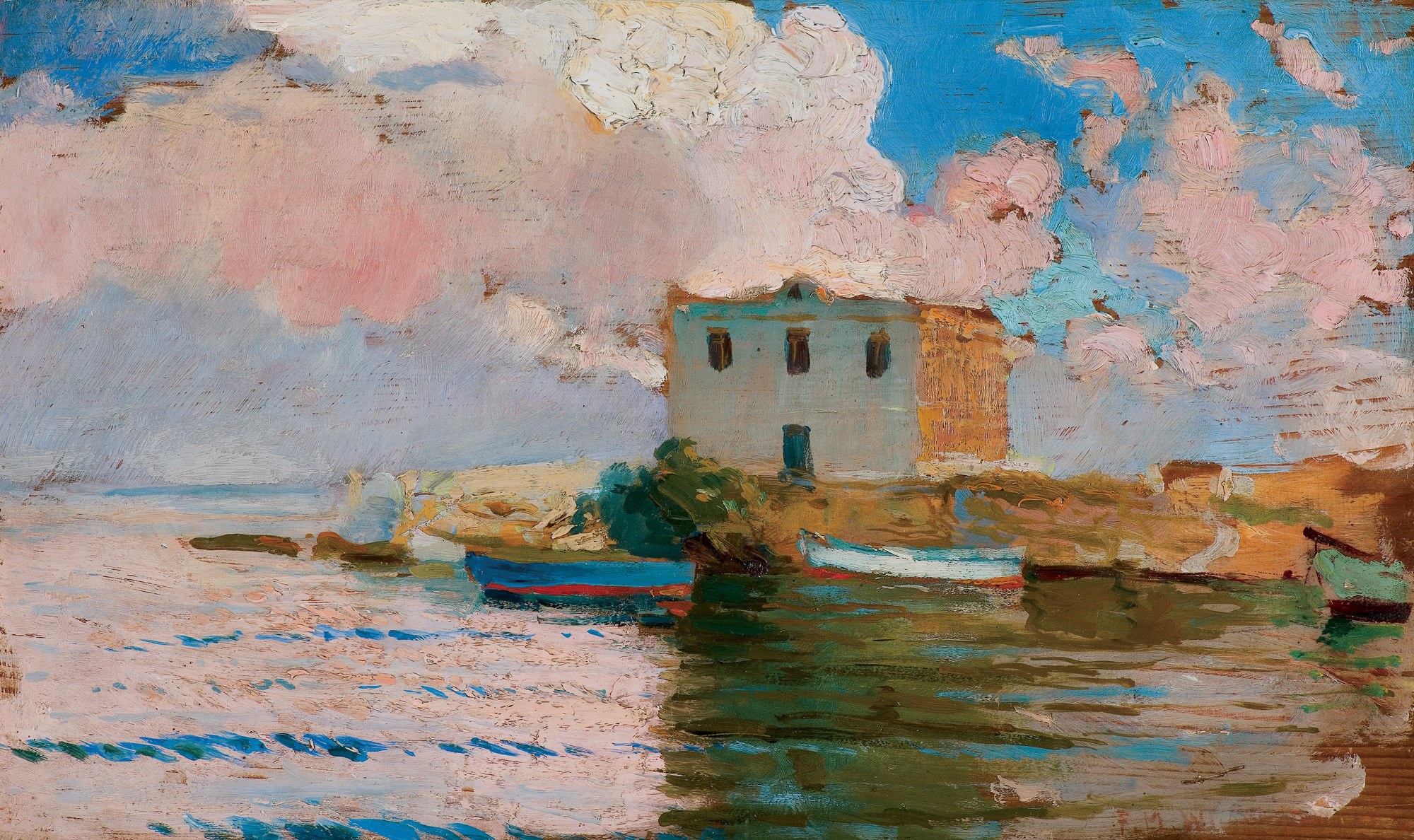
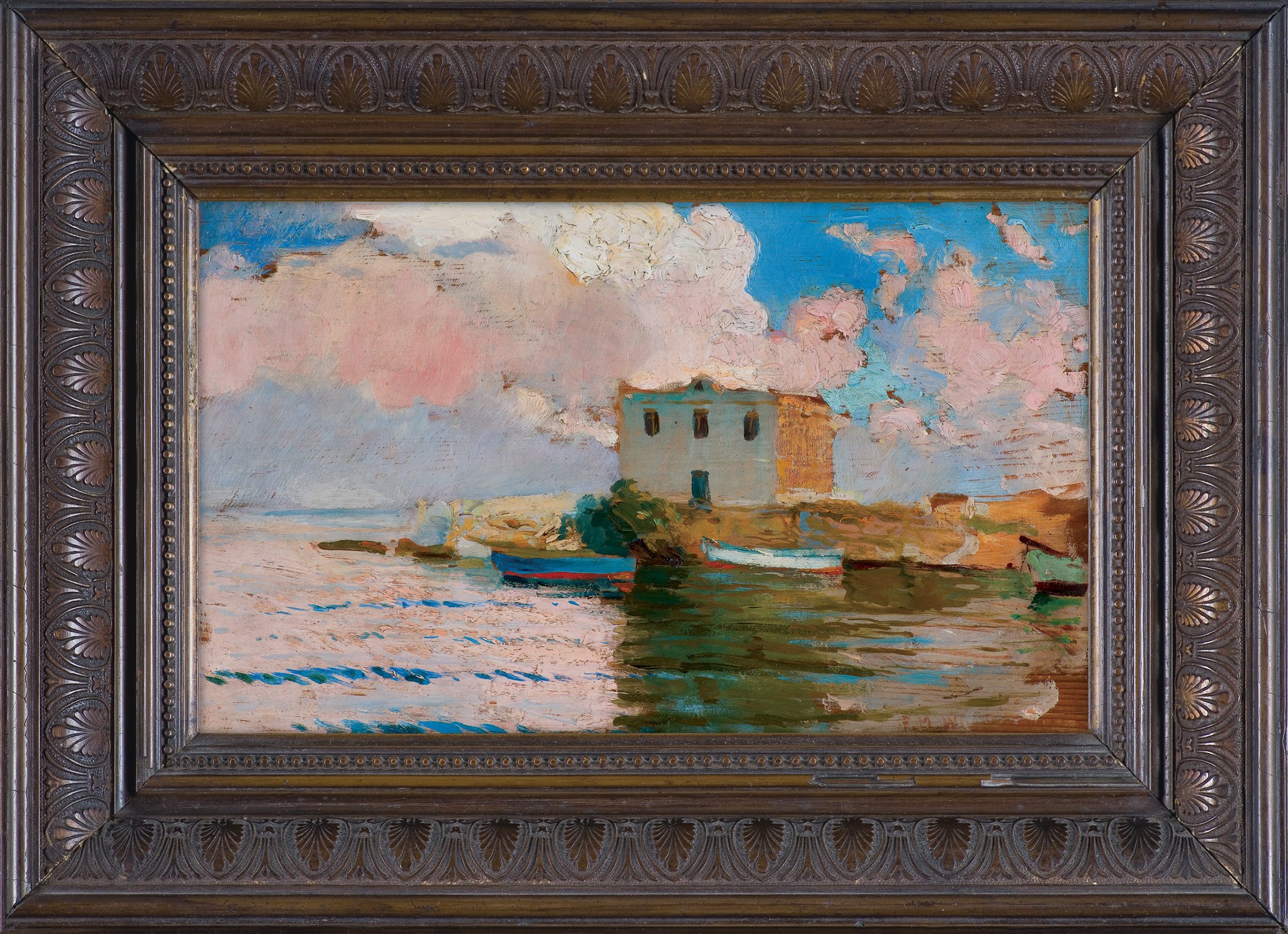
17.0 x 28.0 cm - oil, board
Signed p. d.: F. M. Wygrzywalski
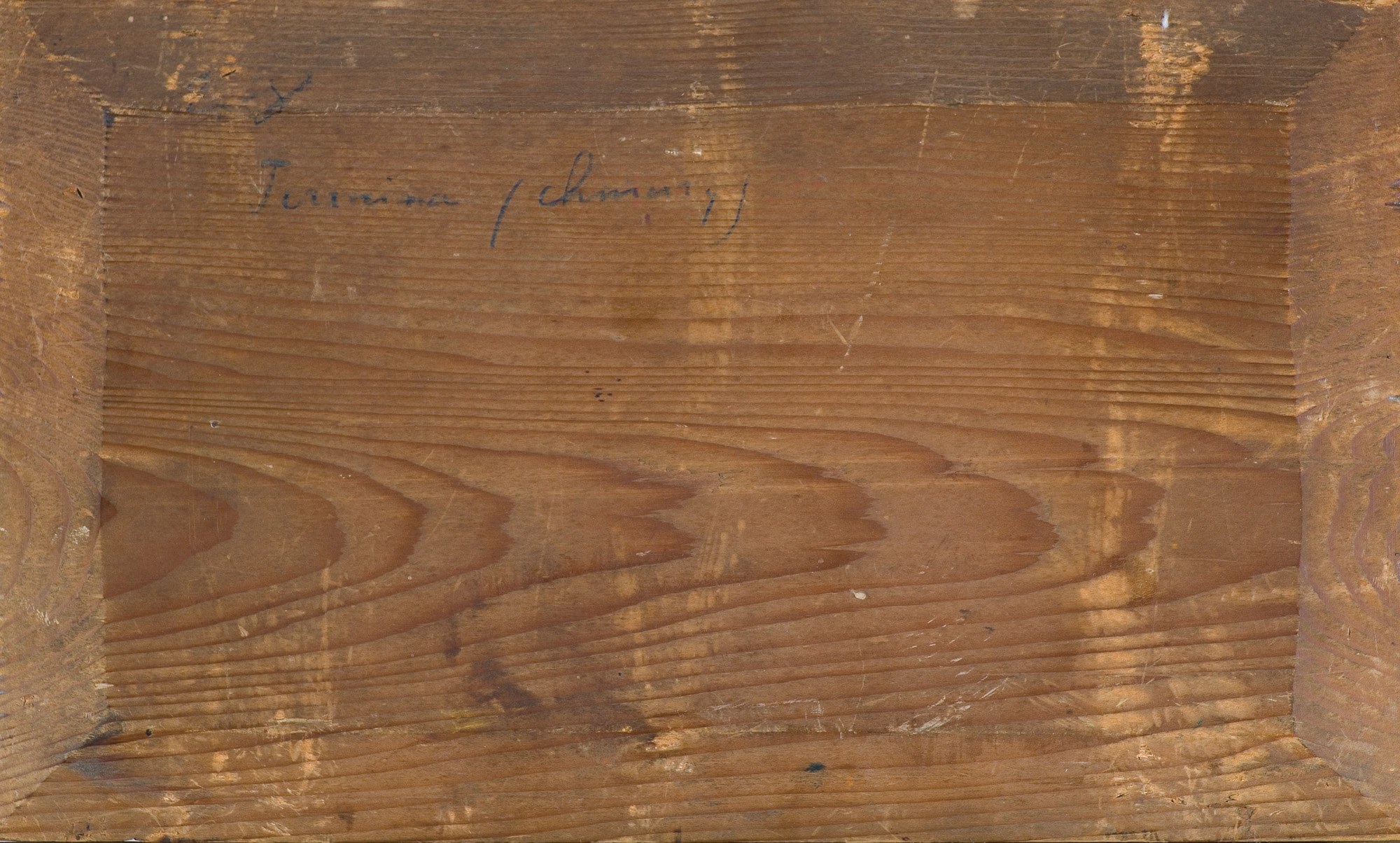
On the back inscription in pencil: (...) 8 | Taormina (clouds)
Provenance:
The painting comes from the collection of Stanislaw Werner (1903-1985) of Lviv, a lawyer and opera singer. According to family accounts, the painting was purchased from Feliks Michał Wygrzywalski, who ran a Kunstausstellung - an art salon - in Lviv during the occupation in 1941/1942-1944. The salon advertised in the occupation's "Gazeta Lwowska" that it was buying paintings by Polish painters and works by F. M. Wygrzywalski. The advertisements were used by Wygrzywalski to gather his own paintings for a group exhibition, which he organized at the turn of 1943/44 in his own premises (cf. S. Bołdok, Lviv's Plastic Community, Warsaw 2017 [typescript], p. 481). The message from Maria A. Radecka, who ran the Kunstausstellung, confirms that Werner often visited the salon:
At the Kunstaustellung he exhibited and sold not only Feliks Wygrzywalski, but also a whole plethora of artists. In addition, we sold paintings left on consignment by outsiders. The hard living conditions of the time forced many to dispose of even works of art in order to get money to live. The buyers were Germans, Italians, Slovaks and Polish picture dealers. In addition to sellers and buyers, many acquaintances and friends came to the Kunstaustellung. They treated the Salon as a social gathering place and, like in a pastry shop, sat there for hours. Regular guests were the painters Czeslaw and Tadeusz Sadowski, the tenor Stanislaw Werner.... museum curator Jerzy Guttler .... and many, many others. Painters Rozwadowski and Batowski dropped in for a chat. Kazimierz Sichulski was a daily visitor.... (quoted in S. Bołdok, Lwowskie środowisko plastyczne, Warsaw 2017 [typescript], p. 481).
Feliks Michał Wygrzywalski (Przemyśl 1875 - near Rzeszów 1944) studied at the Academy of Fine Arts in Munich under J.C.Herterich and K.Marr in 1893-98. He supplemented his studies at the Académie Julian in Paris. Already during his studies he traveled to Italy, and after 1900 he lived in Rome for several years. In 1906 he traveled to Egypt. In 1908 he settled permanently in Lviv. In 1909-14 he worked in the local theater as a stage inspector. He traveled to Italy several more times. He was a realist painter; in his earlier period of work he leaned towards naturalism and strong expression. He attached great importance to lighting effects and used a rich, vivid color palette. In his early paintings, he often depicted human labor (Burlacy) or dramatic events and social tensions (Strike, Bread to Us Hungry). He also painted portraits, nudes, seascapes, landscapes from Italy and Ukraine. After his trip to Egypt, oriental motifs and themes recurred in his paintings (Prayer of the Arabs, Carpet sellers). He was involved in decorative wall painting, including designing and later executing allegorical murals for the Chamber of Commerce and Industry building in Lviv in 1908. He was involved in printmaking, illustrated books and magazines, designed stained glass windows, costumes and theater decorations (including for Peer Gynt, Irydion, November Night).













Viimeksi katsotut
Kirjaudu sisään nähdäksesi kohdeluettelon
Suosikit
Kirjaudu sisään nähdäksesi kohdeluettelon