


Antanas Žmuidzinavičius (1876-1966)
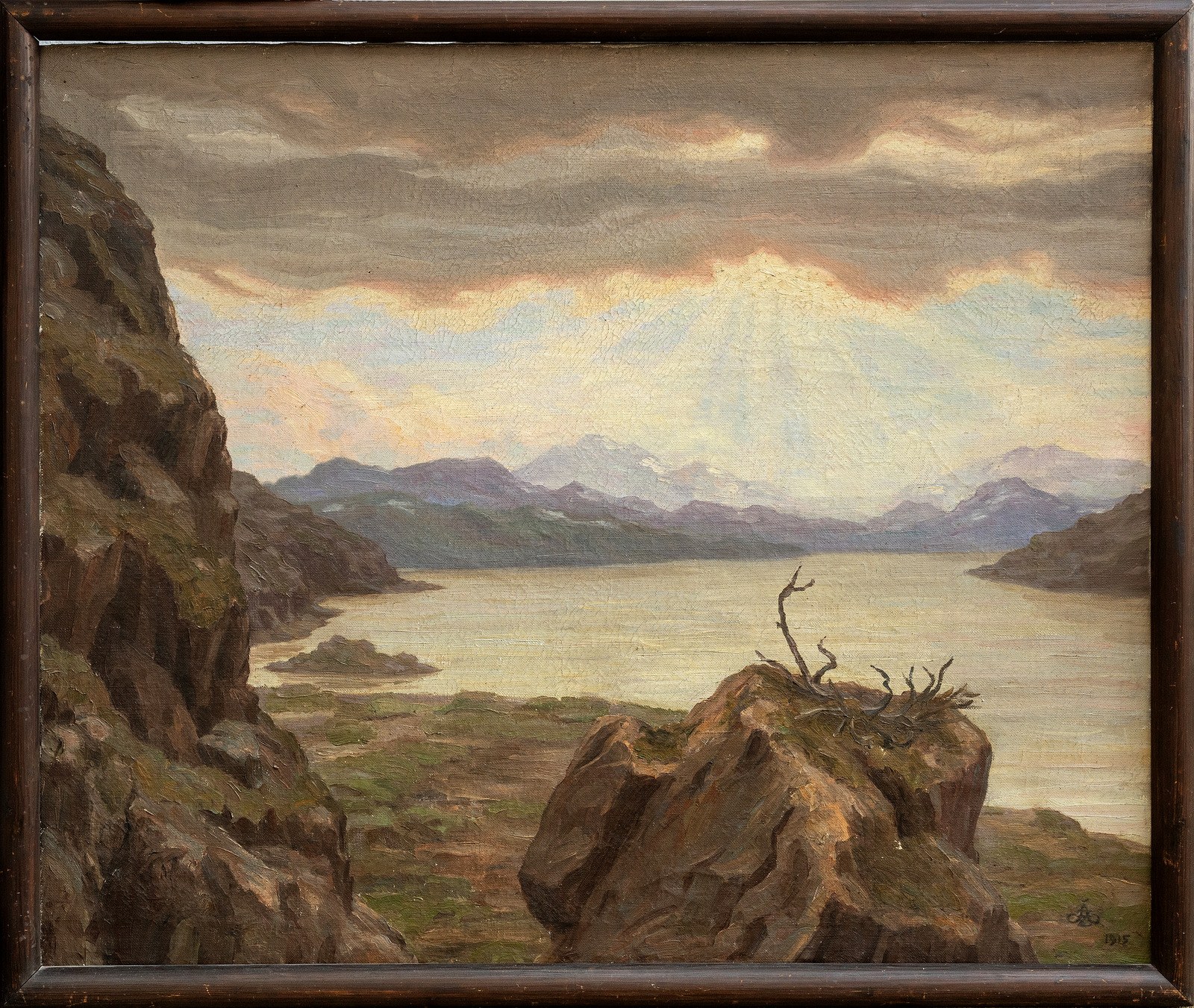
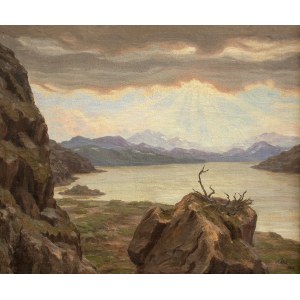
Midnight in Murman
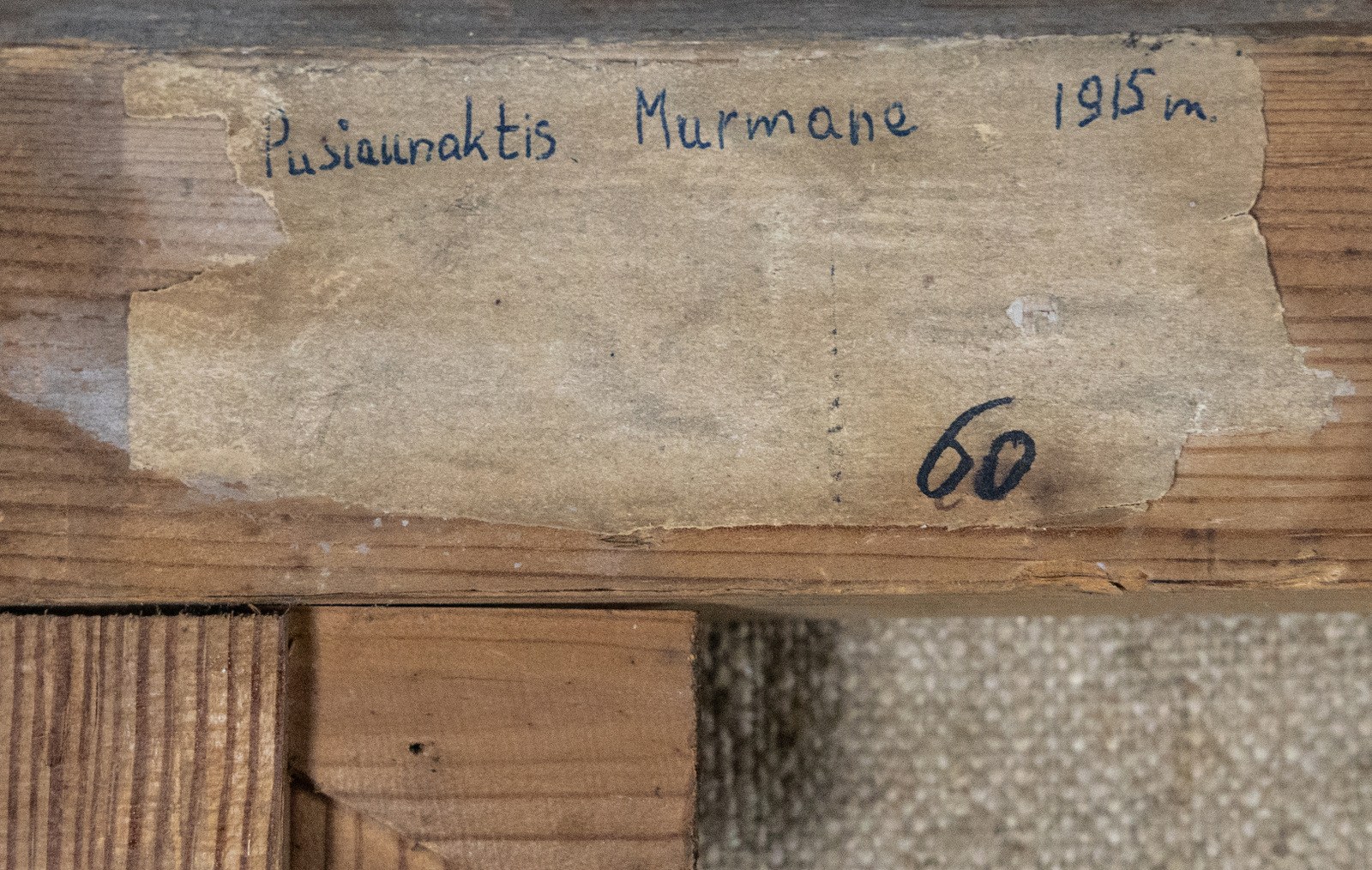
1915, drb., al., 101 × 120
Sign. AD: signature / 1915
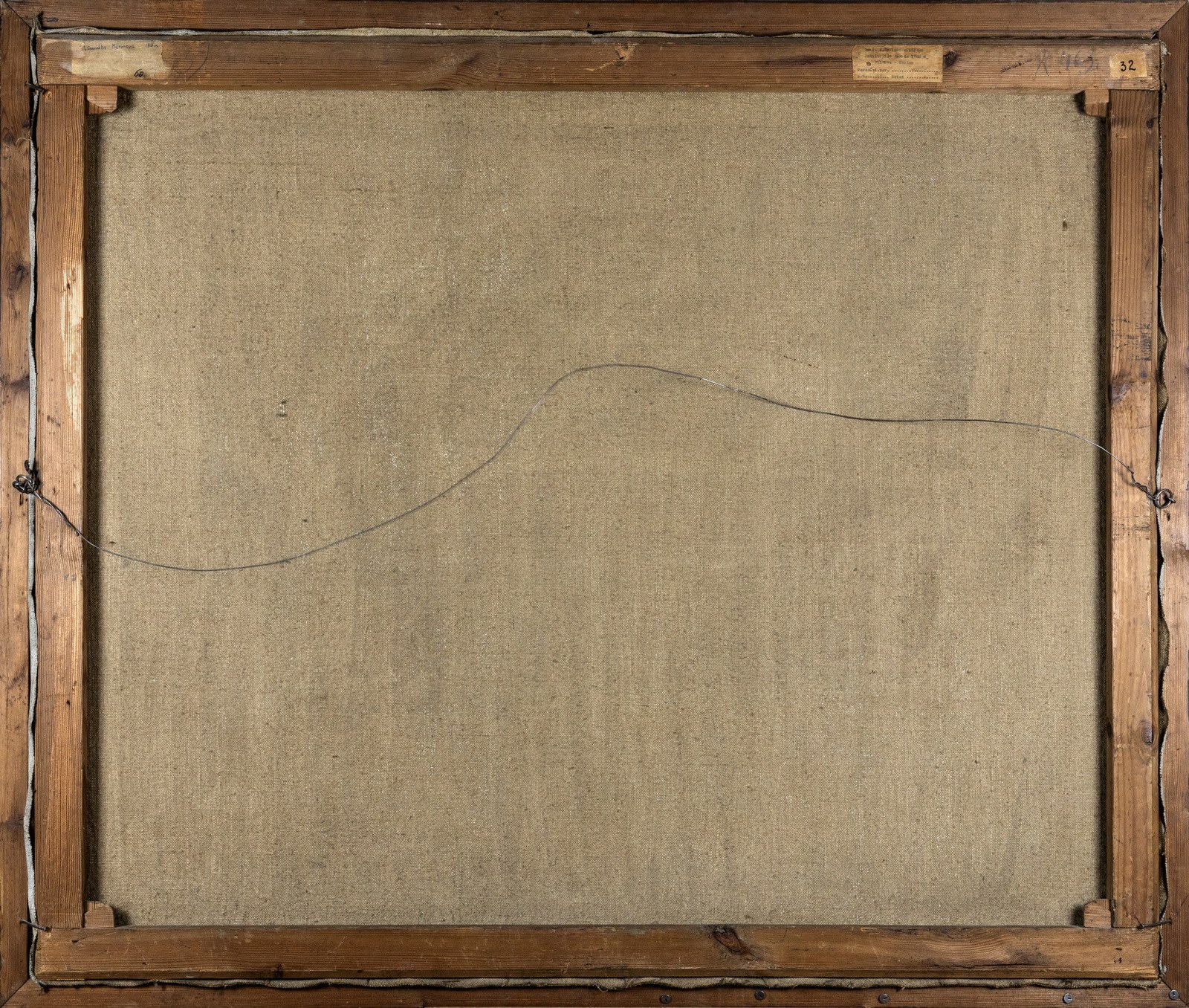
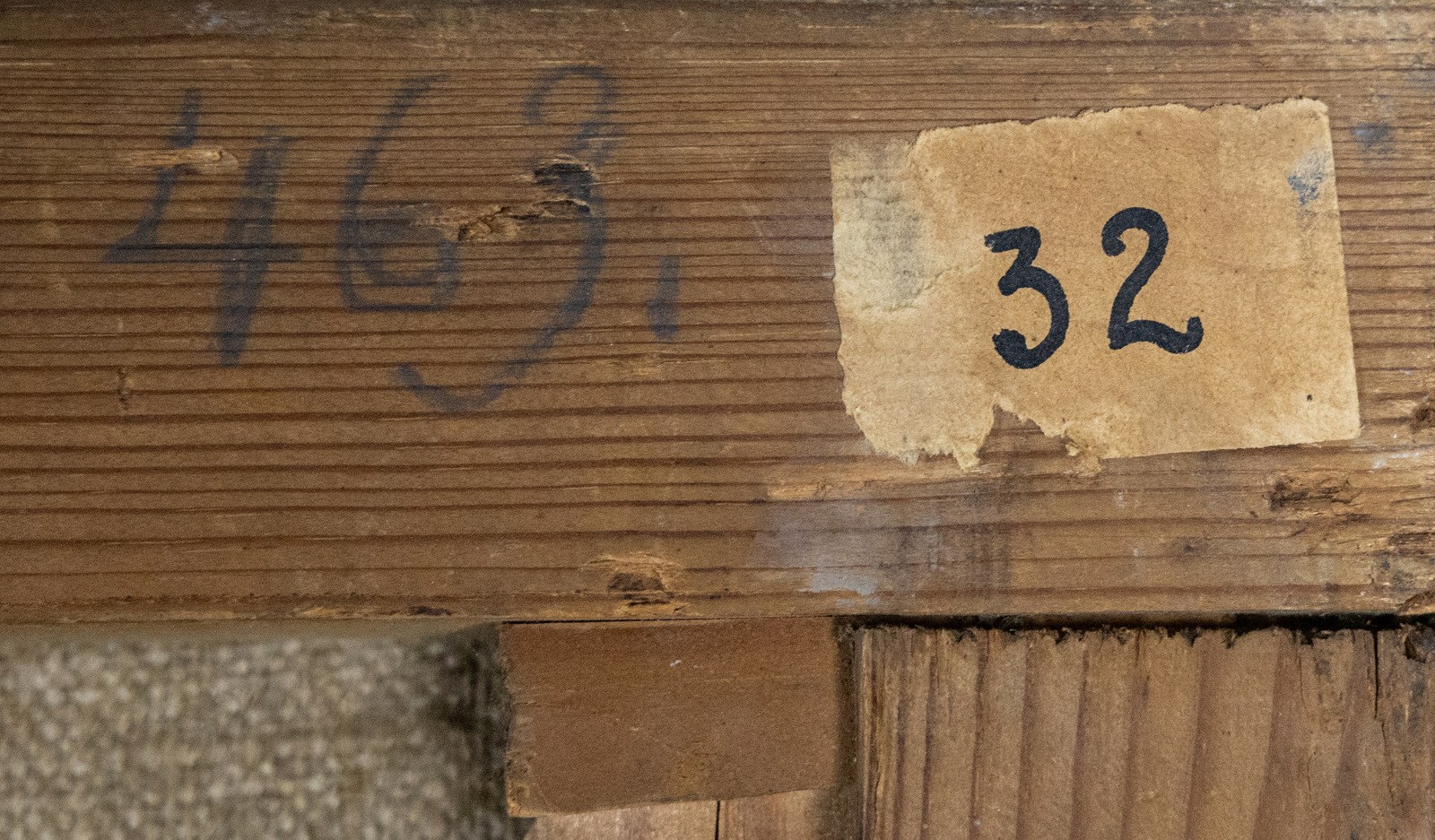
Inventory number: R 463
THE NORTHERN LEGACY OF ANTANAS ŽMUIDZINAVIČIUS
This is one of the most interesting landscapes in Žmuidzinavičius's biography, probably based on an etude created just before the First World War, when the artist, together with the naturalist Tadas Ivanauskas, set off on a trip to the Kola Peninsula (then known as Murmansk). From this trip, Žmuidzinavičius brought back a series of small-format nature etchings and one other larger painting.
The peninsula of north-western Russia, situated between the Barents and White Seas, fascinated the artist with its harsh nature and white nights, when twilight lasts all day. In his diary, the artist wrote: "We have sailed into the Arctic, into the land of the sunny night, into the land of cruel frosts and frostbites, of icy mountains and bare rocks, so interesting and so little explored" (A. Žmuidzinavičius, Palette and Life, V., 1961, p. 168). He captured this time of year, when the sun shines at midnight and "reflects in a pillar in the boundless water" and "dark clouds float across the sky", in a painting. The title 'midnight' and the bright time of day depicted should not be surprising. Looking at the rusty rocks and the poor environment, where, according to the artist, one would not see "even the smallest tree or a green bush", he could not rely on the compositional schemes tried and tested in Lithuania and the transparent palette of light colours praised by the reviewers of the first Lithuanian art exhibitions. The mood of neo-romantic lyricism, so favourable to conveying the beauty of his native land, which had taken root in his work at the beginning of the twentieth century, was not suited to the nature song.
Other means were needed - ascetic, more restrained, more sensitive. So I had to free myself from the etude characteristic of my early work and paint with epic ambition, monumentality, empathising with the grandeur of the Nordic nature. The two parts of the painting - the bleak waterfront surrounded by rocks and the vividly painted sky - are separated in the distance by a blue mountain range. The low horizon line and the brownish greyness of the rocks allow us to focus on the turbulent sky, where a spectacle worthy of a true romantic is taking place - the clash of natural forces, where light overcomes darkness, freeing the sun from the shackles of the clouds. The painter loved to identify with the natural environment. Some feelings were evoked by the Lithuanian landscape, others by the Nordic landscape, which led him to philosophical reflections. In order to convey the Nordic reality, the author chooses restrained colours, grey-brownish tonality, but recovers when confronted with the restless element of clouds, which begs for brighter colours, free, expressive pastoral brushstrokes, echoing the contrast of light and shadows, and the lightly undulating rhythm of nature's motifs, elevating the uninspired image to the level of a metaphor of an internal state of being. As a result, the landscape hides a deeper subtext, it does not appear gloomy, because it glows with a spark of hope, like the sun's rays breaking through a thick layer of clouds.
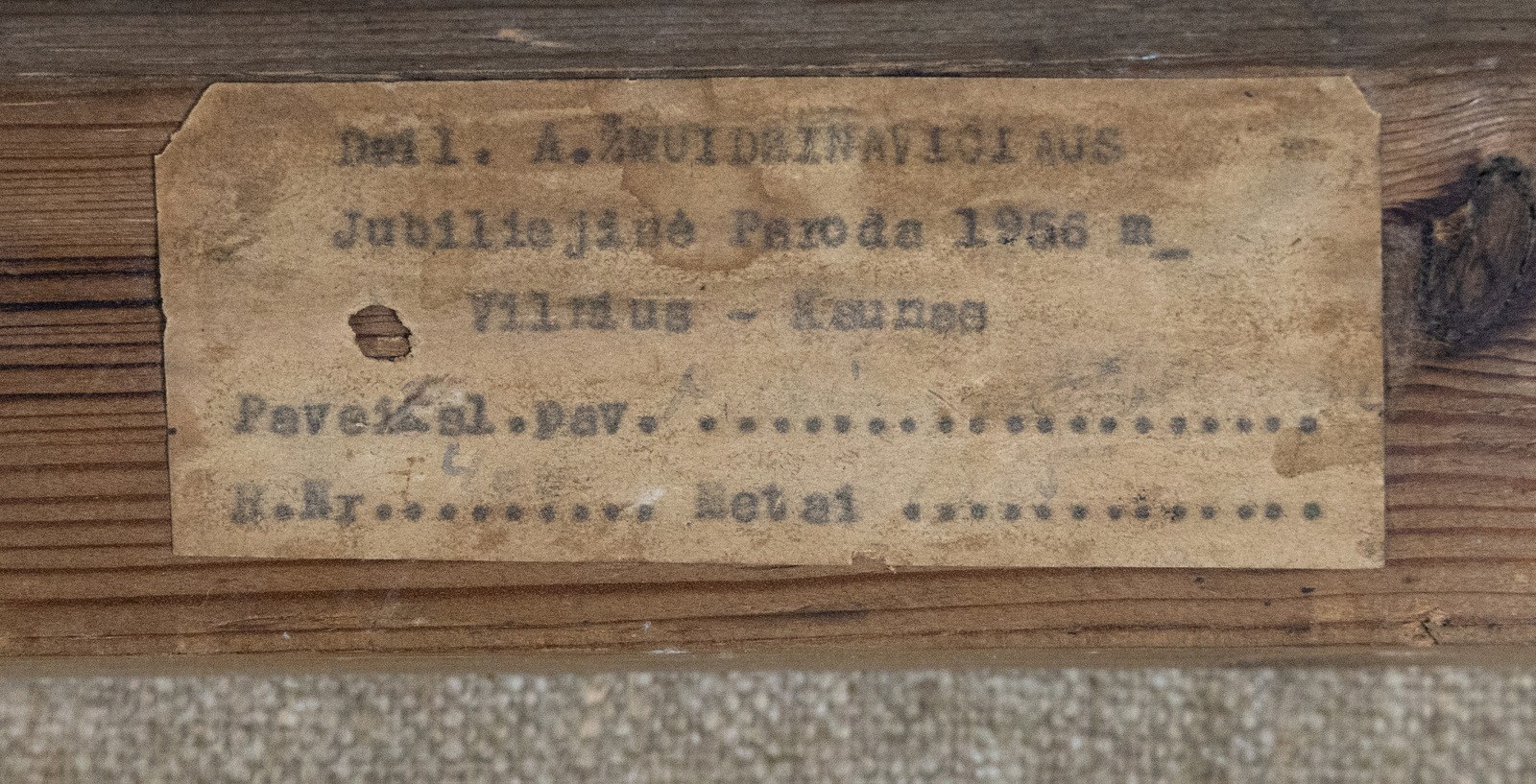
Inspired by his travels in the north of Russia, these works reveal different traits of Žmuidzinavičius, the master of landscape, than the idyllic views of Dzūkija pine forests, country farms, sunsets and the banks of the Nemunas. At that time, the artist was shaped by many factors: the professional knowledge acquired in Warsaw, Paris, Munich and Hamburg, the environment of the national liberation movement, and the impressions of his travels to foreign lands. The artist appreciated the work of the Nordic period and often exhibited it in exhibitions. It was also an important part of the painter's jubilee exhibition in Vilnius and Kaunas in 1956. "Midnight in Murman demonstrates the artist's versatility, his ability to feel and masterfully reveal the harsh reality, while retaining the basic principles of his work and the soul of a romantic. This landscape occupies an important place in A. Žmuidzinavičius' artistic legacy as a painting that transcends the characteristic parameters of his work and reveals a different side of his talent.
Dr. Lijana Natalevičienė











Viimeksi katsotut
Kirjaudu sisään nähdäksesi kohdeluettelon
Suosikit
Kirjaudu sisään nähdäksesi kohdeluettelon