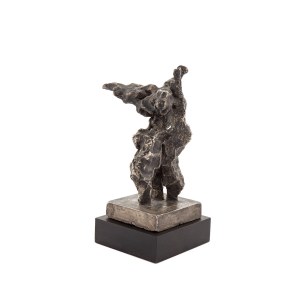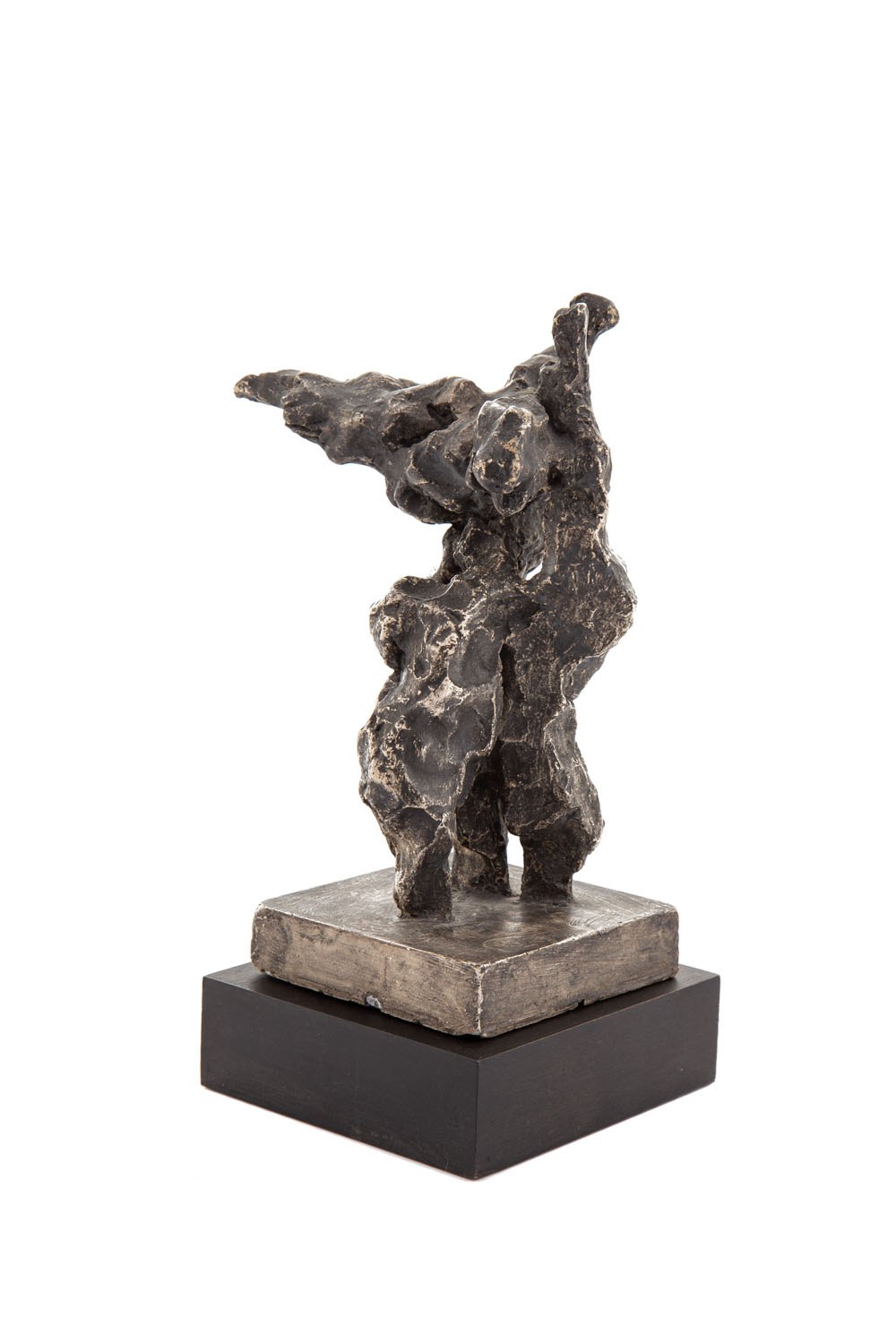
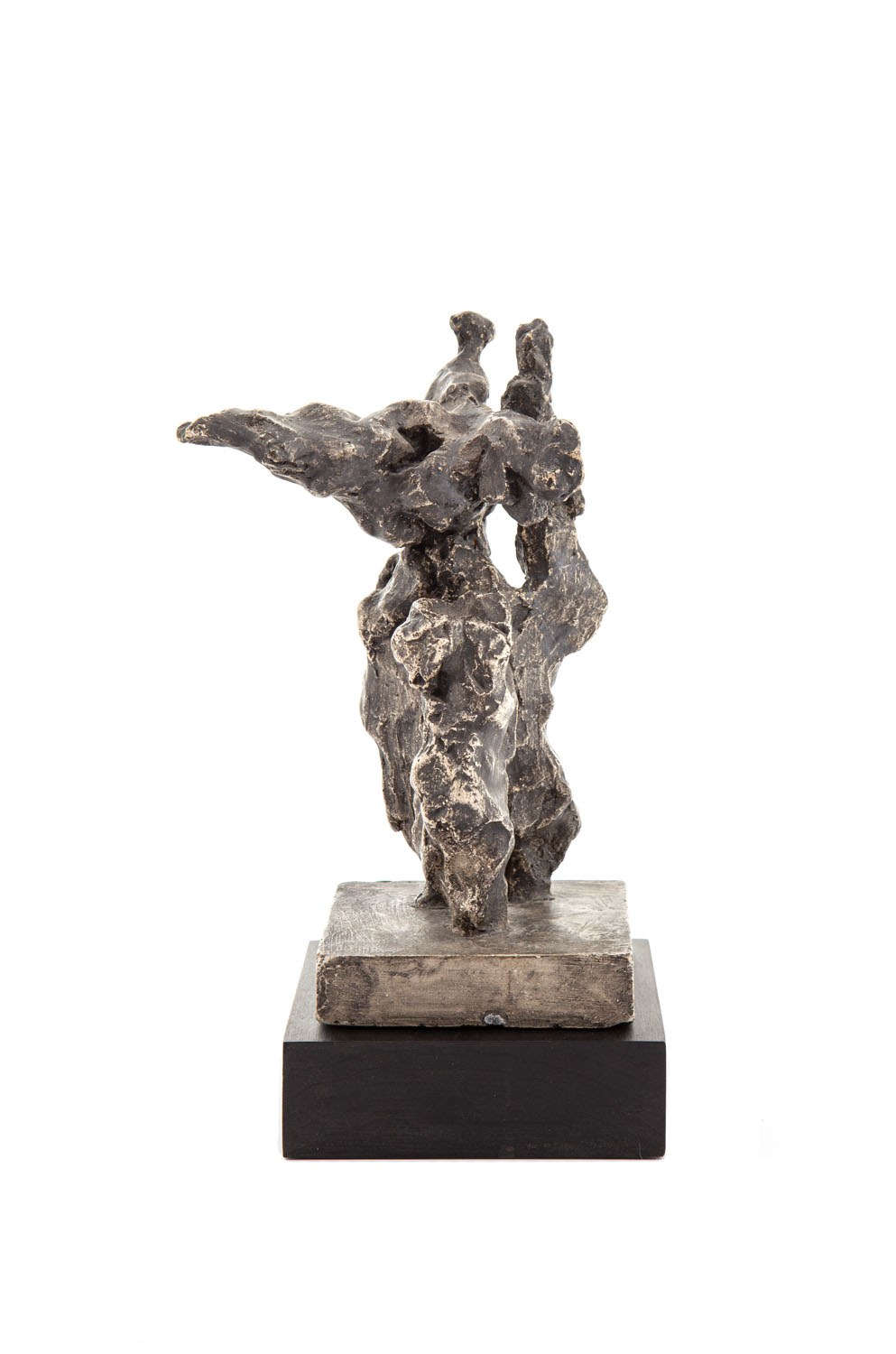
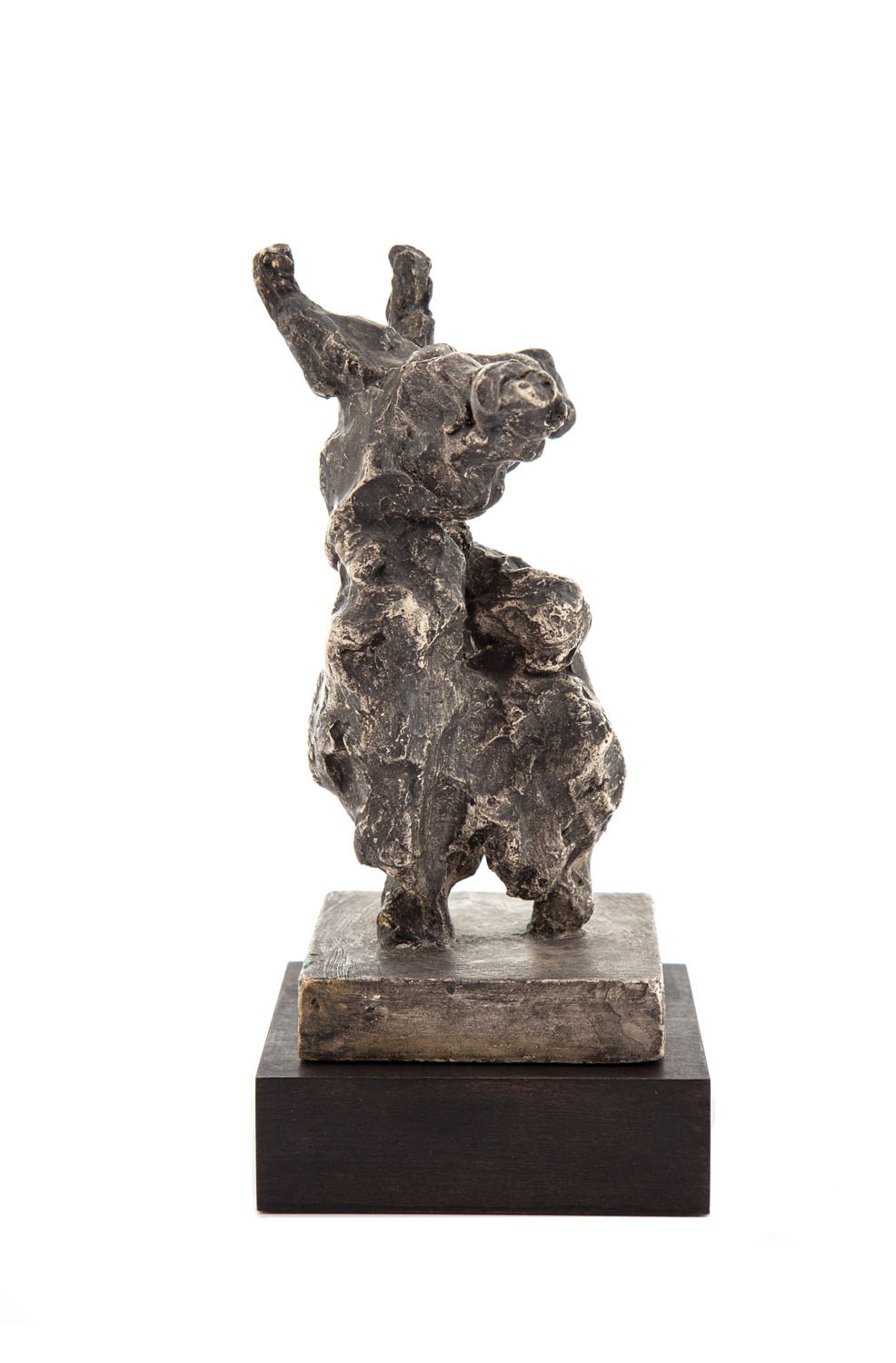
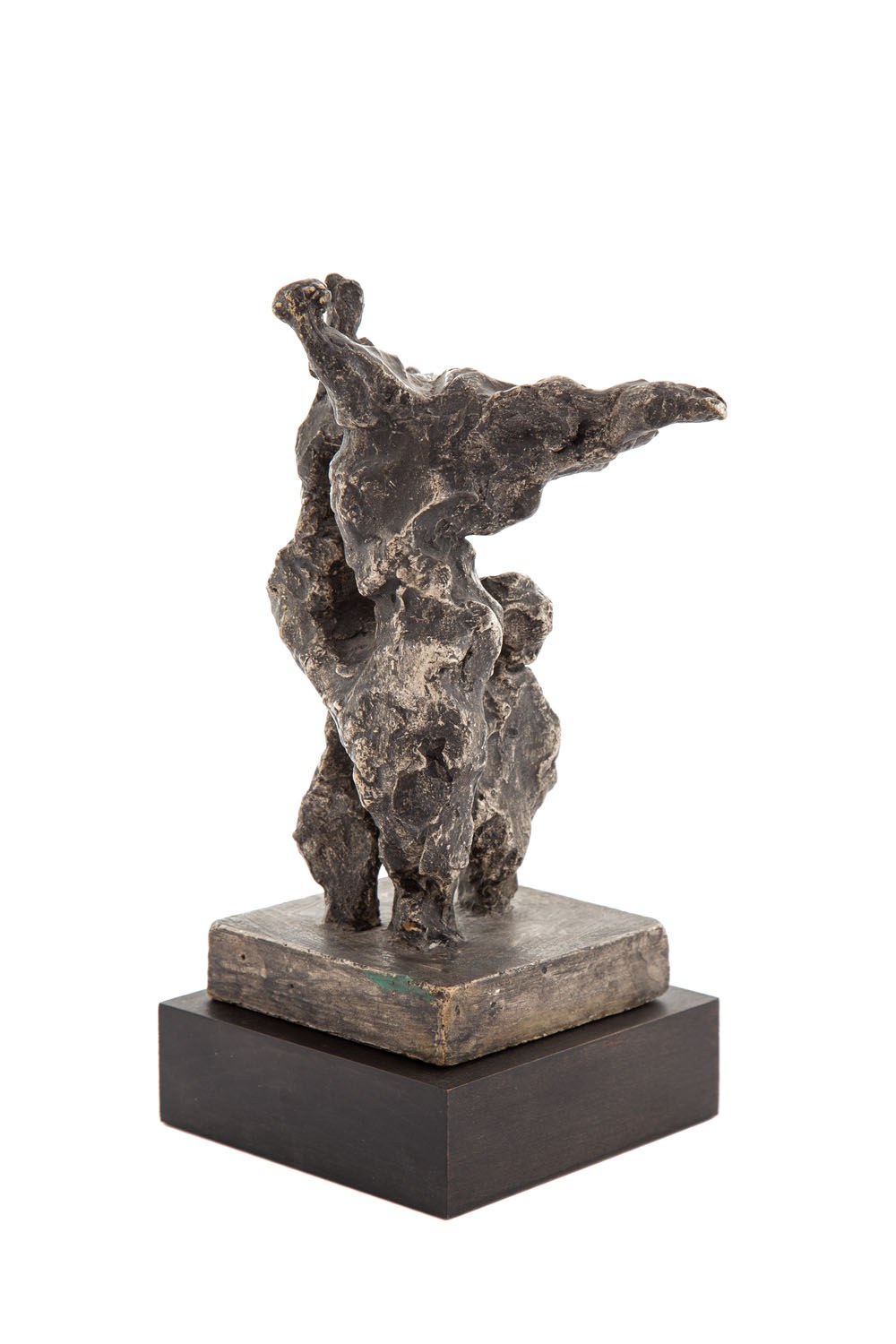
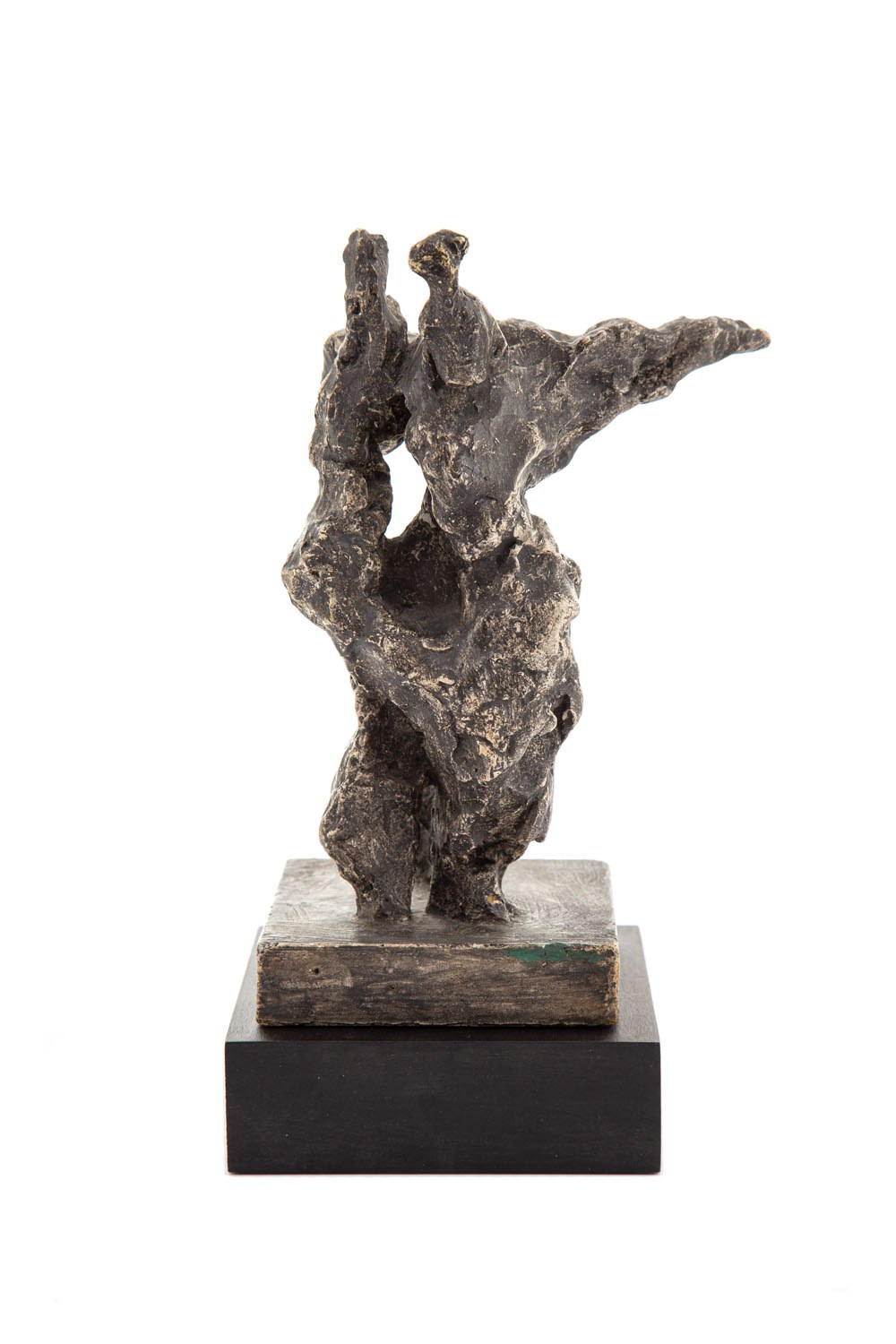
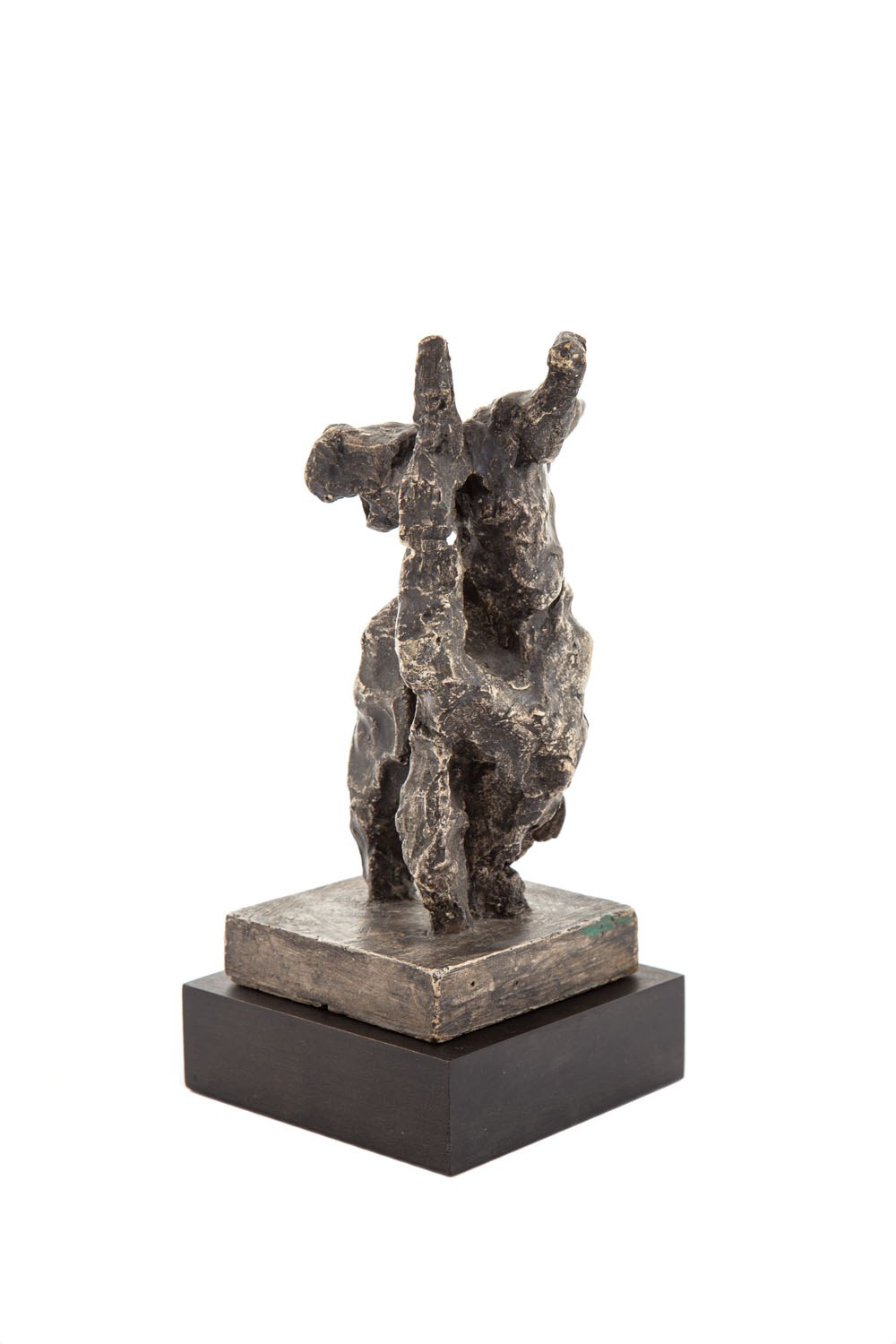
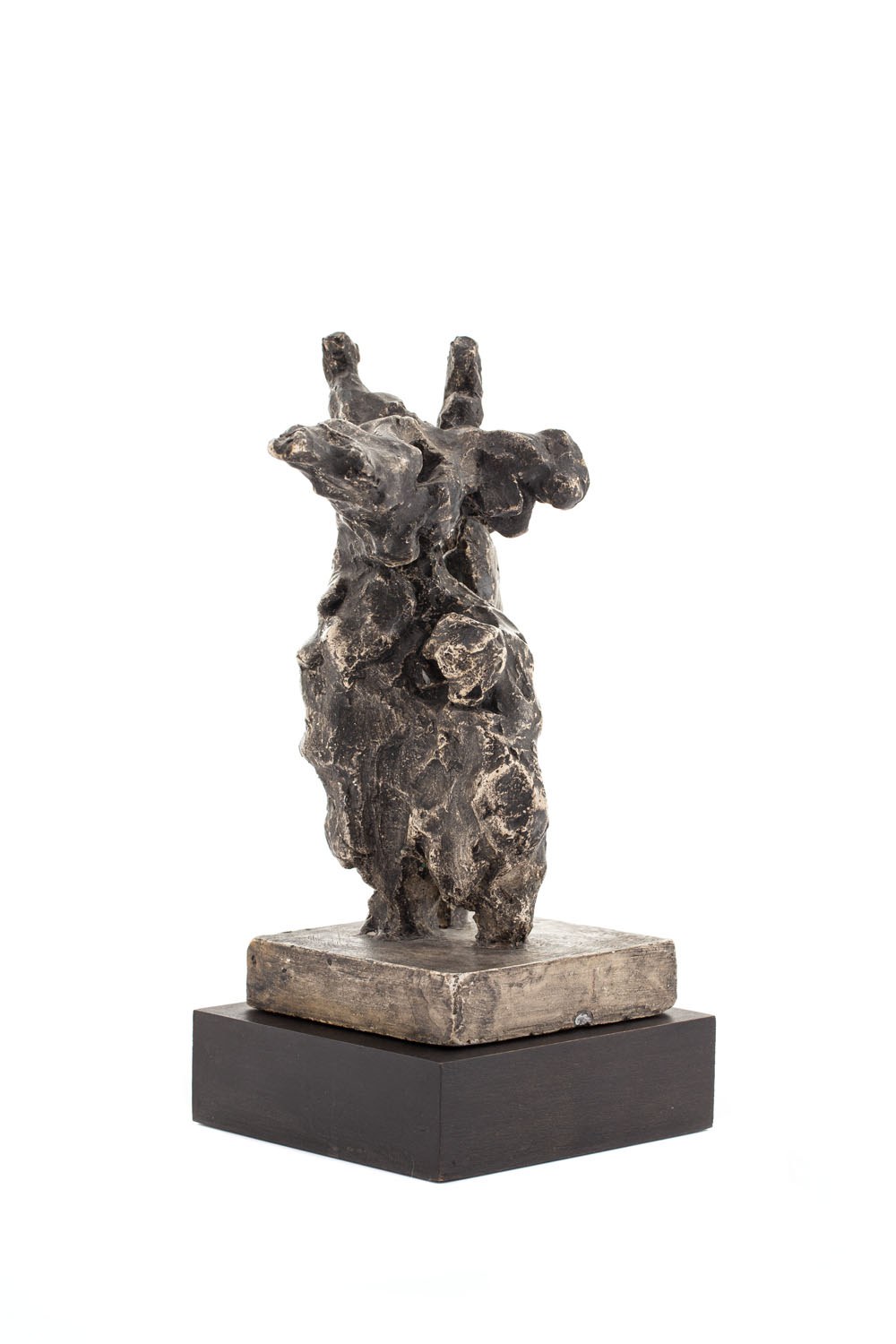
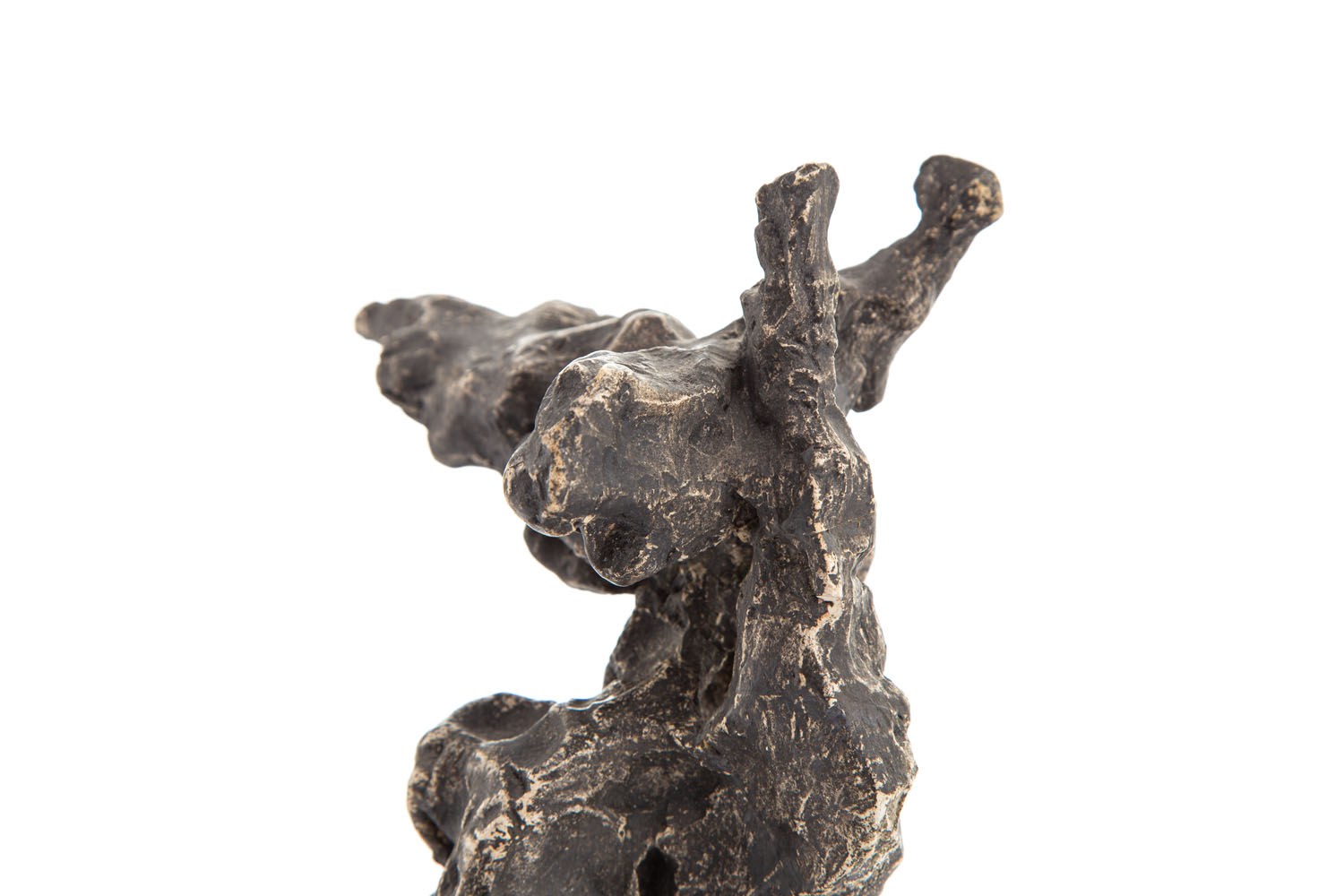
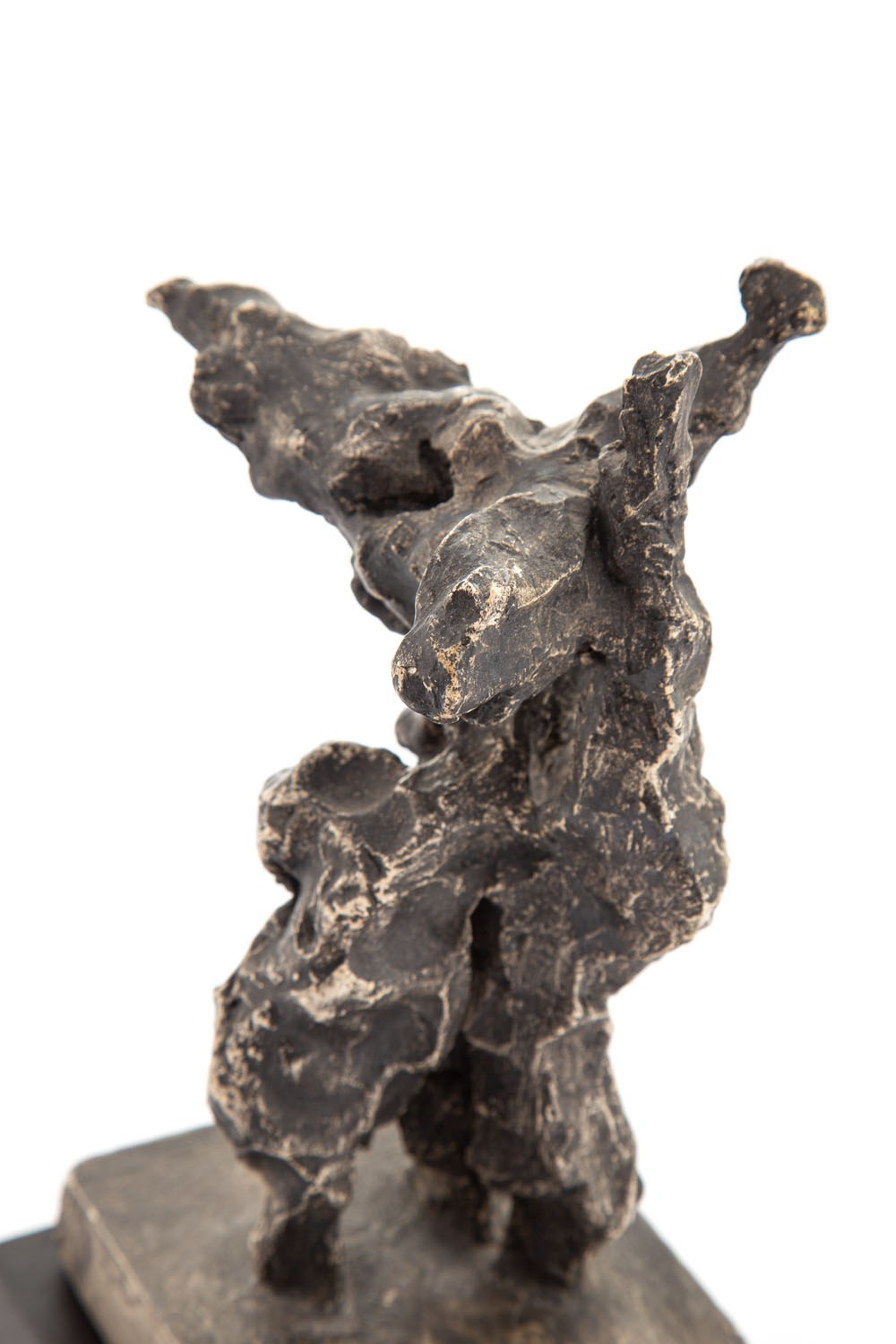
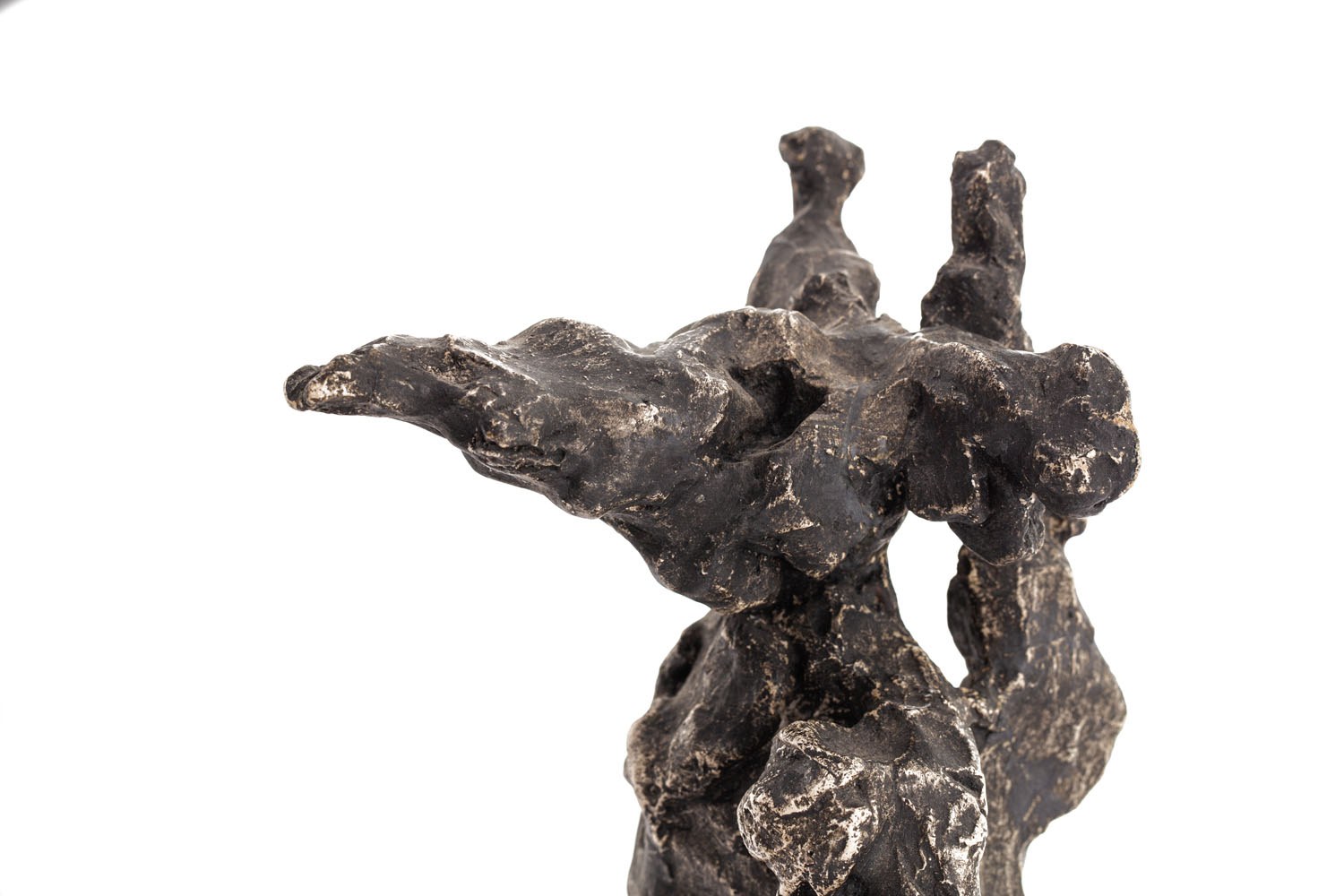
Dimensions: 22 x 10 x 10 cm
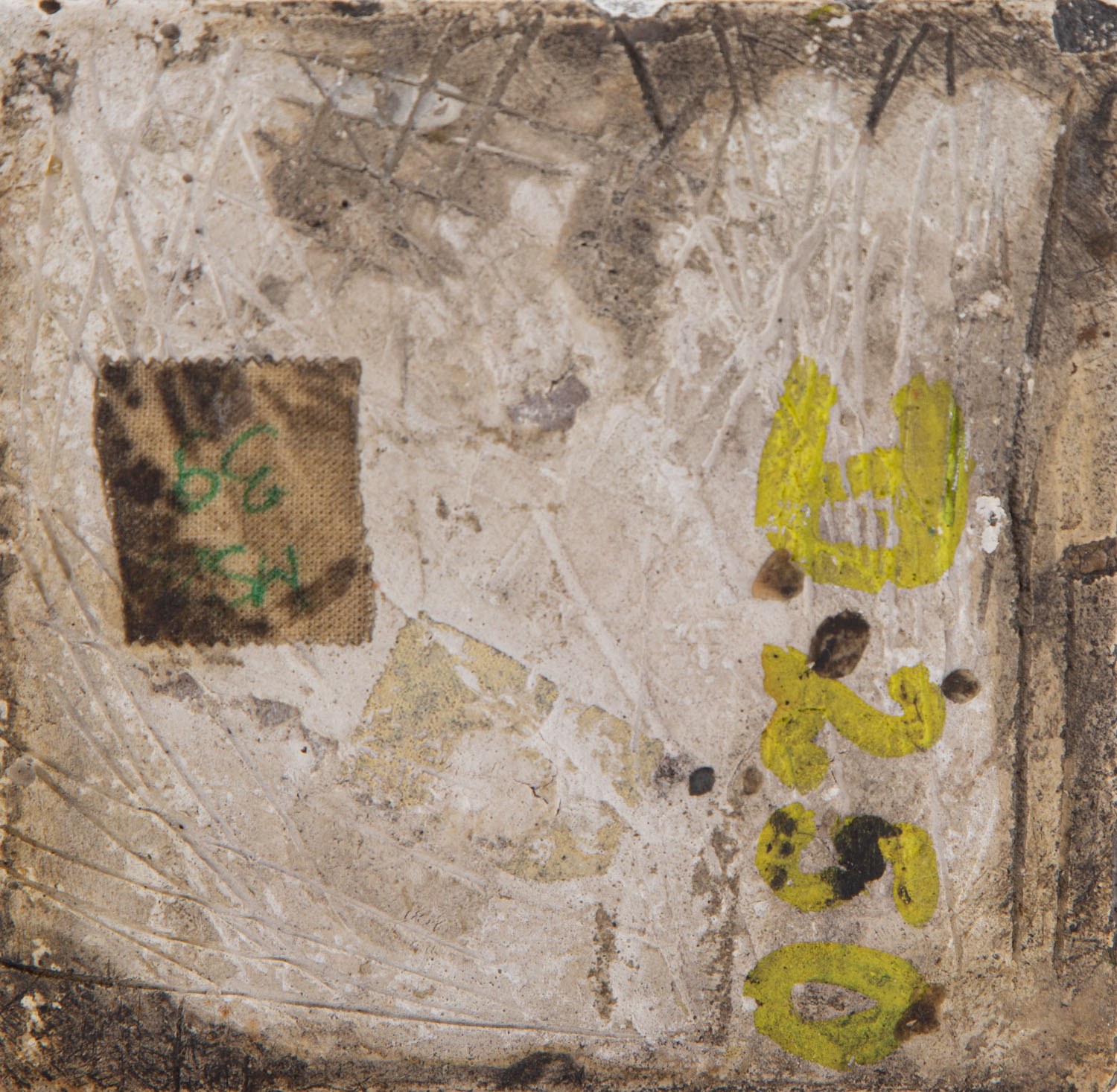
On the bottom of the pedestal yellow inscription: 'D 250' and a sticker with the inscription 'MS 39
Origin:
private collection, Berlin
Exhibited
Exhibition of works by participants in the competition for the Monument to the Heroes of Warsaw, Zachęta Gallery, April-May 1958
"Second exhibition of Alina Szapocznikow's sculpture," BWA in Poznan, April 1960
"Alina Szapocznikow 1926-1973: Sculpture, drawing", National Museum in Warsaw, November 1975
"Alina Szapocznikow 1926-1973," Museum of Art in Lodz, September-October 1975
"Alina Szapocznikow. Sculpture," BWA in Bydgoszcz, June 1976
Literature
"Competition for the Monument to the Heroes of Warsaw," Stolica, no. 16, p. 19.
Bohdan Gniewiewski, "Monument to the Heroes of Warsaw," "Architektura," 1958, no. 8, p. nlb.
Jadwiga Jarnuszkiewicz, A collision with the viewer, "Artistic Review," 1958, no. 3, p. 12.
Irena Grzesiuk-Olszewska, Polish monumental sculpture in 1945-1995, Warsaw 1995, p. 85 et al.
Stopping Life. Alina Szapocznikow's drawings and sculptures, [ed.] J. Grabski, Warsaw 2004, p. 144 (ill.).
Agata Jakubowska, Multiple portraits of Alina Szapocznikow's works, Poznan 2008, pp. 96-124
Jola Gola, Catalogue of the sculptures of Alina Szapocznikow, Cracow 2001, p. 96 (ill.)
II Exhibition of the Sculpture of Alina Szapocznikow, catalog of the exhibition at the BWA, Poznań 1960, cat. no. 38.
Alina Szapocznikow 1926-1973. sculpture, drawing, exhibition catalog at the National Museum, Warsaw 1975, cat. no. 45.
Alina Szapocznikow 1926-1973, exhibition catalog at the Museum of Art, Lodz 1975, cat. no. 53.
Alina Szapocznikow. Sculpture, exhibition catalog at BWA, Bydgoszcz 1976, cat. no. 43
Biography
Alina Szapocznikow was born on May 16, 1926 in Kalisz. She came from a family of Jewish doctors. During the war she was in the ghetto in Pabianice, and then was successively imprisoned in German concentration camps: Auschwitz-Birkenau, Bergen-Belsen and Theresienstadt. After liberation, although her mother returned to Lodz, Szapocznikow decided to live in Prague. There she took up an artistic apprenticeship in the studio of sculptor Otokar Velimsky, and later began studying at the University of Arts and Industry. Thanks to a scholarship, Szapocznikow studied four years at the École nationale supérieure des beaux-arts in Paris. However, a severe illness forced her to interrupt her studies. In 1951, the artist returned to Poland and settled permanently in Warsaw, where she had a studio. Initially she made sculptures in the prevailing Socialist Realist style, and they were mainly monumental projects and realizations. After the so-called "thaw" in the mid-1950s, she was finally able to show what fascinated her: form and material. Sculptures marking the next stages in the artist's work were created then. Female figures: First Love, Difficult Age; organic forms: Creeper, Bellissima; masses of matter stretched on steel scaffolding that seem to mock the law of gravity: Mary Magdalene, Jester. In 1963, she left the country and settled permanently in Paris. At her studio in Malakoff, she experimented with new materials: polyester or polyurethane. She mainly created spatial compositions using casts of her own body, as well as those of people close to her. Toward the end of her life, some of her projects were conceptual in nature. She died ten years later, at the Praz-Coutant sanatorium in Passy, after a long struggle with cancer. The exposition of tensions and contrasts existing between beauty - ugliness, joy - sadness, inner energy - decay, vitality - bodily infirmities can be considered decisive for the reading of Szapocznikow's art. This starting point comes from looking at her works through the prism of biography, which has undergone a kind of mythologization process. On the basis of texts written from the perspective of memories, a coherent image of Szapocznikow emerged - full of life, hard hit by fate, a beautiful woman who died early. Her serenity, beauty, energy evident in her way of being and creating, juxtaposed with her hard experiences: her stay in the ghetto and concentration camps, her tuberculosis, the inability to give birth to a child and cancer, seem to cast a shadow over her entire artistic legacy and constitute one of the main interpretative keys.