


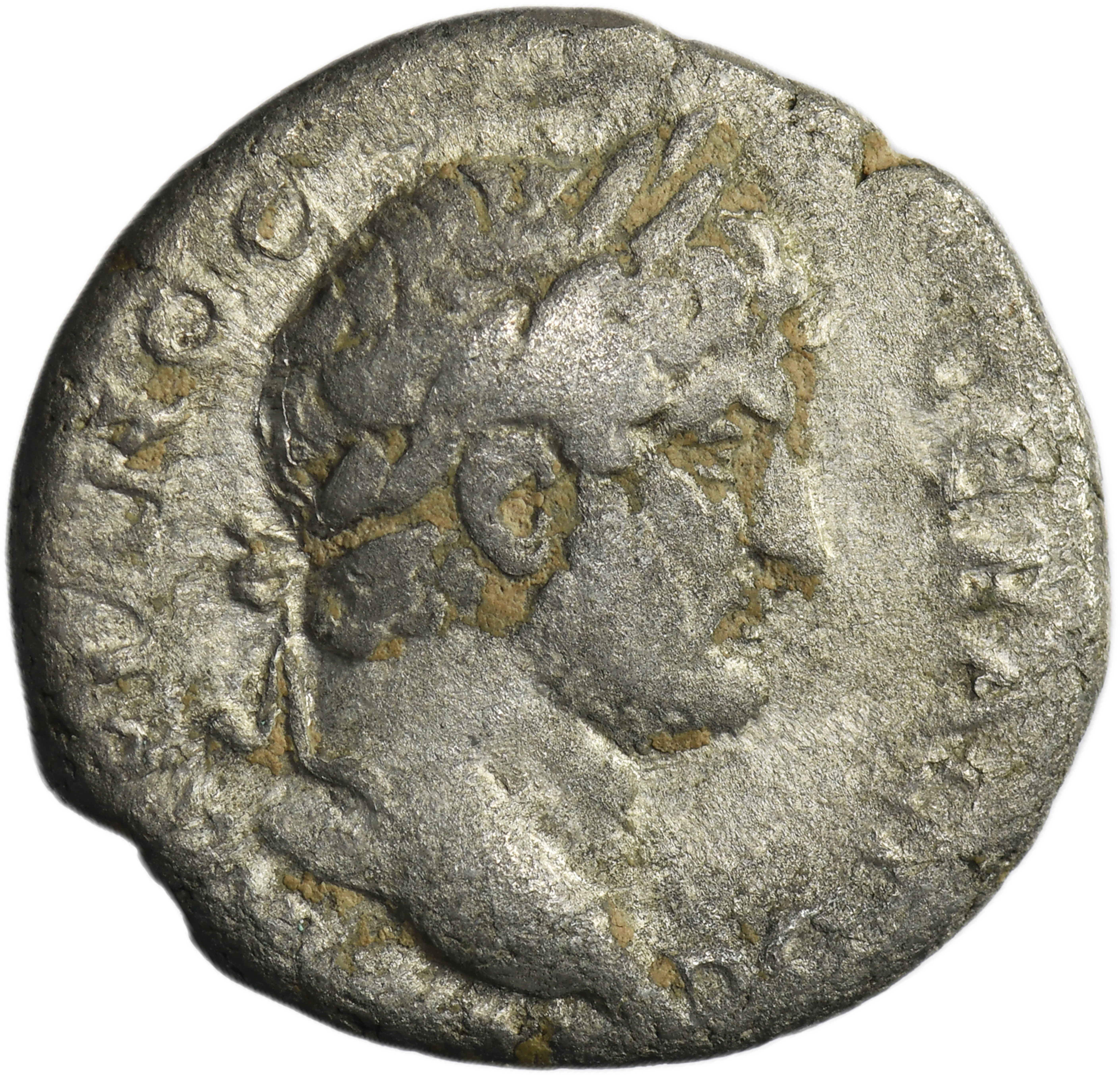
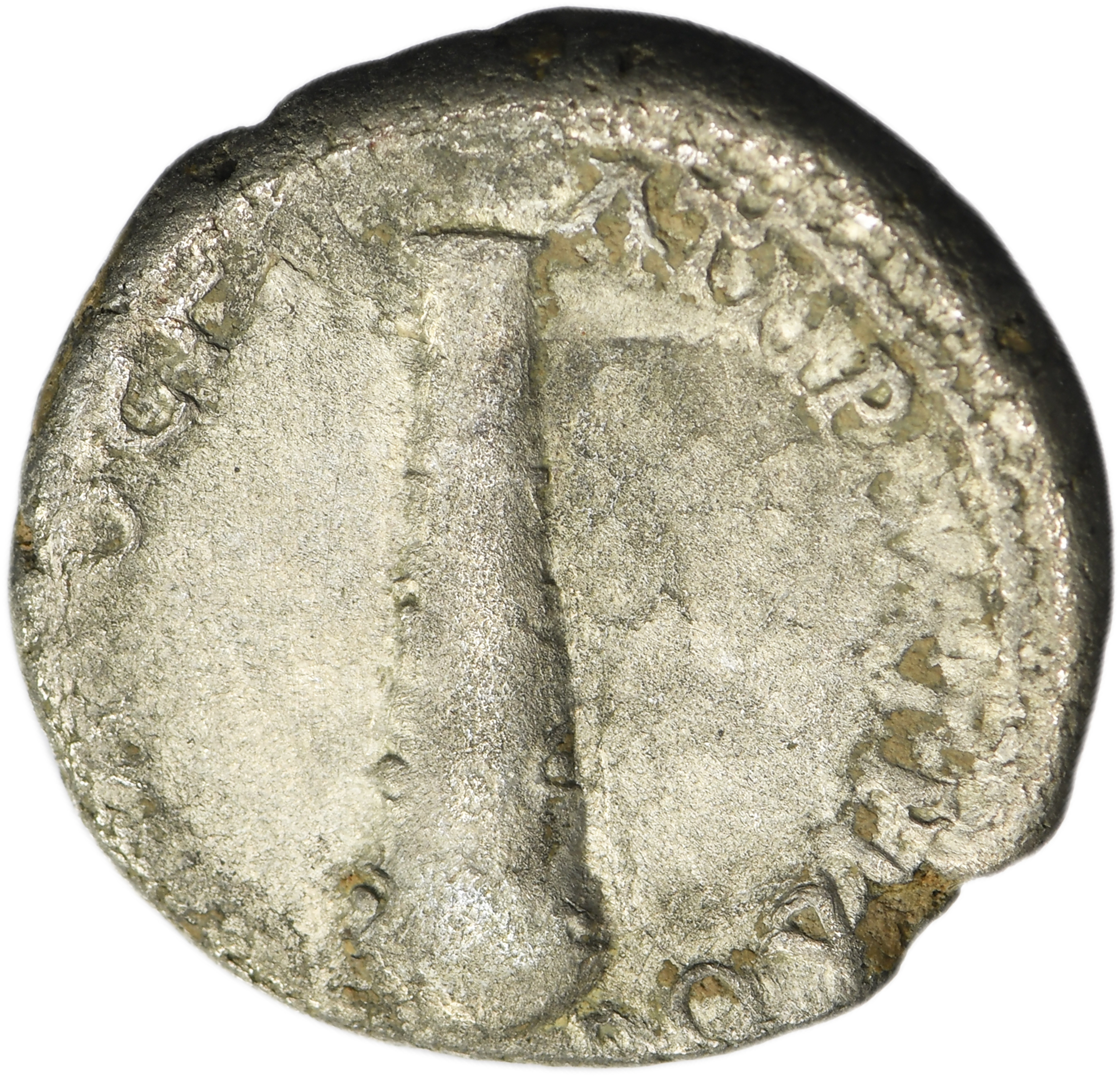


Silver didrachm of Hadrian (AD 117–138), struck at Caesarea in Cappadocia, belongs to the distinctive provincial coinage of the eastern parts of the empire, where local denominations and minting traditions were maintained while retaining the imperial portrait as a unifying element of the monetary system.
The obverse shows a laureate head of the emperor facing right with the Greek legend ΑΔΡΙΑΝΟϹ ϹΕΒΑϹΤΟϹ, identifying Hadrian as Augustus. The use of Greek is typical for Cappadocian coinage and reflects the administrative and cultural character of the region, where Hellenistic traditions remained dominant.
The reverse features a club (clava), an attribute clearly associated with Heracles, with the legend ΥΠΑΤΟϹ Γ ΠΑΤΗΡ ΠΑΤΡΙΔΟϹ, corresponding to the Latin Consul tertium, Pater Patriae. The club is a well-established motif in the coinage of Caesarea, appearing across numerous issues from earlier reigns and reflecting local religious symbolism, particularly the popularity of the Heracles cult in the region.
Roman Provincial
Cappadocia, Caesarea, Hadrian (117-138), Didrachm
Obverse: laureate head right
ΑΔΡΙΑΝΟϹ ϹΕΒΑϹΤΟϹ
Reverse: club
ΥΠΑΤΟϹ Γ ΠΑΤΗΡ ΠΑΤΡΙΔΟϹ
Diameter 20 mm, weight 6.56 g











