


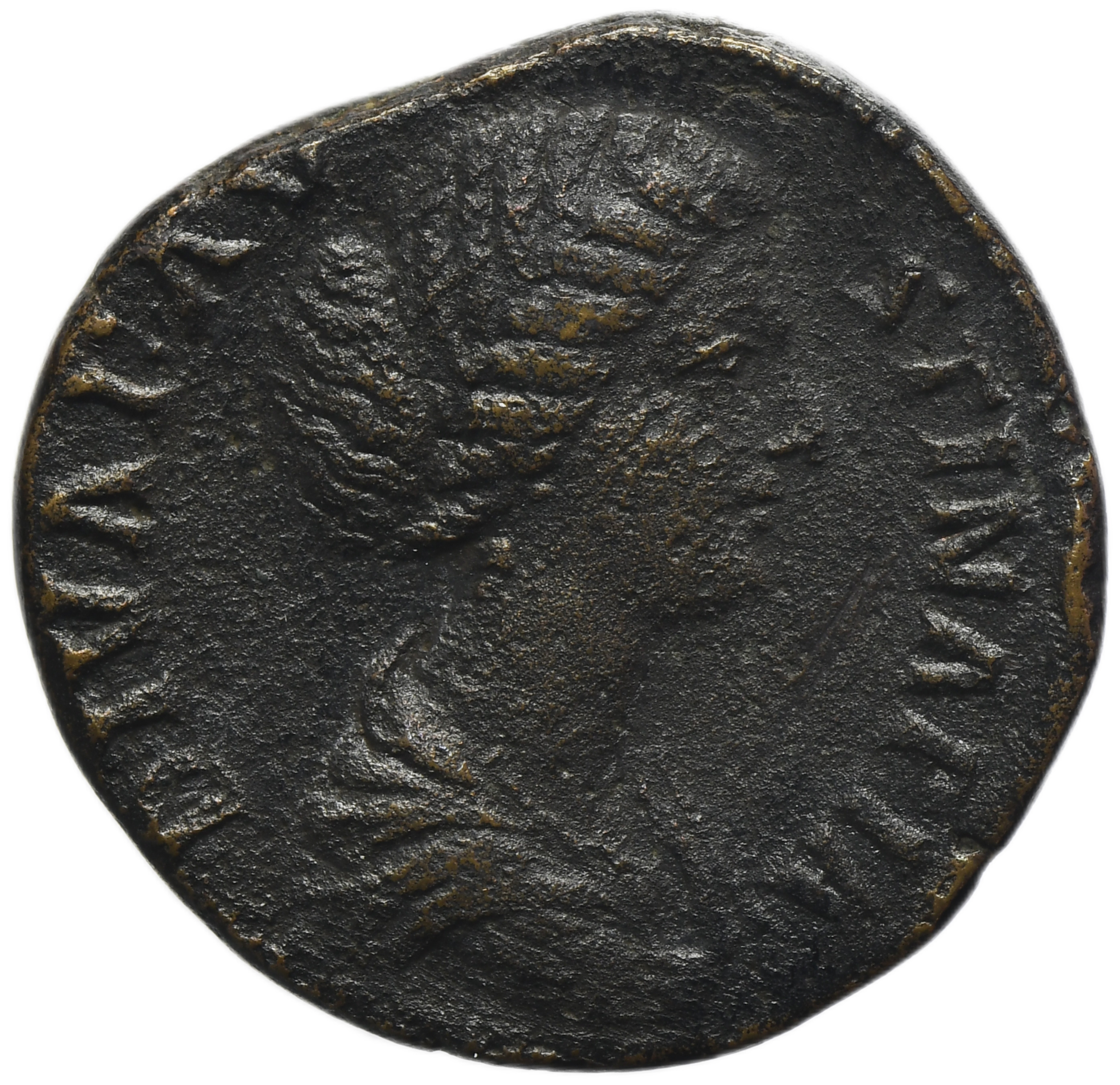
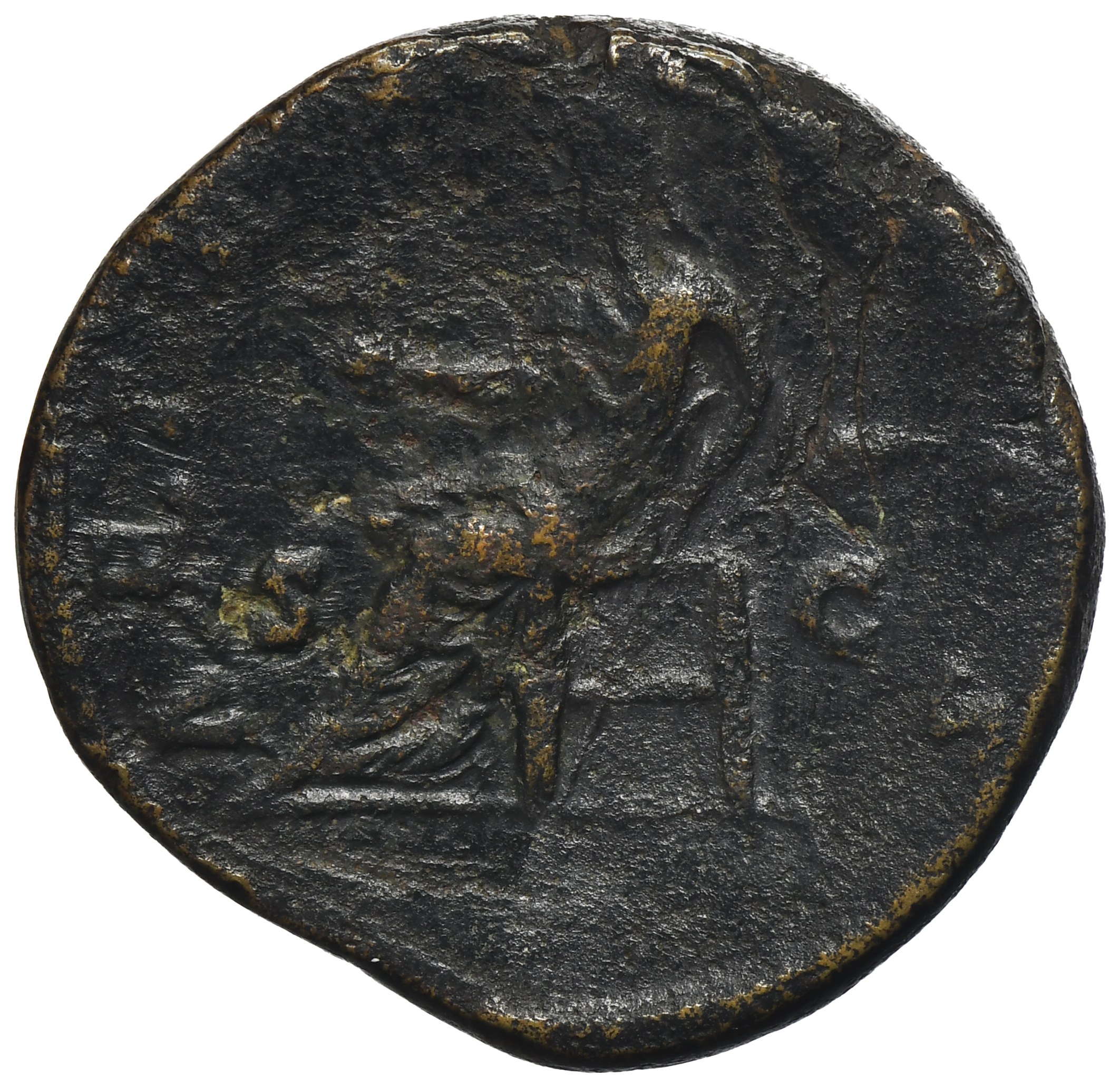


Bronze sestertius of Faustina II the Younger, daughter of Antoninus Pius and wife of Marcus Aurelius, struck at the Rome mint around AD 176–180, belongs to the series of posthumous issues (consecratio) produced following her deification.
Faustina II died in AD 175 during the imperial court’s journey in the eastern provinces, after which she was officially deified by decree of the Senate. This event is reflected in numerous coin issues bearing the legend DIVA FAVSTINA PIA. The production of these commemorative coins began under Marcus Aurelius and continued into the early years of the reign of Commodus, as well documented in the standard corpora of Roman imperial coinage.
The obverse displays a right-facing bust of the deified empress with the legend DIVA FAVSTINA PIA, identifying Faustina as a “divine” member of the imperial house and emphasizing the epithet Pia, which had formed part of her official titulature during her lifetime and was retained in posthumous issues.
The reverse depicts Aeternitas seated left, holding a phoenix standing on a globe and a sceptre, with the legend AETERNITAS. In Roman iconography the phoenix symbolized rebirth and immortality, while its placement upon the globe expressed the concept of eternal existence on a universal scale. The type of Aeternitas with the phoenix appears regularly in posthumous coinage of members of the imperial family and serves as a visual reference to the eternal, divine status of the deceased and the enduring continuity of the imperial dynasty.
Roman Imperial
Faustina II Junior (147-176, daughter of Antoninus Pius, wife of Marcus Aurelius), Sestertius 145-161, Rome mint
Obverse: bust of the empress right
DIVA FAVSTINA PIA
Reverse: Aeternitas seated left, holding phoenix on globe and sceptre, S-C across fields
AETERNITAS
Diameter 31 mm, weight 25.29 g











