


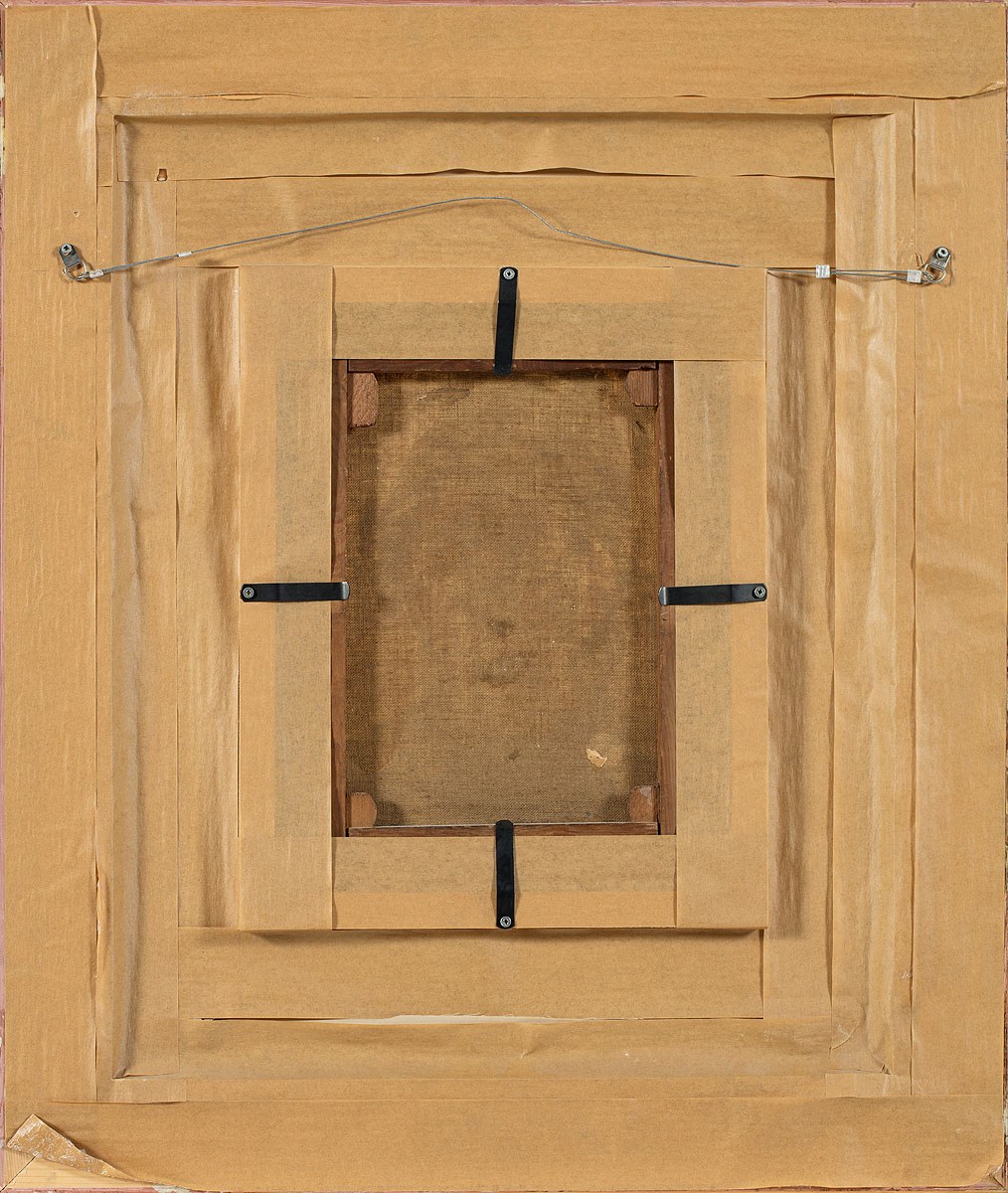
Dimensions: 29 x 26 cm
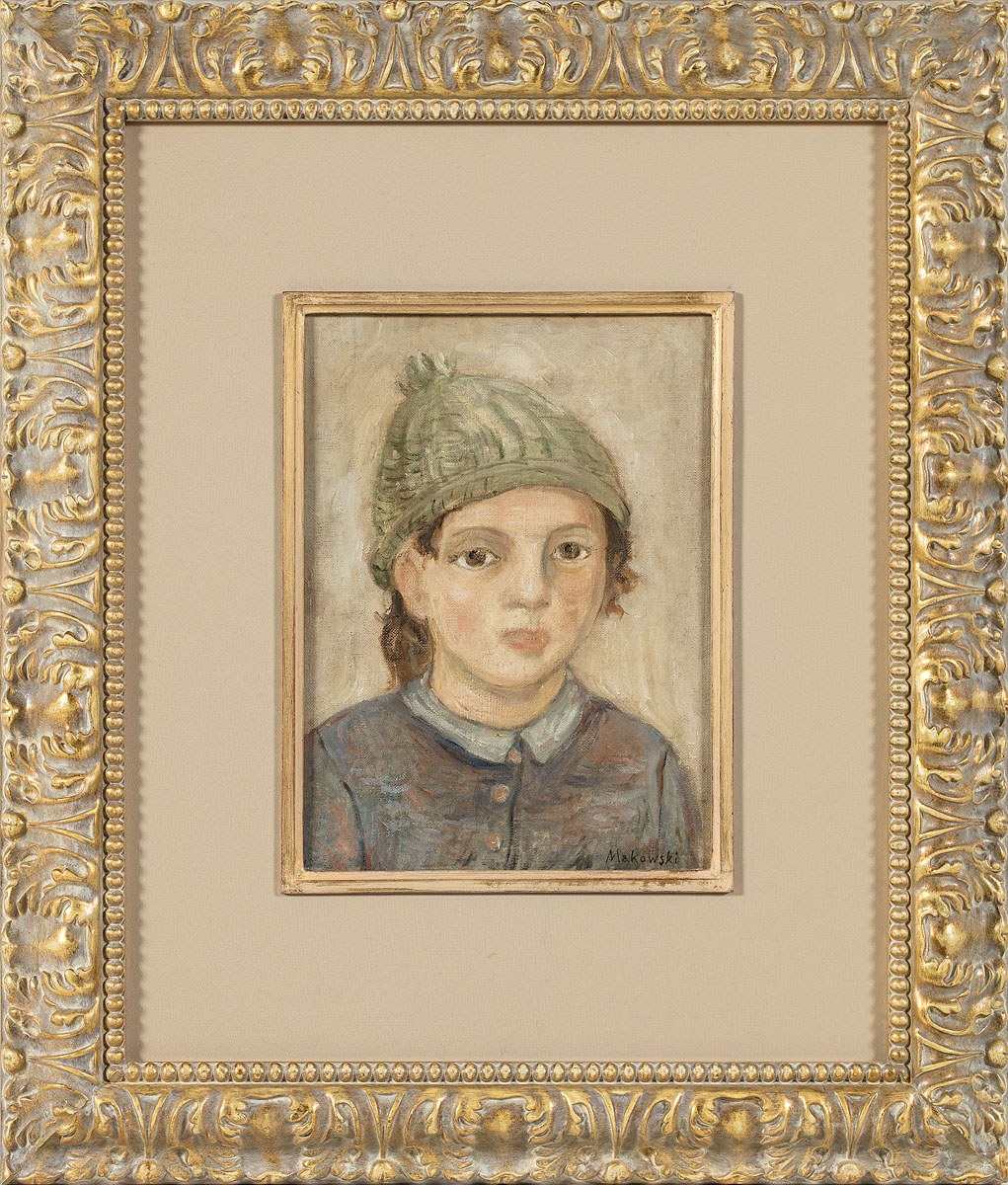
Signature: signature p.d.: Makowski
Provenance
Warsaw, private collection Kielce, private collection
Children's portraits are a theme widely taken up in the Polish painting tradition, for example by Stanisław Wyspiański, Jacek Malczewski or Wlastimil Hofman. Tadeusz Makowski, however, enriched it with an unprecedented emotional charge and an in-depth psychological study. He succeeded in turning children into a medium for expressing his vision of himself as a human being, the truth about life and the surrounding world.
After graduating from the Academy of Fine Arts in Krakow and coming into contact with Cubism and Dutch painting, Tadeusz Makowski found the fullness of his painterly expression in neo-romantic compositions, the main character of which he made the soul of a child. Beginning around 1918 for nearly a decade, this theme became the central motif of his work, resulting in a series of portraits of small models. Their characteristic feature is the solemnity, the thoughtfulness painted in a raised gaze or parted lips, as if troubled by some not at all childish concern. The artist's focus on the psychological depth of those portrayed is a continuation of the fascination with the child psyche that was born in the Romantic era. Artists of the time began to recognize and appreciate the importance and authenticity of children's emotions and experiences. Tadeusz Makowski decades later becomes a continuator of the 19th century vision of the Romantics
The offered "Portrait of a Boy" is part of the period of the artist's work conventionally called by Wladyslawa Jaworska as lyrical realism, falling in the years 1923-27 (Jaworska W., Tadeusz Makowski. Życie i twórczość, published by Zakład Narodowy im. Ossolińskich / PAN, Wrocław-Warszawa-Kraków 1964, p. 169). Unlike the earlier period of naive realism, the lyrical portraits are characterized by maximum subtlety of form and color. The latter is played out in muted tones of beige, blue and shades of green, giving the works an unusual intimacy and poetry. Makowski said: "I avoid strong colors because they scream - I prefer subdued piano" (Jaworska W., Tadeusz Makowski. Life and Works, op. cit., p. 190). The harmony and effect of the offered portrait lies precisely in the muted colors, which, instead of drowning out, emphasize what is most important in the painting - the authenticity of the child's experience.










