


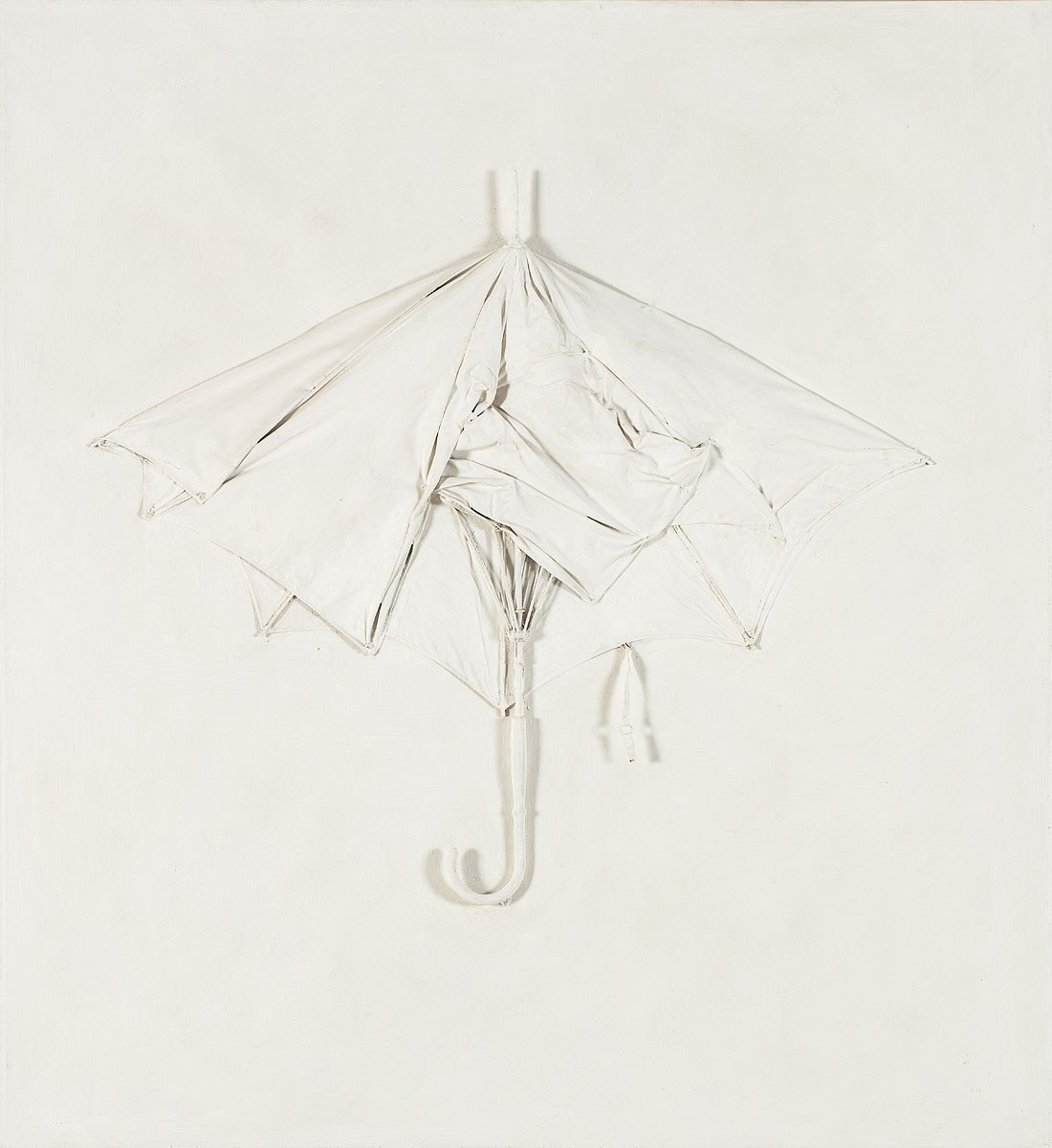
Dimensions: 120 x 110 cm
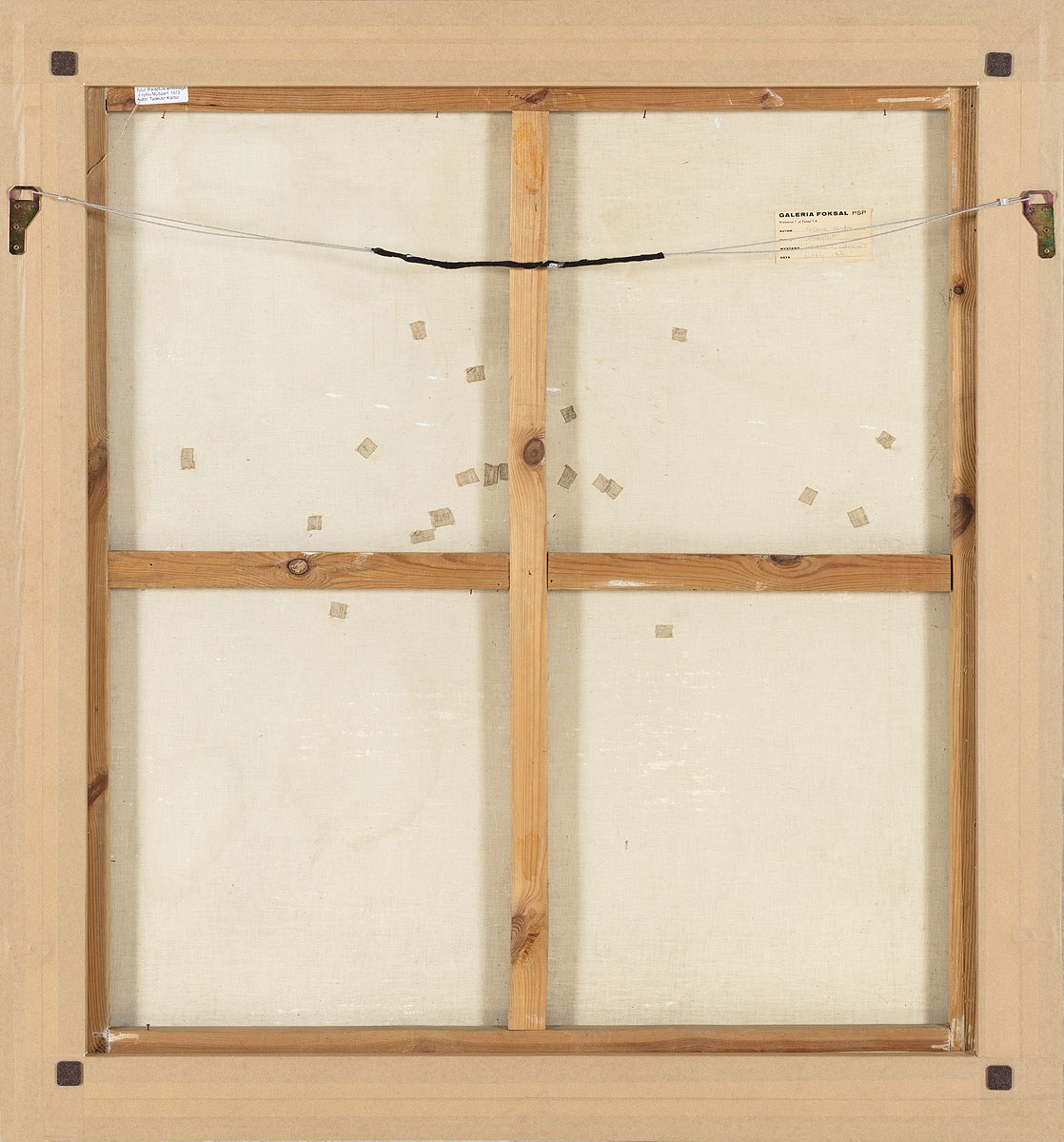
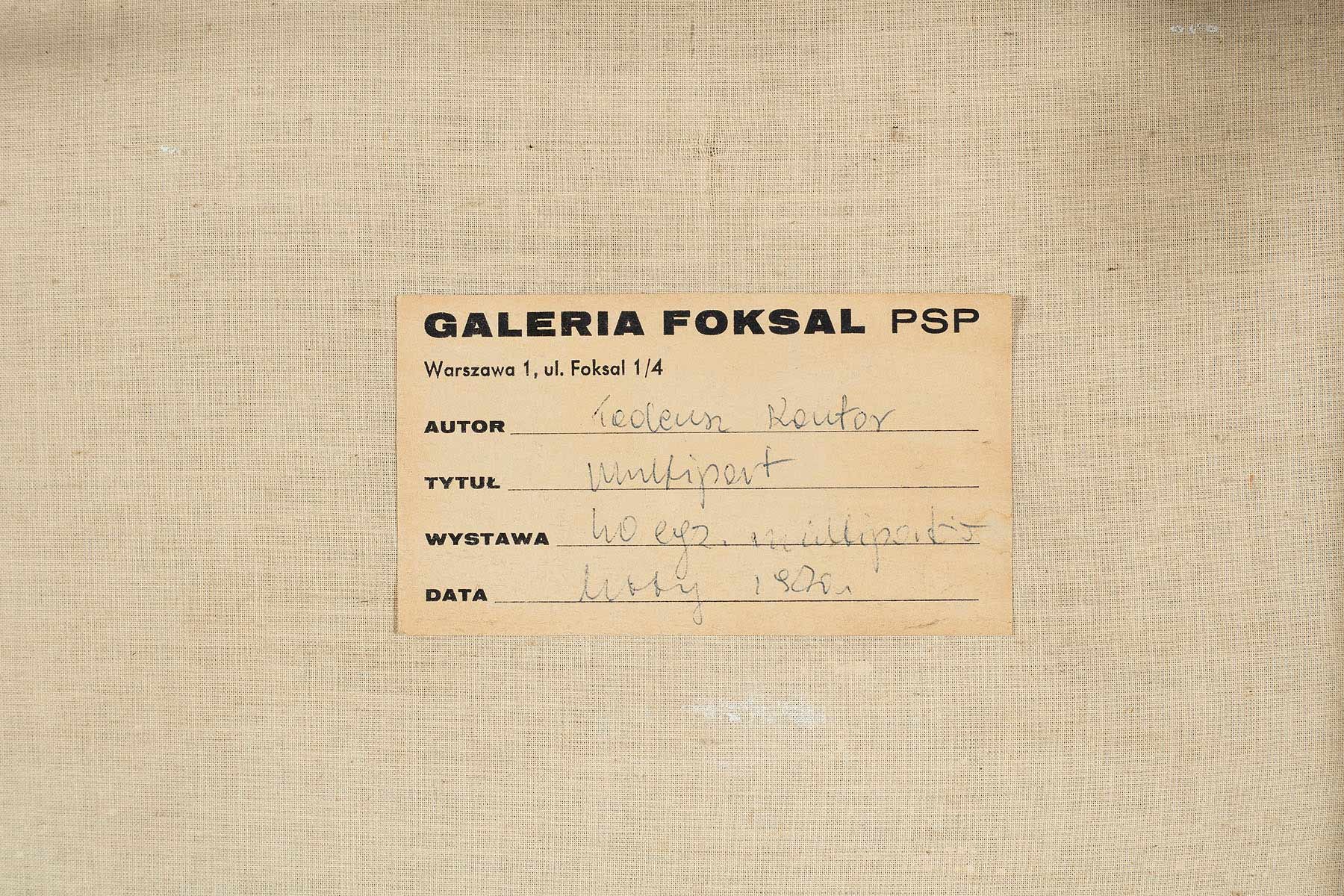
Signed: on the reverse a sticker of Galeria Foksal with a description of the work
Provenance
Poznan, private collection Warsaw, Foksal Gallery
Exhibited
Warsaw, Foksal Gallery, Multipart, 1970.
In February 1970, at the Foksal Gallery in Warsaw, Tadeusz Kantor organized an action entitled. "Multipart." The name was formed from a compound of two words: multipart and participation. The object of this particular event was forty numbered, identical canvases measuring 120 x 110 cm each, to which the artist attached a destroyed umbrella and painted white. During the show, the gallery (which is a non-commercial gallery), sold the paintings under the terms of a contract written by the artist. The contract required the buyer to hang the painting in his home in a prominent place and make it available to visiting friends. The artwork was to become the subject of any treatment someone wished, giving vent to their creative impulses. After a year, the owner was obliged to send the painting back to the gallery to hold an exhibition entitled "The Last Stage of Multipart," according to Kantor. "The Last Stage of Multipart." Only twenty-five of the forty buyers returned with the paintings they had purchased the year before. The exhibition then showed canvases covered mainly with notes and collages created by the new owners.
With Multipart, Kantor challenged the notion of a work of art as a unique creation attributed to the artist. Moreover, he negated the creator-buyer relationship, making the former a mere artisan producing a serial commodity, and giving the role of the artist to the buyer. By allowing the latter to do whatever he wishes with the painting, he questioned the idea of a work of art and, in a broader sense, the meaning of the existence of exhibition institutions. However, as Lech Stangret writes: "Over the years, something happened with the paintings that Kantor did not foresee. The umbrellas, intended as an ironic commentary on the commerciality of art, began to fetch high prices at auctions. It turned out that there were surprisingly many of them intact - and these, as traditional paintings, were the ones that attracted the most interest from collectors" (Tadeusz Kantor. The Painterly Emballage of the Total Work, 2006, p. 76).










