


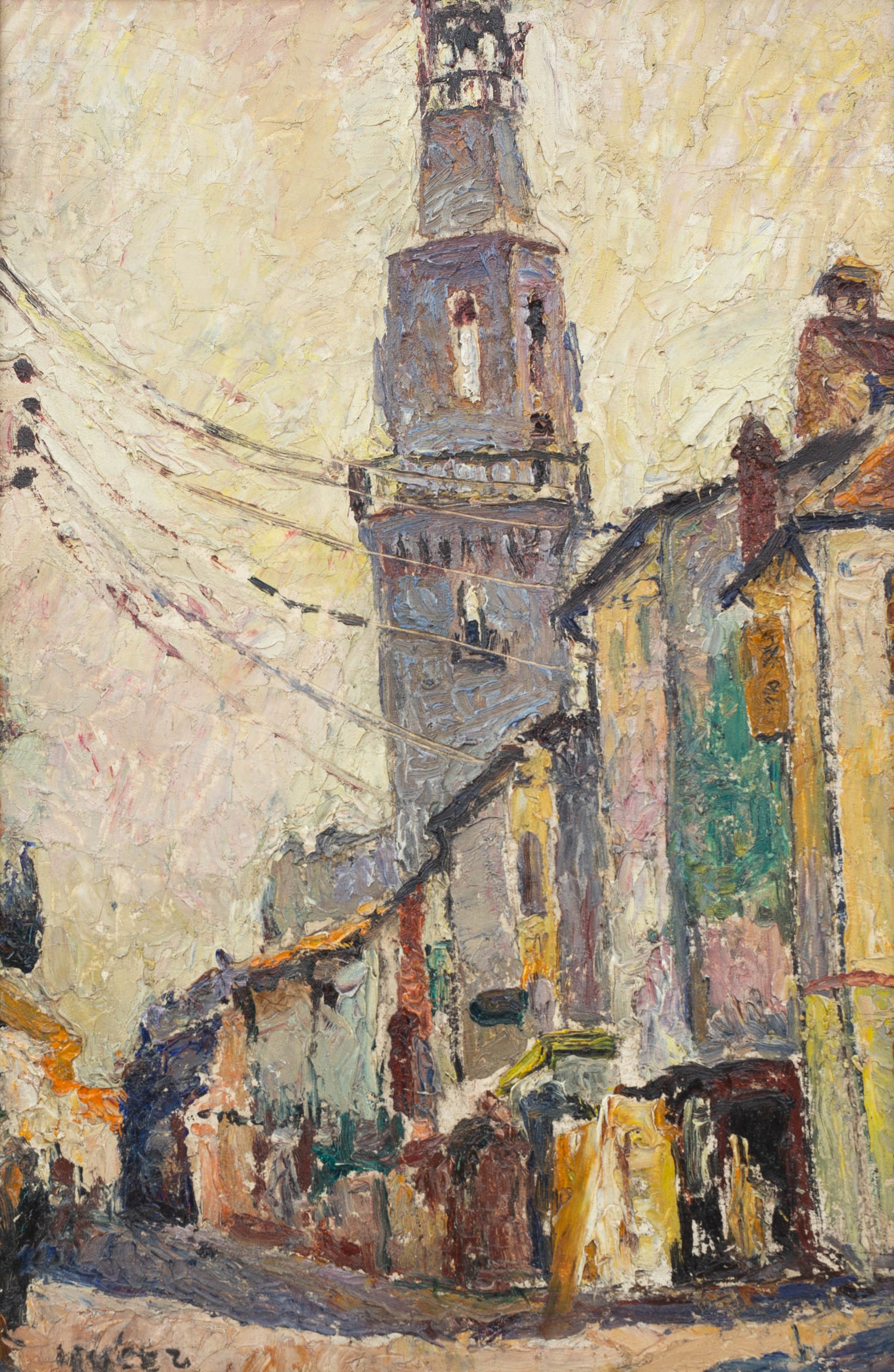
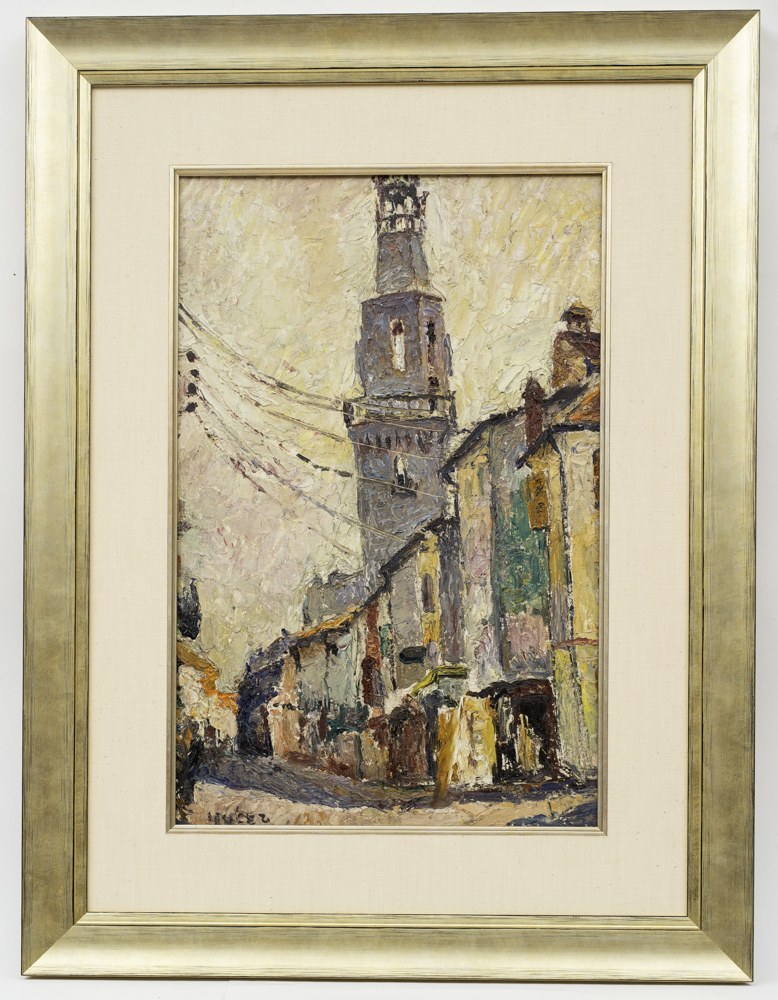
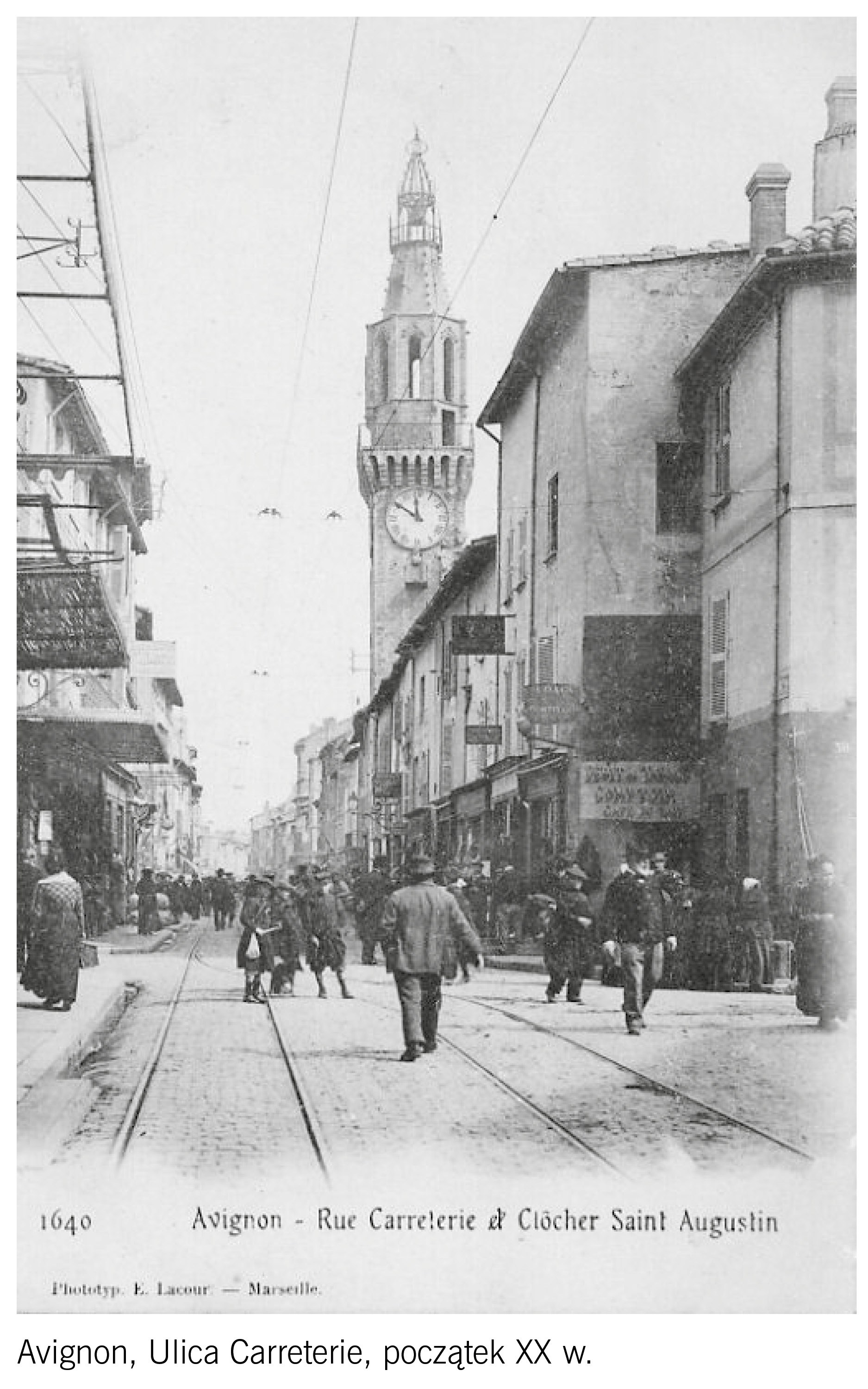
oil, plywood, 43 × 27.5 cm clear passe-partout
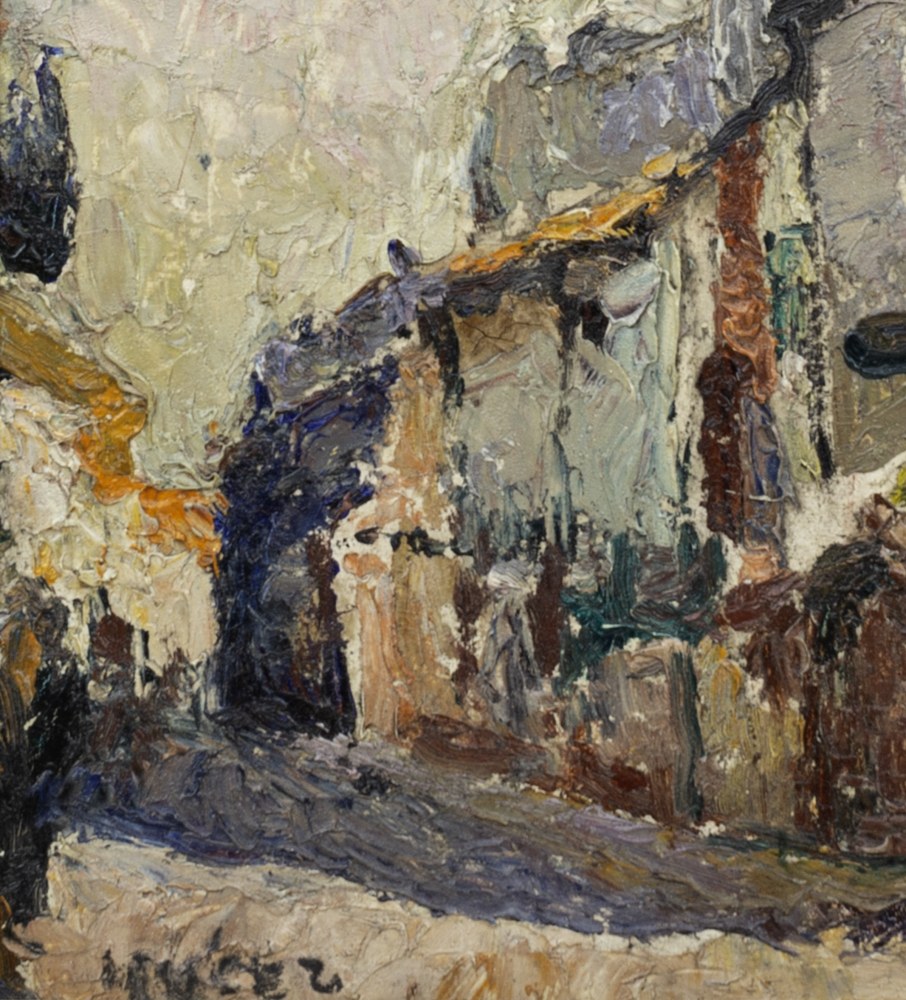
signed l. d.: "MUTER"
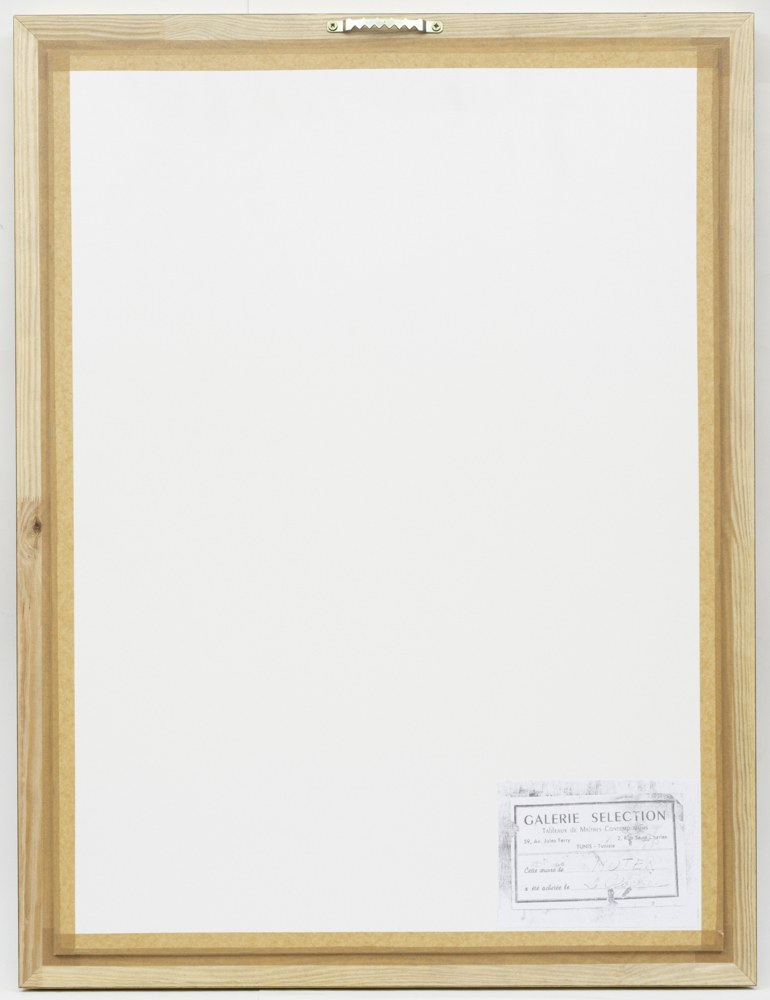
on the reverse a sticker: GALERIE SELECTION/ TABLEAUX DE MAITRESCONTEMPORAINS/ TUNIS - Tunisie
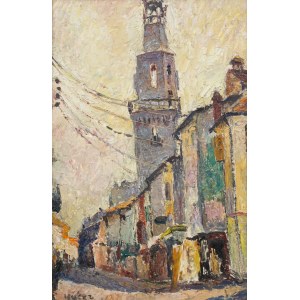
"[...] The paintings of Mrs. M. Muterova were placed in a prominent place, in the first room. [...] landscapes from the South live their own life extremely focused, firm and painful in their tension, and yet without a trace of resignation or passive despair [...] ". E. Woroniecki, Artyści polscy w Paryskim Salonie, "Tygodnik Ilustrowany" 1924, no. 7, p. 100 After the outbreak of World War II, Mela Muter left Paris and went to the south of France. She initially settled in Villeneuve-lès-Avignon and then in Avignon. There she settled at 12 Velonterie St. She worked at the girls' school College Saint-Marie, where she taught drawing, literature and art history. Avignion becomes very close to the artist. After the end of the war, Melania returned to Paris, but in the summer she returns to Avignon. Here the city authorities offered the artist an apartment at Quai de la Linge 24, located at the foot of the papal palace and gardens. In Avignon itself, the artist had solo exhibitions, including in 1948 and 1958. For Mela Muter, both the landscapes of the Rhone Valley and Villeneuve-lès-Avignon or Avignon itself were undeniable sources of inspiration. The very views of the city's buildings from the nearby hills, as well as the picturesque streets or its monuments repeatedly appeared in the artist's paintings bathed in saturated colors. In addition to the characteristic fortification walls, monuments, stone bridges of Avignon, she often immortalized the ordinary streets of the medieval city, of which the presented painting is a wonderful example.
source of additional photo: Avignon, Street Carreterie, early 20th century https://de.wikipedia.org/wiki/Rue_Carreterie#/media/Datei:Avignon_tramway_rue_Carreterie.jpg accessed on 14.04.2025


![Mela MUTER [Maria Melania Mutermilch] (1876-1967), Portret młodej kobiety, lata 30. XX w.](https://img1.one.bid/img/8512/2545921_1w.webp)







Viimeksi katsotut
Kirjaudu sisään nähdäksesi kohdeluettelon
Suosikit
Kirjaudu sisään nähdäksesi kohdeluettelon