


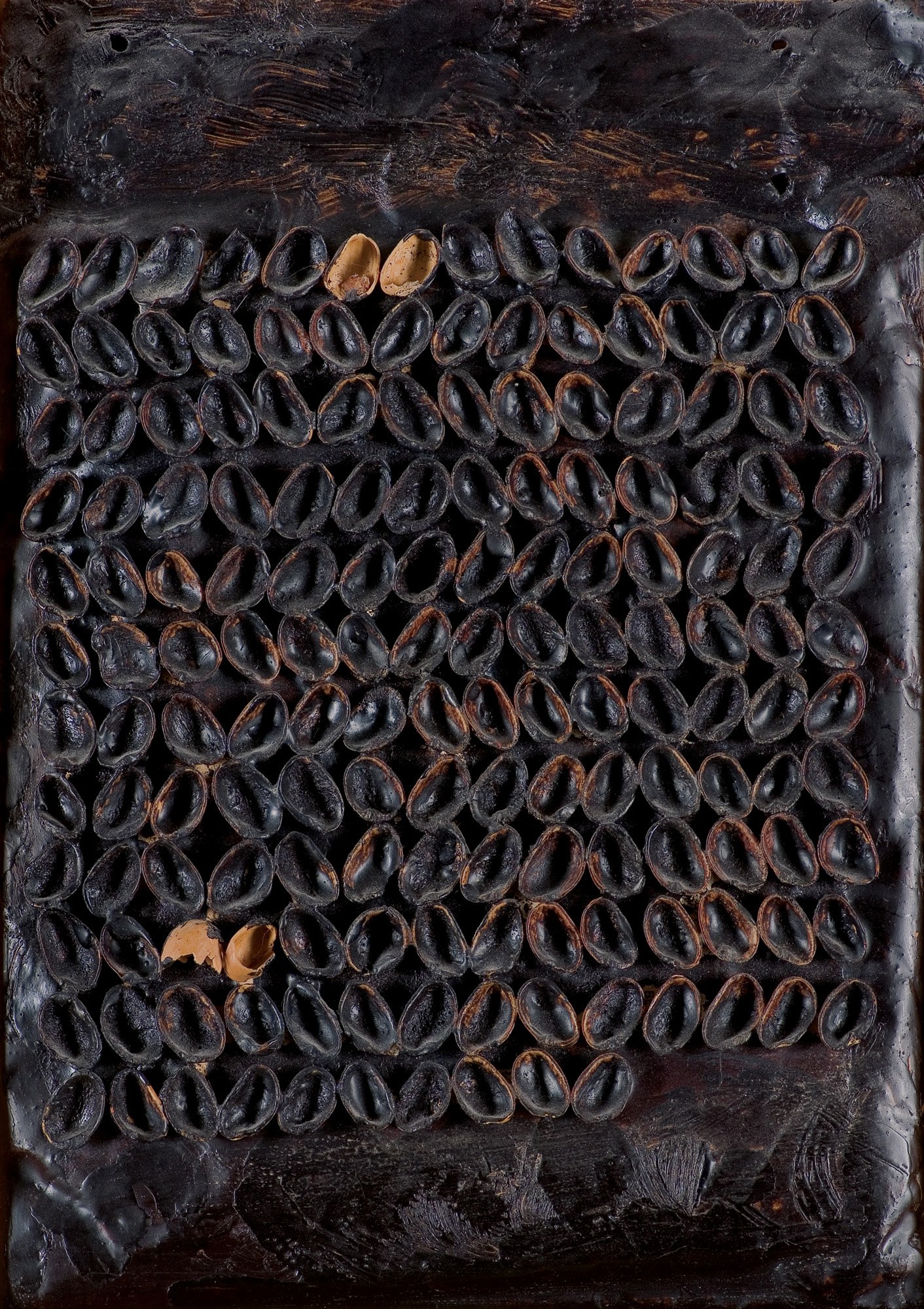
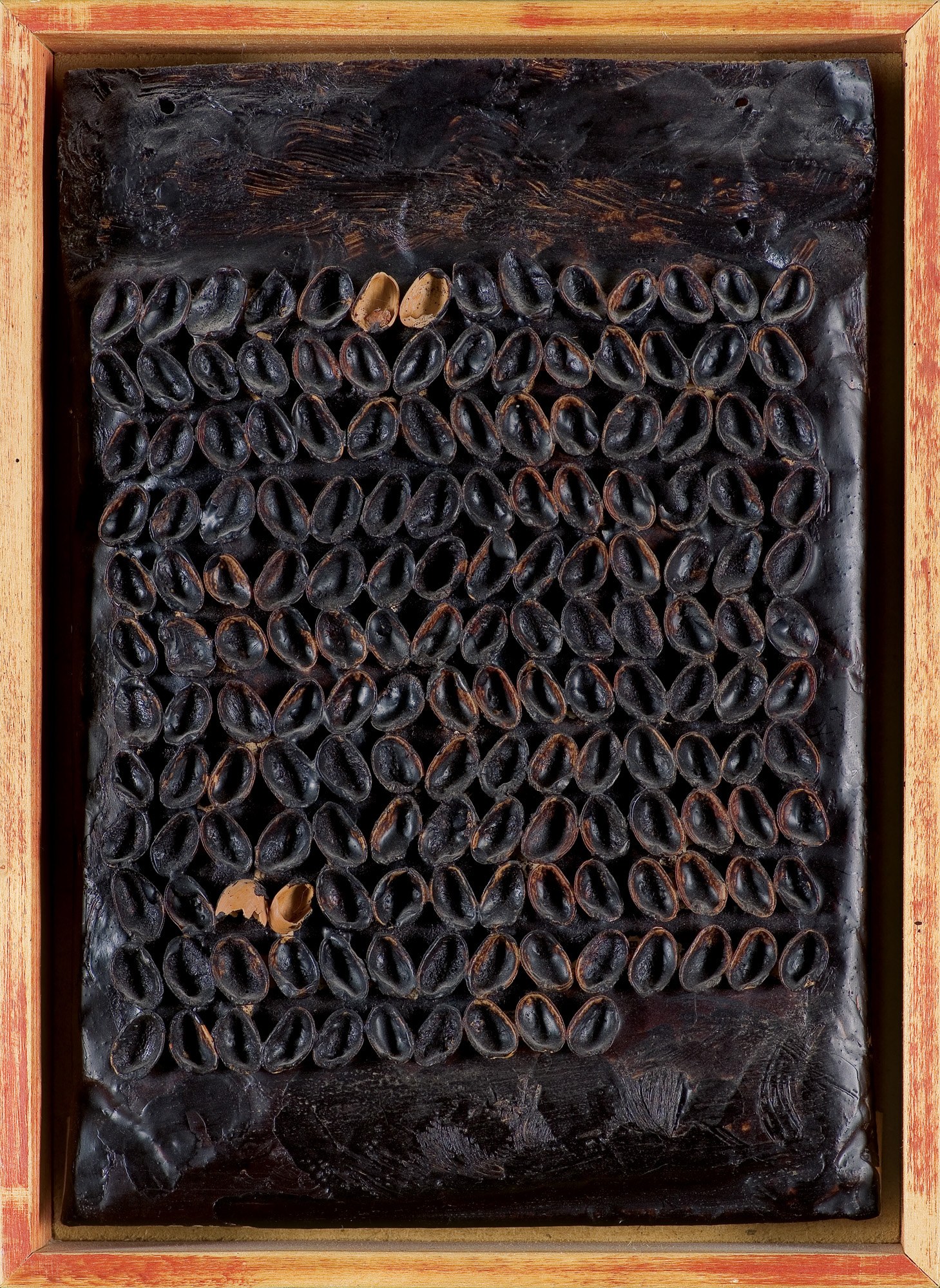
31.0 x 22.0cm - pistachio shells, encaustic, used envelope, plate
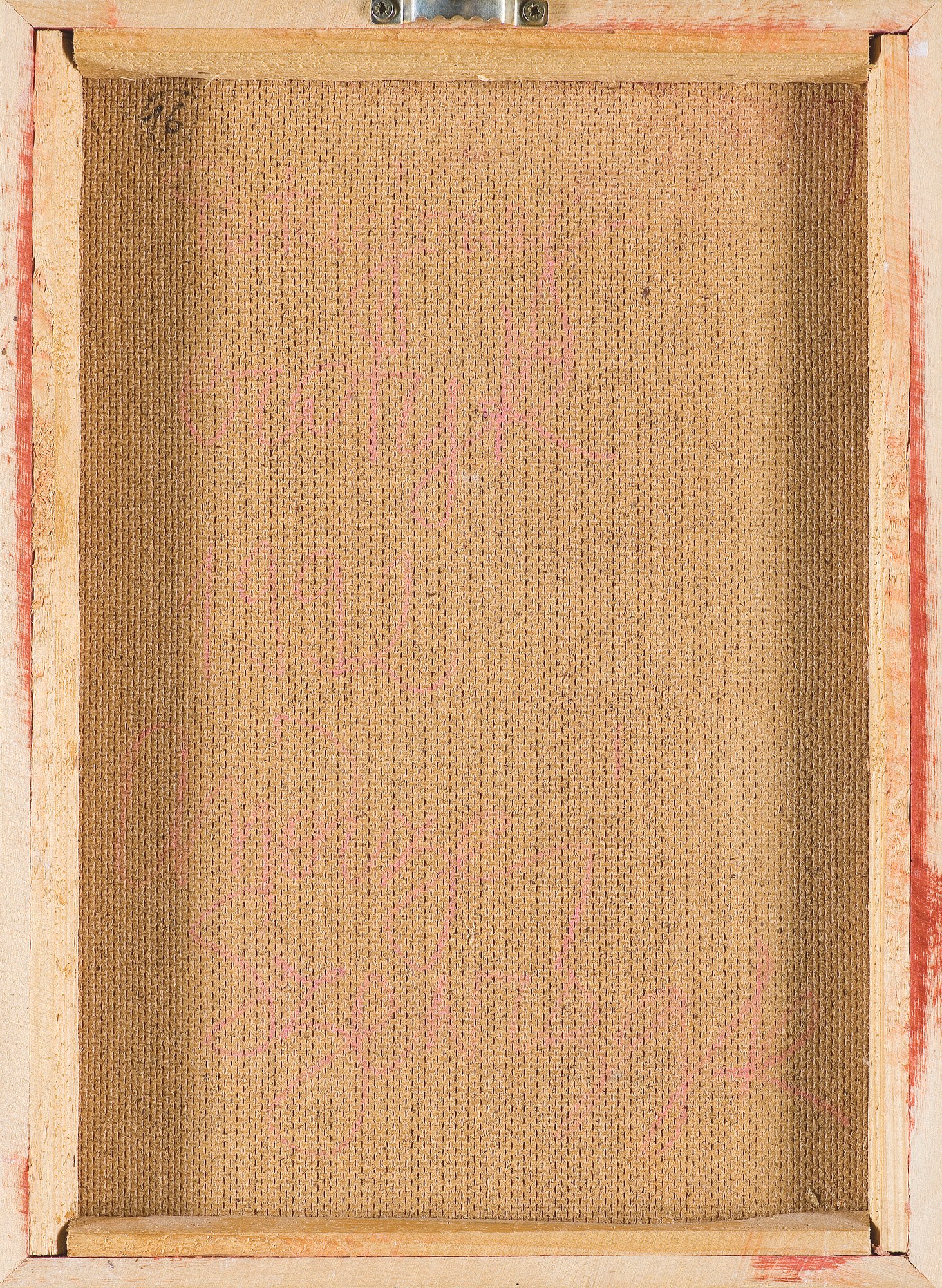
signed on the reverse on the plate in pink crayon: Pistachio | erotic | 1992 | Andrzej | Szewczyk
in upper l. corner: 16 [in circle].
Provenance: Galerie Ucher, Cologne.
In the 1990s, Andrzej Szewczyk worked on his Erotics Pistachio Text series, in which pistachio shells, encaustics, used postal envelopes - or, less frequently, cigar boxes and old wooden ironing boards were the painting material. The pictorial compositions resembled written sheets of paper. They had a vertical format, and the nut shells stuck to the ground were arranged in a characteristic type of writing, whose color, size and "duct" had a specific meaning. [The shell] attached to a piece of paper in the company of other shells is used as a "letter" that co-creates a certain text (...) The nut shell and the shell of the letter say: we are a sign, a trail to follow in order to reach what is true (meaning) or tasty and nutritious (fruit). (T. Slawek, Without. Pistachio texts by Andrzej Szewczyk [in:] Andrzej Szewczyk - Works from the collection of contemporary Polish art of the Upper Silesian Museum, Bytom 2007, p. 208)
♣ a fee will be added to the auctioned price in addition to other costs, resulting from the right of the artist and his heirs to receive remuneration in accordance with the Act of February 4, 1994 - on Copyright and Related Rights (droit de suite).
Andrzej Szewczyk (Szopienice near Katowice 1950 - Cieszyn 2001) in the late 1960s was associated with the Cracow art community centered around the Krzysztofory Gallery, and formed friendships with Krzysztof Niemczyk and Tomasz Wawak. In 1974-78 he studied Visual Education at the University of Silesia. Since 1977, he constantly cooperated with Warsaw's Foksal Gallery, where he exhibited many times. He settled permanently in the village of Kaczyce Górne. His diverse oeuvre inspired by poetry and literature provoked viewers to make their own associations. He expressed himself in visual as well as written language. In the early 1980s he also created installations from crayon and pencil cuttings, while his later realizations acquire richer content. He was a representative of conceptual art. He did not live to see the opening of the last exhibition of his works at Poznan's Muzalewska Gallery, which he personally consulted with the organizers. He died shortly before its grand opening.













Viimeksi katsotut
Kirjaudu sisään nähdäksesi kohdeluettelon
Suosikit
Kirjaudu sisään nähdäksesi kohdeluettelon