


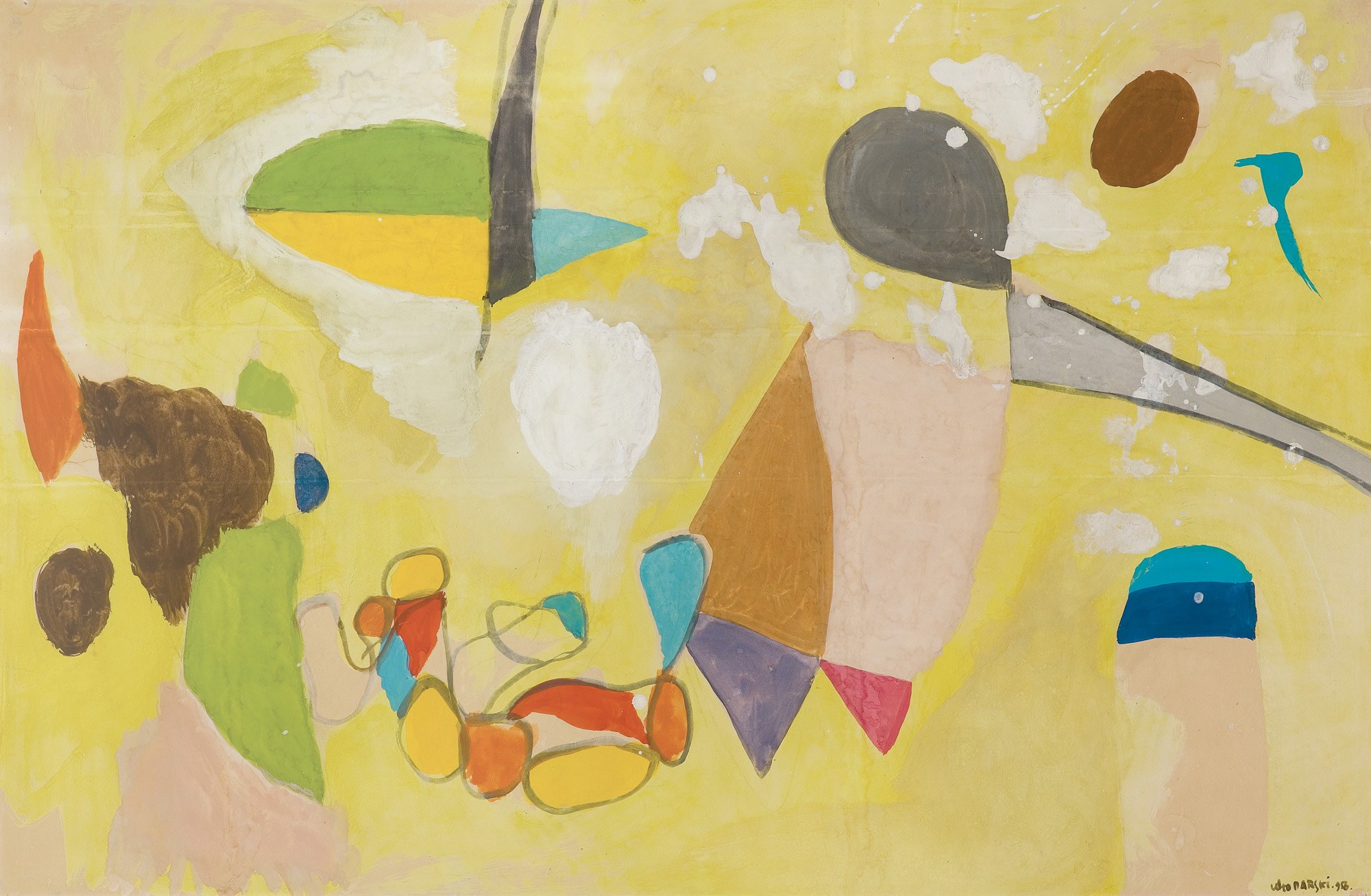
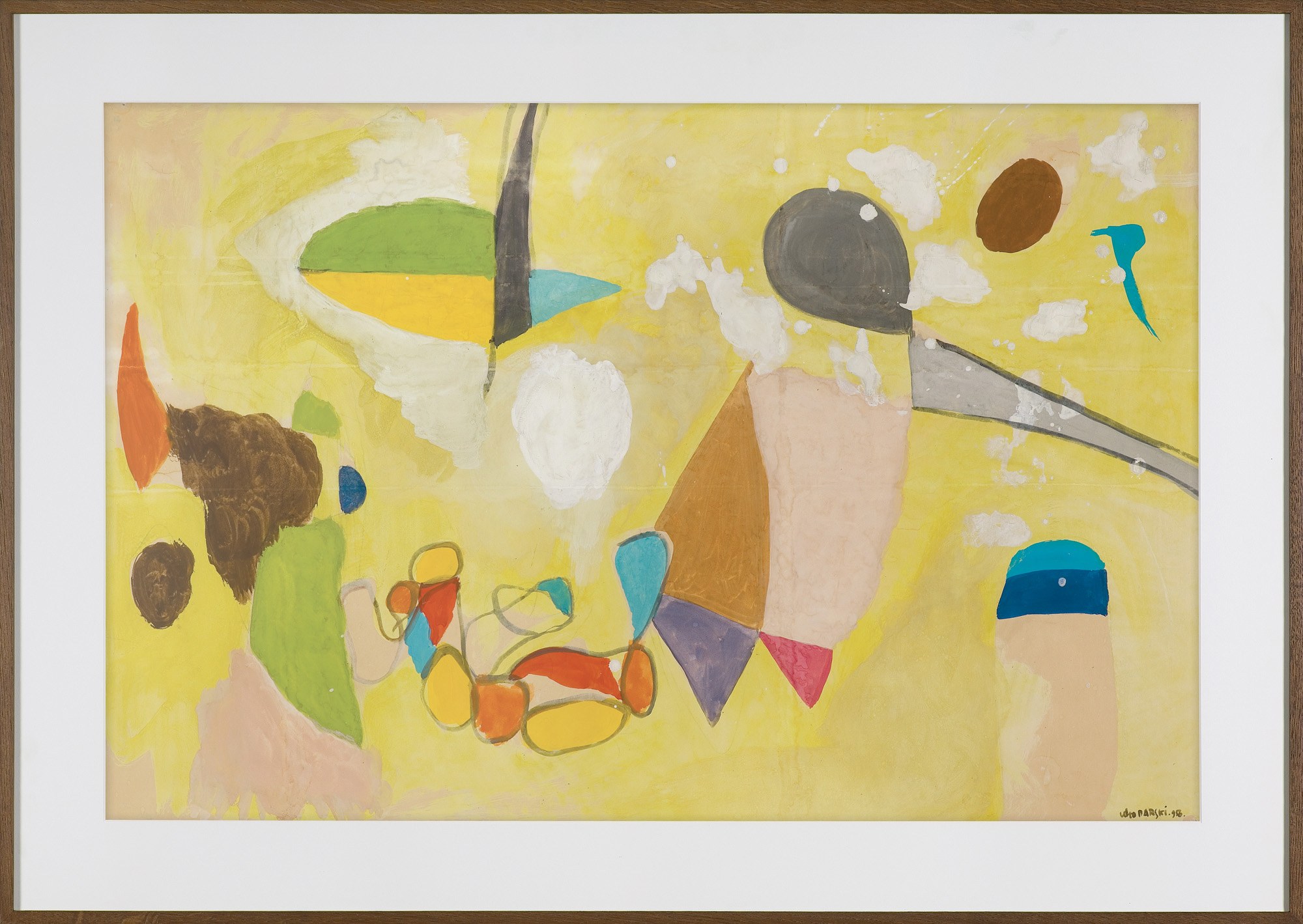
60 x 93 cm - gouache on paper
signed lower right: WŁODARSKI 956.
The painting has been exhibited, mentioned, and reproduced in, among others: The work has been mentioned and reproduced in:
– Marek Włodarski (Henryk Streng) 1903–1960. Monographic Exhibition, National Museum in Warsaw, Warsaw, Dec. 1981 – Jan. 1982, p. 85, cat. III.342;
– The Sorcerer by the Green Rock. Marek Włodarski / Henryk Streng, eds. Józef Chrobak, Justyna Michalik, Marek Wilk, Galeria Piekary / Verbum Sp. z o.o., Poznań 2009, cat. 97, ill. p. nlb.
♣ Droit de suite: ♣ A fee resulting from the right of the artist and his heirs to receive remuneration in accordance with the Act of February 4, 1994, on Copyright and Related Rights (droit de suite) will be added to the Purchase Price.
xxxMarek Włodarski (Henryk Streng) studied from 1920 to 1924 at the Free Academy of Fine Arts, and subsequently at the State Industrial School in Lviv under the guidance of, among others, Kazimierz Sichulski. While studying at this school, he met colleagues who would later form the “artes” group: Otto Hahn, Jerzy Janisch, Aleksander Riemer, Roman Sielski, and others. In 1924, he traveled to Vienna and Paris, where he began his studies at the Académie Moderne under the guidance of Fernand Léger. During his several-year stay in Paris, he established contacts with the Surrealist circle and met André Breton and André Masson. Upon his return to Poland in 1930, he joined the “artes” Association of Visual Artists, participating in the group’s exhibitions in Lviv, Warsaw, Kraków, and other cities. He was active in community work and was repeatedly elected to the board of the Lviv Union of Visual Artists. From around 1933, the artist became involved with left-wing circles and organizations, participating in demonstrations and collaborating with radical journals. His left-wing convictions also influenced the themes of his works, which were often drawn from the lives of workers. Under Soviet occupation, he joined the newly formed Union of Soviet Artists of Ukraine, serving as its vice president. He spent the years of German occupation in hiding in Lviv. During this time, he adopted the surname Marek Włodarski. In 1944, he left for Warsaw. Imprisoned at the start of the Warsaw Uprising, he was deported to the Stutthof concentration camp, where he remained until the end of the war. After the war, he settled in Warsaw. He was active in the Association of Polish Fine Artists (ZPAP) and held several solo exhibitions, including one at the Club of Young Artists and Scientists (1947). From 1947, he taught at the State Higher School of Fine Arts, which merged with the Academy of Fine Arts (ASP) in 1950. He continued his teaching career until the end of his life. Although he received an honorable mention at the First National Art Exhibition in 1950, from 1951 to 1954 he avoided participating in exhibitions, unwilling to conform to the requirements of the doctrine of socialist realism. In 1954, together with Tadeusz Błażejowski, he created interior decorations for the PDT in Wola using the technique of painting on glass. In 1956, he participated in the 28th Venice Biennale. From that time on, the influence of Informel abstraction became evident in his paintings. Beginning in 1958, he served as head of the painting department at the Faculty of Interior Architecture at the Academy of Fine Arts.













Viimeksi katsotut
Kirjaudu sisään nähdäksesi kohdeluettelon
Suosikit
Kirjaudu sisään nähdäksesi kohdeluettelon