


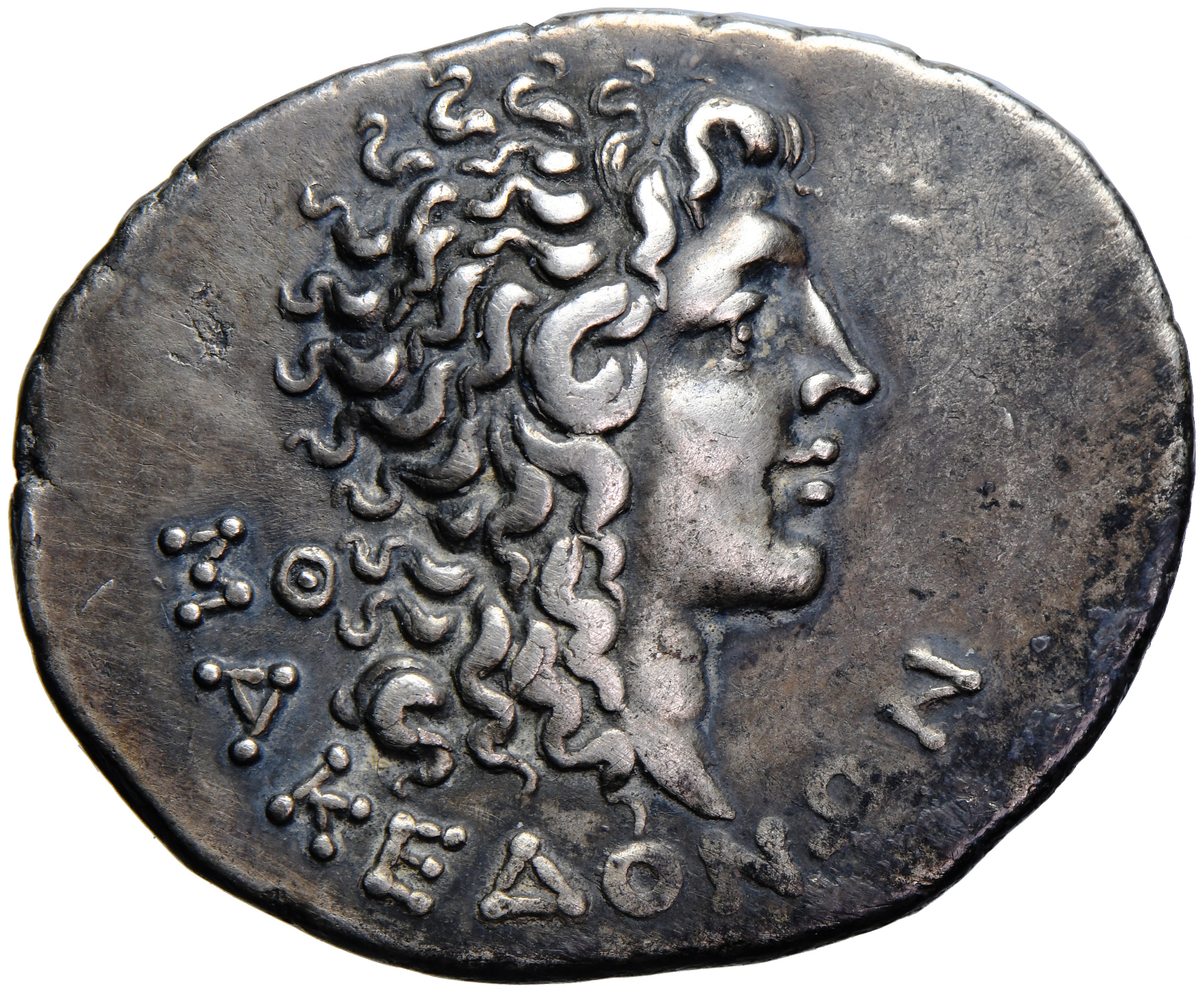
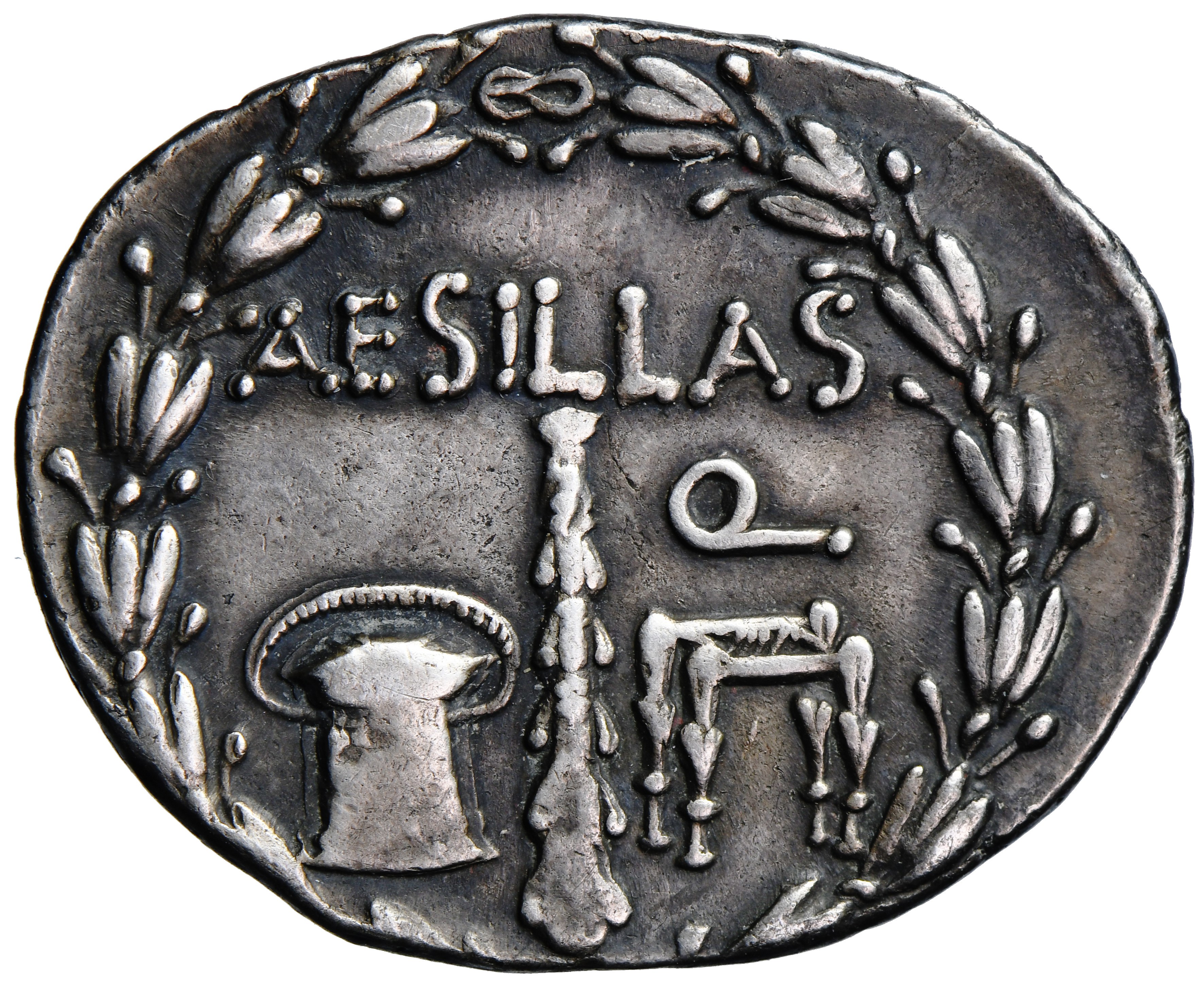
Greece, Macedonia (Roman protectorate), quaestor Aesillas, tetradrachm, ca. 95–70 BC.
Obv. MAKEΔONΩN, head of deified Alexander III the Great facing right, with the letter Θ on the back.
Rev. AESILLAS Q, a money chest, a mace, and a chair, all surrounded by a laurel wreath.
Silver, 16.50 g, 34.0 mm. AMNG 223; SNG Copenhagen 1330; HGC 3.1, 1110.
Condition II-, patina
It is believed that the tetradrachms bearing the name of the quaestor Aesillas were minted as a monetary bribe for the Thracian tribes in exchange for their neutrality in the First War against Mithridates, thus securing to some extent the Roman supply line along the Via Egnatia (see Ursula Kampmann, Money Museum Zurich, “Becoming Masters of Asia Minor: When the Roman Quaestor Aesillas minted un-Roman Tetradrachms to buy Thracian Loyalty”).









