


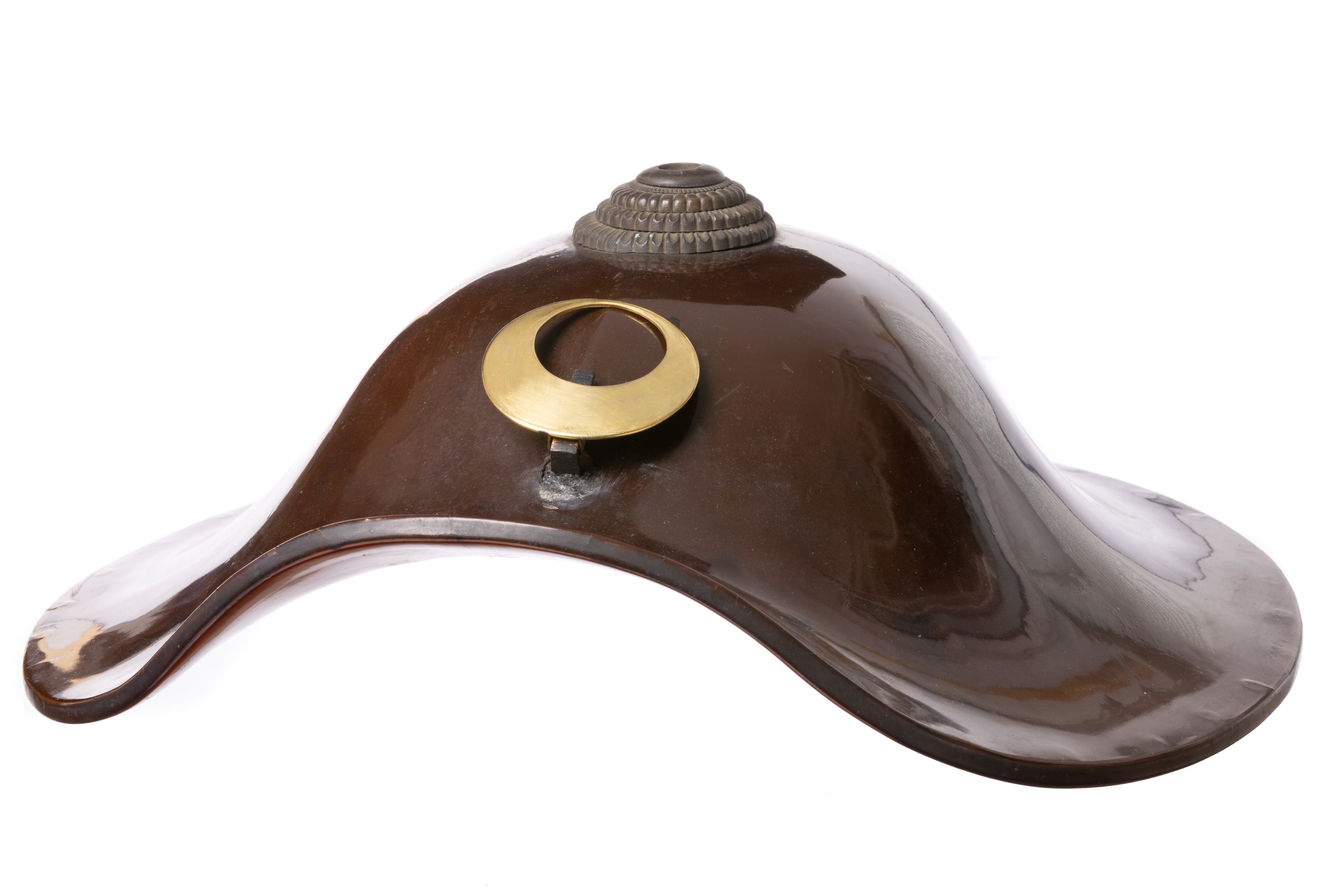
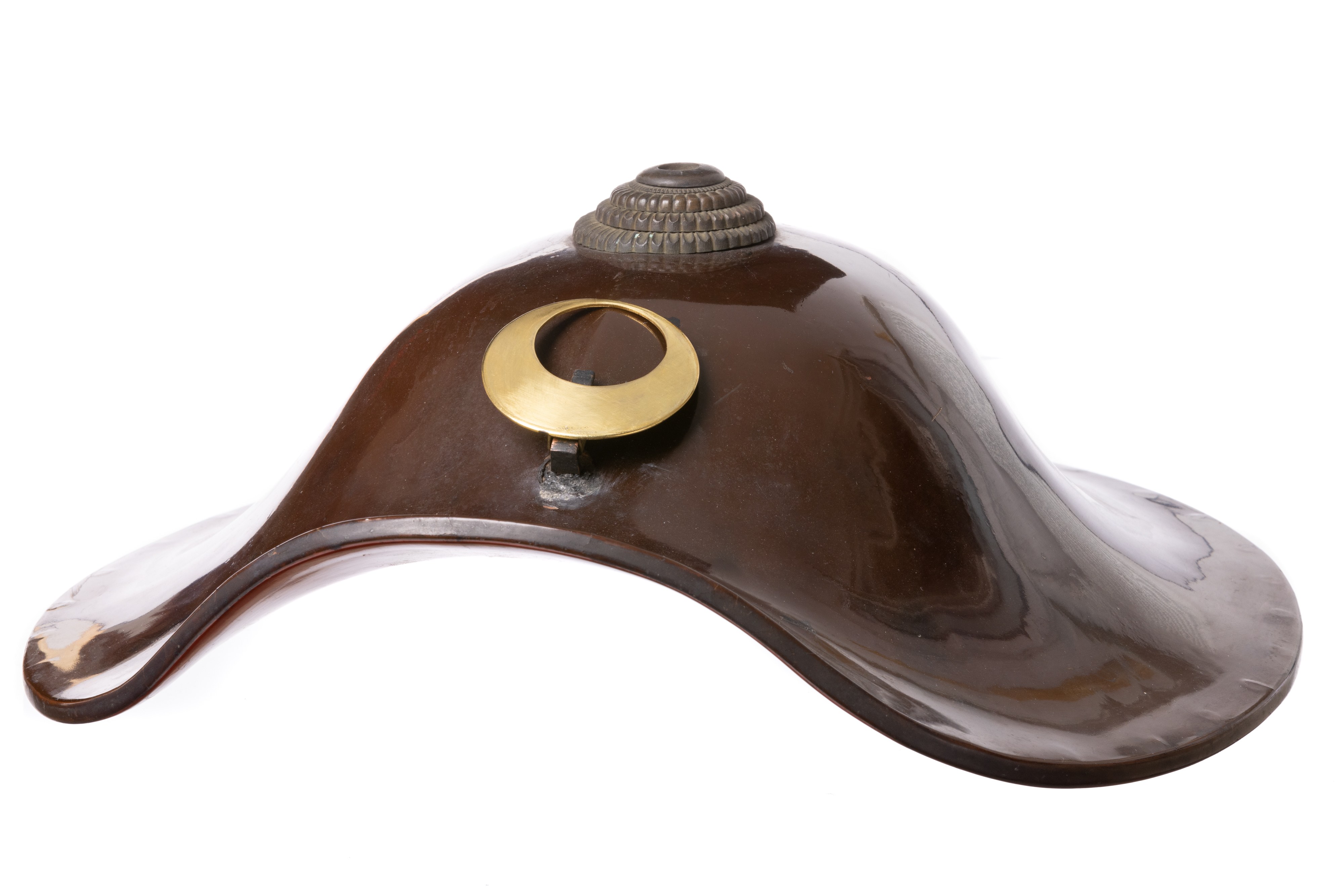
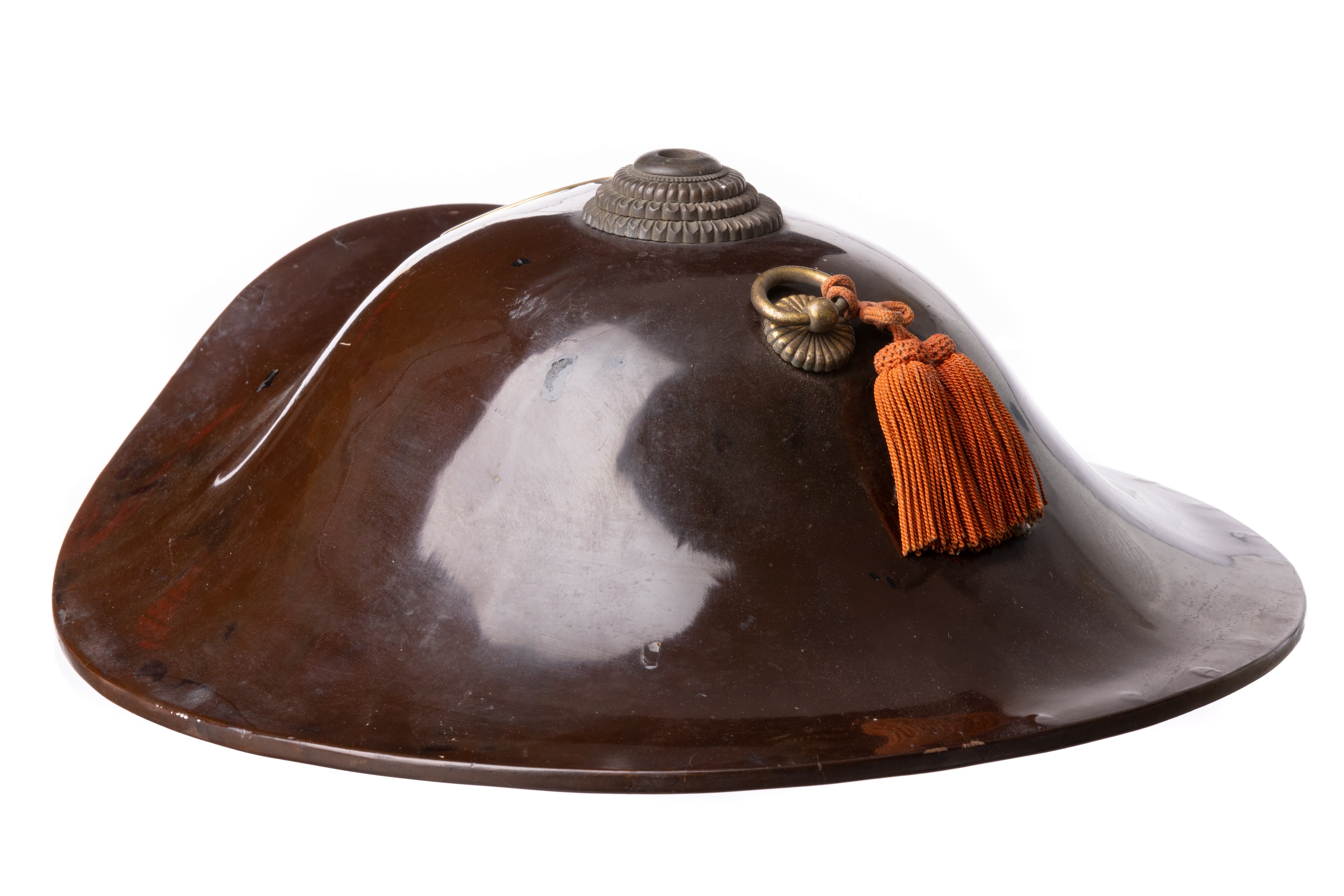
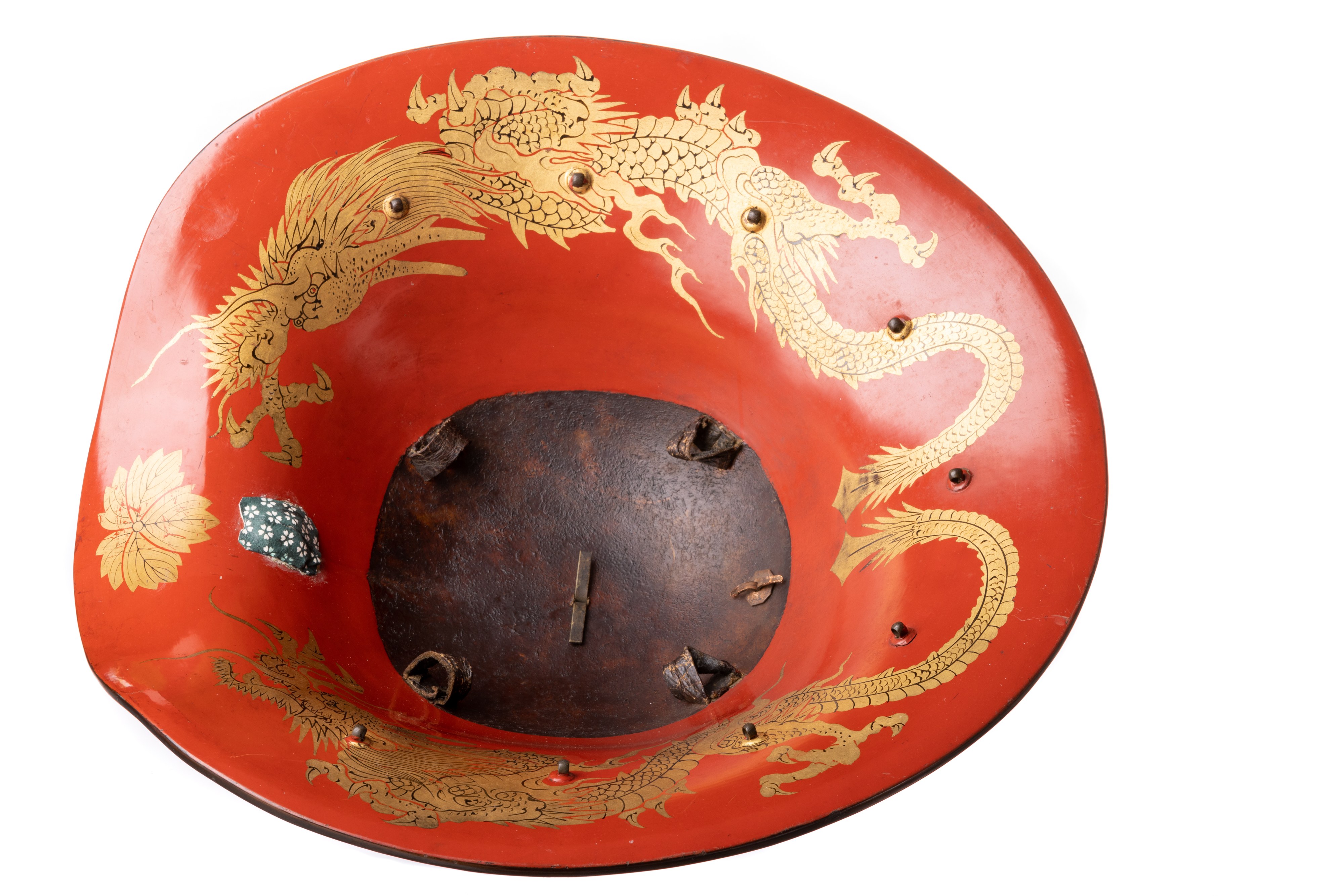
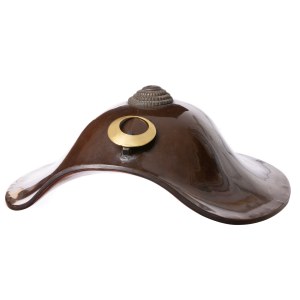
A wide jingasa with a sloping conical shape and a round brim in the type of decorative horse helmet (bajo-gasa). It is decorated on the front with a crescent-shaped maedate jewel. This jewel represents the mon of a Japanese family. This mon has been used by the Okudaira clan since the Heian period. On the inside, the helmet has a beautiful decoration in the form of two fighting dragons (ryu), topped from the top with a tama gem (hidden in the kirimon), over which the dragons fight. It is a common motif on pieces of weaponry, a kind of amulet meant to ensure prudence during a skirmish.
It dates to the Edo period, specifically the 19th century. It was a time of peace and prosperity, lightweight helmets, because of their convenience, became very popular at that time. Such an exclusive type of headgear could even be worn by the Daimyo himself, or someone from his entourage. This is indicated by the richness of ornamentation and the mastery of finishing details. The helmet-skeleton, in this case, was made of bamboo. The system for attaching the helmet is unfortunately not preserved, but all the hooks for possible attachment of the straps are in good condition.
This helmet has a typical tehen kanamono - a hole at the tip of the helmet used to pull hair that did not fit under the helmet. According to ancient beliefs, it was through this hole that the god of war, Hachiman, entered the fighting men.
On the back there is a gold-plated attachment ring (agemaki) with a clasp, and on the front there is a hook for hanging the maedate.
Dimensions of the helmet: 375 x 345 x 130 mm.








Viimeksi katsotut
Kirjaudu sisään nähdäksesi kohdeluettelon
Suosikit
Kirjaudu sisään nähdäksesi kohdeluettelon