


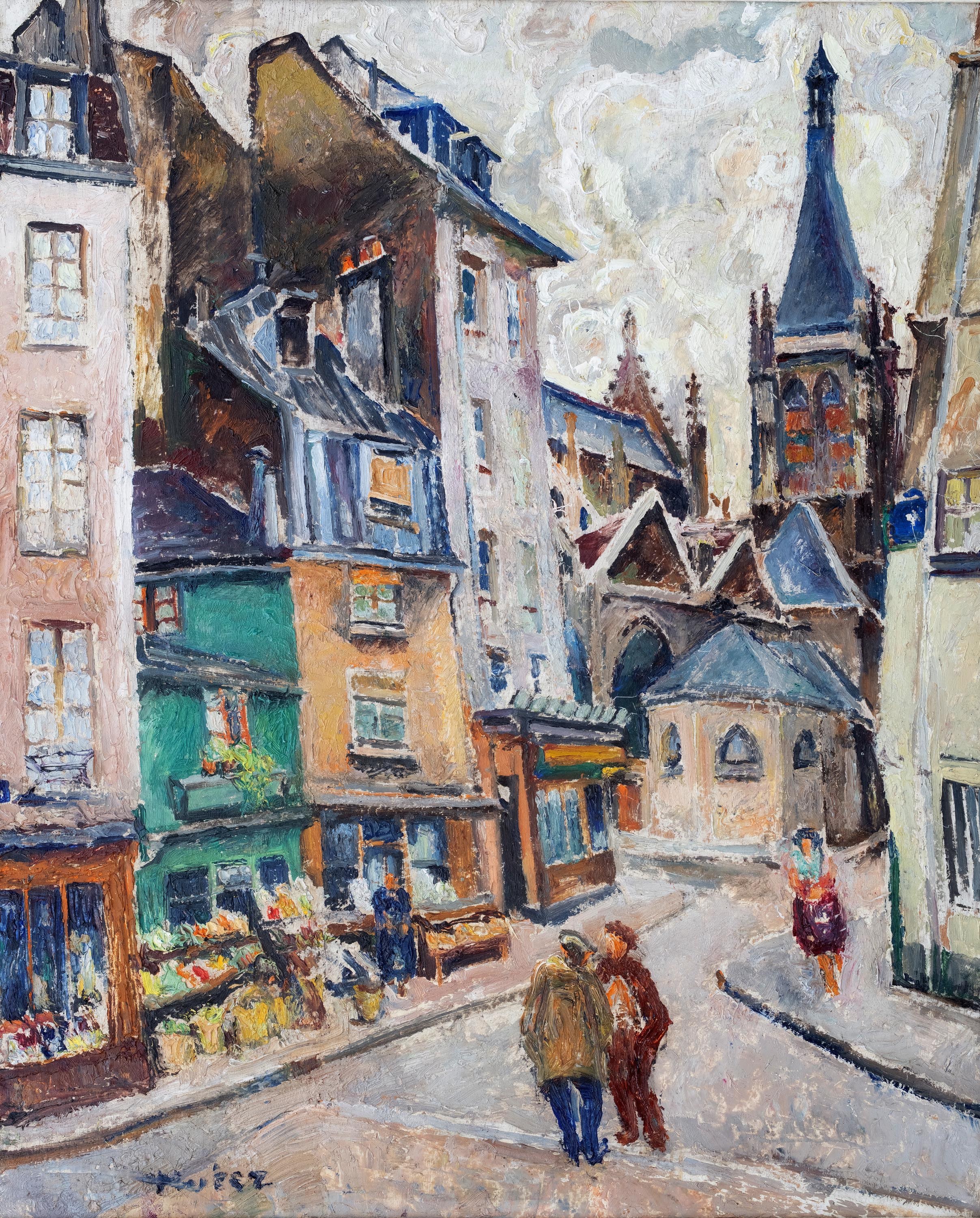
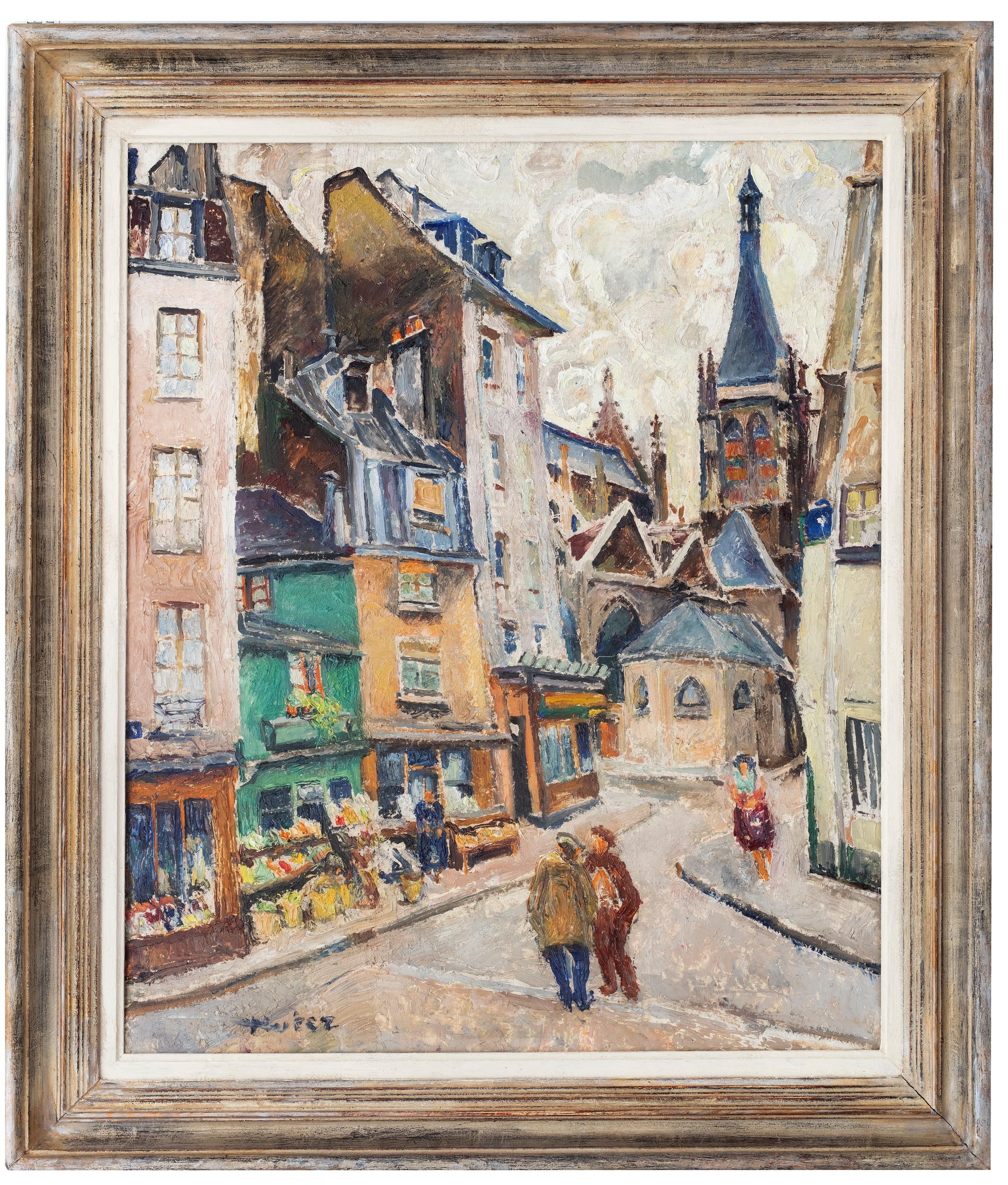
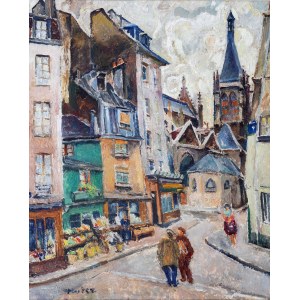
oil, panel, 73 × 60 cm
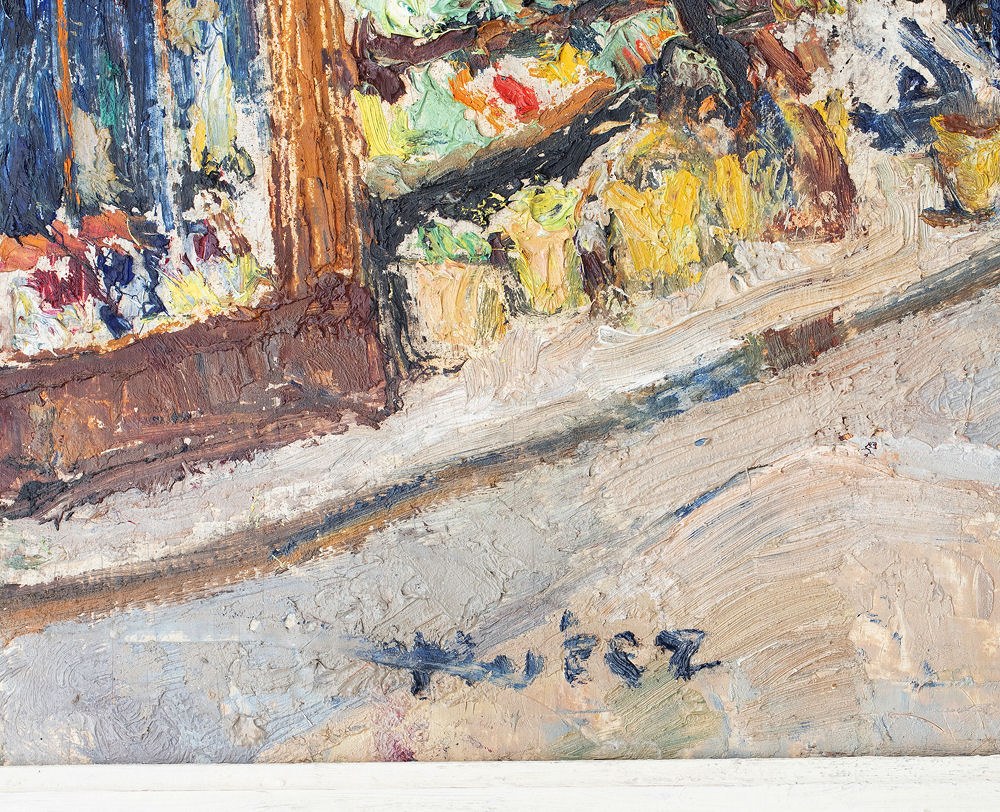
signed l. d.: "Muter"
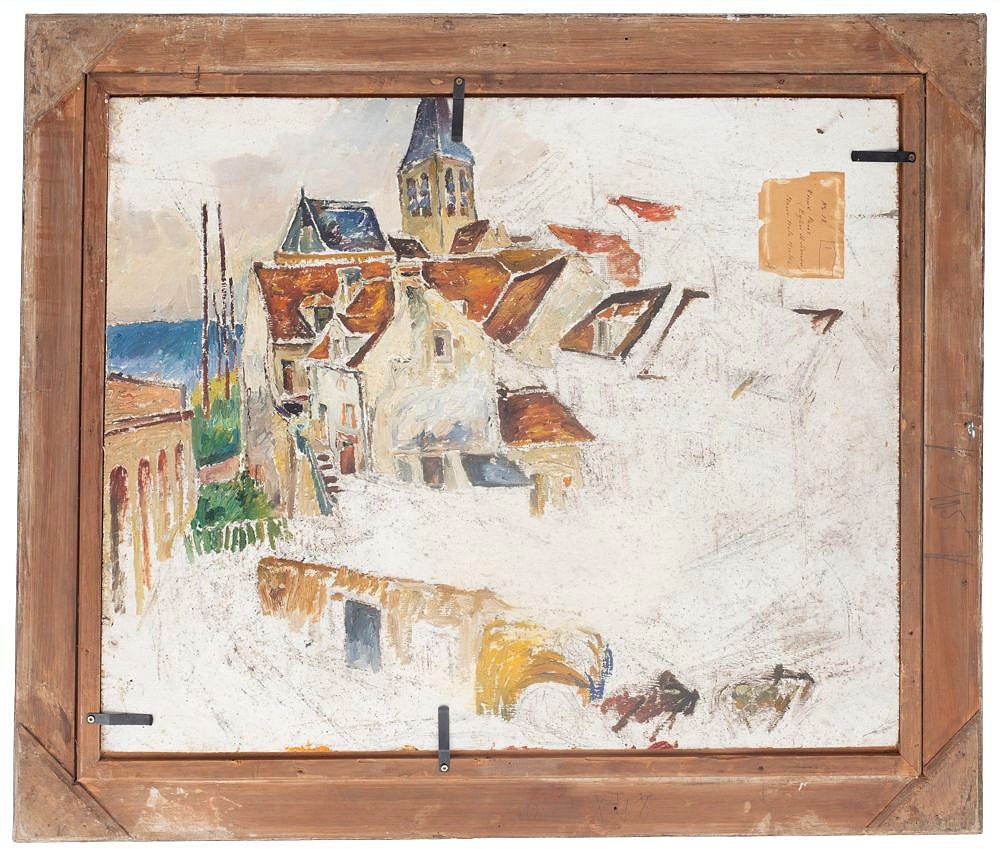
On the back a paper label with handwritten inscription: "No. 18/Vieux Paris/(Eglise St. Séverin)/Marie Mela Muter".
"And here is Paris - but not the leper Paris of Utrill, not its gloomy neighborhoods, but the heroic Paris of Notre Dame and the Seine, the ghetto neighborhoods where the twisted streets with old-fashioned stores come alive in the first rays of the sun. Ah! "Paris, my village" - as she sings it, this foreigner (Mela Muter), who is now ours, by her pagan exaltation and by her great talent." G. Revau, Visages de femmes - Mela Muter, "L'Avenir de Paris - L'Eclair," 1928.
"It was Paris that gave me all the elements that make up my art. Here I even found my Slavic character, which in Poland I probably wouldn't even notice, but which here everyone readily notices in my canvases. And in this, I think, is the great strength of Paris: all the various raw materials we bring here with us are strengthened here and melted into a uniform alloy, a kind of solid and homogeneous metal." Mela Muter, "Bravo," October 1932
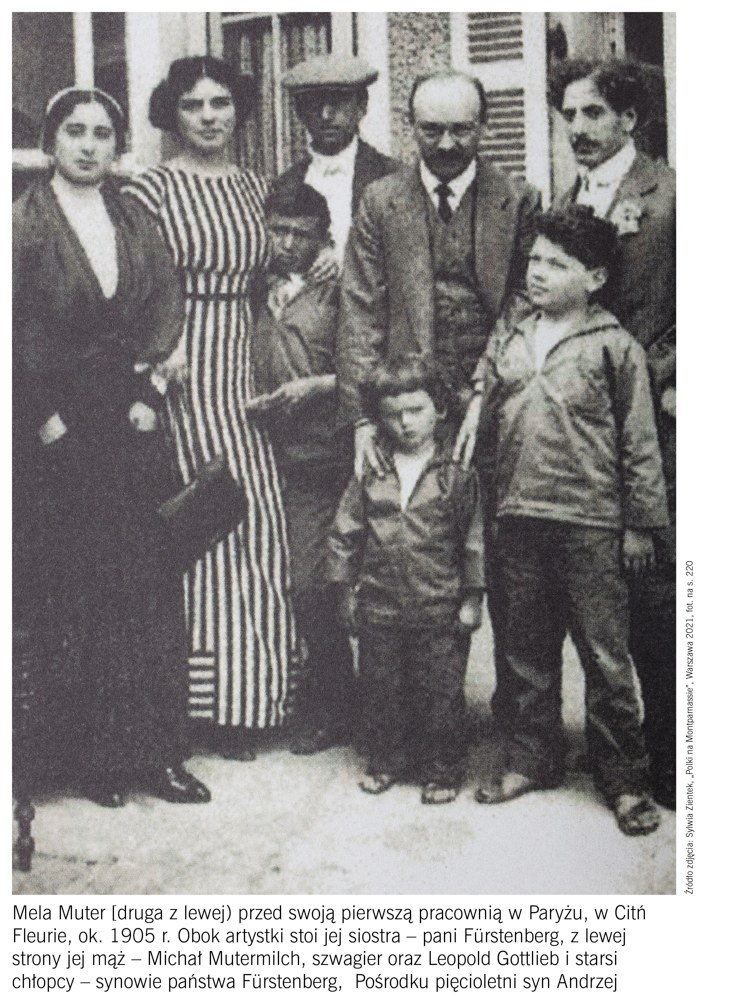
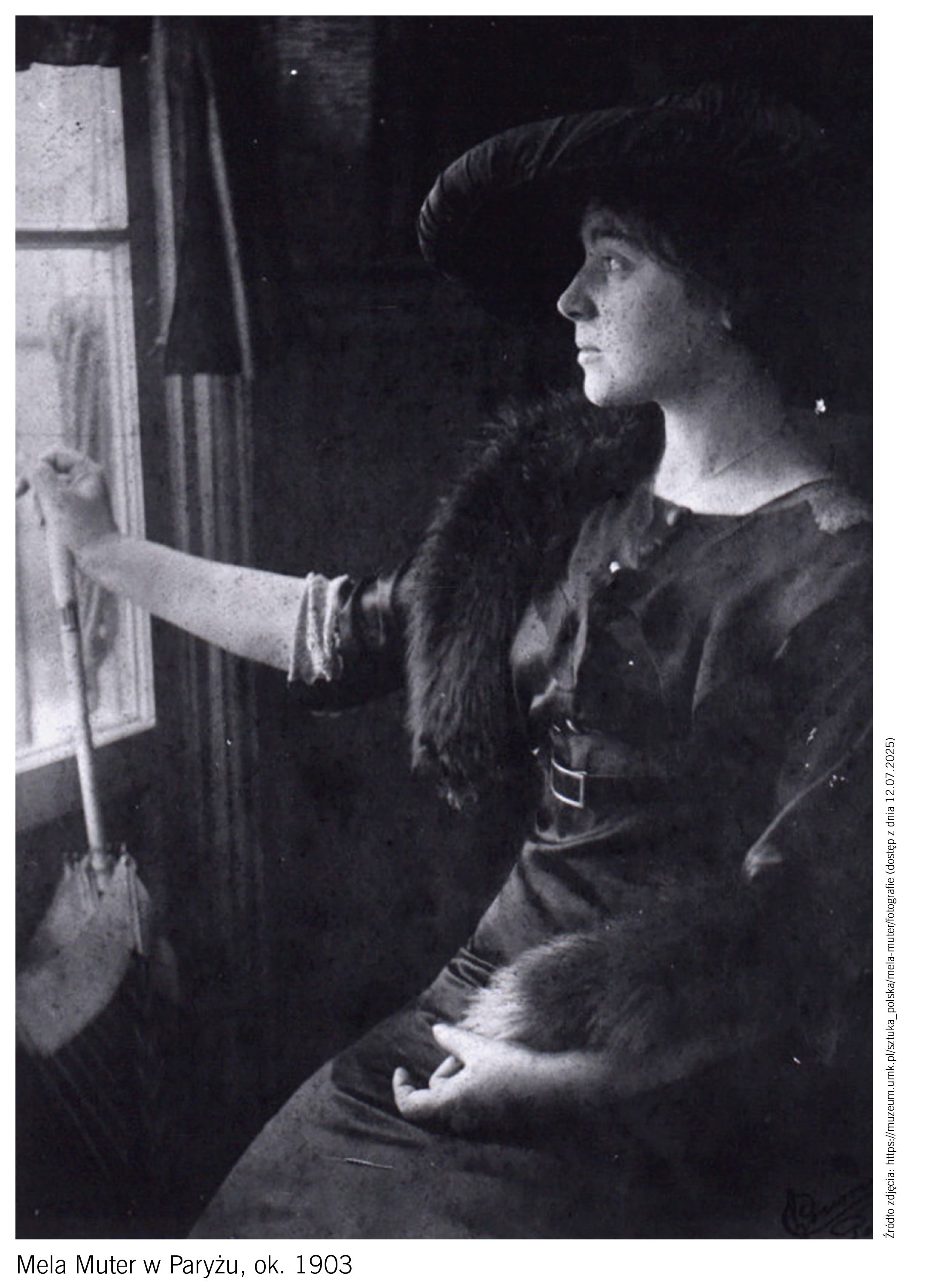
In the spring of 1901, Mela Muter arrives in Paris with her husband Michael Mutermilch and son Andrew. Here, in the Cité d`artistes at Bd. Argo 65, she rents a painting atelier. Here she also establishes contacts with the international art community, as well as with the Polish colony. Mela Muter's arrival in the French metropolis coincided with the extraordinary time of the belle époque - an era that was colorful, intense and full of artistic flourishing. Paris, seen as a mecca for artists, the European capital of art, a source of hope and inspiration, captivated the artist at first sight. Muter came to love the city like a second home. She passionately painted the charming corners of Paris, which, though seemingly quiet and peaceful, were teeming with everyday life. Countless times she walked the streets of Parisian neighborhoods, fascinated by ordinary passersby and the work of local shopkeepers. As she recalled: "Walking down the street one day, I noticed a painting in a display window that made a huge impression on me. When, after looking at it for a long time, I entered the store, I was welcomed by a stout gentleman. It was Vollard himself, a patron of Impressionist art. The painting that so moved me was a work by Gauguin. Next to it were works by Cézanne, Van Gogh and others by Gauguin. The paintings of Gauguin and the aforementioned Impressionists made a breakthrough in me. Cézanne taught me to think plastically." (Sylwia Zientek, "Polki na Montparnassie", Warsaw 2021, p. 235) She painted images of artists, writers, politicians. Paris was also the hero of her paintings. Mela portrayed romantic narrow streets, the lazily flowing Seine River with barges gliding over it, famous bridges, or characteristic silhouettes of Parisian monuments. Showing these places in the changing light of the seasons, from a variety of angles and perspectives, she gave them a new narrative each time.
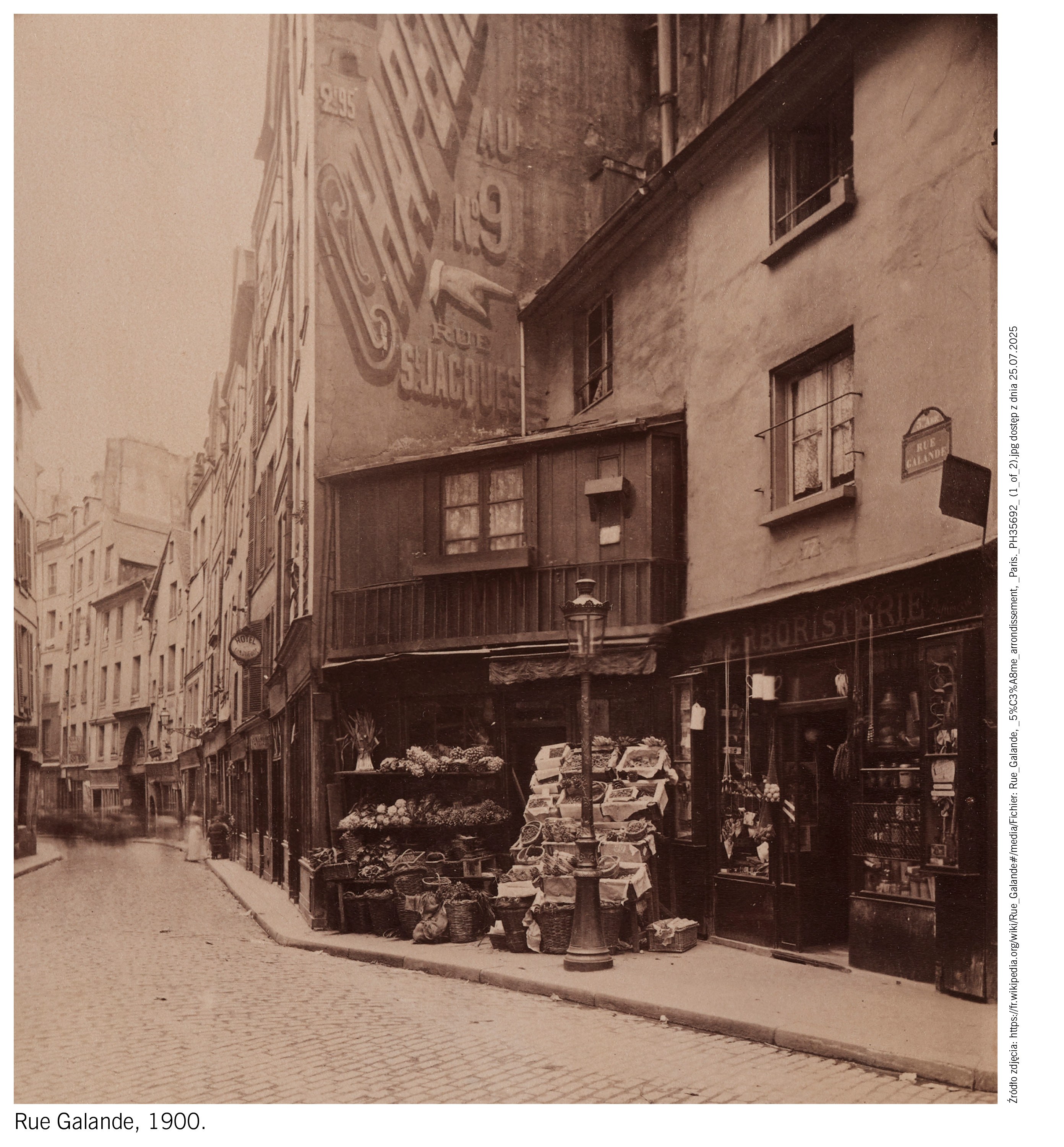
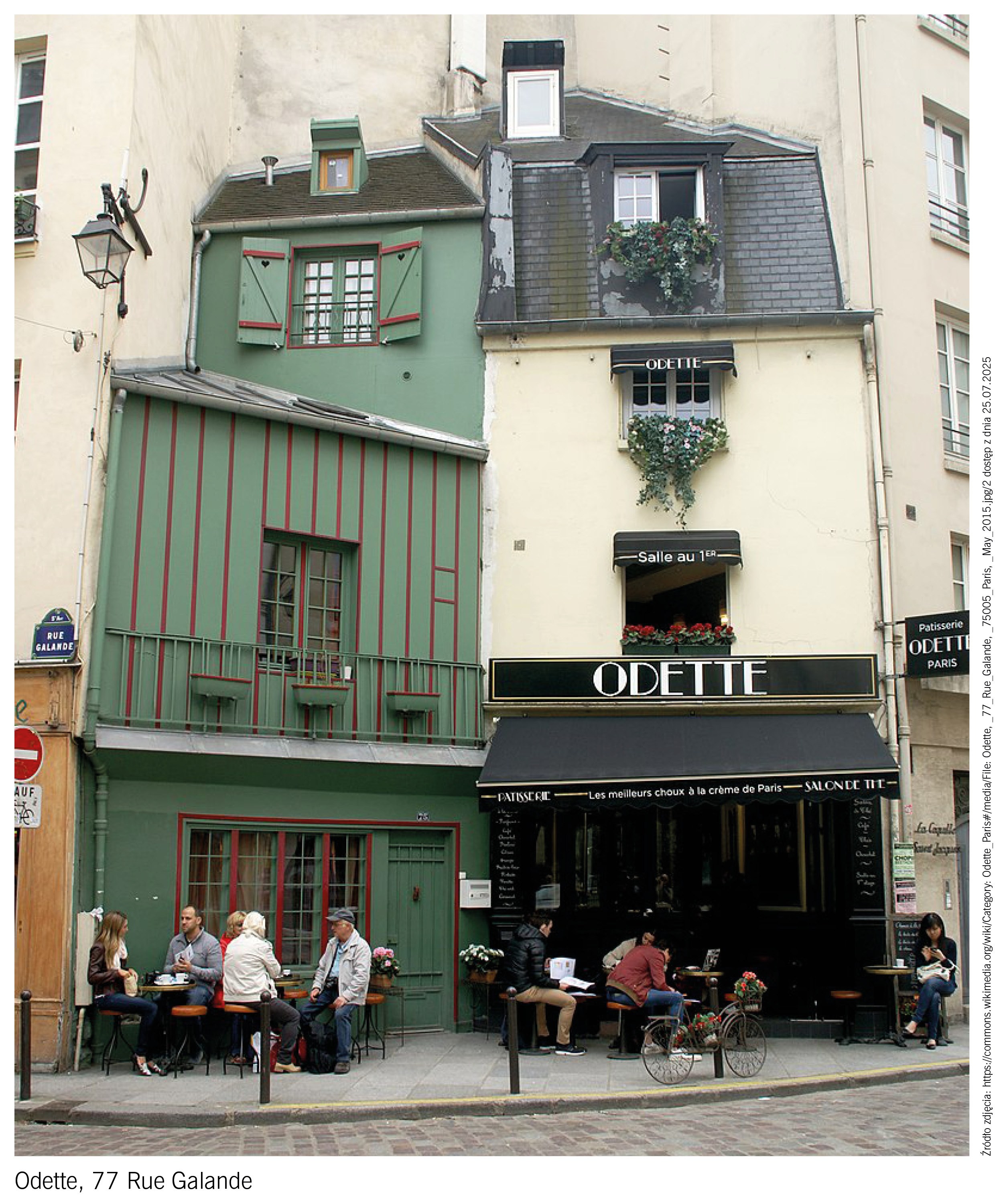
As French critic Georges Revau wrote of her paintings: "And here is Paris - but not the leper Paris of Utrill, not its gloomy neighborhoods, but the heroic Paris of Notre Dame and the Seine, the ghetto neighborhoods where the twisted streets with old-fashioned stores come alive in the first rays of the sun. Ah! "Paris, my village" - as she sings it, this foreigner who is now ours, by her pagan exaltation and by her great talent." (G. Revau, Visages de femmes - Mela Muter, "L'Avenir de Paris - L'Eclair", 1928, (21.05) And such is the appearance of a corner of Paris in Mela's featured painting. The composition was created in the 1920s - the period when Mela Muter reached the peak of her artistic career. It is an example of masterful immortalization of a Parisian veduta, where the main character is, a narrow street, with characteristic buildings. Here before the viewer appears a tight frame of the Galande street, from Saint-Julien-le-Pauvre, in the background you can see the lump of the apse and the tower of the late Gothic church of Saint Séverin. Here we are witnessing the quietly flowing life of the people of Paris. The windows of small stores, stalls bending under the weight of probably fruits and vegetables, colorfully depicted facades of tenement houses - all these elements create a unique atmosphere of the painting. Synthetically depicted figures of passers-by and shopkeepers subtly blend into the whole composition. The Saint-Séverin Church is located among the oldest streets in Paris, whose history dates back to Roman times. Famous for its unique atmosphere, these streets have made history. Surrounded by historic townhouses, boutiques and cafes, they form a picturesque neighborhood reflecting the intellectual and cultural heritage of the Latin Quarter. One of the most charming is rue Galande, long considered one of the most beautiful streets in Paris. Meli's composition shows the storefront of the Pays de Poche antique shop, which is still in operation today. The site of the Herboristerie herb store painted by Muter, as well as the adjacent vegetable store, is now home to the Odette Paris patisserie.










Viimeksi katsotut
Kirjaudu sisään nähdäksesi kohdeluettelon
Suosikit
Kirjaudu sisään nähdäksesi kohdeluettelon