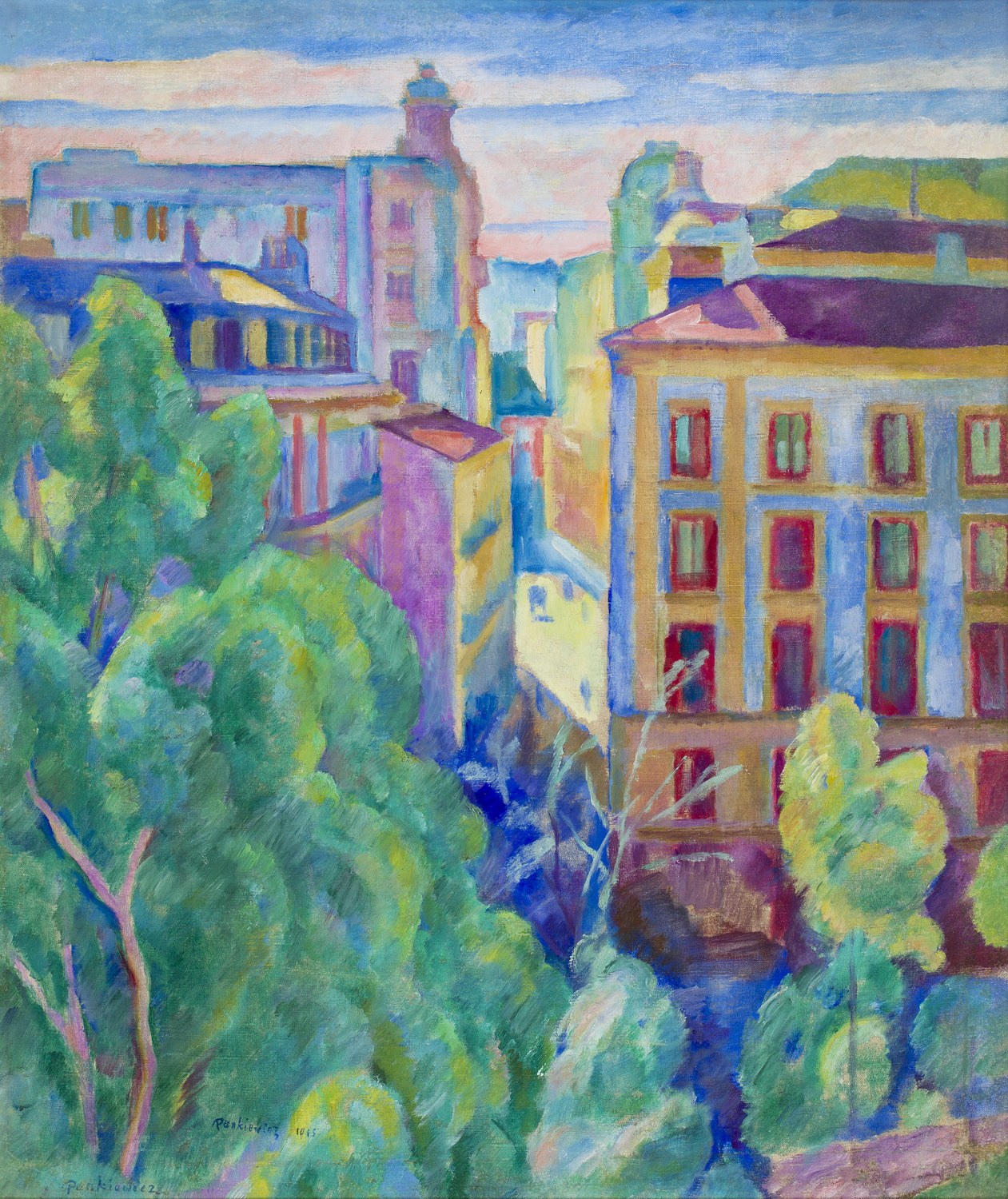
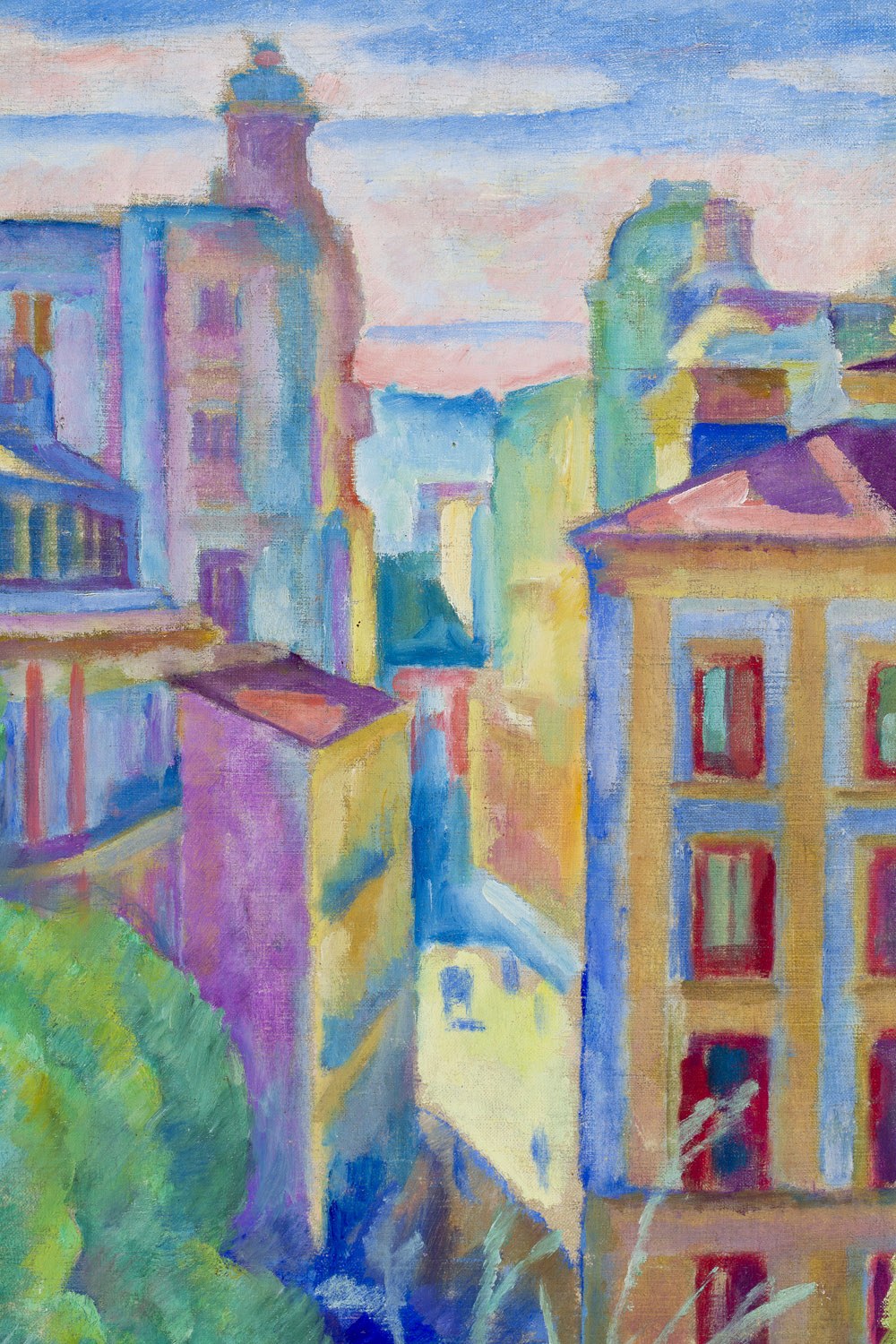
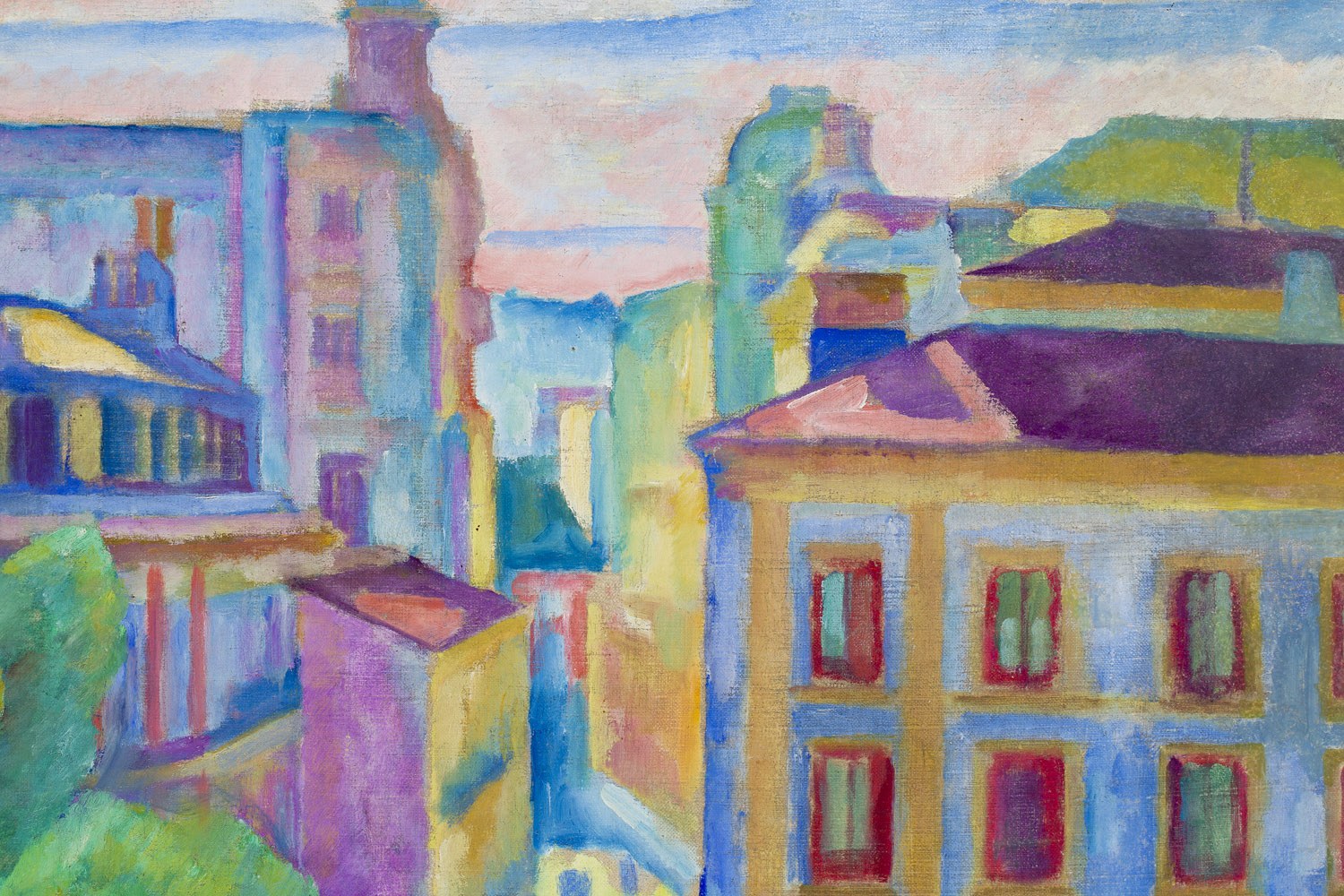
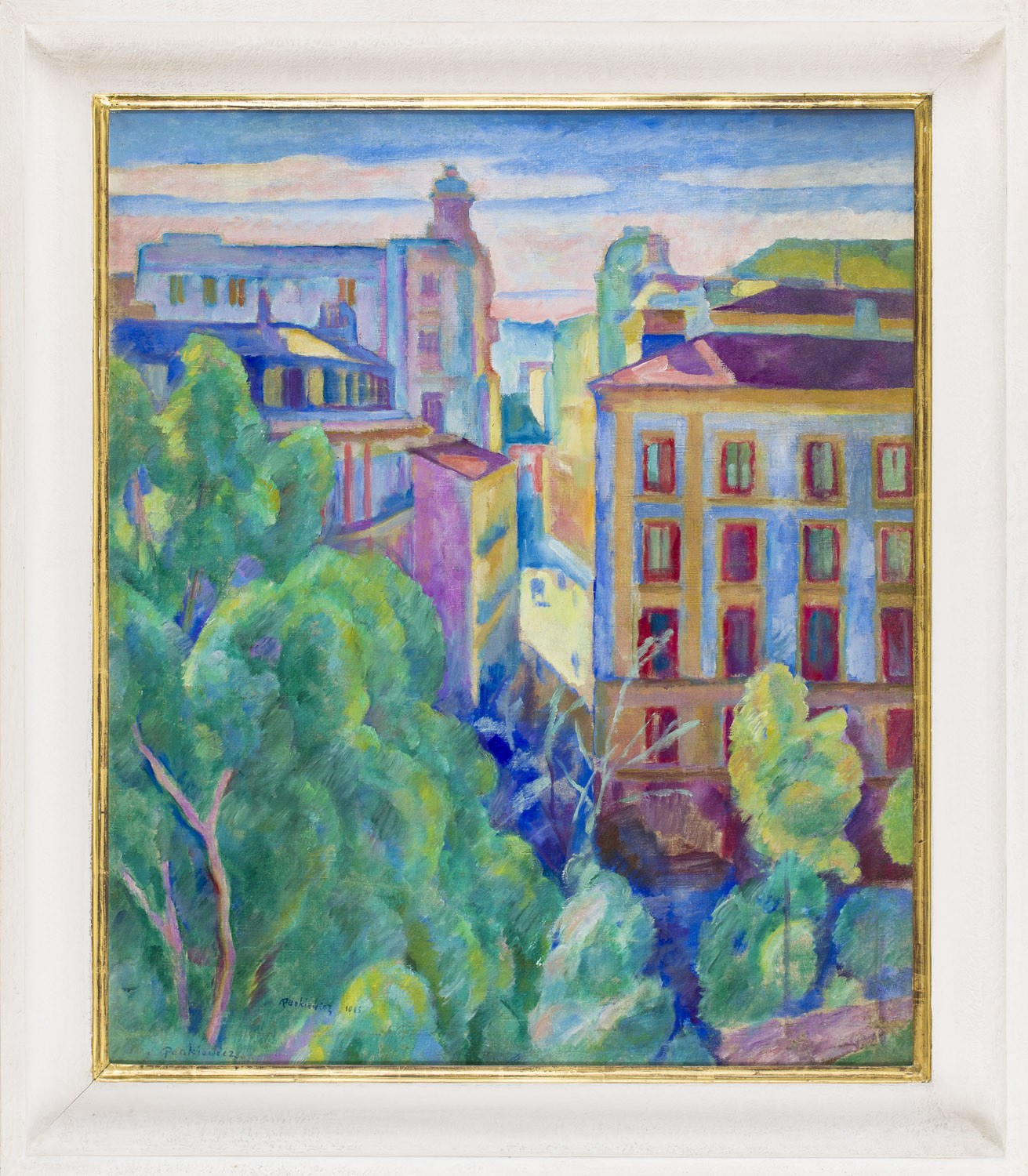
Dimensions: 70 x 59 cm
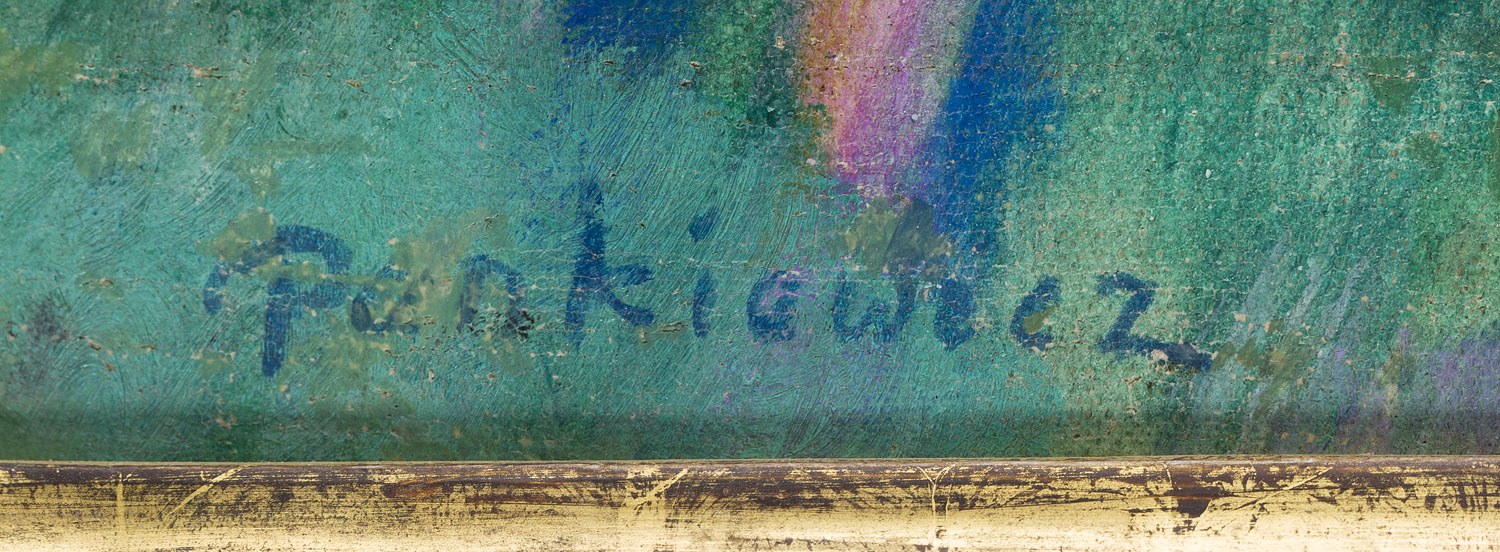
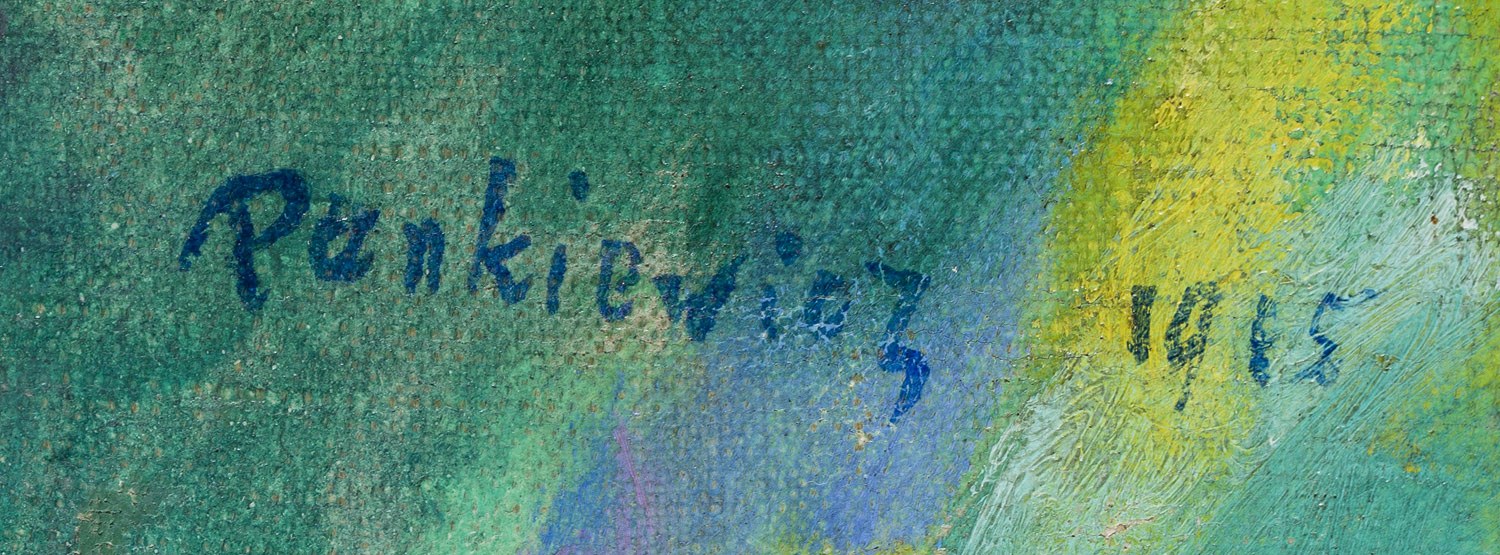
signed and dated l.d.: 'Pankiewicz 1915 | Pankiewicz [repeated]'.
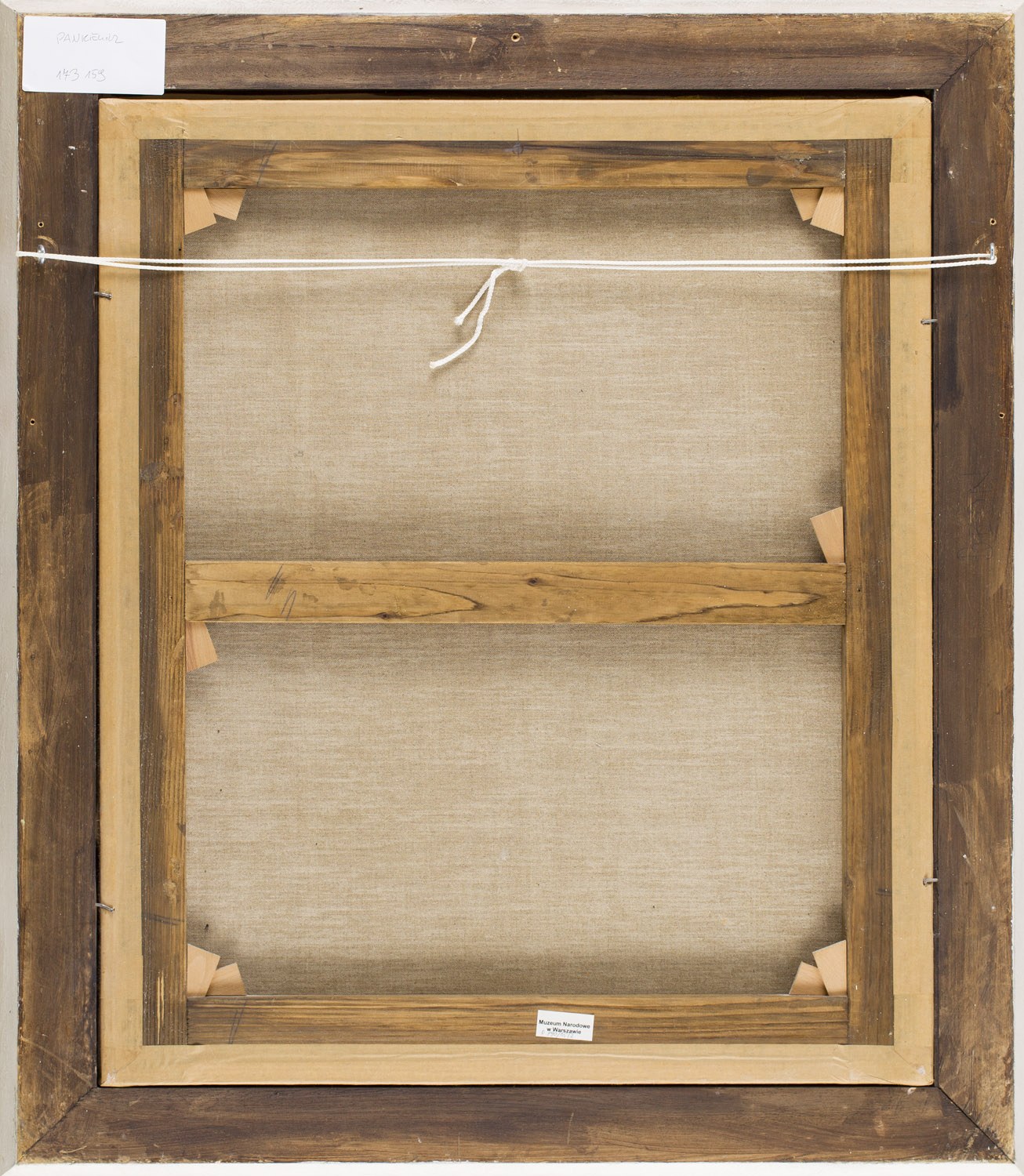
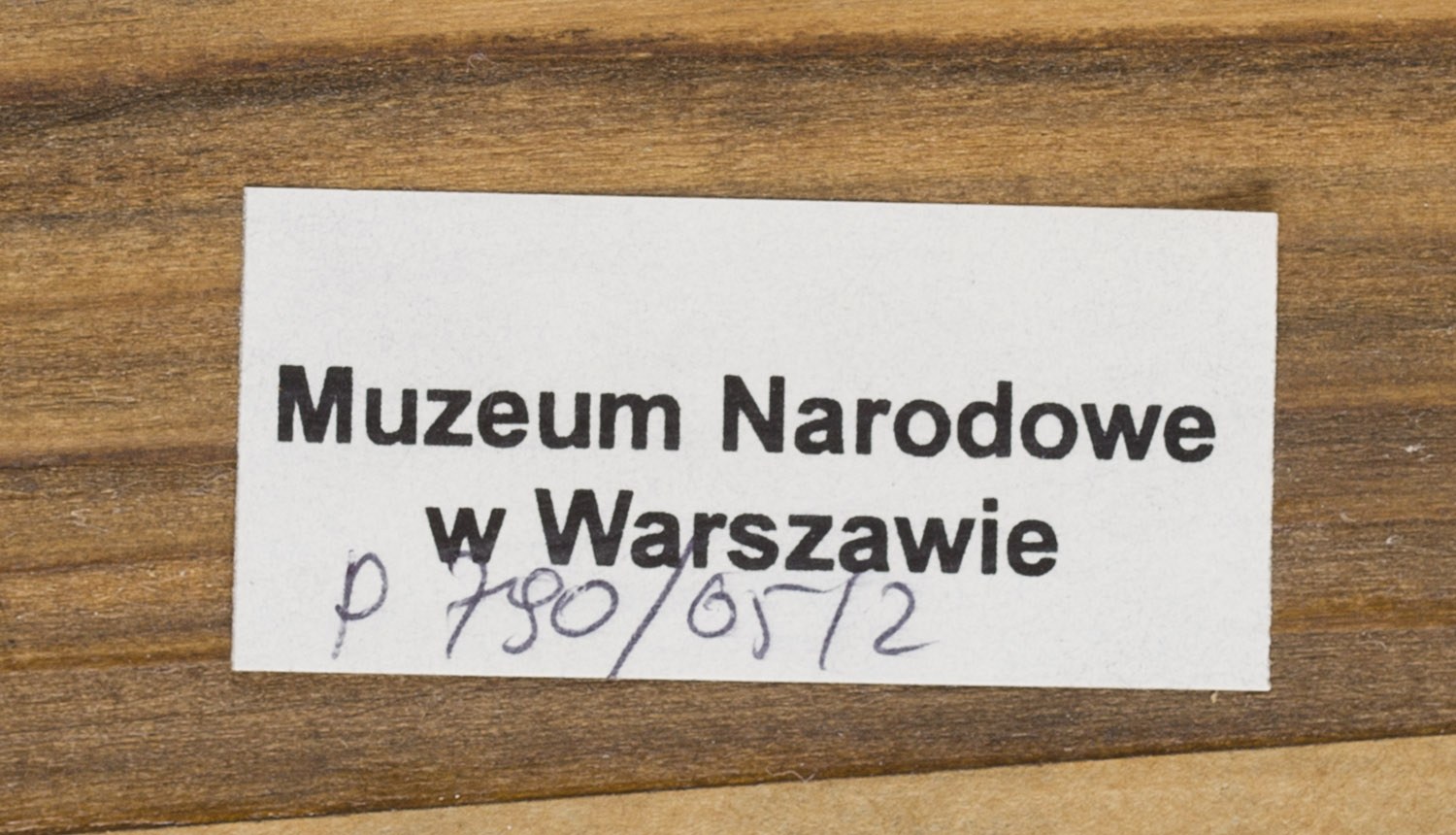
on the reverse an exhibition sticker from the National Museum in Warsaw with the inventory number: 'P 790/65/2'
Origins
acquired in the 1880s in France
private collection
Exhibited
Quelques Artistes Polonais, Galerie Barbazanges, Paris, January 12-27, 1920
Individual exhibition, Galerie chez MM. Bernheim-Jeune, Paris, June 22-July 5, 1922
Jozef Pankiewicz (1866-1940). Life and work. To the artist on the 140th anniversary of his birth, National Museum in Warsaw, January 9-March 26, 2006
Literature
Józef Pankiewicz (1866-1940). Life and Work. To the Artist on the 140th Anniversary of his Birth, exhibition catalog, ed. by Elżbieta Charazińska, National Museum in Warsaw, Warsaw 2006, p. 94 (ill.), cat. no. I/200
Exposition Joseph Pankiewicz, introduction by Félix Fénéon, Paris 1922, cat. no. 36
Quelques Artistes Polonais, exhibition catalog, Galerie Barbazanges, Paris 1920, cat. no. 76
Biography
From 1884-85 he studied at the Warsaw Drawing Class under Wojciech Gerson and Aleksander Kaminski, then went to St. Petersburg with Władysław Podkowiński to stay on scholarship at the Academy of Fine Arts there in 1885-86. In 1889, the two artists traveled to Paris; there, his painting "Vegetable Market on the Square Behind the Iron Gate" (1888) was awarded a silver medal at the Universal Exhibition. Having become familiar with the works of the Impressionists upon his return to Warsaw in 1890, he tried to transfer French painting trends to his native soil. Referring to Impressionism, "Flower Market in Front of the Church of St. Magdalene in Paris" (1890) met with an unfavorable reception from Polish critics and the public, who advised the painter to visit an ophthalmologist. In the following years, the artist's work was influenced by symbolism - he created atmospheric nocturnes with dark, almost monochromatic colors: Old Town Market in Warsaw at Night (1892) Dorożka nocą (1896), Swans in the Saxon Garden (1896) Park in Duboj (1897). Inspired by the work of James Whistler, among others, he would create a series of atmospheric portraits, including Portrait of a Girl in a Red Dress (1897), Portrait of Mrs. Oderfeld with her Daughter (1897, awarded a gold medal at the Universal Exhibition in Paris). In 1897 he became a member of the Cracow Society of Polish Artists "Art". In 1897-1906, he traveled around Western Europe visiting Holland, Belgium, Italy, England, Germany and France. Subsequent holiday visits to France - starting in 1908, when he struck up friendships with Pierre Bonnard and Felix Fénéon, among others - resulted in a series of paintings and etchings depicting views of Concarneaux, St. Valery en Caux, Collioure, Saint-Tropez, Vernon and Giverny. The painting on display is from this period of the artist's work. In 1906 he became a professor at the Academy of Fine Arts in Cracow. This is evidenced by, among others, a series of still lifes including the most outstanding Still Life with Fruit and Knife (1909). He spent the war years 1914-19 in Spain, where he befriended Robert Delaunay, to whom he owes his change of style. The canvases of the 'Spanish period' are characterized by geometrization (the influence of Cubism) and the intensity of flatly laid colors - the influence of Fauvism. In the 1920s, he initiated the current of Polish colorism, referring to the work of the French Post-Impressionists. As an educator, he patronized a group of painters and printmakers gathered in the Paris Committee, commonly known as the Capists. It included Jan Cybis, Artur Nacht-Samborski, Józef Czapski, Zygmunt Waliszewski and Piotr Potworowski, among others. From 1923 he became a professor at the Academy of Fine Arts in Cracow again, and from 1925 he headed a branch of the academy in Paris. The postwar years brought another change in Pankiewicz's style. He gradually gave up pure, intense, decorative color in favor of valor painting, which is an objective vision of reality. A frequent theme of the painter's postwar works are "landscapes with fluffy treetops" of the Sanary, Cassis and La Ciôtat areas.


![Józef PANKIEWICZ (1866-1940), Tulipany w dzbanie [Tulipany w wazonie]](https://img1.one.bid/img/183/29812_1w.webp)