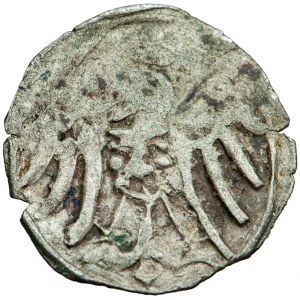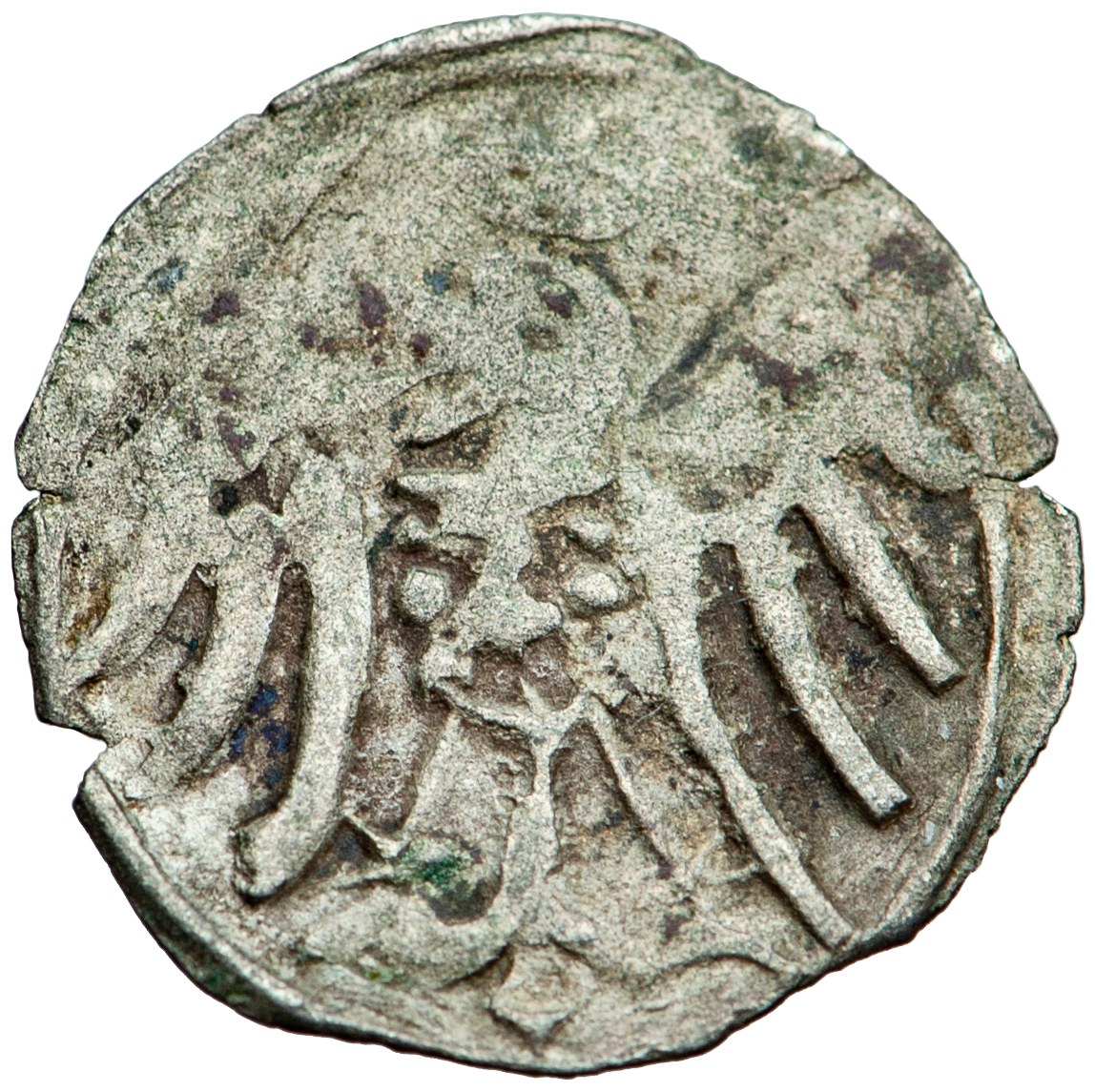
Bohemia, Moravia, George of Poděbrady (and successors), round money(kruhový peníz), men. Iglawa (Jihlava), after 1460.
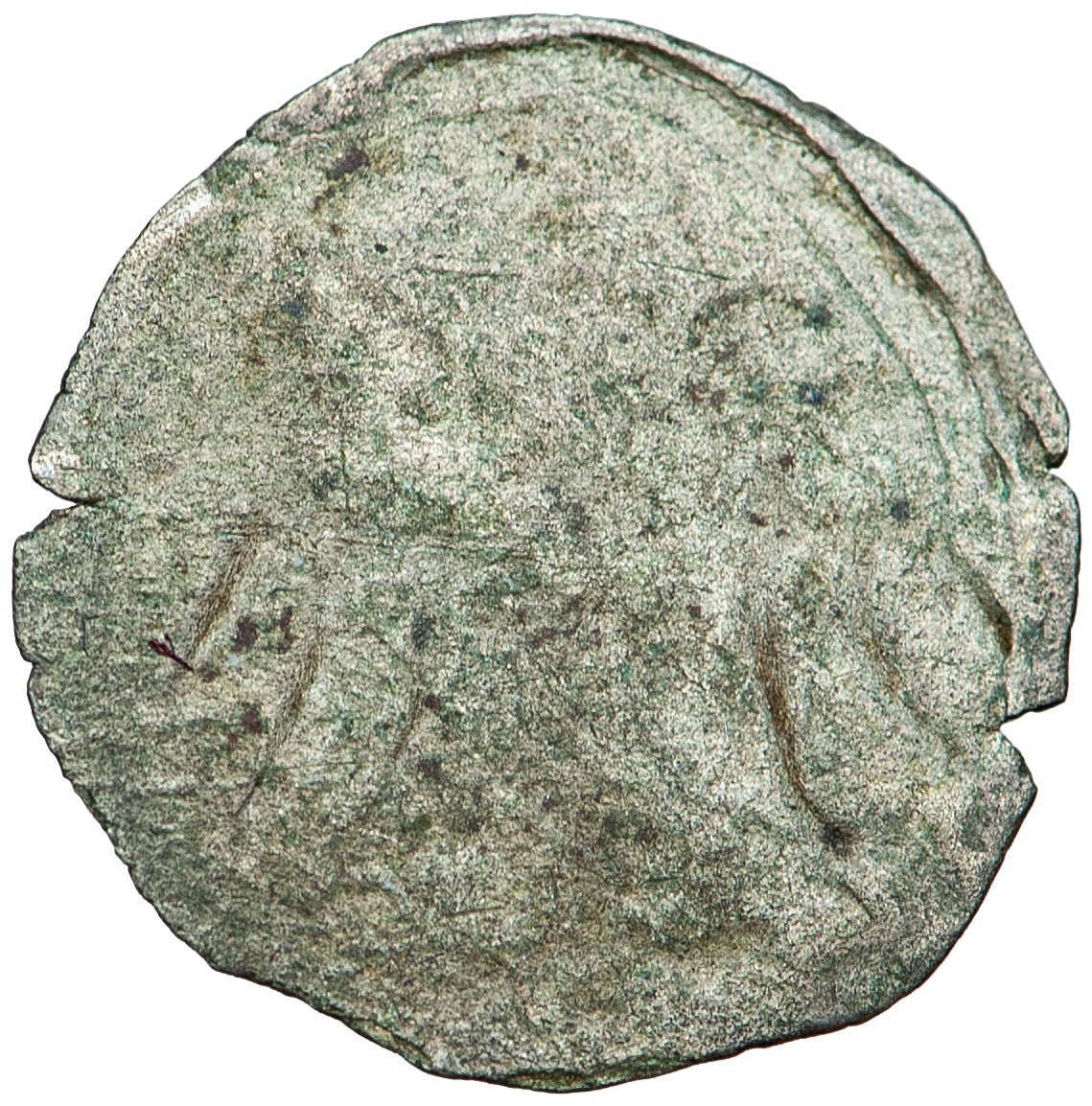
Av. Eagle, on its breast placed directly the head of a beast. Rv. Blank, traces of the negative of the obverse. Silver, 0.32 g, 13.8 mm. Sejbal(Dějiny peněz na Moravě) no. 158.
Condition III, patina. Denarii (peníze) on which the eagle has an obscure mark on the chest, interpreted as the letter I(Iglavia), are very rare. Most researchers have adopted the opinion of E. Nohejlová-Prátová that the older and better-made pieces depict the letter I on the shield, and only the later and stained pieces, either from the engraver's misunderstanding of the sign's content or for unsuccessful embellishment, received a shape similar to the head of the beast (E. Nohejlová-Prátová, Peníze města Jihlavy z poloviny 15. století, Numismatické listy X, 1955, no. 1-2, pp. 1-9). Karel Castelin, however, believed that the eagle of all varieties had a beast's head on its breast (K. Castelin, O písmenu "I" na jihlavských mincích. Numismatické listy VII, 1952, no. 1-2, pp. 10-11), primarily because shields of this shape did not exist in the 15th century and the city of Needles did not use the mark with the letter I anywhere else. These coins are usually considered to be the town coins of Needles from 1435-1452 (Sejbal, Moravská mince doby husitské, p. 241; Sejbal, Příspěvek k problematice městských, p. 109), but neither the reading of the mark is certain, nor the minting in Needles at that time is confirmed. These coins appear in treasuries after 1460 and the beginning of their issuance is during the reign of King George, although they may also have been minted later, under the reign of Matthias Corvinus (1469-1490). |