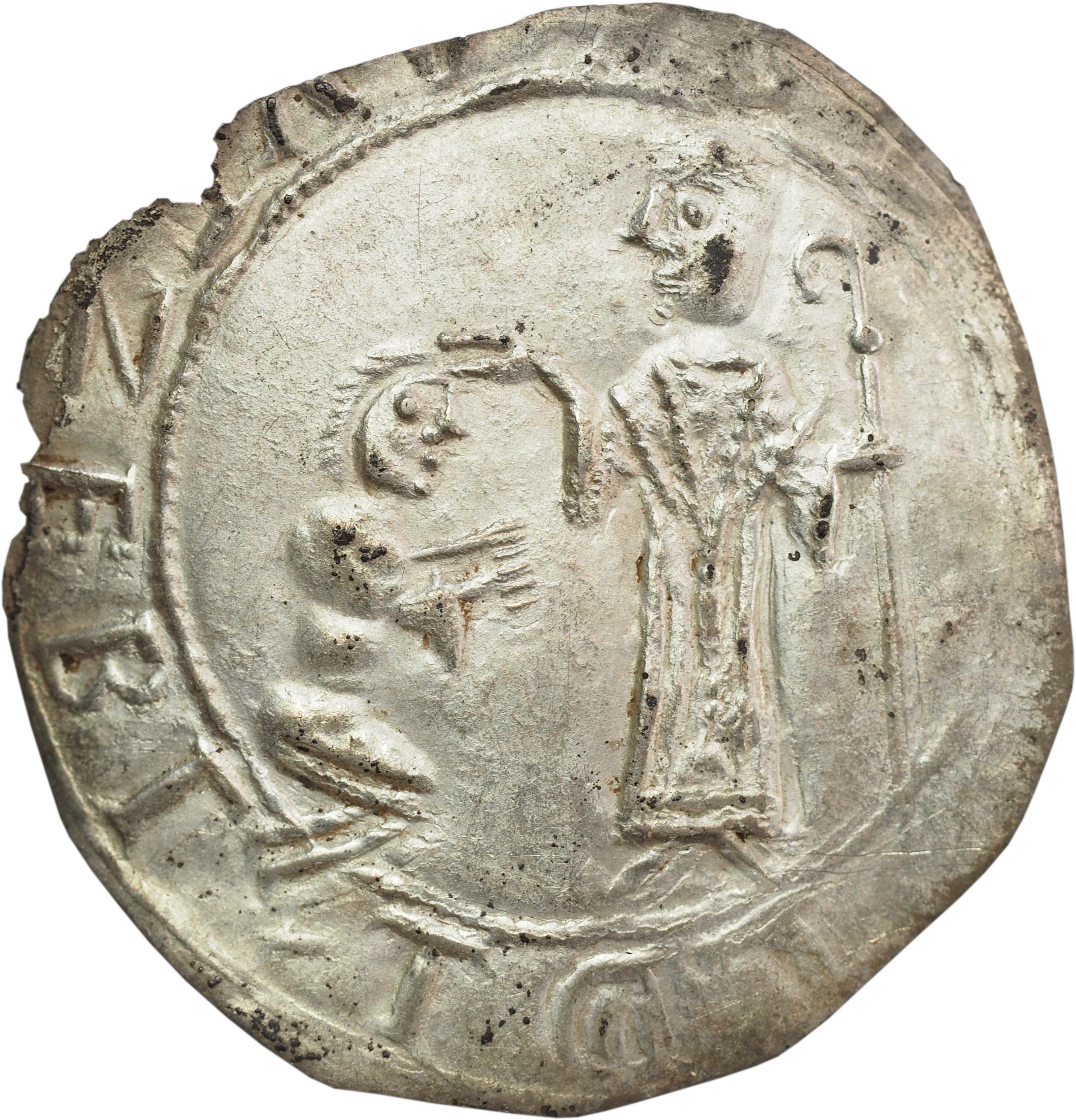
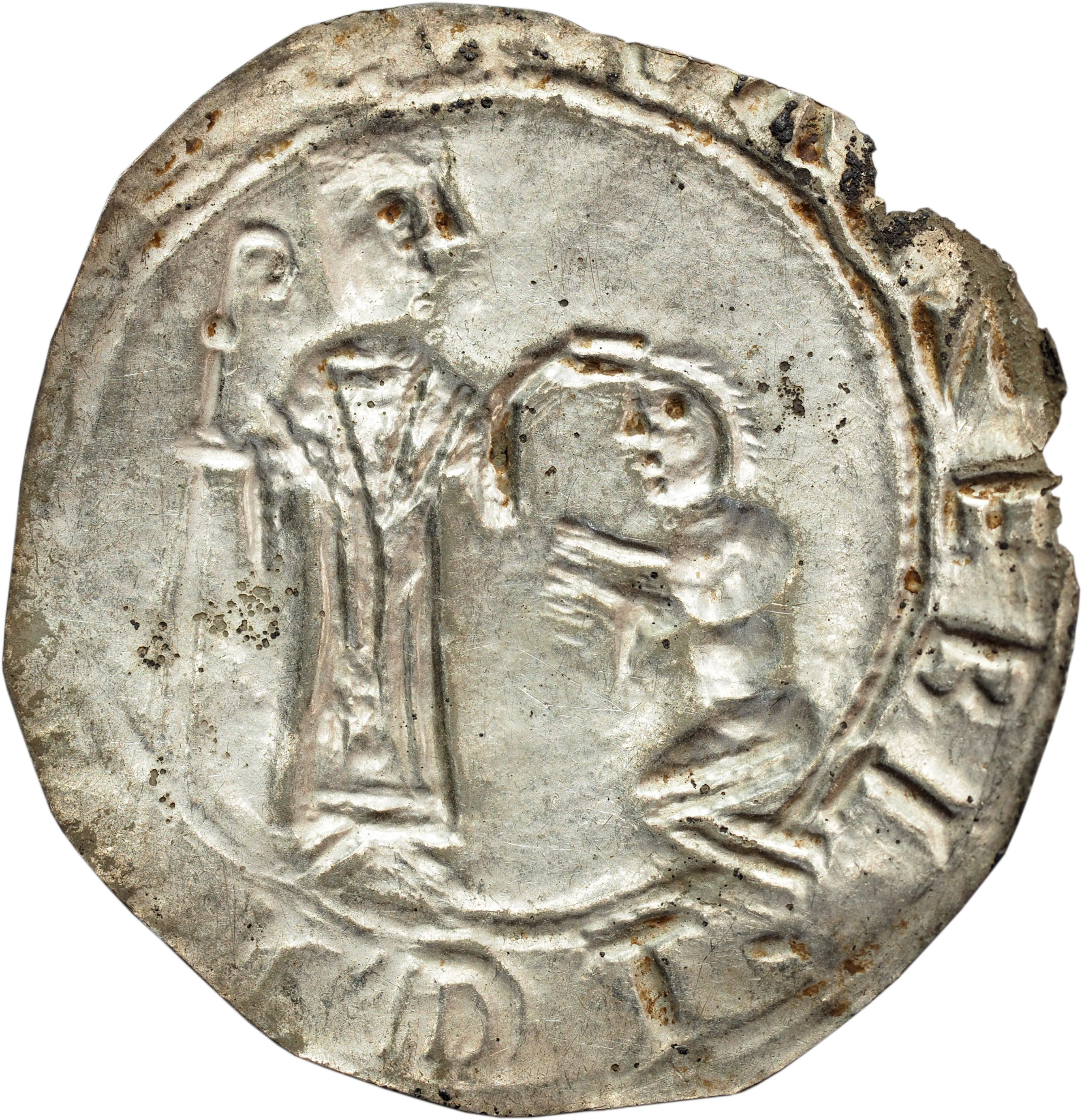
Ahistorically significant Polish protective bracteate.
This coin was once referred to as a “penitential coin,” as it was seen as a reference to Prince Bolesław’s pilgrimage to the tomb of St. Adalbert in Gniezno in 1113. This referred to penance for the blinding and death of his older brother, Zbigniew.
It was not until Ryszard Kiersnowski that this coin was linked to Bolesław Krzywousty’s manifesto, following the Polish prince’s act of homage in Merseburg before Emperor Lothar III. He dated this event to around 1135. The iconography was intended to proclaim that the Polish prince was under the protection of Saint Adalbert, hence the term “protective” applied to bracteates of this type.
In turn, Witold Garbaczewski’s research shed a different light on the nature of this bracteate’s issuance. He views it as a result of the monetary reform from the end of Bolesław Krzywousty’s reign, which was intended to replenish the treasury to pay tribute to Lothair III, and dates this type to the year 1137.
Mint-fresh, glossy metal with sharp relief—practically uncirculated.
Minimal loss of metal.
For the finest collections—we highly recommend it.
Obverse: St. Adalbert standing facing forward, with his head turned to the left; in his left hand he holds a crosier, his right hand raised in a gesture of protection over the kneeling prince; the legend is inscribed around the edge