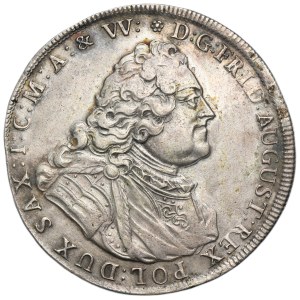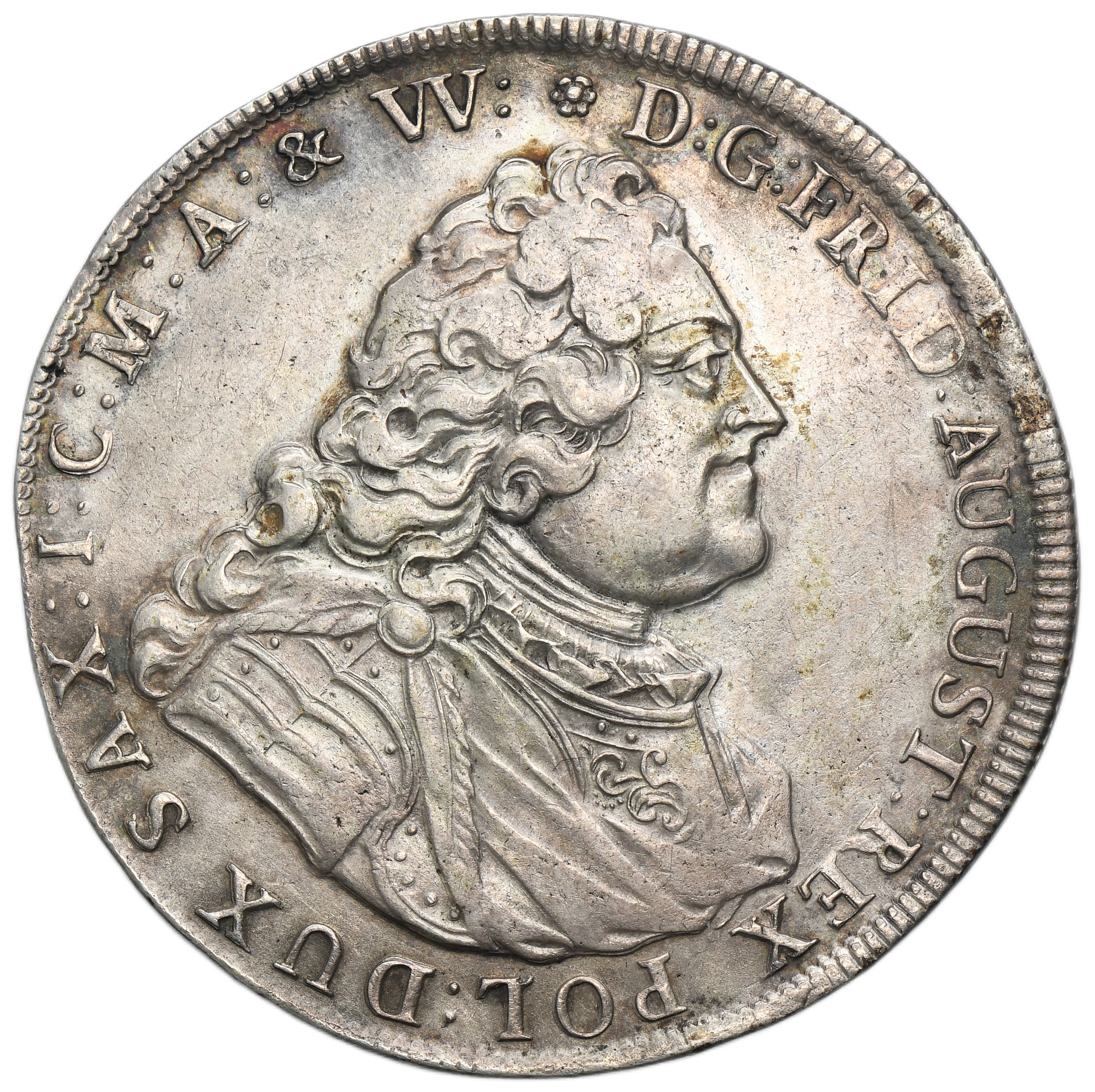
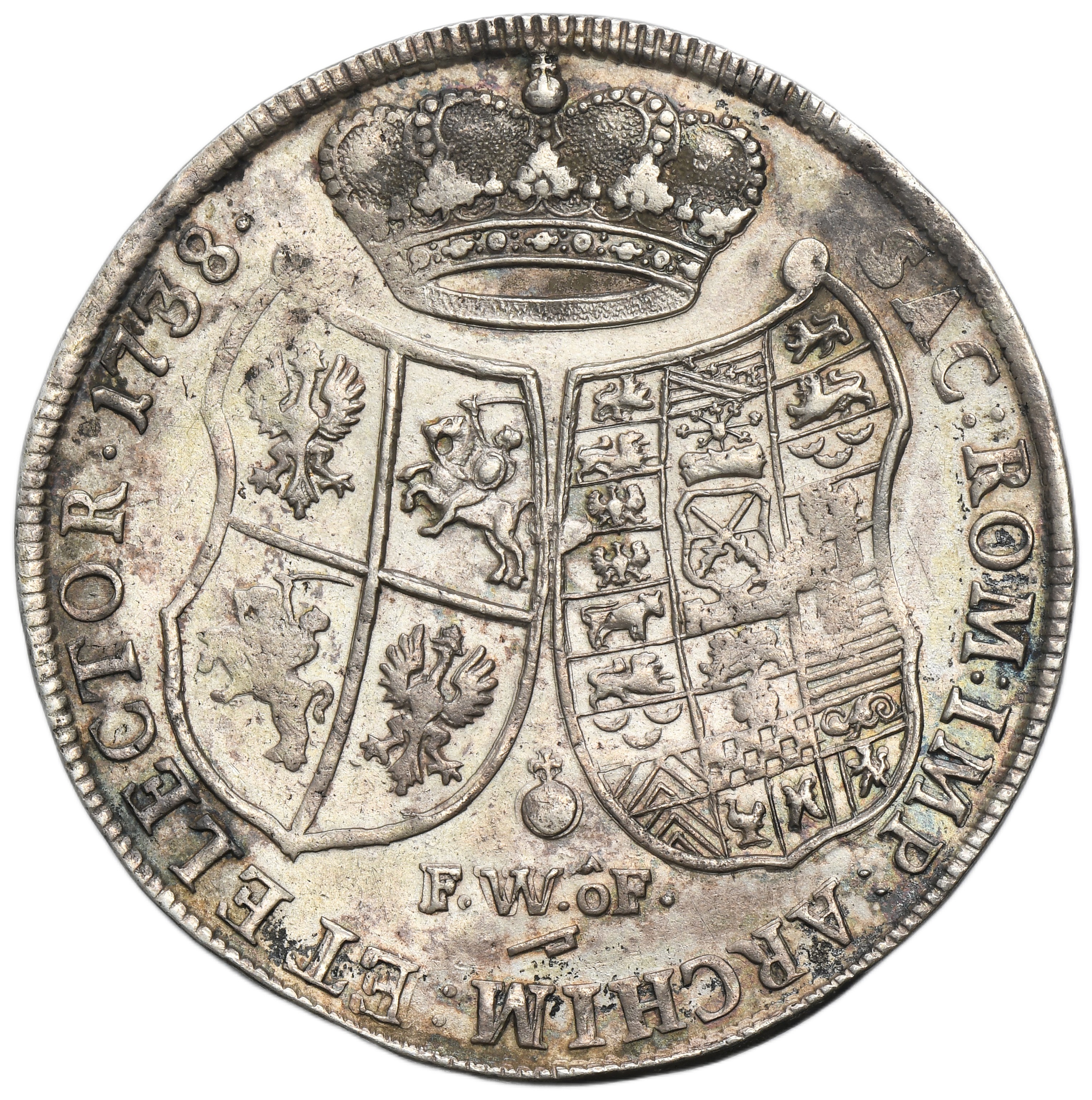
Less frequently recorded, the second type of Augustus III Saxon thalers with the initials FWôF of Friedrich Wilhelm ô Feral, mintmaster of the Dresden mint in 1734-1763.
An extremely difficult item to obtain in mint condition. The example offered is mint-fresh with well-preserved details.
An attractive example of the rarer type of Augustus III Saxon thaler.
Obverse: Armored bust, right
DG FRID AUGUST REX POL DUX SAX ICMA & W
Reverse: Polish and Saxon coat of arms, below the royal orb and the initials FWô.F. of Friedrich Wilhelm ô Feral, mintmaster of the Dresden mint in 1734-1763, below them the mint mark hook
SAC ROM IMP ARCHIM ET ELECTOR 1738
Diameter 46 mm, weight 28.97 g
For the first sixteen years of his reign, Augustus III of Saxony essentially pursued no minting policy. It was not until 1749 that the decision was made to begin producing copper shillings and groschen. This task was carried out by three mints: in Dresden, Gruntal, and Gubin. In 1752, Leipzig began producing gold coins (augustdors and ducats, as well as their fractions and multiples), as well as silver coins (thalers, half-thalers, two-złoty coins, tymfs, orts, six-coins, three-coins, and one-and-a-half coins). Formally, the establishment of mints issuing Polish coins was illegal. The Polish Sejm (parliament) did not consent to it. The same can be said for the activities of city mints in Royal Prussia. Gdańsk, Toruń, and Elbląg began minting without seeking the consent of Treasurer Karol Sedlnicki.