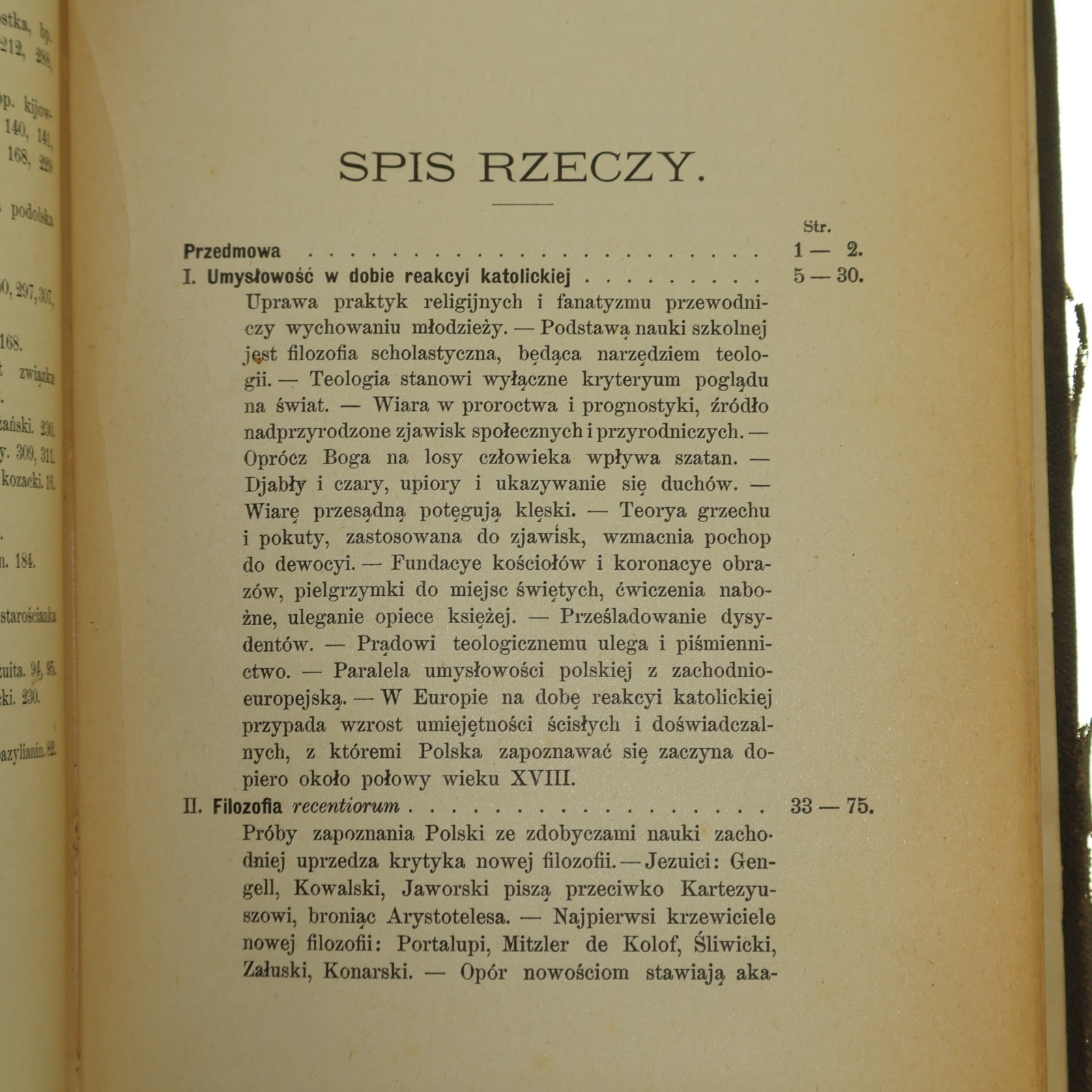
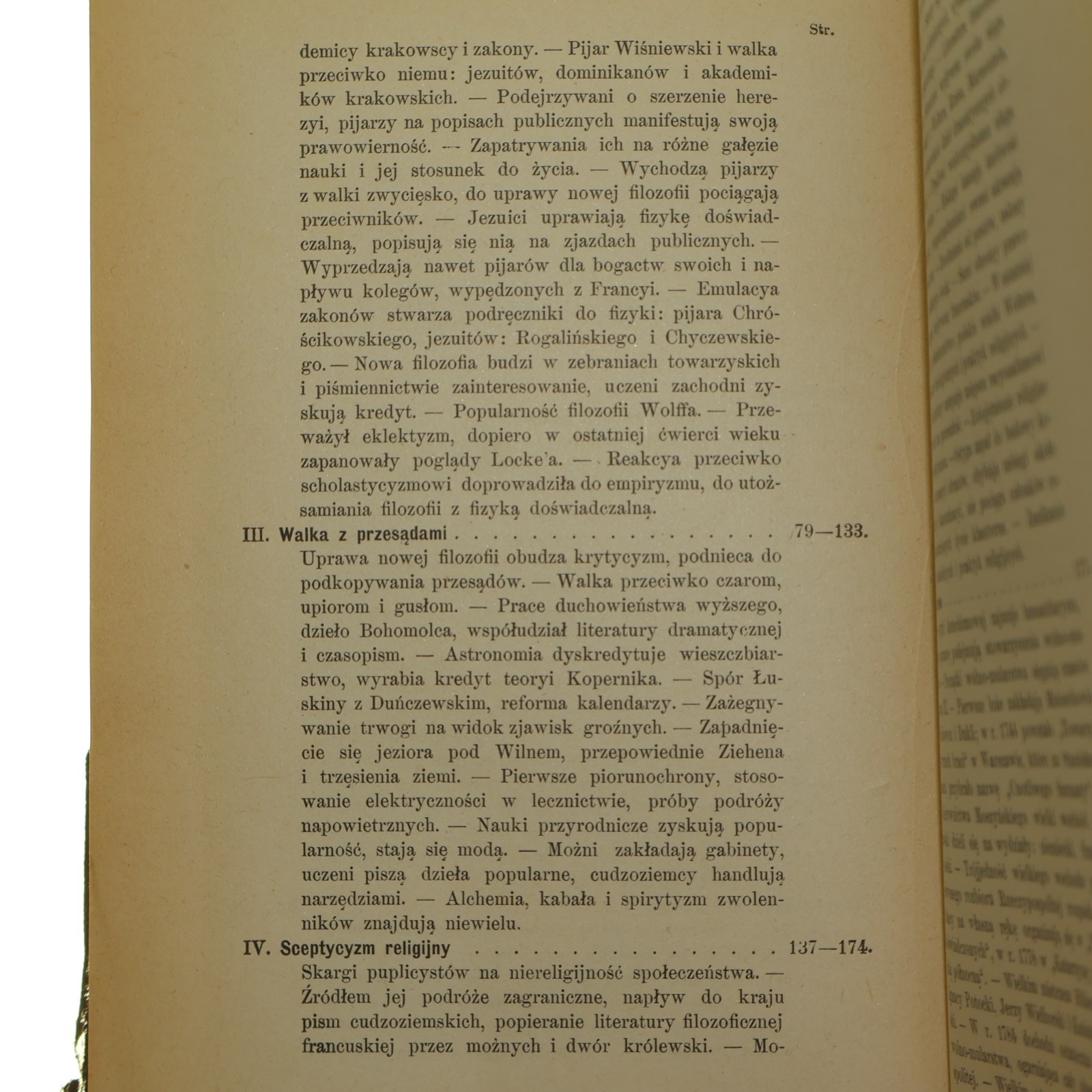
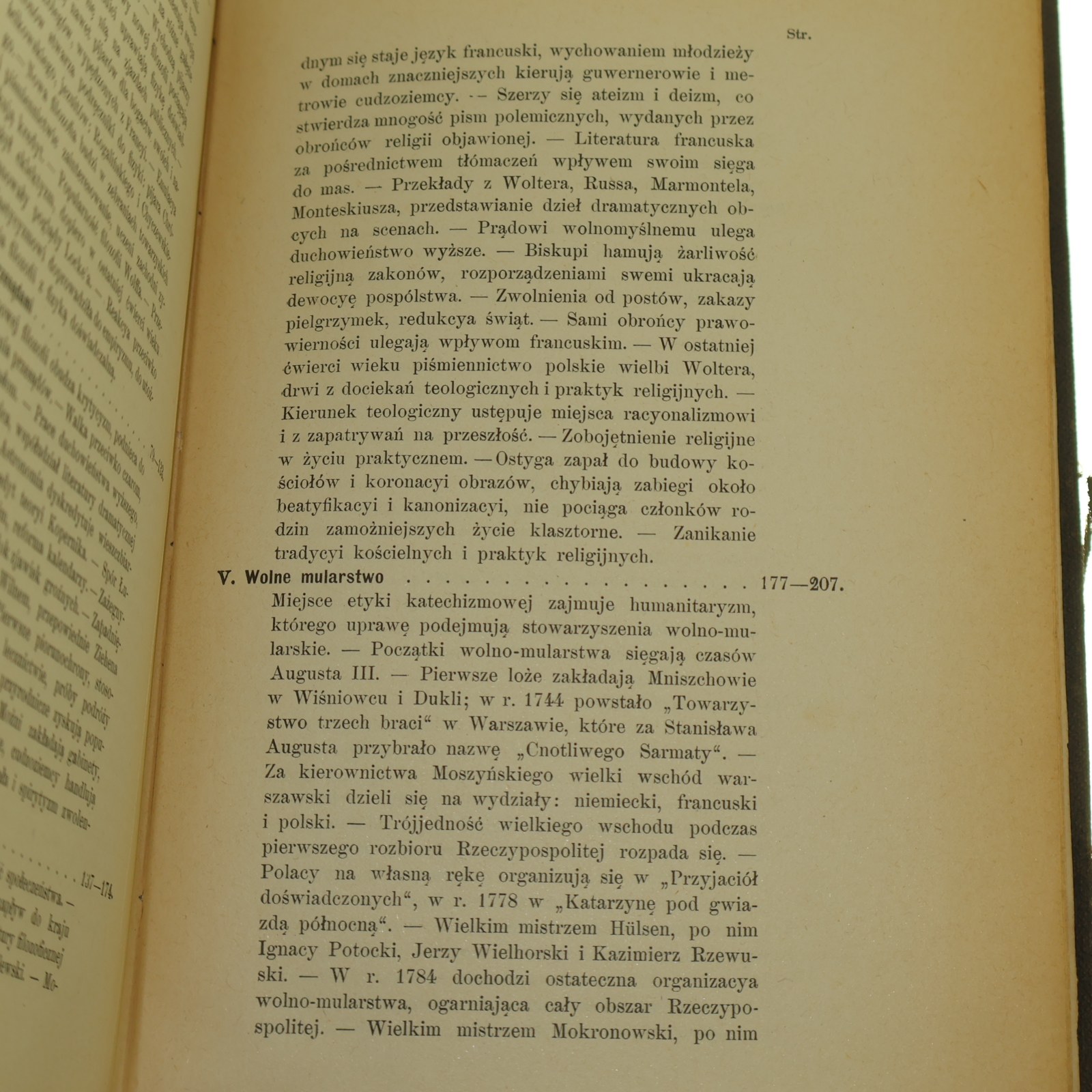
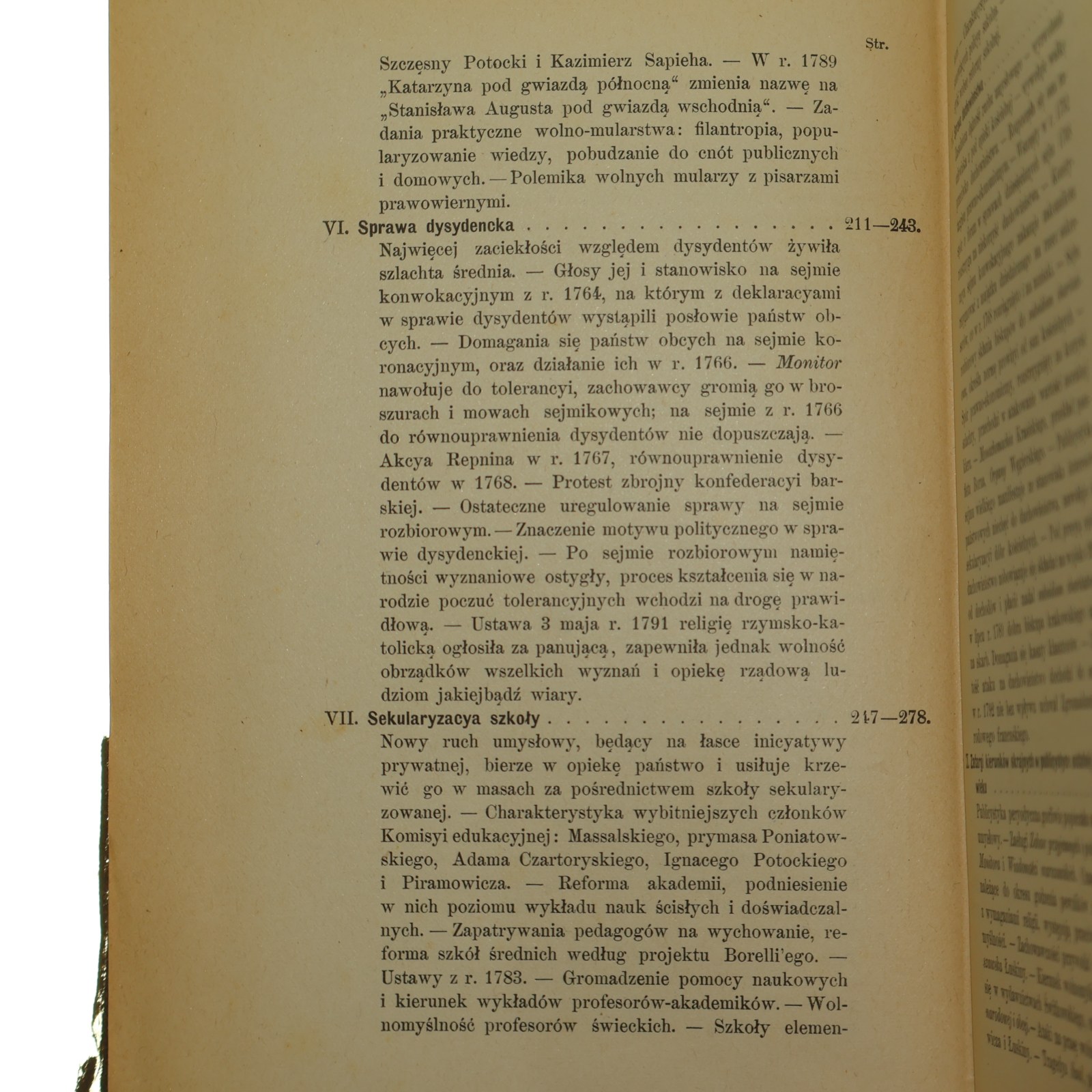
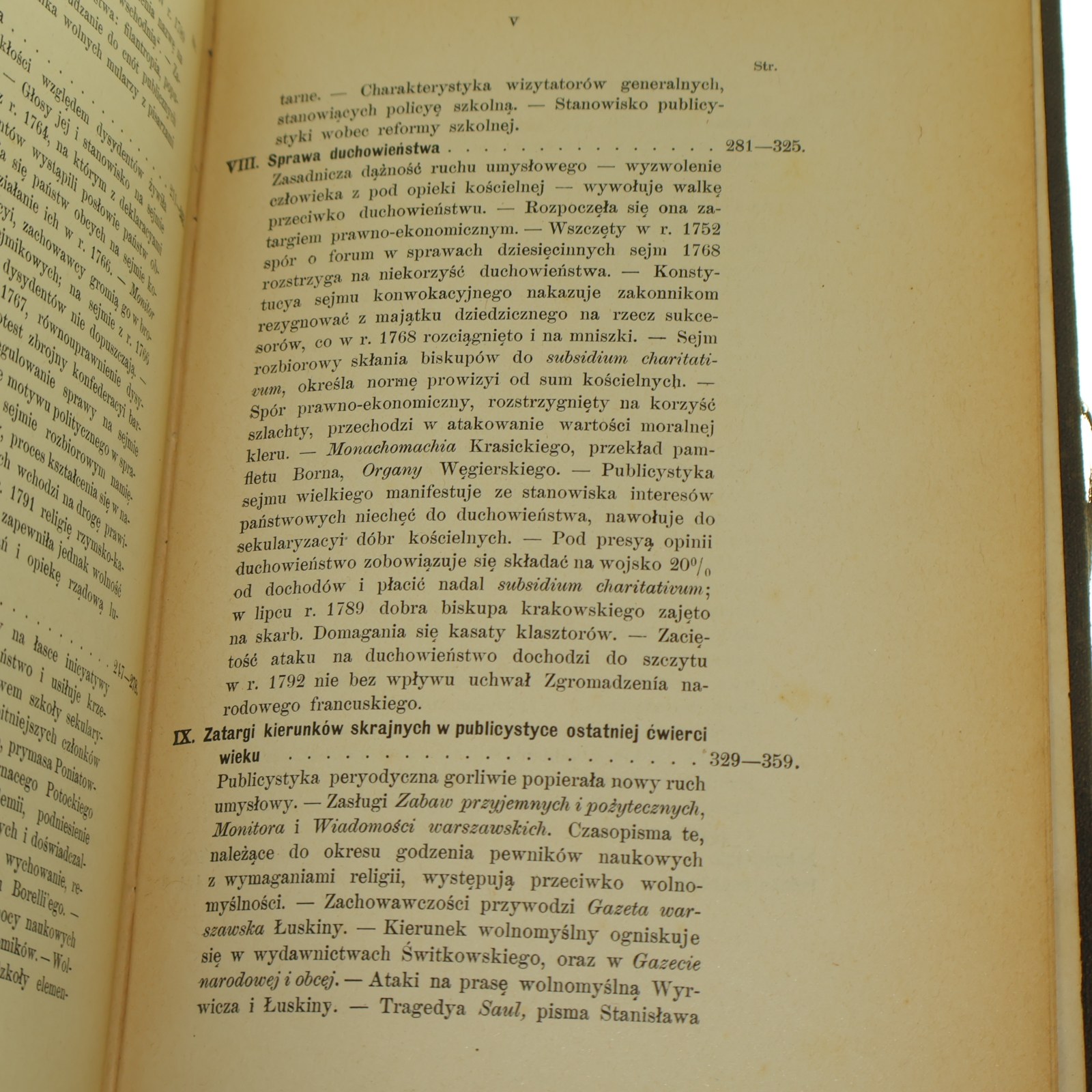
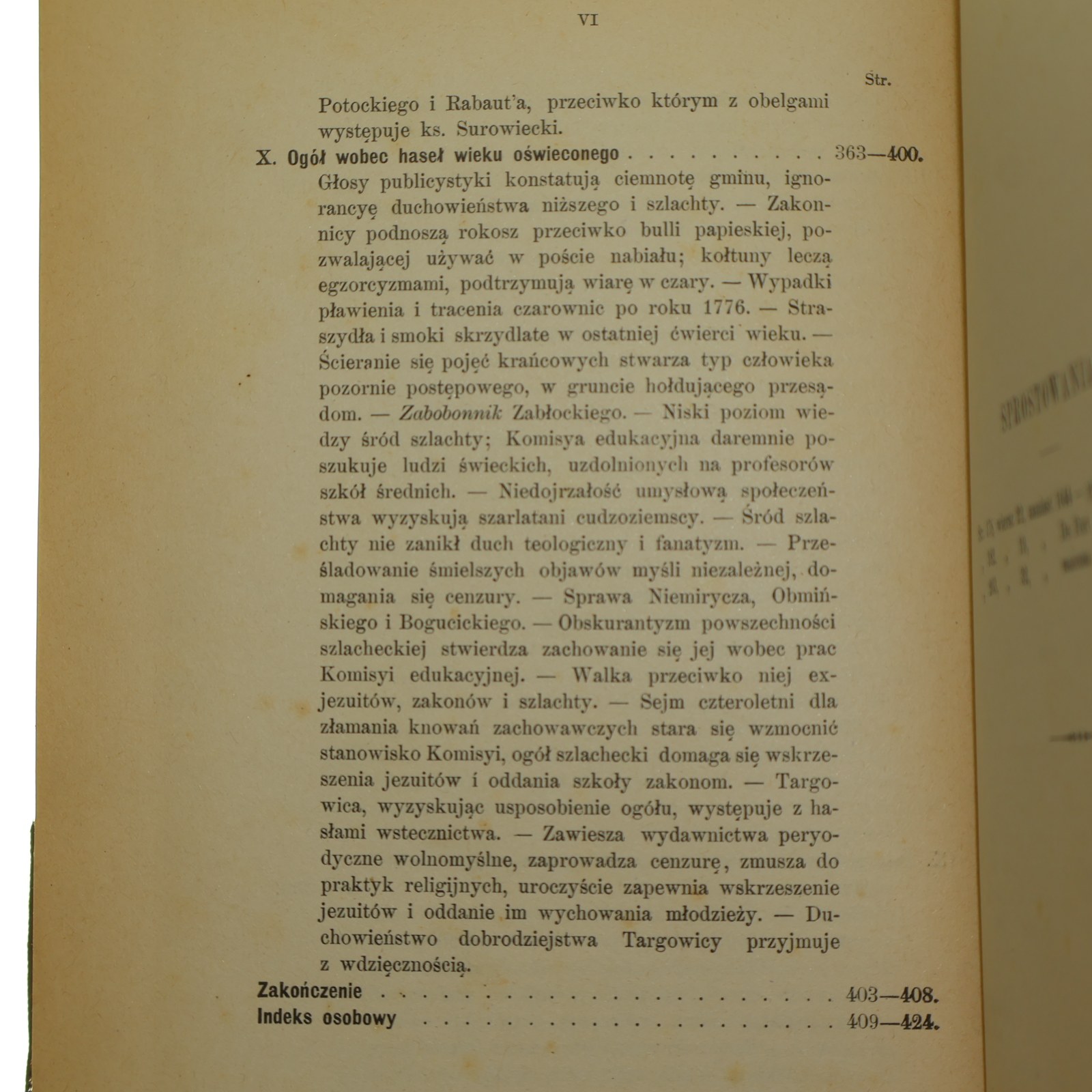
CONTENTS [sections]: Mindfulness in the era of Catholic reactionism / Philosophy / Fight against superstition / Religious skepticism / Free mularity / The dissident case / Secularization of the school / The case of the clergy / Clashes of extreme directions in the journalism of the last quarter of the century / General towards the slogans of the enlightened age.
[INTRODUCTION]
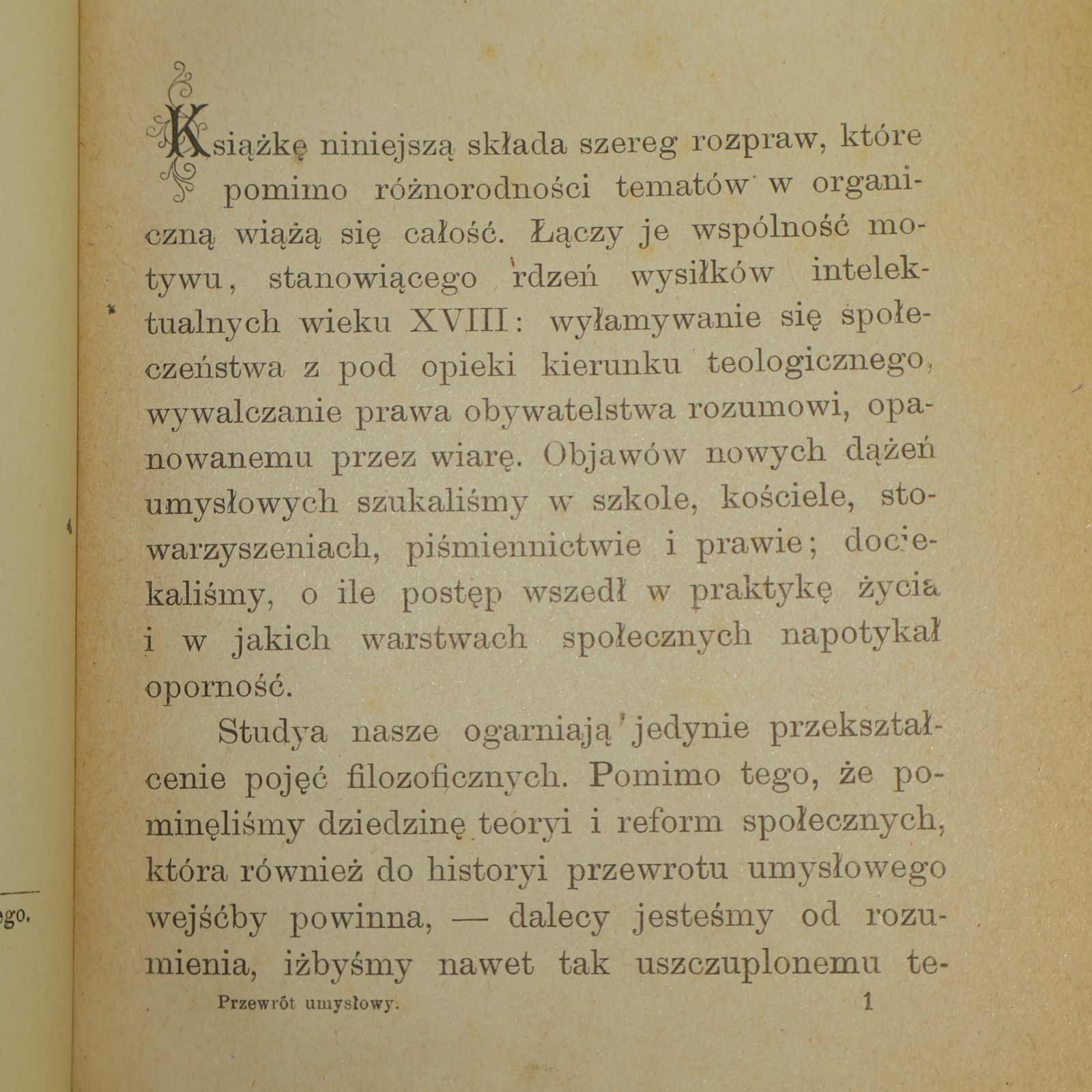
This book is composed of a number of dissertations, which, despite the diversity of topics, into an organic whole. They are united by the commonality of motive, which is the core of the intellectual efforts of the 18th century: the breaking out of society from the protection of the theological direction, the winning of the right of citizenship to reason, mastered by faith. We looked for manifestations of the new mental aspirations in school, church, associations, writing and law; we inquired to what extent progress had entered the practice of life and in which social strata it met resistance.
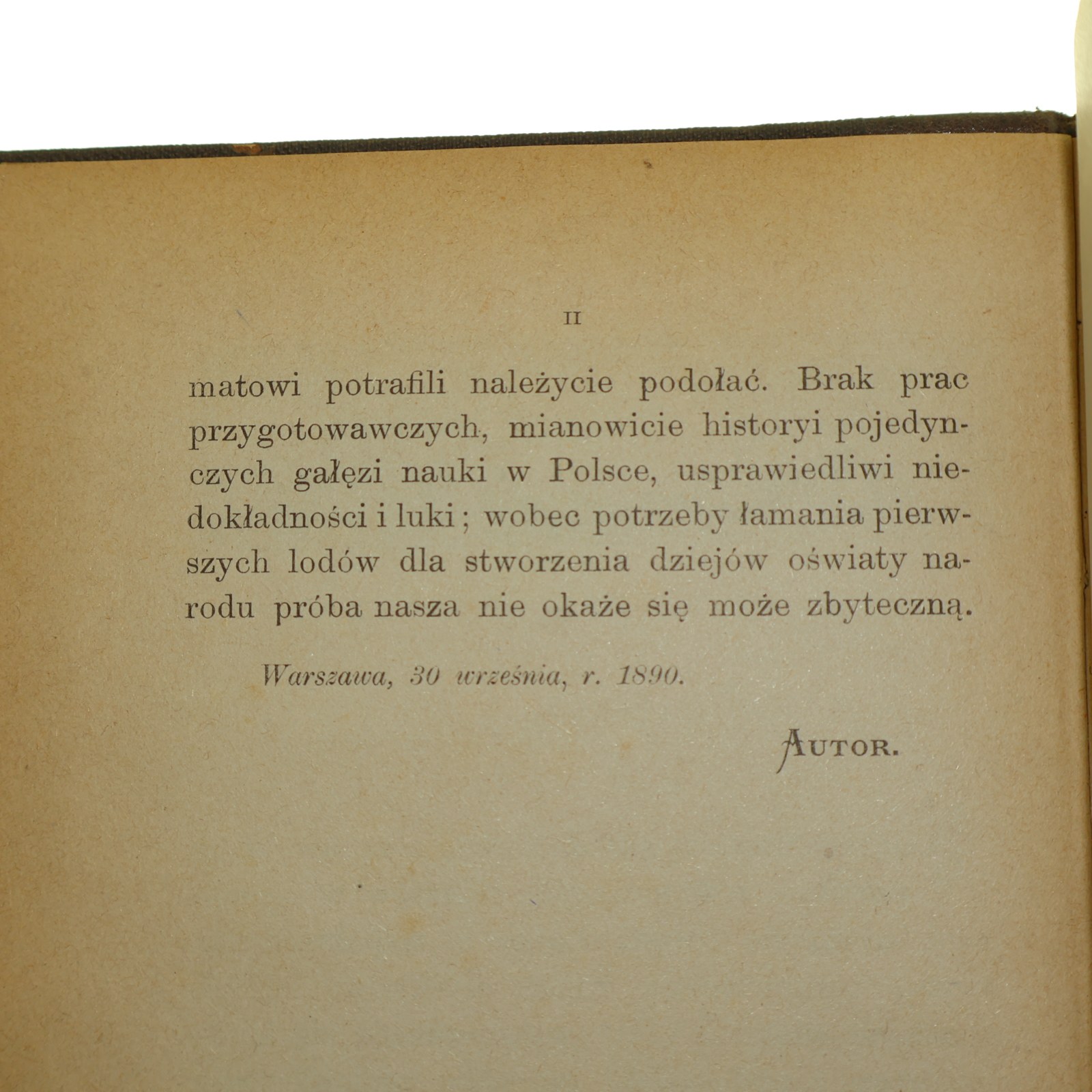
Our studies only encompass the transformation of philosophical concepts. Despite the fact that we have omitted the field of theories and social reforms, which should also enter the history of mental upheaval, - we are far from understanding that we would be able to cope adequately even with such a depleted subject. The lack of preparatory work, namely the history of individual branches of science in Poland, will justify the inaccuracies and gaps; in view of the need to break the first ice for the creation of the history of the nation's education, our attempt may not prove superfluous.
Warsaw, September 30, 1890.
AUTHOR.
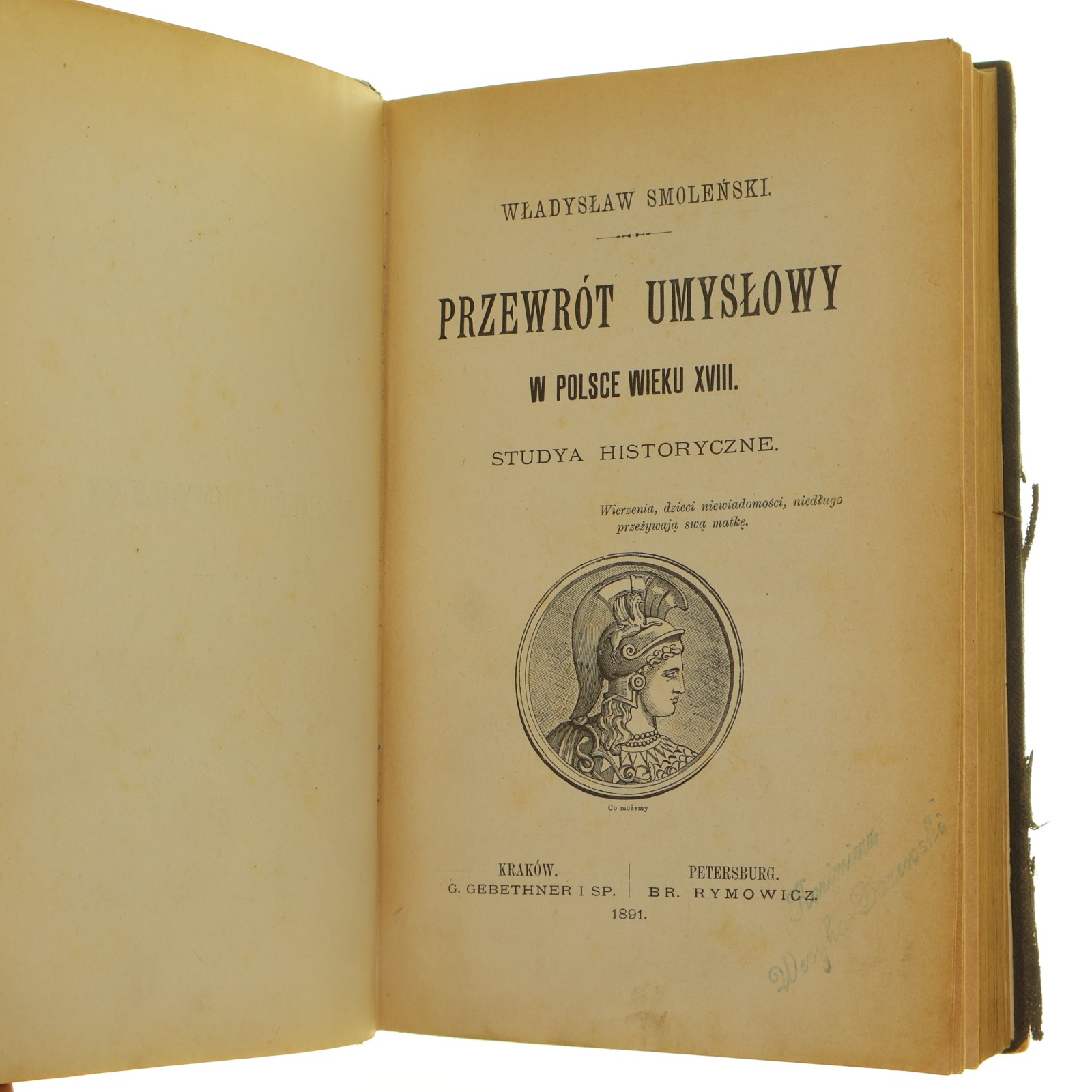
author: Smoleński Władysław
Title: The mental upheaval in Poland of the XVIII century. Studya historyczne
series publisher: no information
place of publication: Cracow - St. Petersburg
year of publication: 1891
publisher: G. Gebethner / B. Rymowicz
number of pages: 426, VI, [1]
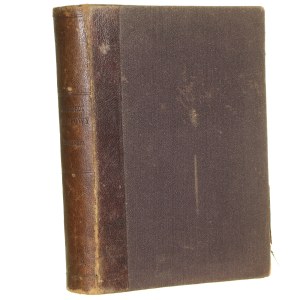
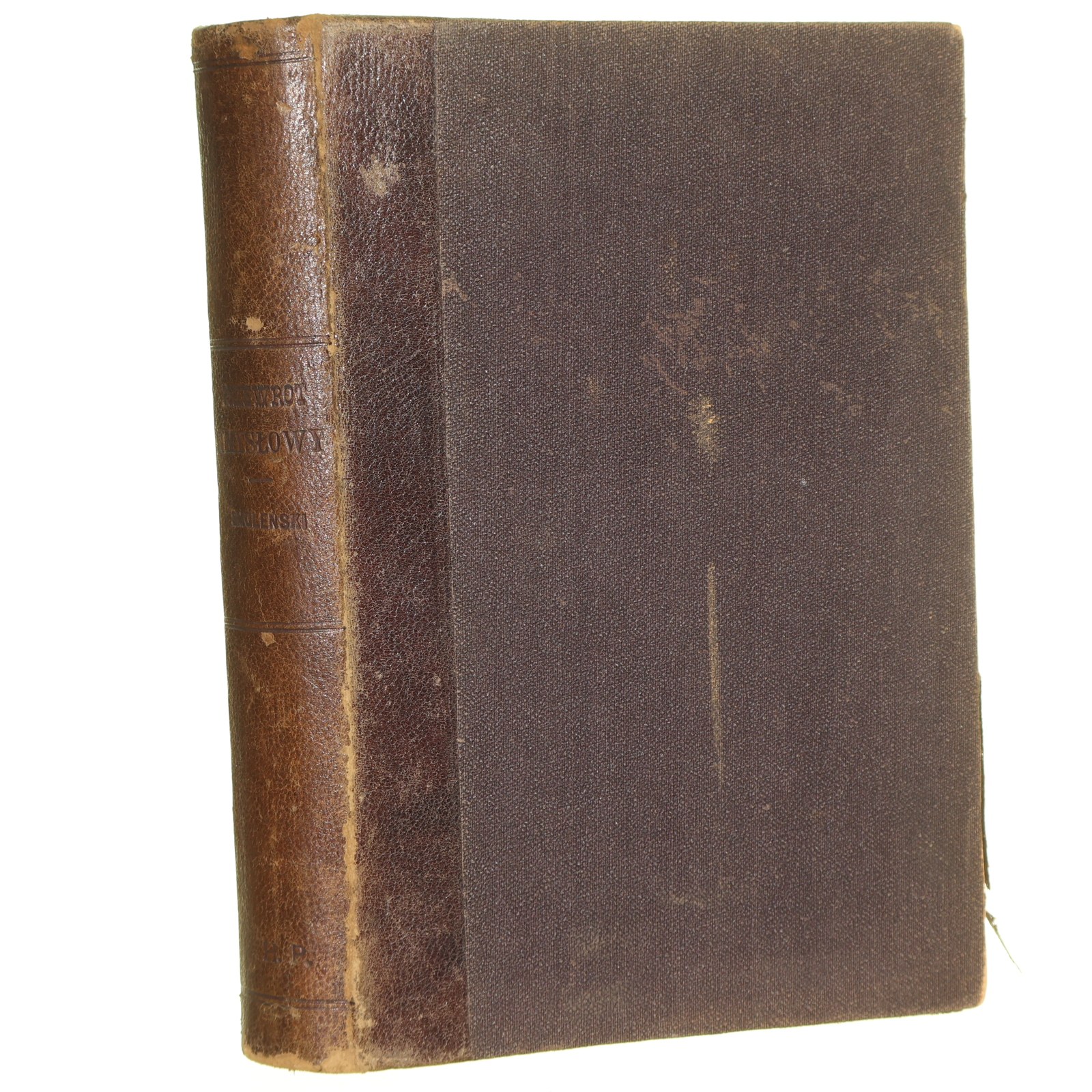
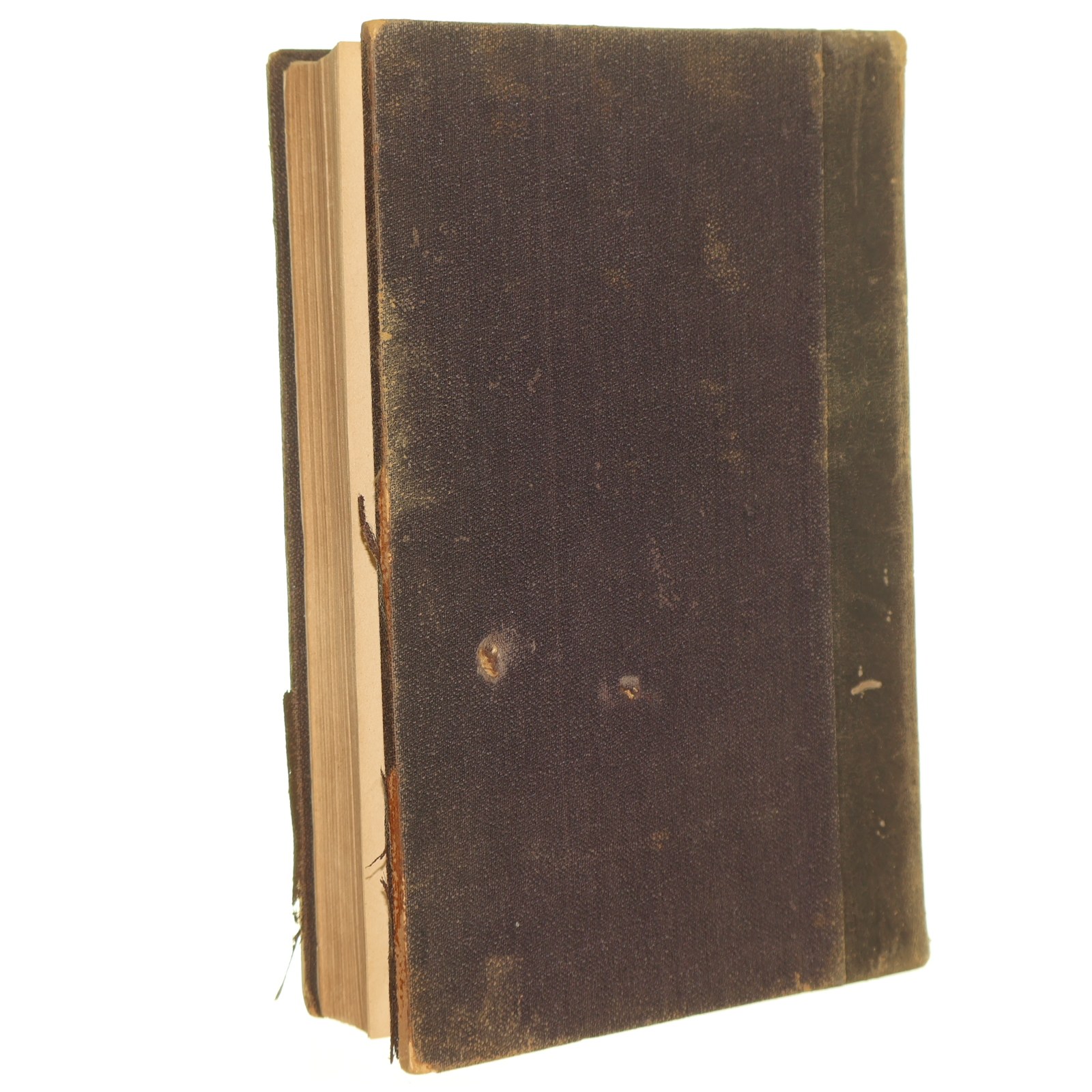
type of binding: half leather
format: 21 cm
additional information: Vignettes en tete.
condition: db. [notable rubbing of edges and corners of binding, rubbing of edges of binding, [2] owner's stamp on p. fore-edge and title].