


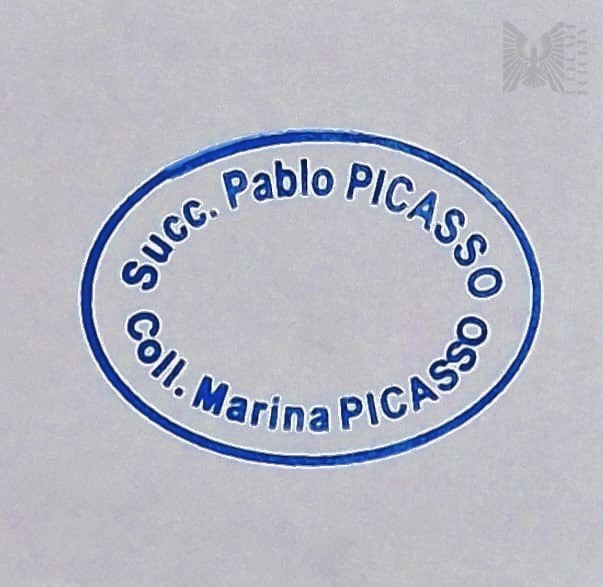
Color lithograph, paper specially produced for this edition by Cartier Sterzi, 47 x 32 cm (inside dimensions) in a 57 x 42 cm mat; published by Centro Diffusione Cultura Milano under license from the Pablo Picasso Estate (with an oval “Succ. Pablo Picasso” stamp on the reverse), edition of 1,000 copies; the lithographic plates were destroyed to prevent unauthorized prints.
The image depicts an intimate, private moment in the lives of itinerant circus artists (known as saltimbanques):
Figures: On the left sits the father—an acrobat—in a tight-fitting harlequin costume with a distinctive cap on his head. In the center is the mother holding an infant in her arms. Her posture and delicacy echo classical Renaissance depictions of the Holy Family (e.g., works by Raphael). In the lower right corner sits a baboon (monkey), watching the child with the same tenderness and focus as the parents.
Color Scheme and Mood: The composition combines the cool blues and greens characteristic of the earlier Blue Period with the warm tones of pink and orange representative of the upcoming Rose Period. In terms of mood, the painting departs from the melancholy of Picasso’s earlier works, introducing a theme of family warmth and hope.
Following the Blue Period, Picasso’s work entered the Rose Period from 1904 to 1906. It was a time of optimism and a warming of the tone of his works after the melancholic Blue Period. Picasso’s Rose Period, spanning 1904–1906, marked a significant turning point in his life and art. It was characterized primarily by a warm color palette dominated by shades of pink, orange, and brown, which contrasted with the cool tones of the preceding Blue Period. This evolution in color reflected a shift in the artist’s mood, as he moved from melancholy to more optimistic, though still contemplative, themes.
His painting technique during the Rose Period became significantly more refined. Picasso began to employ more complex textures and experiment with lighting effects, which allowed him to emphasize the psychological depth of his figures—primarily drawn from circus life, such as traveling performers, clowns, acrobats, and harlequins, among others. This new formal sensibility was also linked to the artist’s personal stability, which began with his meeting and collaboration with the model Fernanda Olivier, who brought him not only inspiration but also emotional balance.
The works from the Rose Period play an important role in Pablo Picasso’s biography and serve as a bridge between his earlier, dramatic works and his subsequent stylistic experiments, which revolutionized 20th-century art and marked the birth of Cubism.











Viimeksi katsotut
Kirjaudu sisään nähdäksesi kohdeluettelon
Suosikit
Kirjaudu sisään nähdäksesi kohdeluettelon