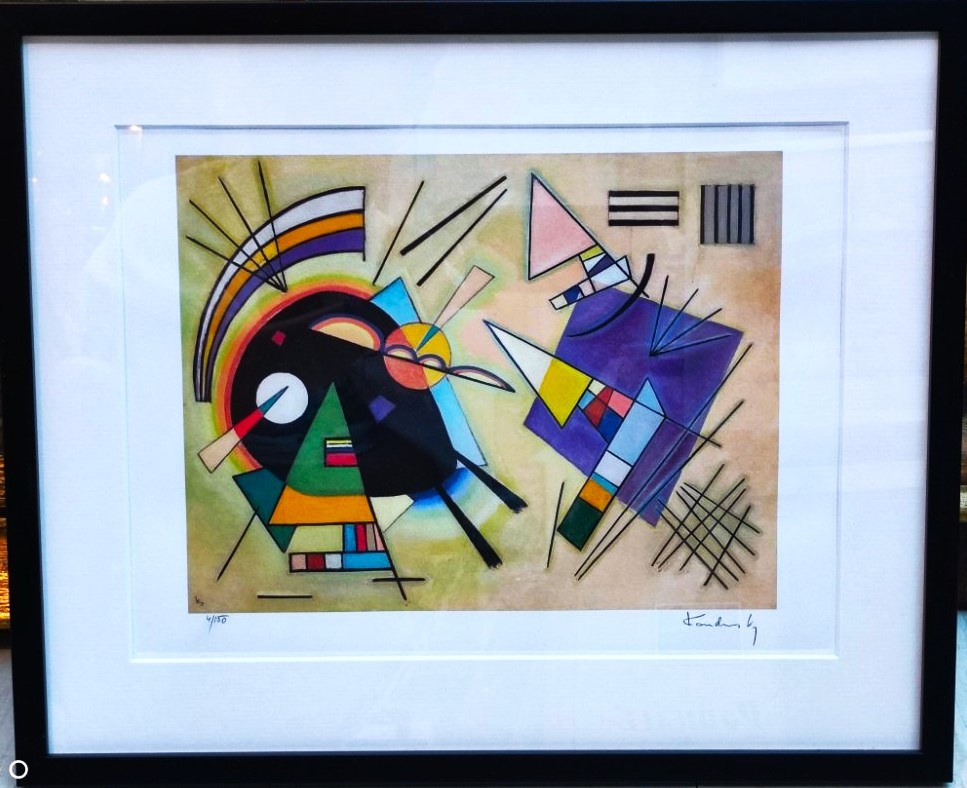
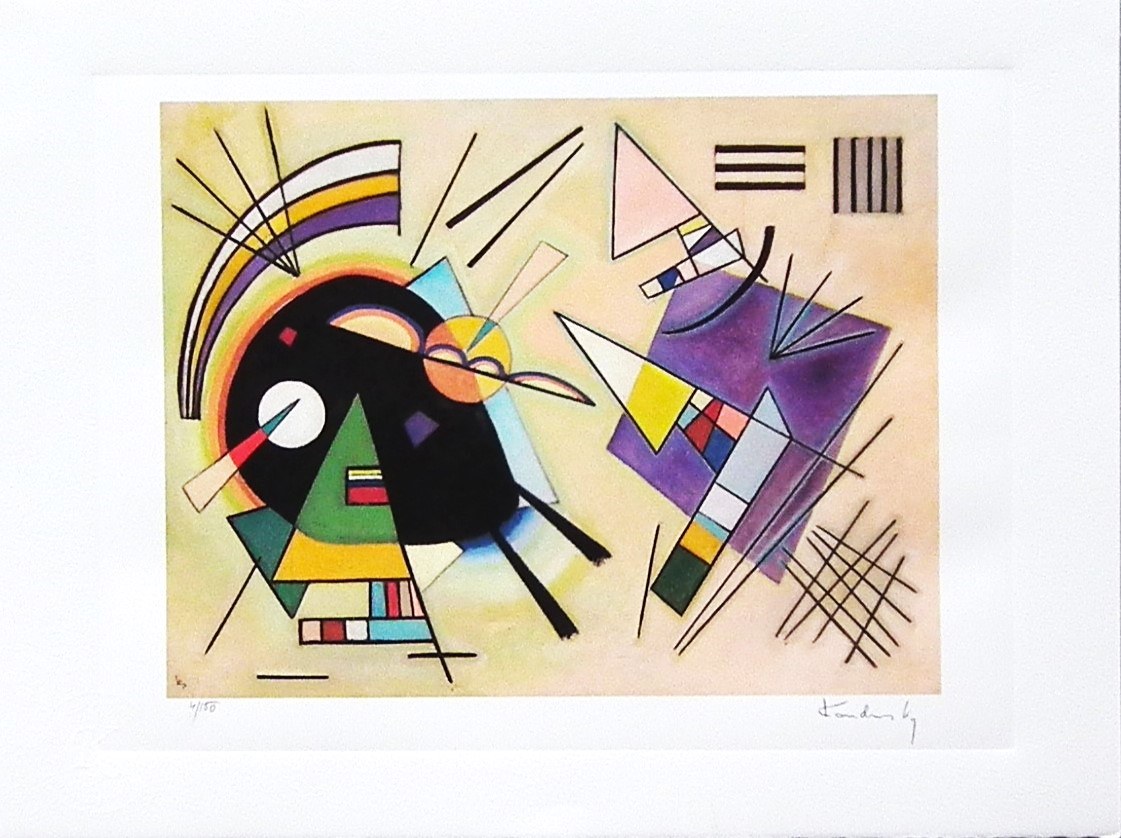
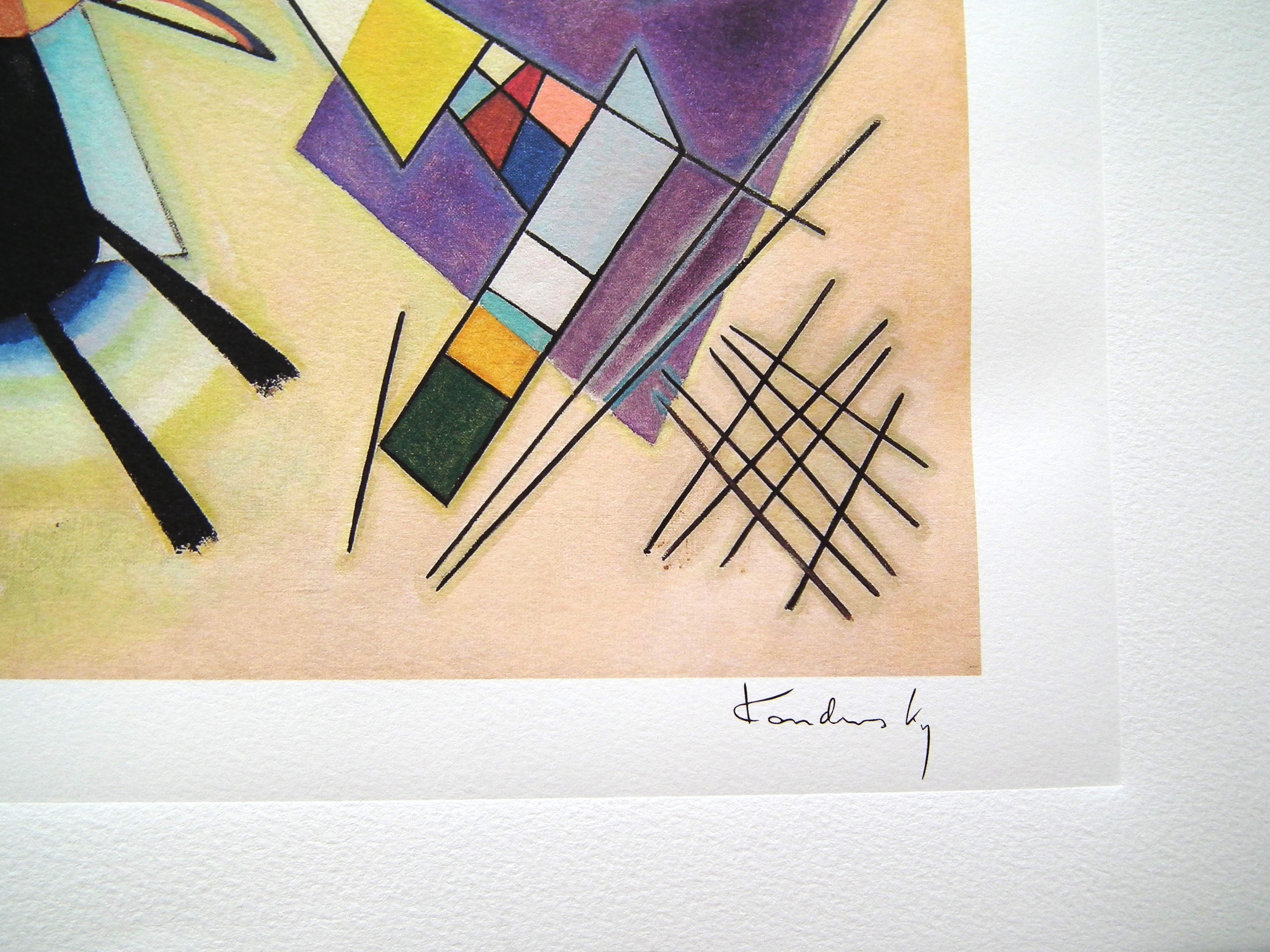
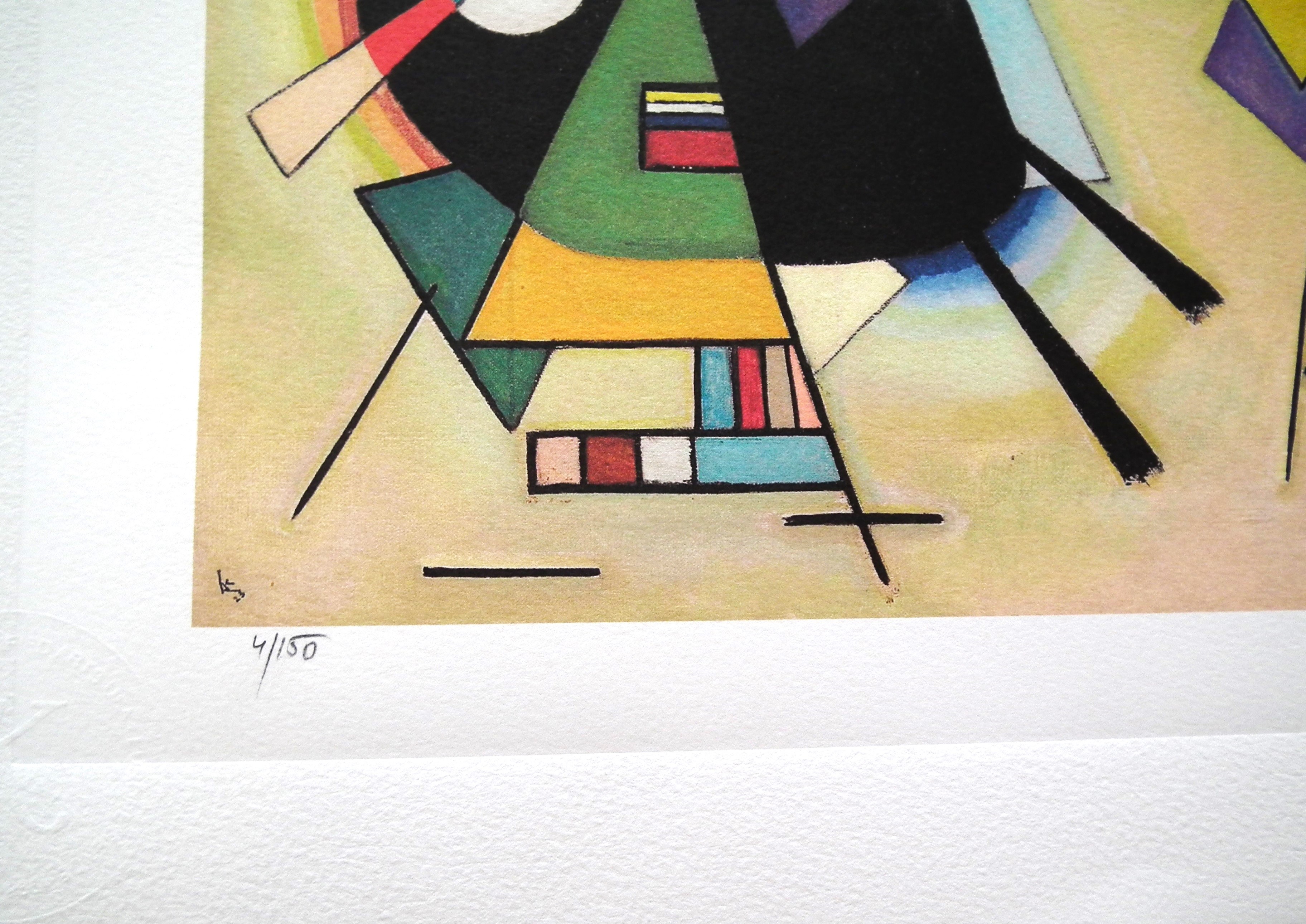
Color heliogravure, Arches France velin paper with high weight watermark; 23 x 31 (plate imprint), 28 x 38 (sheet), numbered in pencil 4/150, signed from plate under composition "Kandinsky", publisher's dry stamp l.d. : letter K surrounded by the words "EDITION LIMITED CERTIFIED ARTS USA EUROPE SINCE 1998".
Heliogravure, widespread in the 19th century, was later supplanted by rotogravure, as heliogravure is an expensive and very time-consuming method. Nowadays it is sometimes used in artistic graphics. Plates obtained by heliogravure can be supplemented by other methods of intaglio printing techniques. Occasionally, this technique is also used in the reproduction of works of art, when it is necessary to create a small number of copies of very high quality
"Black and Violet" (German: "Schwarz und Violett") - Wassily Kandinsky's painting is a masterpiece of abstract art that has captivated art lovers since its creation in 1923. The painting is in the collection of the Solomon R. Guggenheim Museum in New York.
The composition of "Black and Purple" is a mixture of geometric shapes and curved lines that are intertwined to create a feeling of movement and depth, to create a sensation of tension and balance.
The color black in Kandinsky's work often symbolized mystery, the unknown, and sometimes negative emotions or forces. Kandinsky saw black as the color of the end, silence and stillness, but also as a potential source of new beginnings. Purple, which is a combination of blue and red, symbolized spirituality and mysticism for Kandinsky. Kandinsky attributed to purple the qualities of introspection, melancholy and meditation. For him, purple was the color of contemplation and spiritual exploration.
Kandinsky was deeply inspired by music, especially the work of composers such as Arnold Schönberg. His theory of synesthesia, in which different senses intermingle, was central to his approach to painting. He believed that colors could evoke emotions similar to those of music, and that a painting composition could imitate a musical structure.
Kandinsky created this work during a period of his life in which he experienced color theory and spirituality. He believed that colors had emotional and spiritual power and that they could be used to create a connection between the artist and the viewer.