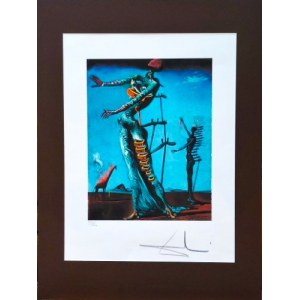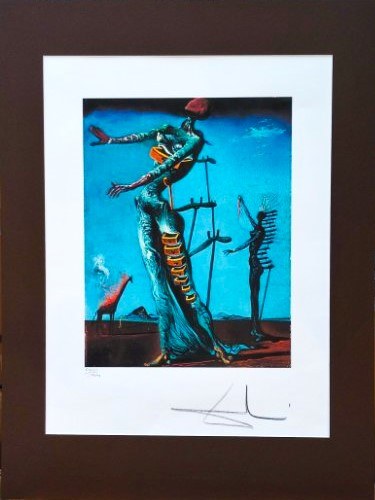
Lithograph, sheet: 66 x 50cm, composition: 40 x 30cm, the print is numbered in pencil (LXXVI/MM) and hand-signed below the composition, dry-embossed stamp OKRĄGŁA WITH CORONA, inside DALI - publisher's mark l.d, watermark BFK LIVERS FRANCE , infinity sign (the symbol is the initials of the owners of the Rives mill in France at the beginning of the 19th century - Blanchet Frères & Kiebler, a producer of excellent quality paper), on the back hologram "verification of authenticity".
"The Burning Giraffe"("La Girafe en Feu") is one of the most famous paintings by Salvador Dali, who is a leading representative of Surrealism. The work was created in 1937, at a time when the artist was in the United States, fleeing the turmoil of war in Europe.
Salvador Dalí was known for using rich symbolism in his works, and "Burning Giraffe" is no exception. Dali himself claimed that it was a "symbolic representation of the male cosmic apocalypse." The opening drawers in the women's bodies allude to Freud's theory of the subconscious. They may symbolize hidden desires, memories and emotions that are hidden deep in the human psyche.
The props that support the figures may suggest the fragility of human nature or the need for support in difficult times. They may also refer to man's impermanence and dependence on external forces.
The painting was created during a time of great unrest and political volatility. In 1937, Europe was on the brink of World War II, and Spain (Dali's homeland) was experiencing a brutal civil war. Although Dali initially supported Franco's fascist faction, he later expressed more ambivalent views on politics. "The Burning Giraffe" can be interpreted as a reflection of his personal fears and anxieties about the chaos in the world.