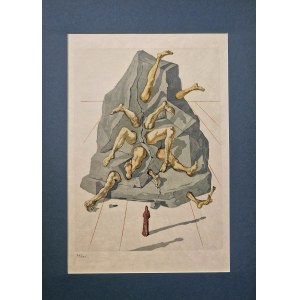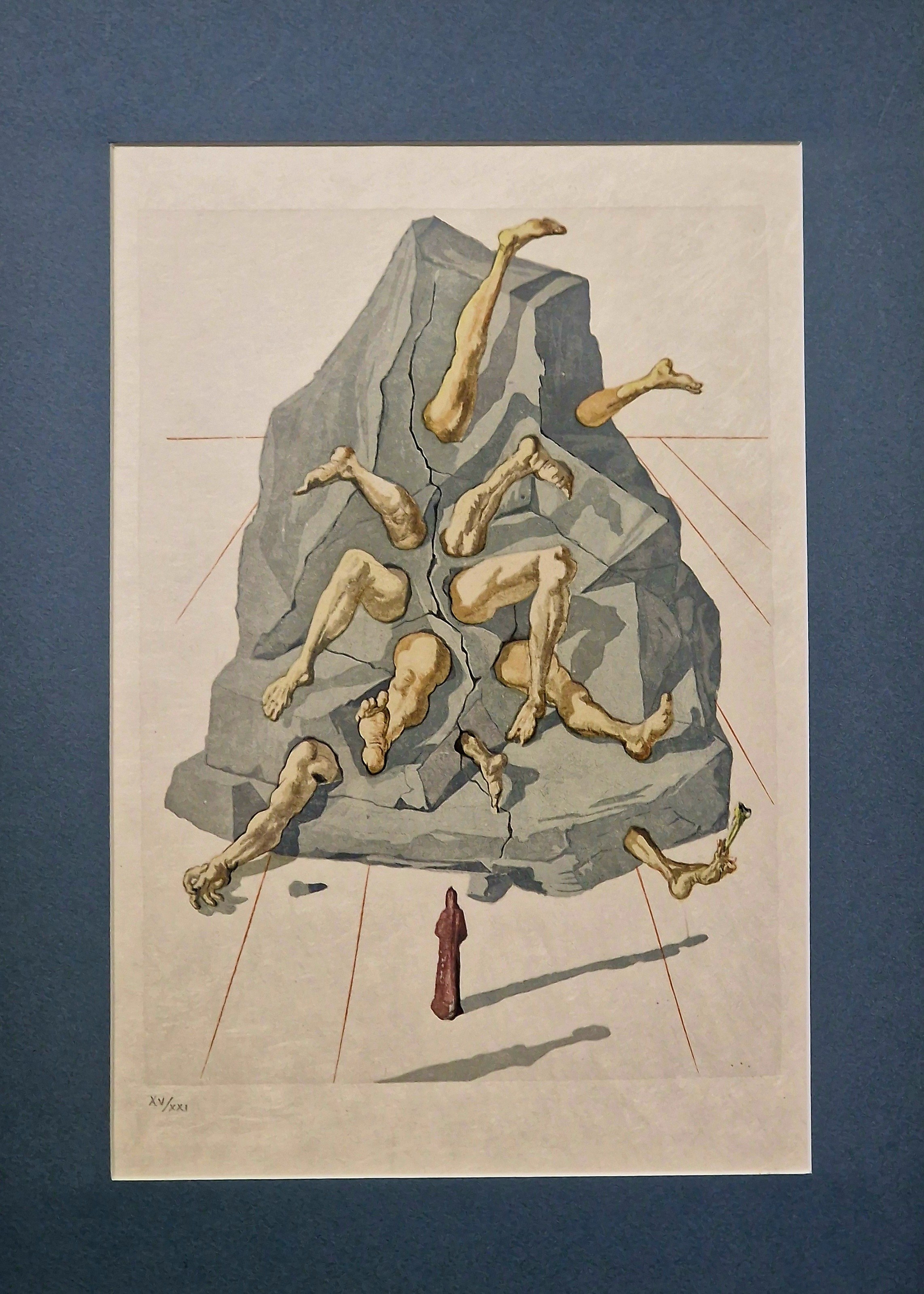
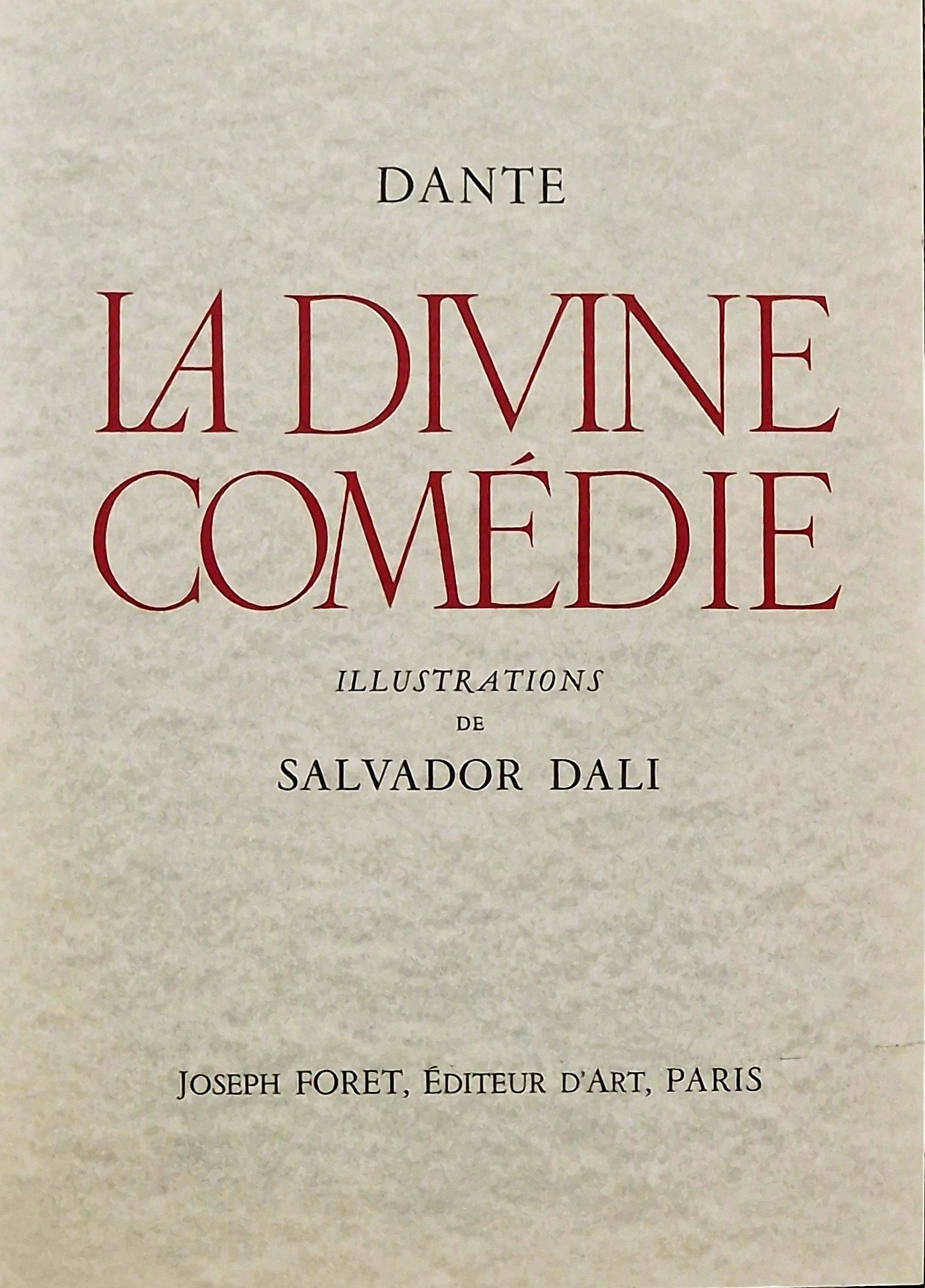
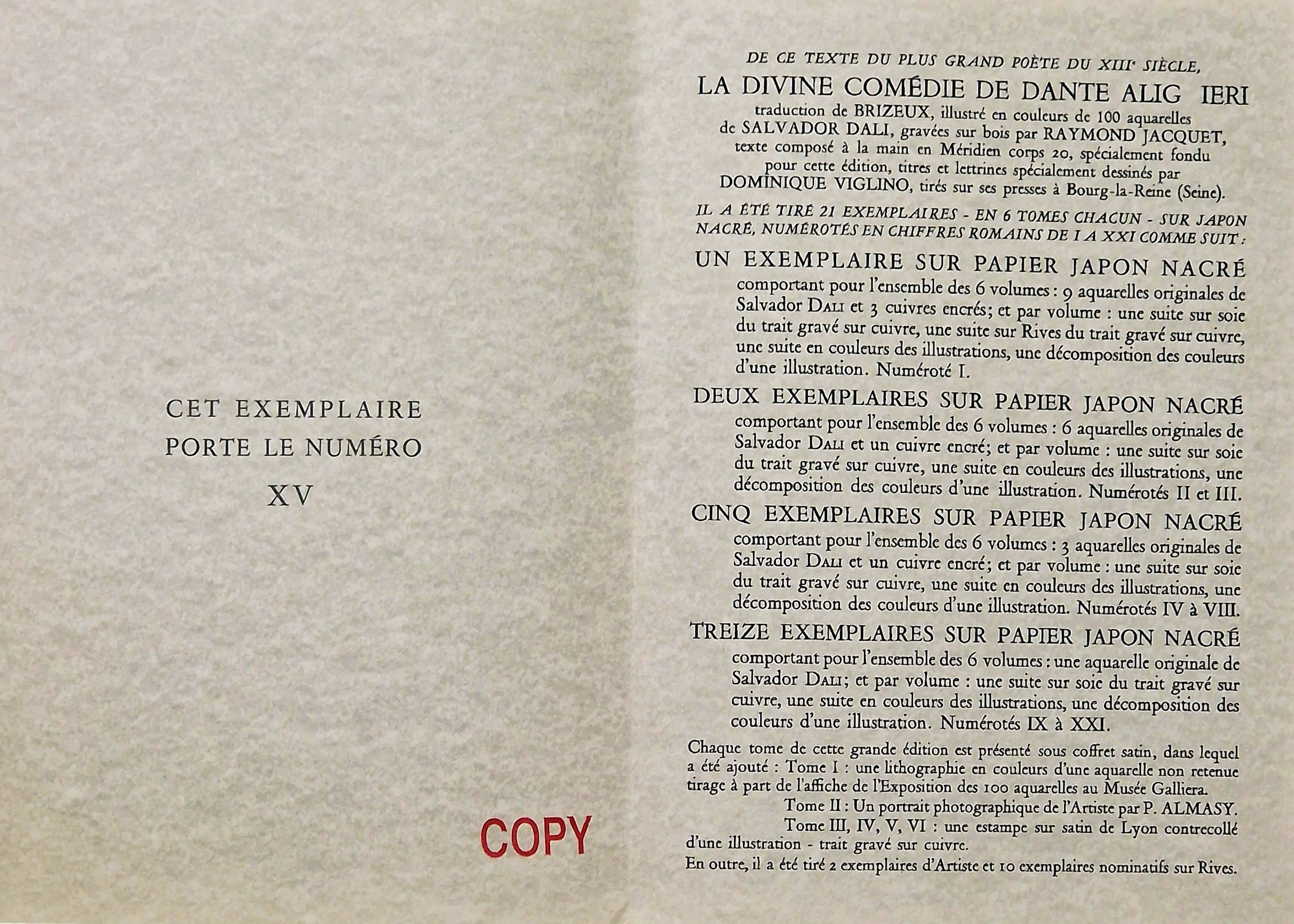
Original woodcut, from the series "La Divine Comédie", dimensions: 33 x 26.5 cm, first French deluxe edition, published by Joseph ForetParis1959/1963, on Japonnacrépaper. Limited edition of only 21 deluxe pieces numbered in Roman numerals, XV/XXI.
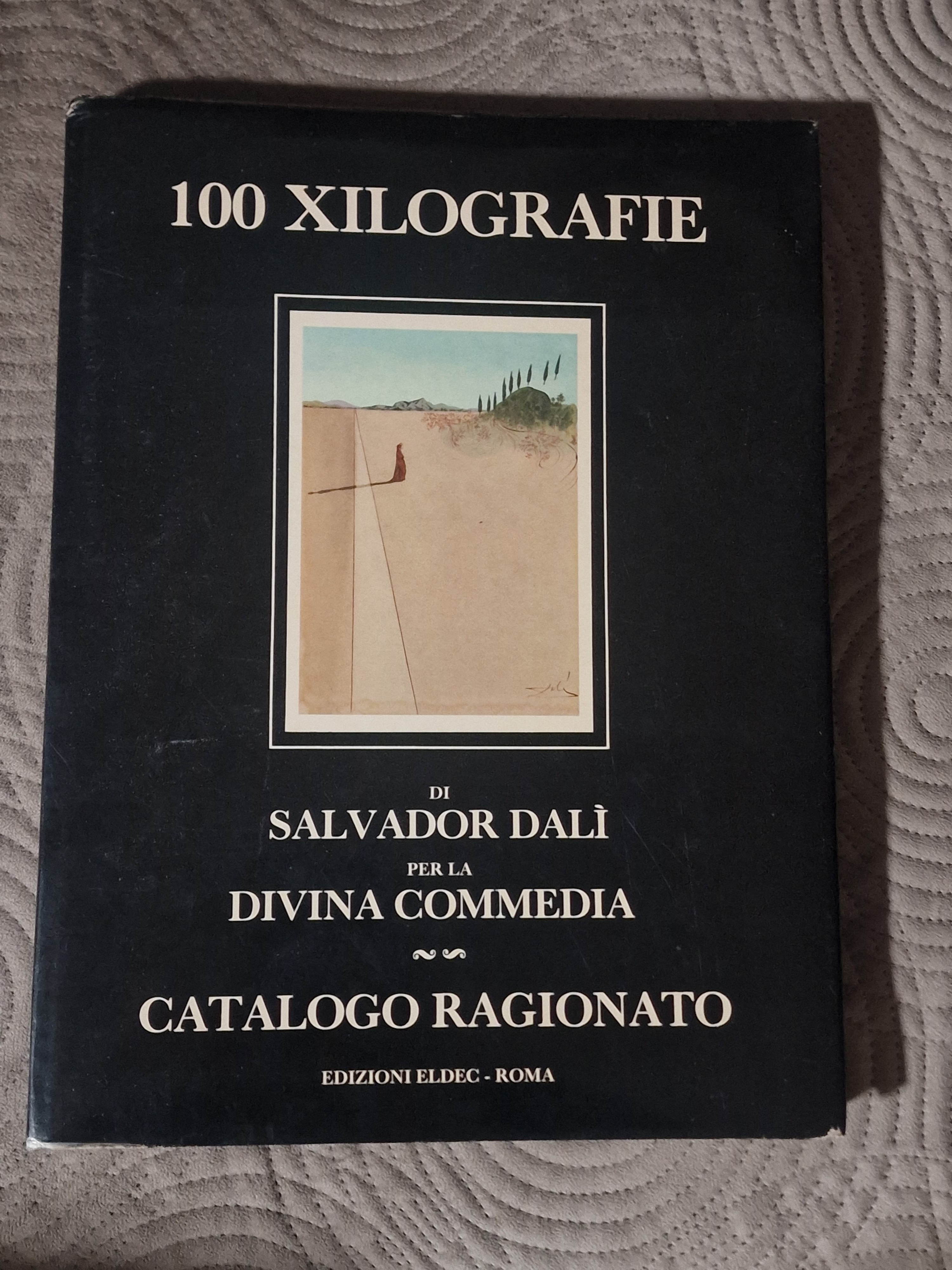
Salvador Dali's composition titled The Simoniac (Simonia- sacredness), was created as part of a series of works inspired by Dante Alighieri's "Divine Comedy."Dali was commissioned by the Italian government in 1951 to create 100 illustrations depicting thevarious hellish,purgatorialandheavenlyvisions described in that epic. It is Dali's surrealjourney through Heaven, Hell andPurgatorycombiningominousness andsensualitytodisturbingeffect.
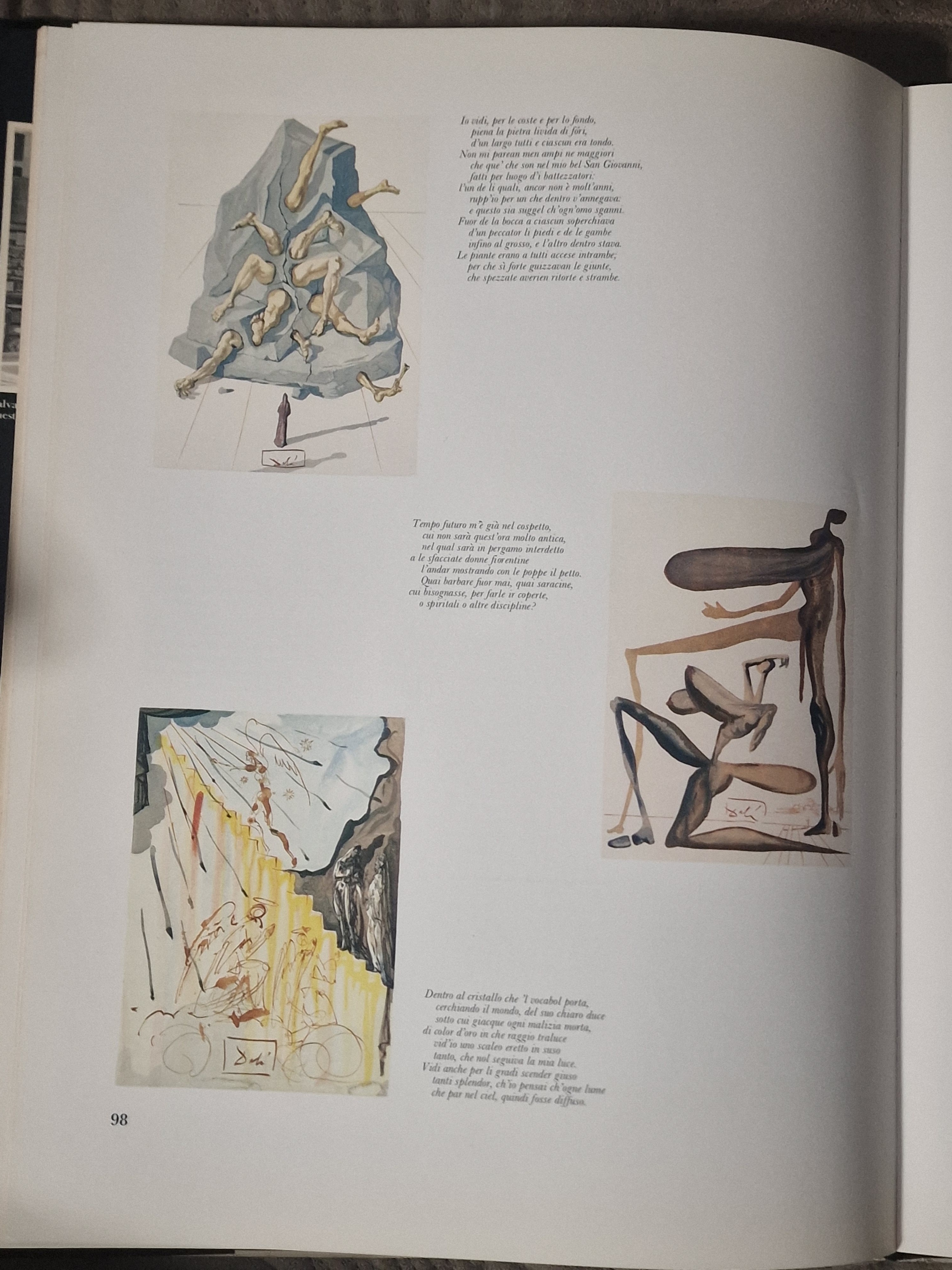
Salvador Dali's woodcut "The Simoniac" refers to the 19thsong "Inferno " from Dante's "Divine Comedy." In thissong,Dante describes thepunishment ofsimonists, or thosewho traded inecclesiasticaldignitiesand sanctities.
Thesimonistsare in the third bolgia (stone valley) of the eighthcircle ofhell, called Malebolge. They are punished by havingtheirbodies wedgedheaddown in tight rock openings, with their feetstickingoutandbeing consumed byflames.This is a symbolicreversalofbaptism and their spiritual corruption. In thissong,Dante speaks toPopeNicholasIII,whois in this bolgia, and prophesies thathe will be joined inthe future byPope Boniface VIII,alsoaccusedofsimony. In the centerofthe illustrationisa figure ina long, dark robe - probably Dante or Virgil -observingthis grotesque and surreal performance. The artwork captures the atmosphere of suffering, absurdity and punishment typical of the descriptions of hell from the "Divine Comedy."
Salvador Dali's illustrations to Dante Alighieri's "Divine Comedy" have won both acclaim and controversy internationally. The project was designed to commemorate the 700th anniversary of Dante's birth and was initially commissioned by the Italian government in 1950. The decision tohaveDali, aSpanishsurrealist, illustrate a workconsidereda cornerstoneof Italian literature was met with mixed reactions.
After the decision to entrust Dali with this task was announced, protests erupted in Italy. Many criticsfeltthat the illustration of "The Divine Comedy," suchan importantwork in Italian literature, shouldhave been commissioned to a nativeartistrather than a foreign artist. Dali, despite his fame, was a surrealist artist, which to many seemed inappropriate inthe context of Dante's classic work.
Due to this controversy, the Italian government eventually withdrew from the project. Nevertheless, Dali continued to work on the illustrations, which were eventually published by a French publishing house. Despite the initial controversy, over time Dali's illustrations began tobe appreciated for theiruniqueness andboldinterpretation. Dali created 100 watercolors, one foreachsongfrom "The Divine Comedy," which show not onlythe content of the poem, butalso Dali's surreal vision of the world.
The framing shown in the visuals is for illustrative purposes and does not constitute a commercial offer.
The work comes with an elegant copy of the title page, along with descriptions of 21 individual numbered pieces.