


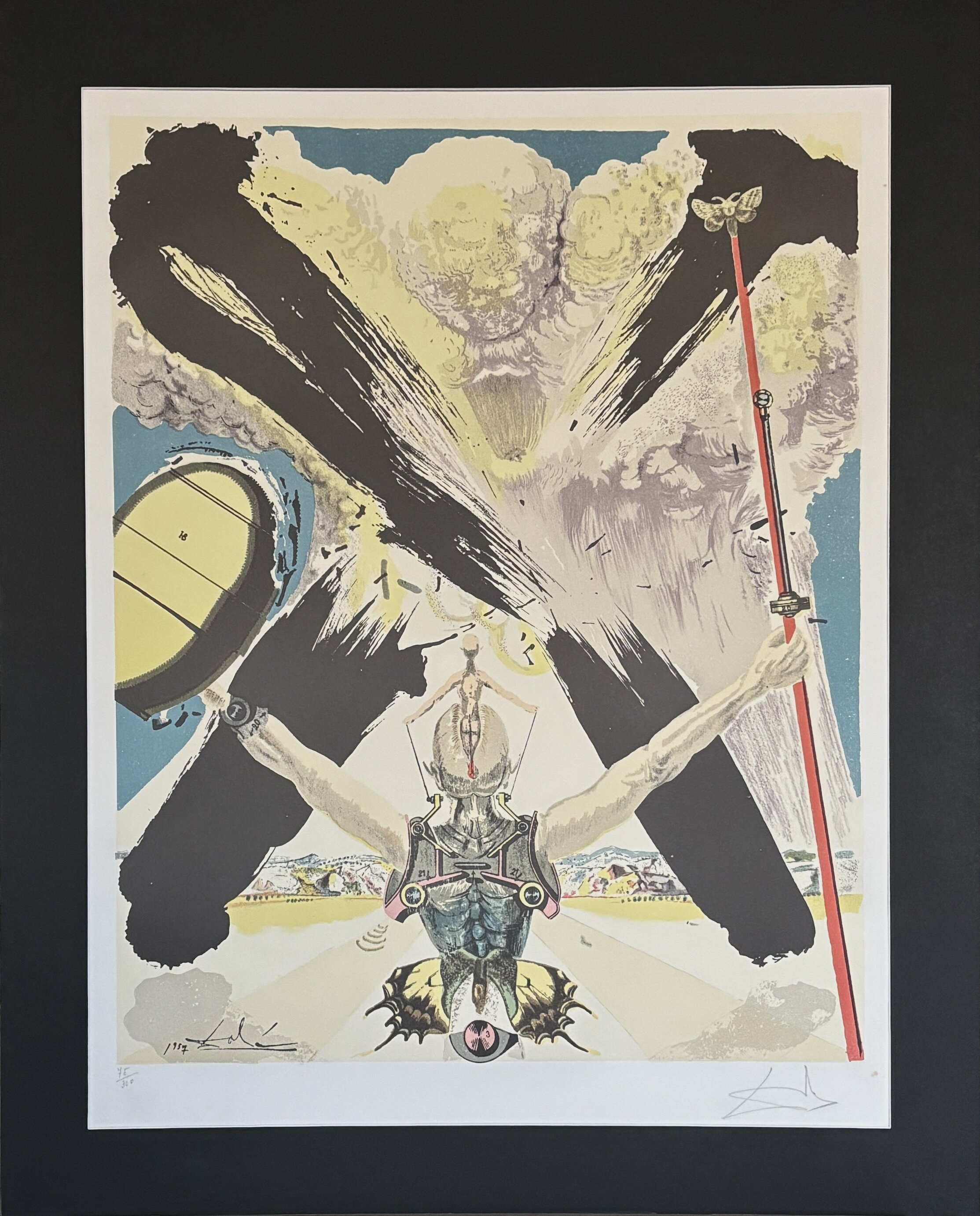

Color lithograph on Velin Arches paper, Arches paper, size: 58 x 46 cm (composition); 75 x 55 cm in passe-partout frame.
Limited edition, hand-numbered (75/300)
Signed and dated from plate l. d. (in composition): "1957 Dali", signed in pencil by the Author.
Publisher: Levine & Levine / Dalart (New York/Curacao)
The works published by Levine & Levine are well described in catalogs raisonné (the most important inventories of Dali's works), including those by Albert Field.
Literature:
Cataloque Michler Ralf Löpsinger Lutz W.; p. 1117.
Provenance: private collection Paris
One of Salvador Dalí's most famous lithographs from his 1957 "Don Quijote de la Mancha" series, for which Dalí used a sculpture of a rhinoceros horn filled with ink, which he then projected onto a lithographic stone. The work combines Dalí's classical fascination with the figure of Don Quixote with the technique of tachism (expressive, almost random brushstrokes that form an "X"). The large, black "X" shaped form is a deconstruction or abstract form of a large figure, which may symbolize the windmill or giant that Don Quixote is fighting. This motif of chaos and destruction perfectly captures Dali's paranoid-critical method, while alluding to the madness and idealism of Cervantes' hero.
We see a silhouette that seems to break free from its armor or cocoon. At the bottom and on top of the costume appears a butterfly - for Dali a symbol of the soul, metamorphosis and transience. In the background looms the stark Catalan landscape (the area around Port Lligat), which is the artist's trademark.
The frames shown in the visualizations are for illustrative purposes only and do not constitute a commercial offer.










