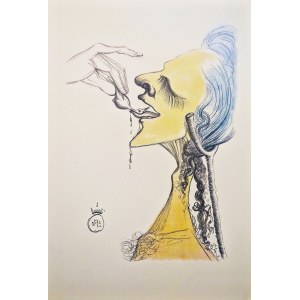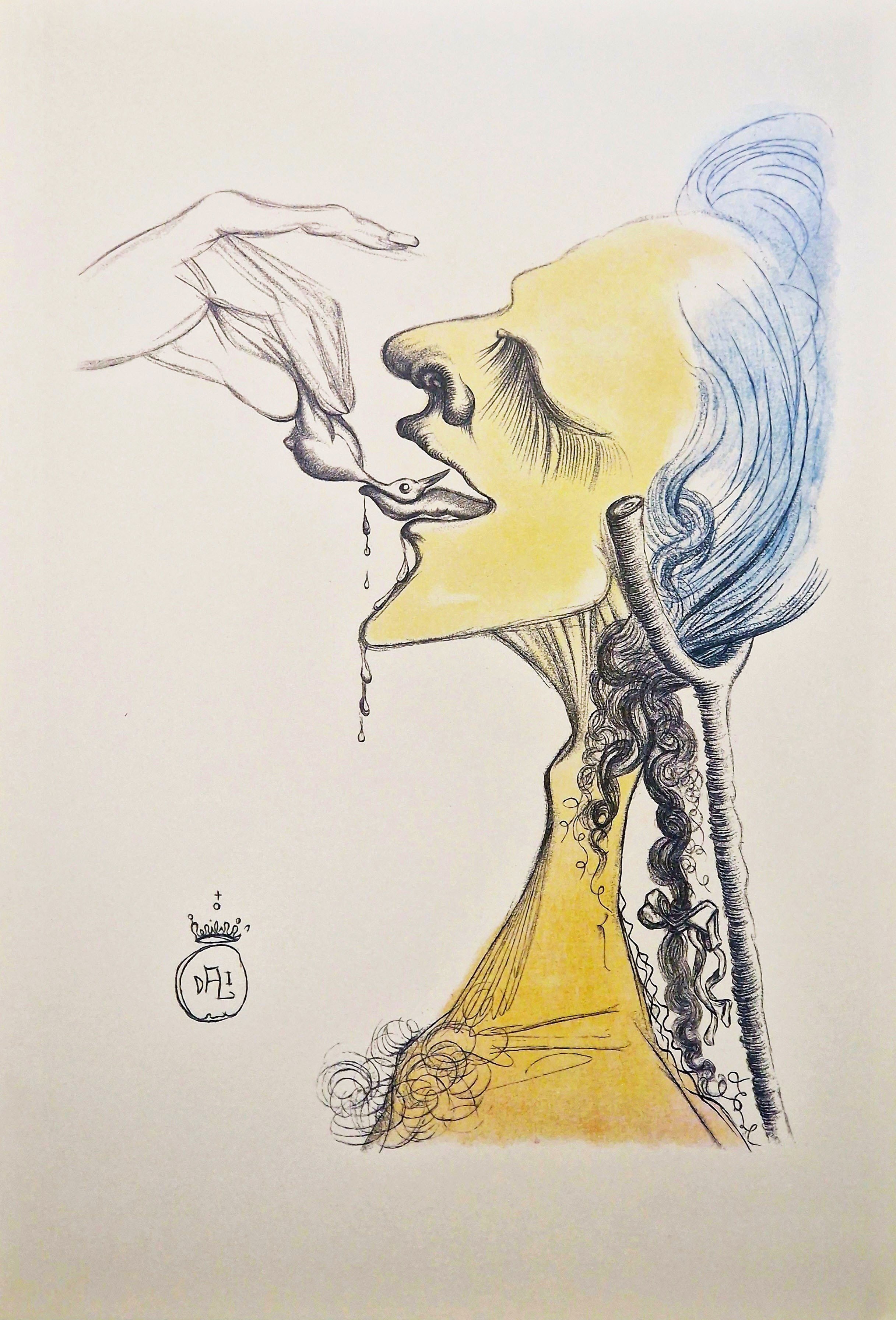
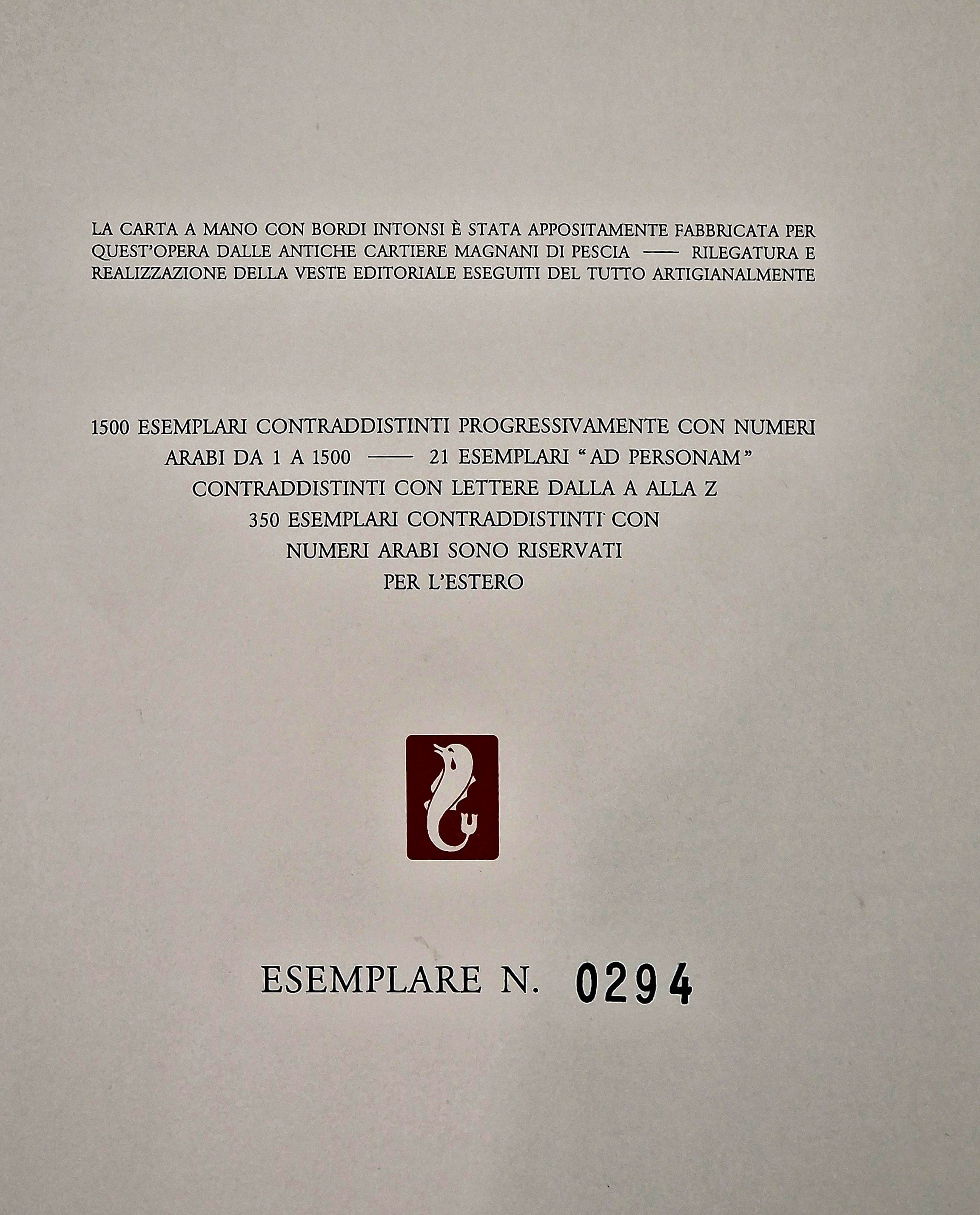
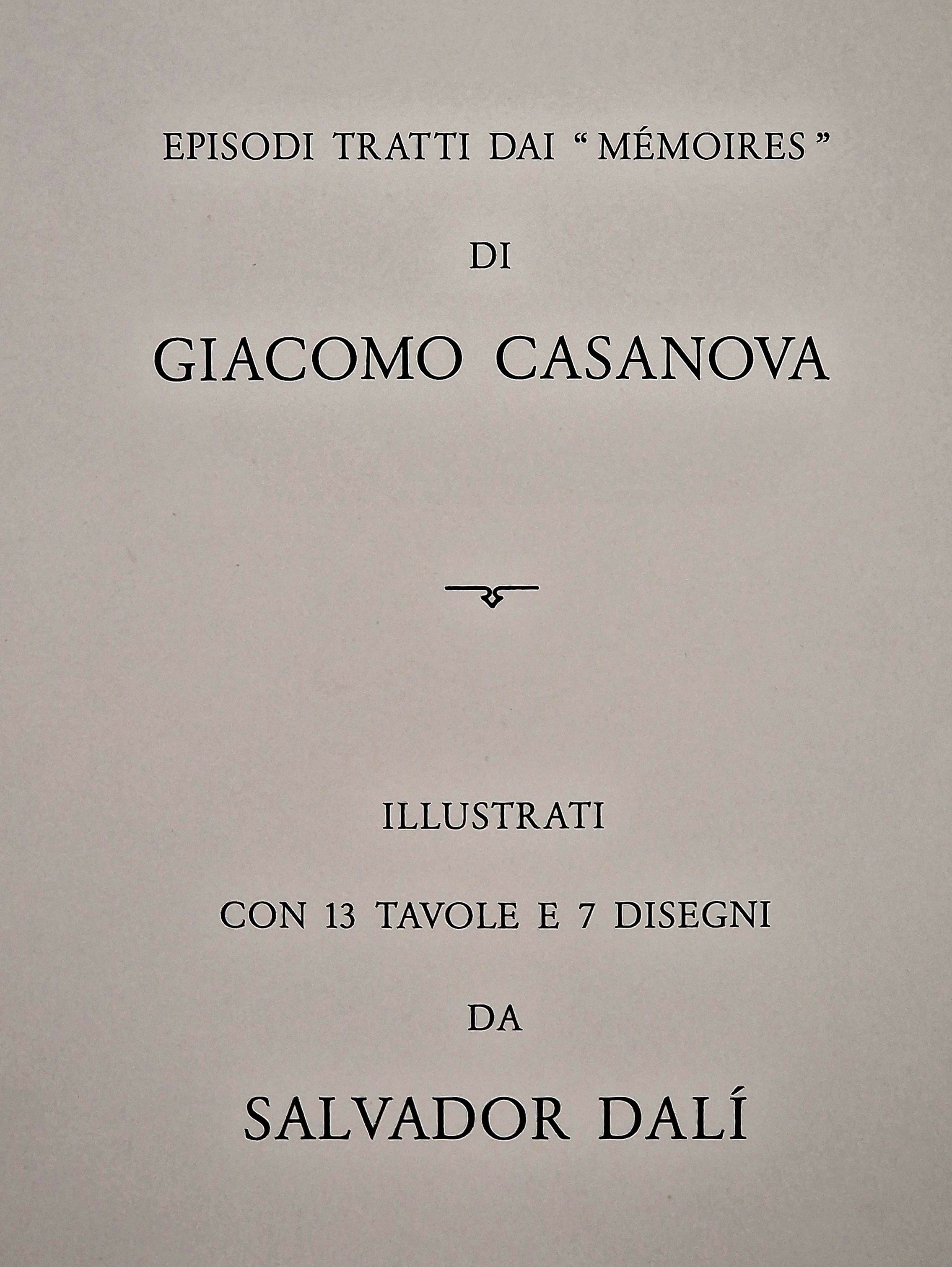
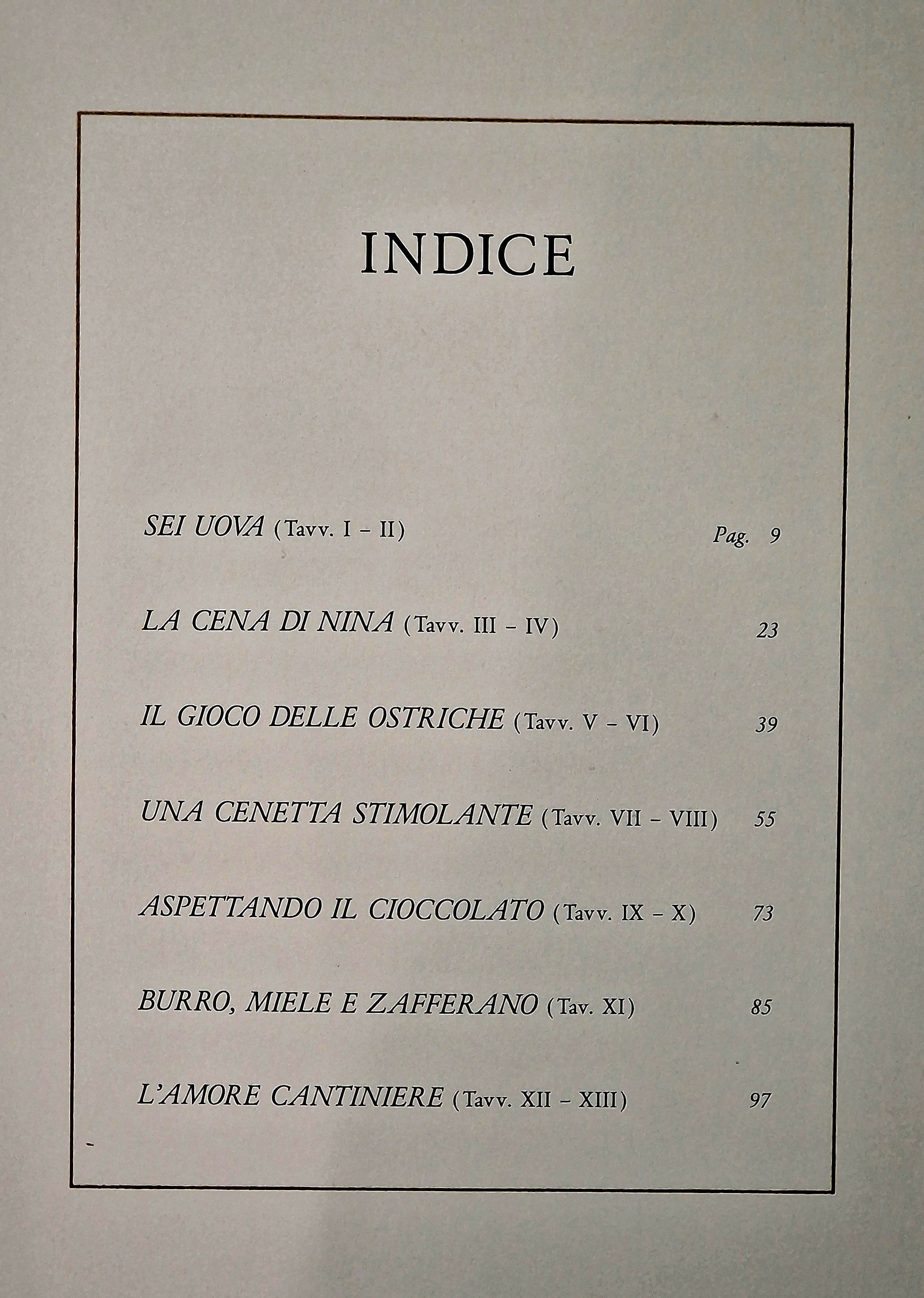
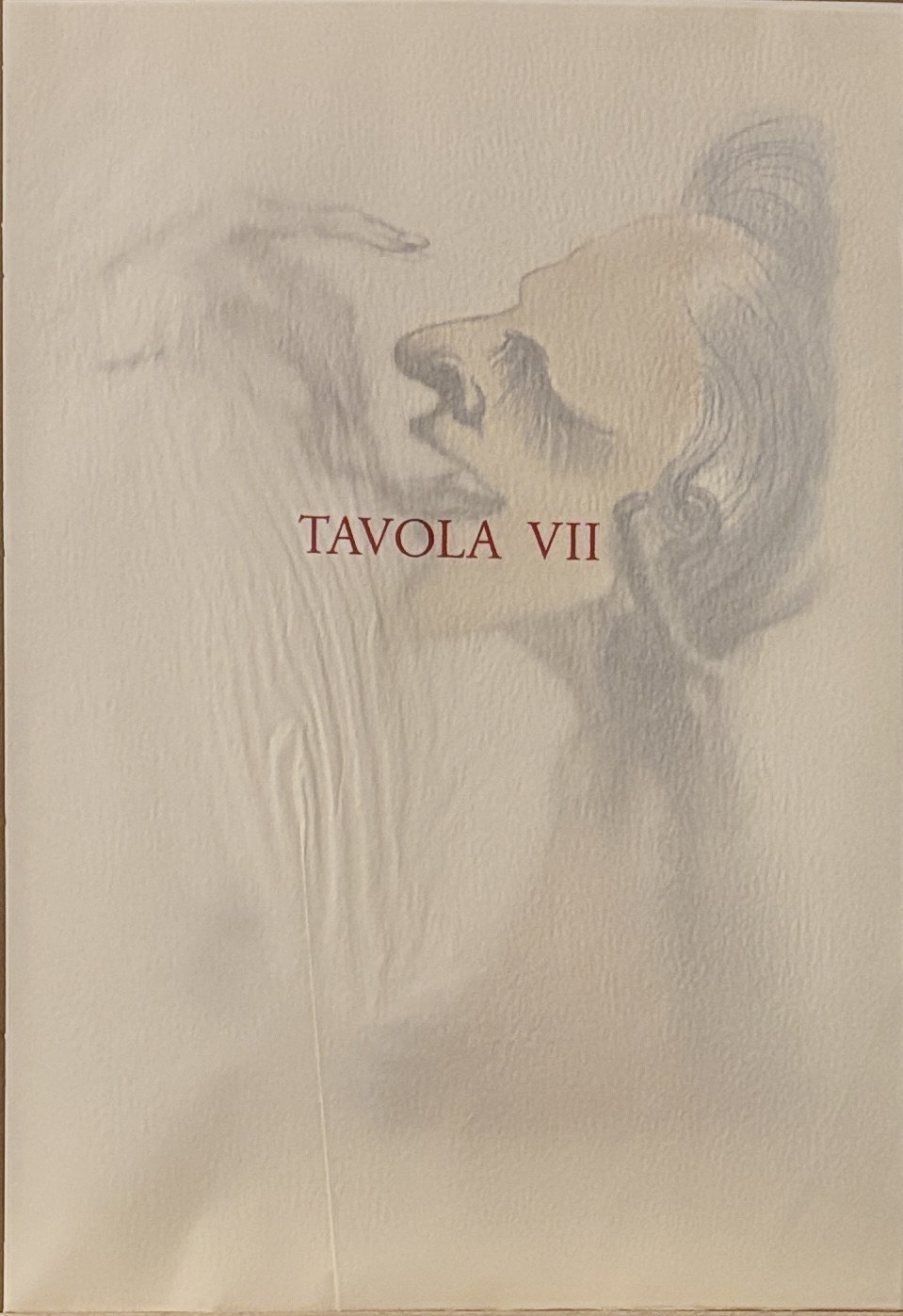
Color lithograph, Magnani di Pescia paper 47 x 32 cm; signed on plate l.g. "Dali"; sheet has original protective tissue paper inscribed "TAVOLA VII" (plate VII); each plate of the series is assigned to a specific chapter of Casanova's Memoirs - plate VII to the chapter titled "Una Cenetta Stimolante" (Stimulating Dinner). Publisher - Delfino Edizioni D'Arte Roma; edition of 1500 copies ;only the entire portfolio was numbered,this one no. 0294
References: : "The Official Catalog of the Graphic Works of Salvador Dali" by Albert Field. Ref. 76-4 - I - pages 32; Michler and Lopsinger catalog raisonné #174-187.
The paper for the edition in question was handmade specifically for this edition by Magnani di Pescia, a company founded in 1481 and still producing "handmade" paper using methods developed in the 15th century and perfected in the 18th century.
Dali, with Gala's help, wrote a cookbook, Les Diners de Gala, 1973, in which he included a cocktail of his own devising and called it "Casanova," an intriguing blend of orange juice, Campari, ginger, brandy and cayenne pepper.
Giacomo Casanova, Chevalier de Seingalt born April 2, 1725 in Venice, died June 4, 1798 in Duchcova) - European adventurer, traveler and writer. He made a name for himself with his memoirs (History of My Life), vividly describing life in 18th-century European capitals, and the numerous descriptions of amorous conquests contained therein are credited with making his name synonymous with seducer in many languages.
Casanova arrived in Warsaw in 1765, where he was kindly received by King Stanislaw August Poniatowski. He had hoped to become a royal secretary, but after a pistol duel in March 1766, in which he severely wounded in the abdomen of the Grand Constable of the Crown Franciszek Ksawery Branicki (it was about the Italian dancer Teresa Casaci), his life began to be seriously threatened by Branicki's supporters. Casanova had to go into hiding in the Reformati monastery on Senatorska Street.
He left Poland around 1767, this time paying off all his debts (Casanova left every country leaving considerable debts) because he received 200 ducats, (about 24,000 euros) from King Stanislaw August for this purpose.
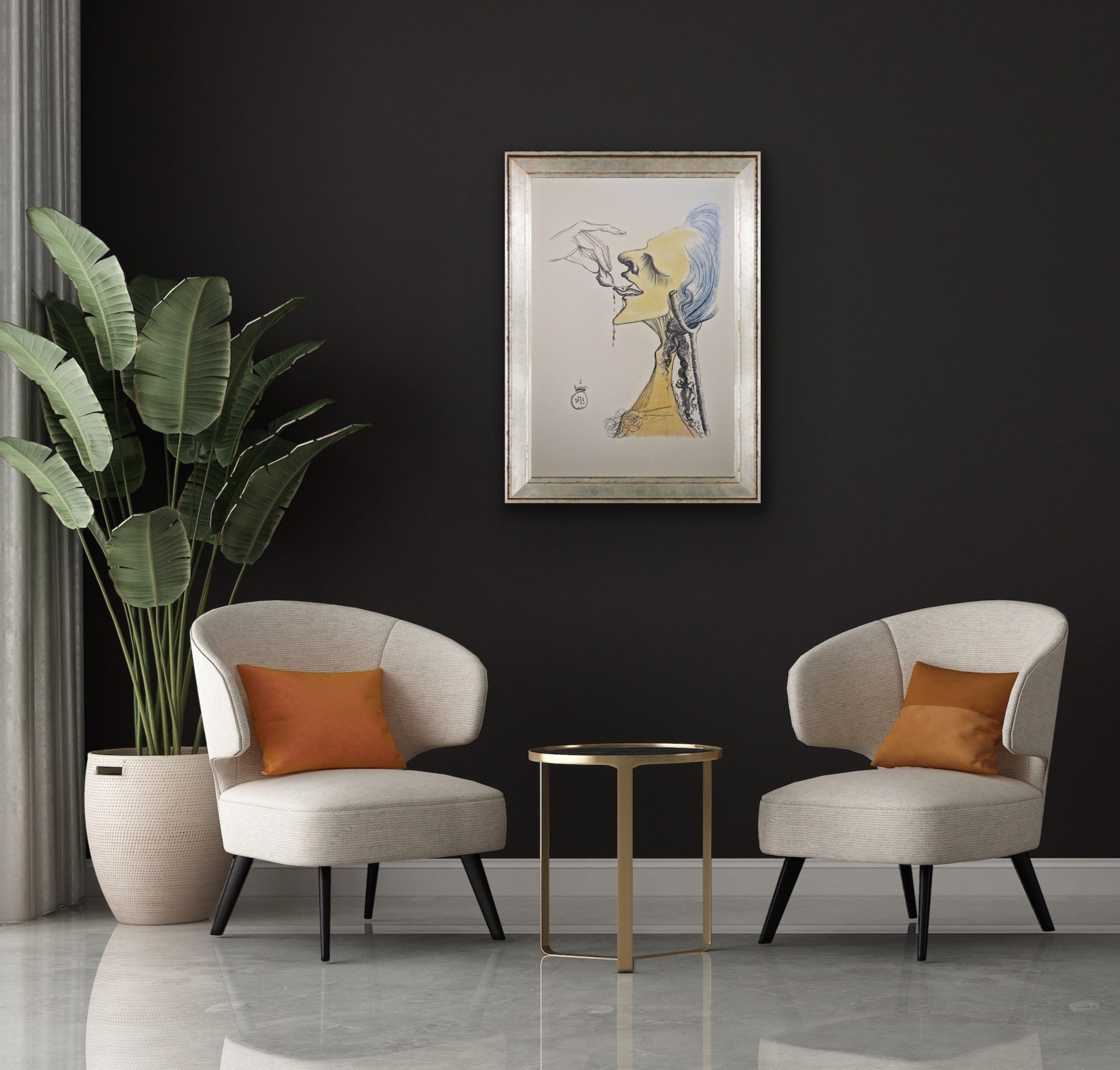
The frames shown in the visualizations are for illustrative purposes and do not constitute a commercial offer.