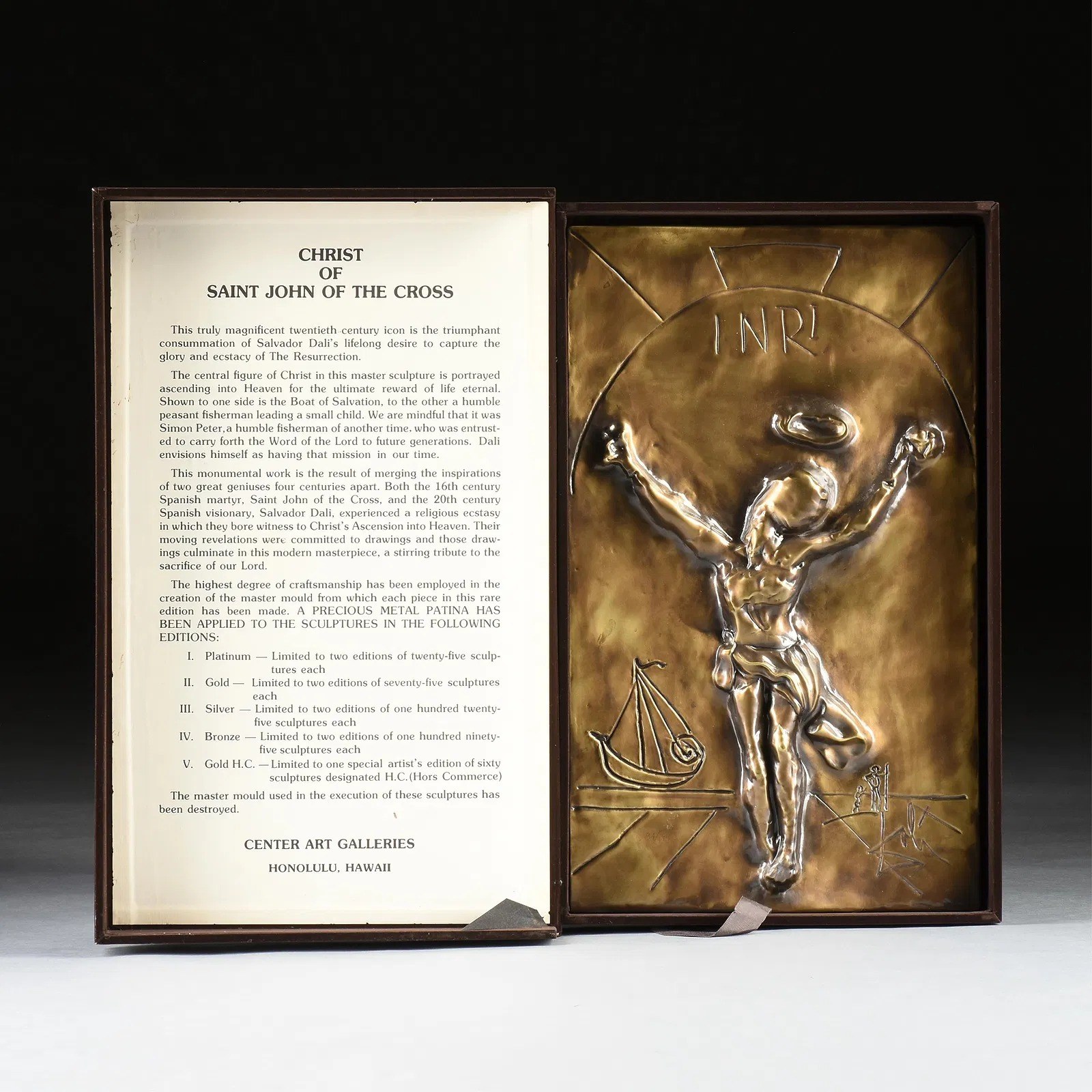
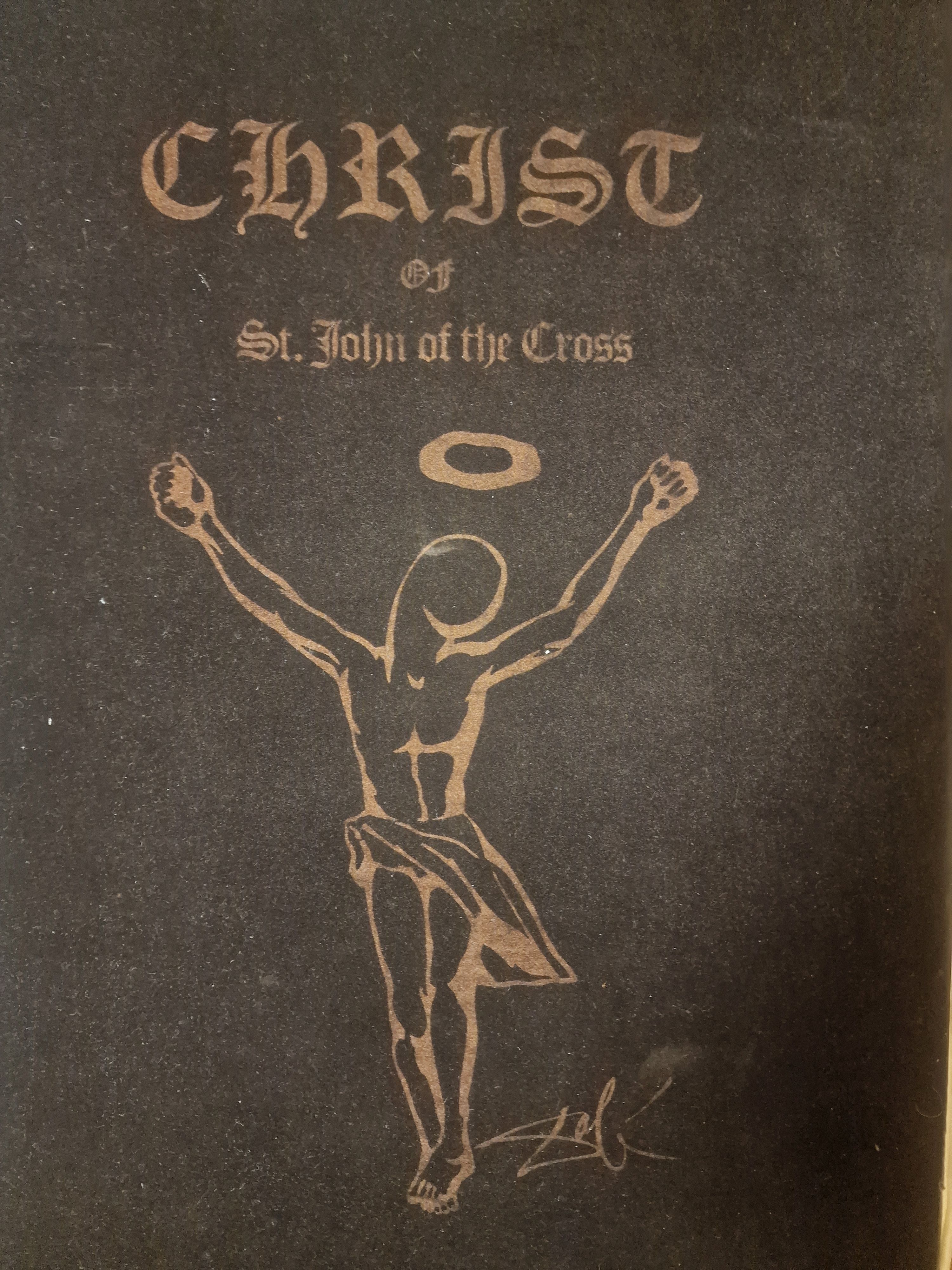
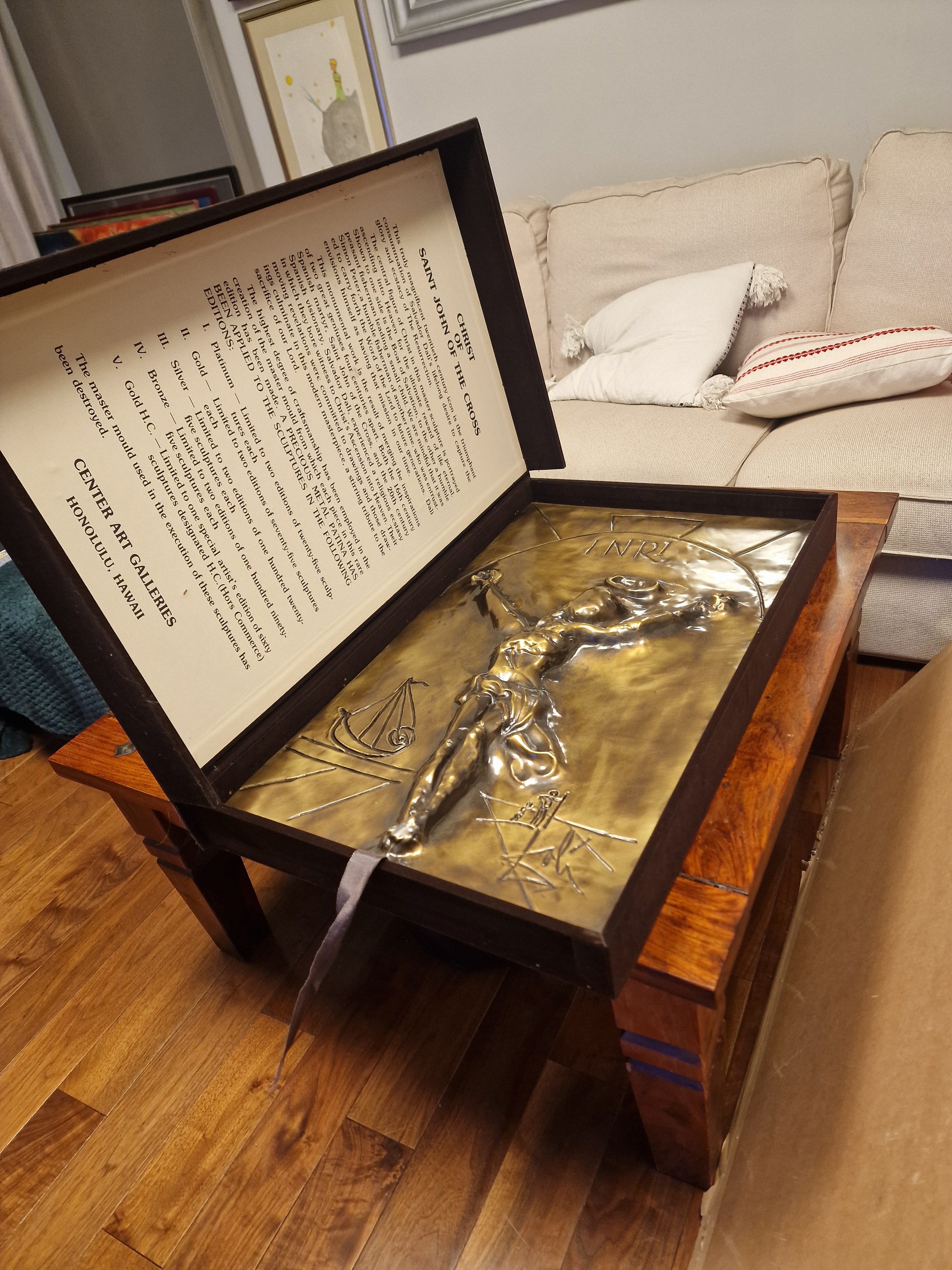
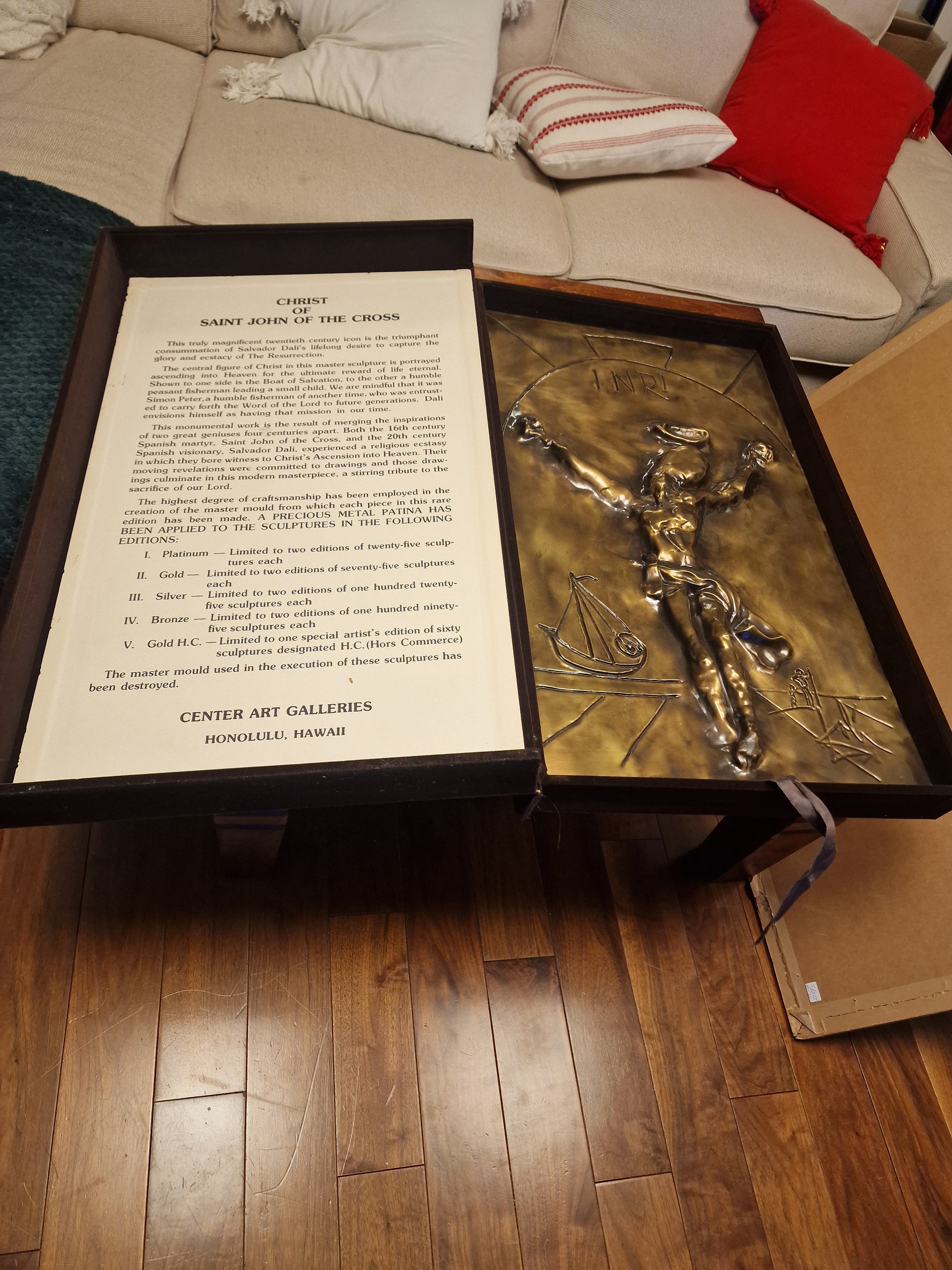
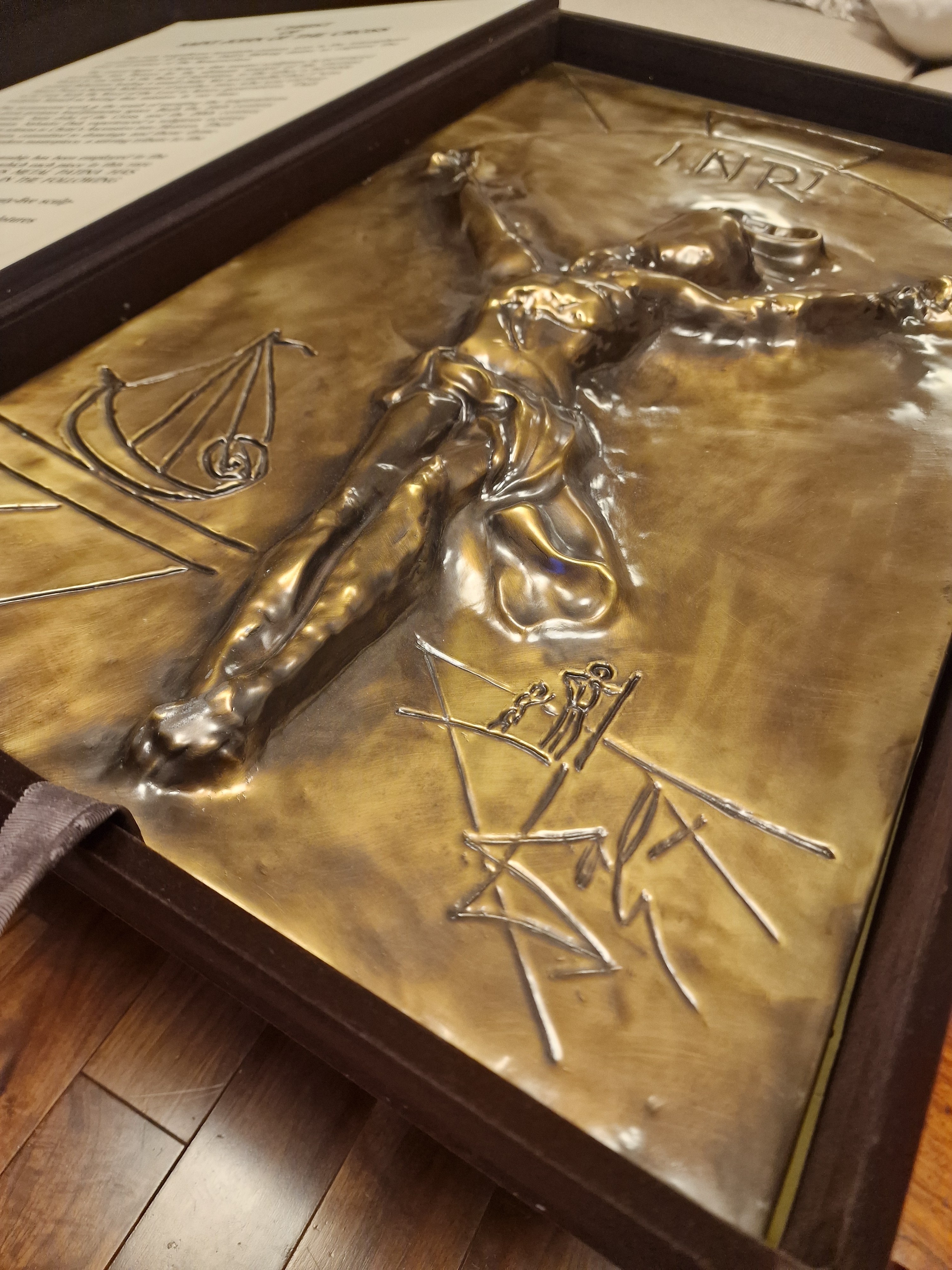
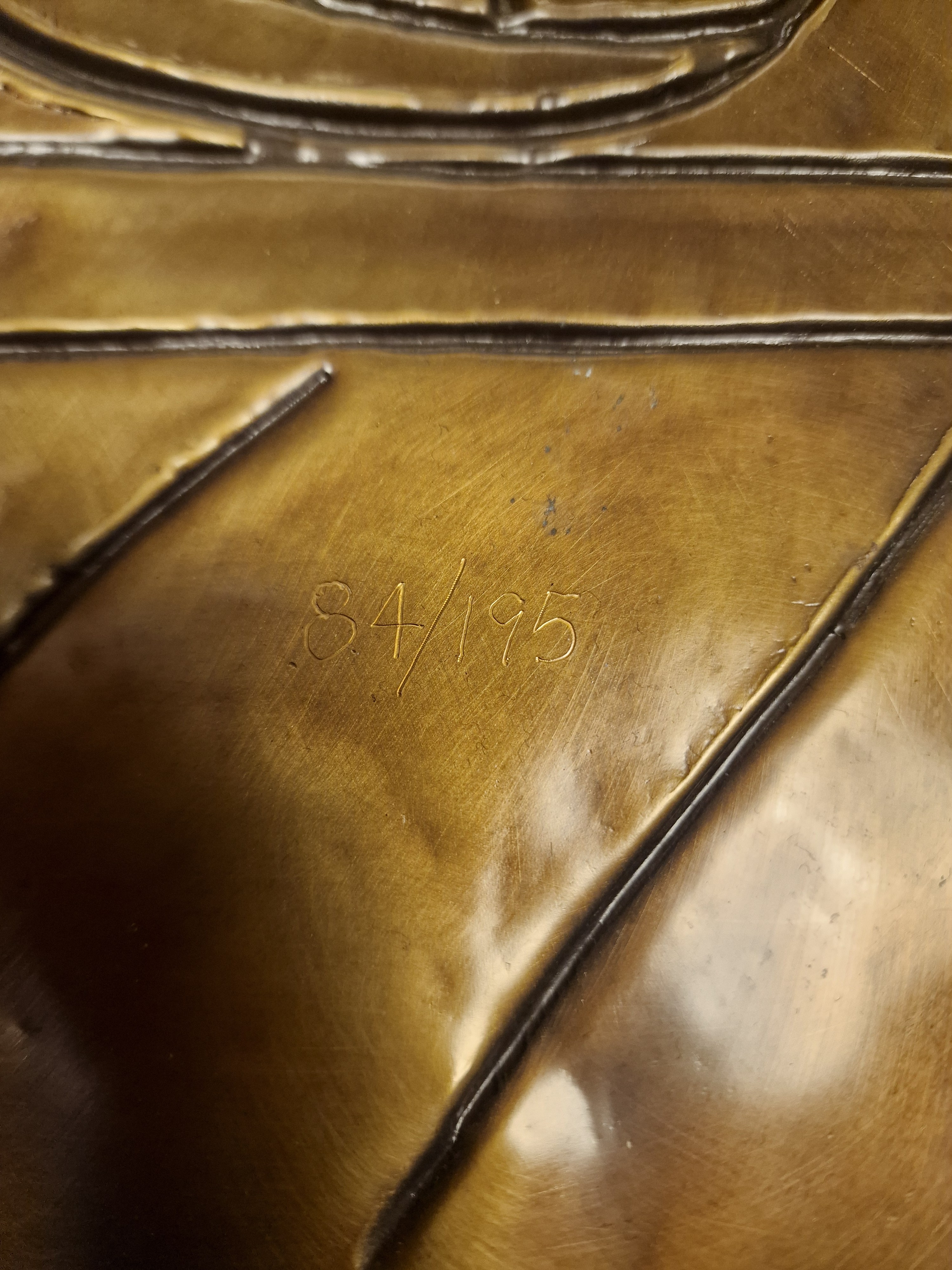
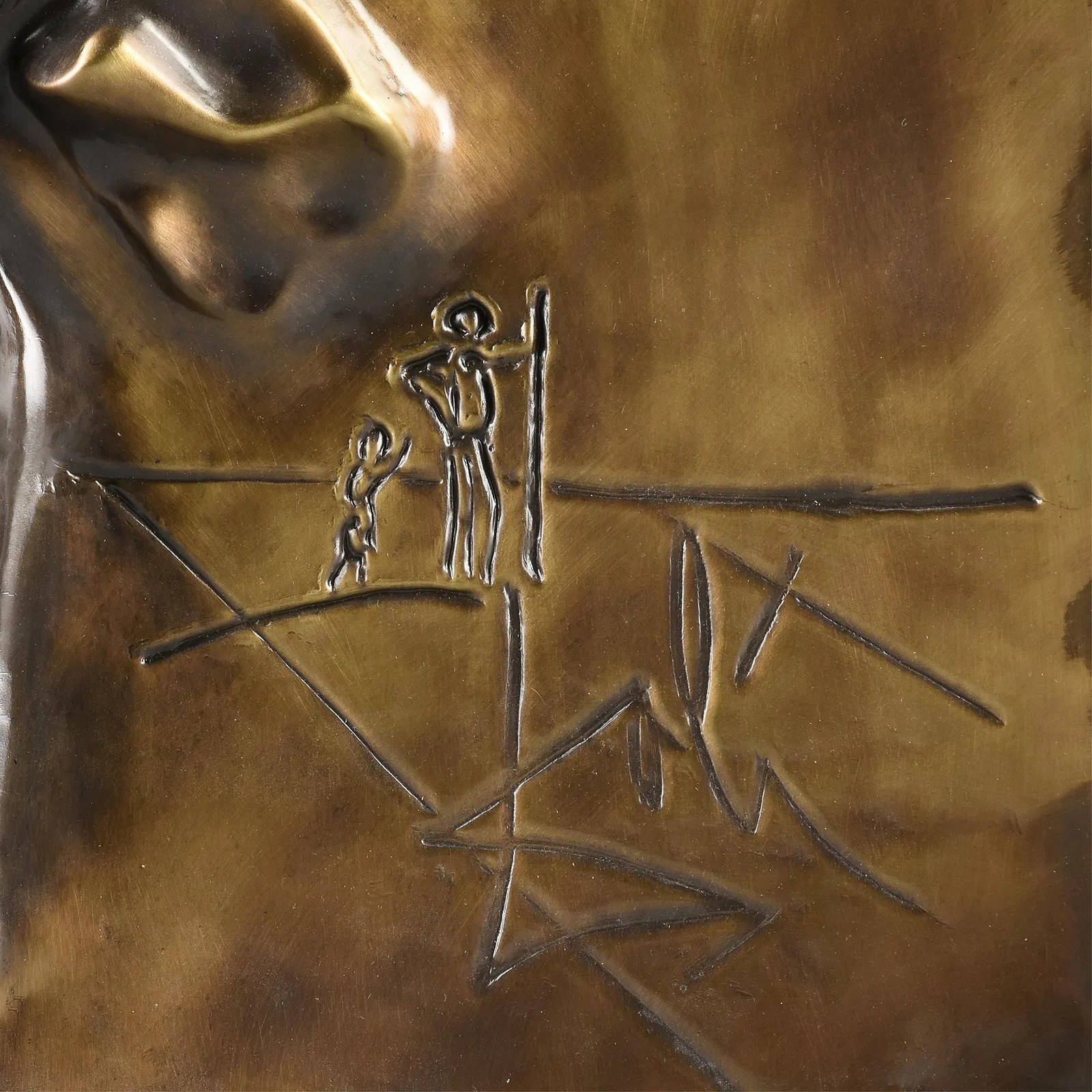
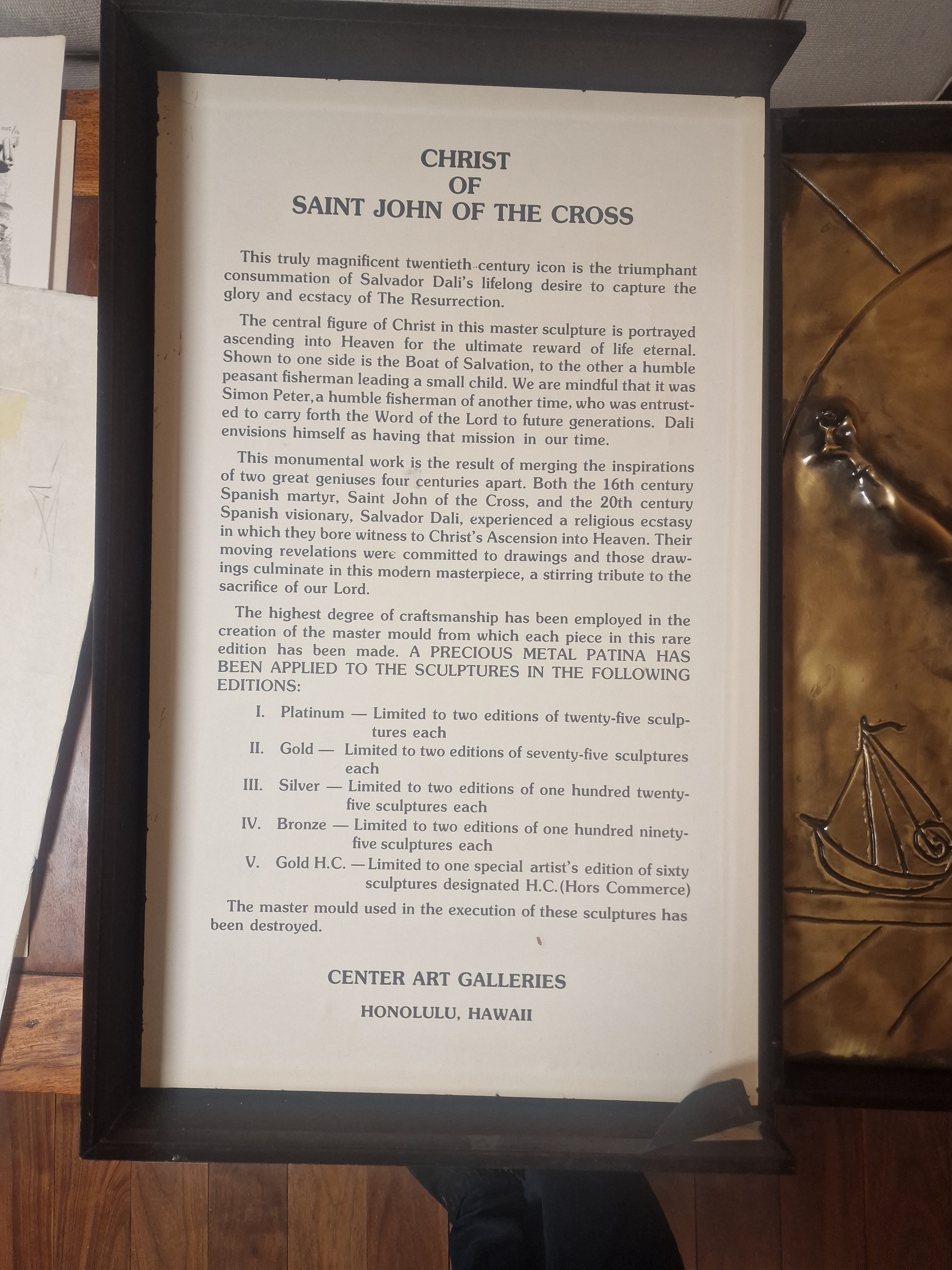
Relief (releif); patinated bronze; 82 x 50 cm; decorative, ornate case with gold embossed title, image of Christ and signature of Dali.
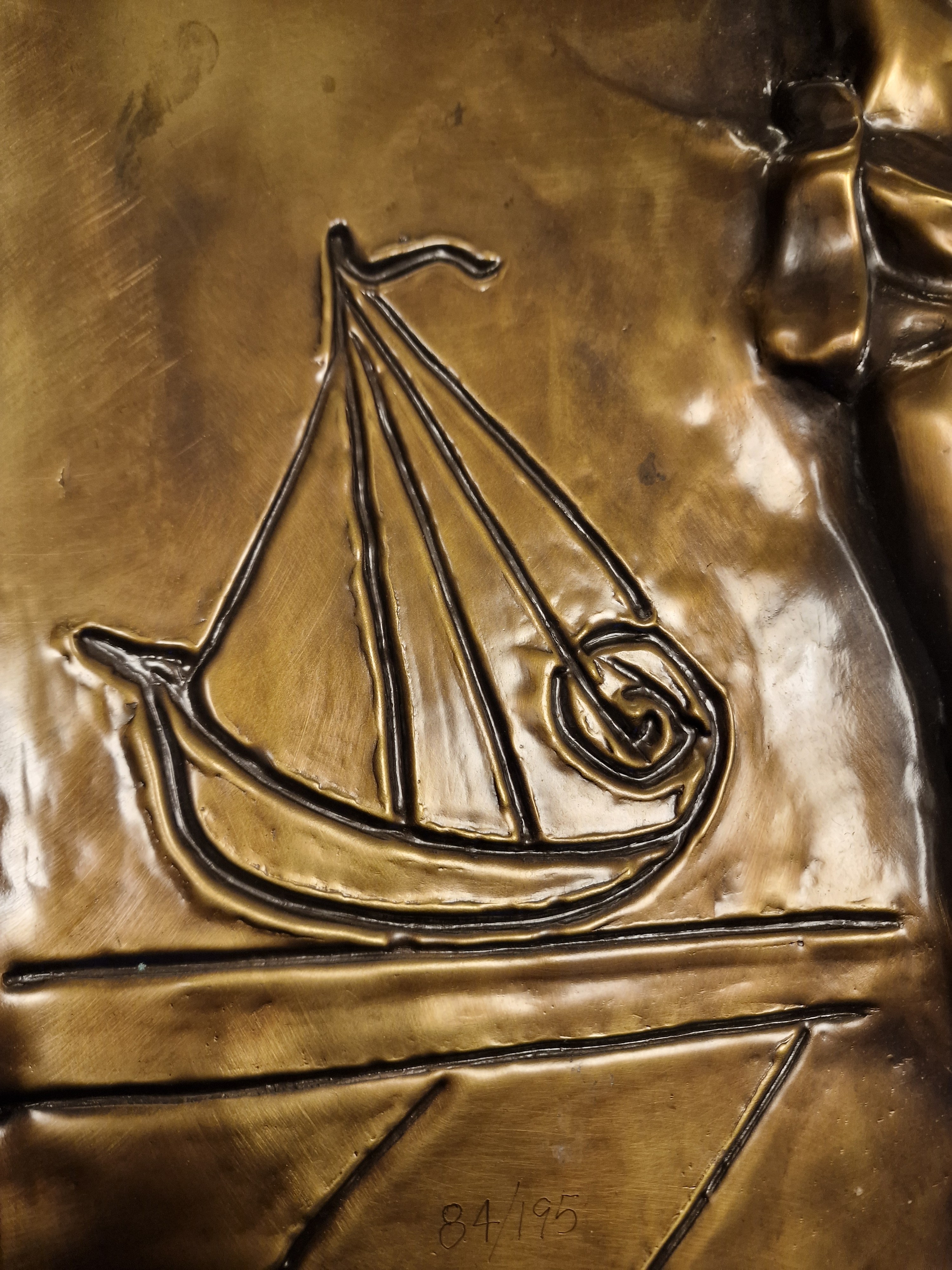
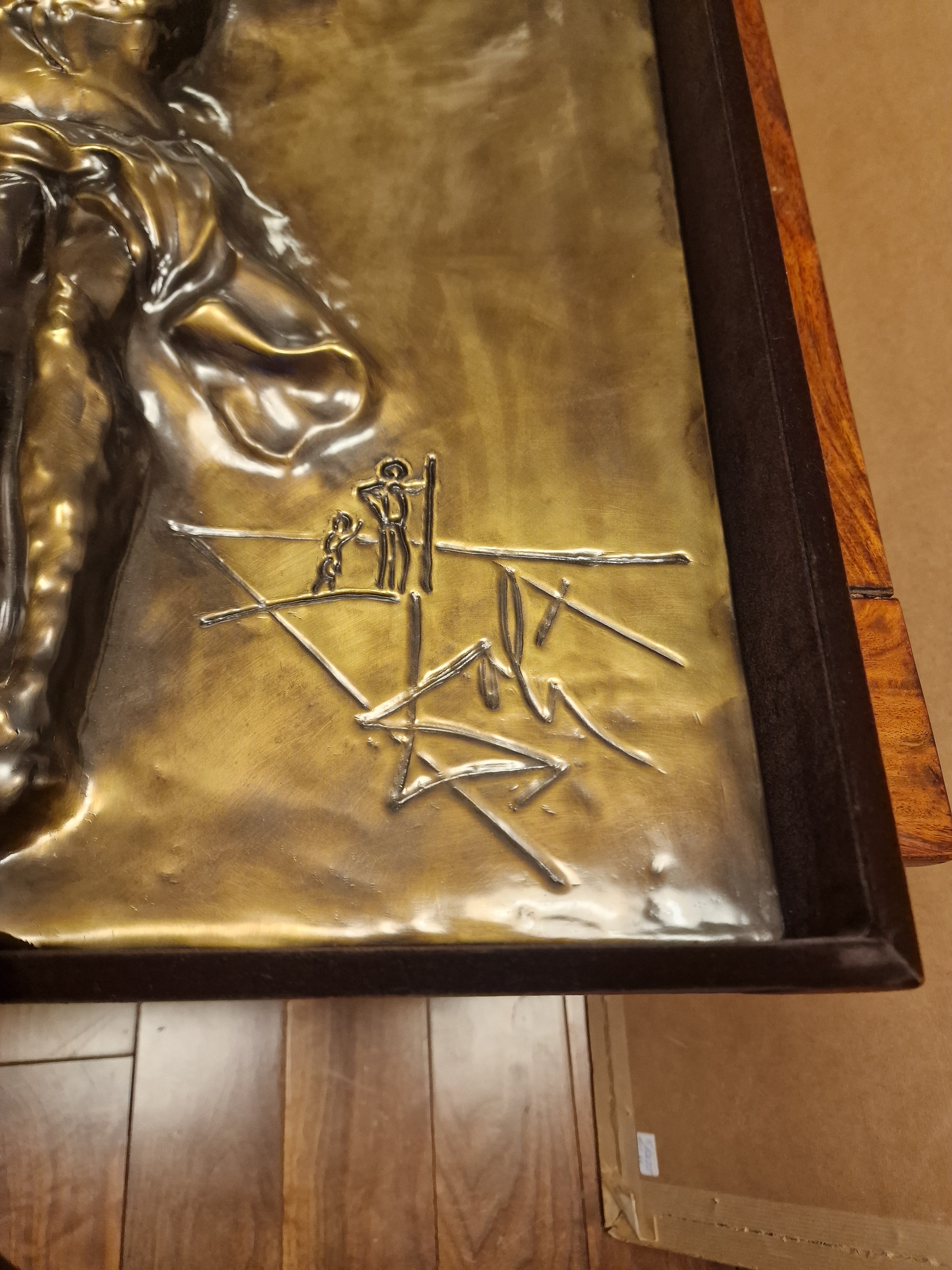
In the case, a detailed description of Dalego's work, along with an indication of the edition. Embossed edition number l.d. 84/195 and embossed author's signature p.d. with biblical decoration.
Publisher: Center Art Galleries, Honolulu Hawaii, USA.
Dali dispensed with the depiction of Christ with a crown of thorns, and placed the inscription INRI (Iesus Nazarenus Rex Iudaeorum - Jesus the Nazarene, King of the Jews) above Christ's head rather than the customary cross. Dali focused on the "cosmic" and "metaphysical" meaning of Christ as the unity of the universe. The artist portrays Jesus as the "nucleus of the atom" - the divine center of everything. Christ does not look tormented, but rises above the earthly landscape (Port Lligat Bay), which suggests divine glory, triumph over death and love for the world.
This unique work is a sculptural interpretation of Dali's most famous religious painting from 1951. This edition, published by Center Art Galleries of Honolulu, is one of the most prestigious and best-documented series of reliefs by the artist from the 1970s.
1 Genesis and Publisher
- Publisher: Center Art Galleries (Honolulu, Hawaii). This was one of the most important galleries working directly with Dalí in the 1970s and 1980s (often in collaboration with publisher Levine & Levine). They were behind many luxury editions of sculptures and prints for the American market.
- Date of creation: The sculptural project was created in 1978. Dalí wanted to give his visionary depiction of Christ a physical, three-dimensional dimension.
2 Technical characteristics
- Material: Patinated bronze. The patina in this edition tends to be a deep, dark brown shade with subtle abrasions that highlight the anatomy of the figure.
- Technique: Cast using the lost wax method(cire perdue). The bas-relief is characterized by an unusual "bird's eye" perspective (the so-called "supernatural perspective"), which was Dali's revolutionary idea.
3 Signatures and Markings (Some Details)
- Numbering: your piece 84/195 indicates a very low and exclusive series. Most popular editions of Dali's sculptures had print runs of 350, 600 or more pieces. An edition of 195 copies is considered very rare.
- Biblical ornament: A decorative motif (such as a stylized fish or cross) often appears next to the signature, which was typical of Dali's religious designs of the period, intended to emphasize the mystical nature of the work.
- Case: The original embossed case is an integral part of the object. At the time, Center Art Galleries attached great importance to the editorial binding, treating the case as an "altar" for the sculpture.
4 Artistic Significance (Characteristics of the work)
- Inspiration: Dalí based this composition on a drawing by the Spanish mystic, St. John of the Cross (16th century), who allegedly saw Christ in this perspective during ecstasy.
- Symbolism: No nails, blood or crown of thorns. Dali's Christ is not a figure suffering, but triumphant over the world (visible in the lower part of the composition as the Portlligat landscape). This is the so-called "cosmic Christ."
5 Sources and Authenticity
- Descharnes: This bas-relief is noted in the archives of Robert Descharnes (catalog Le Dur et le Mou / The Hard and the Soft), who documented the artist's sculptural work.