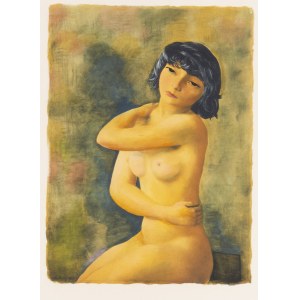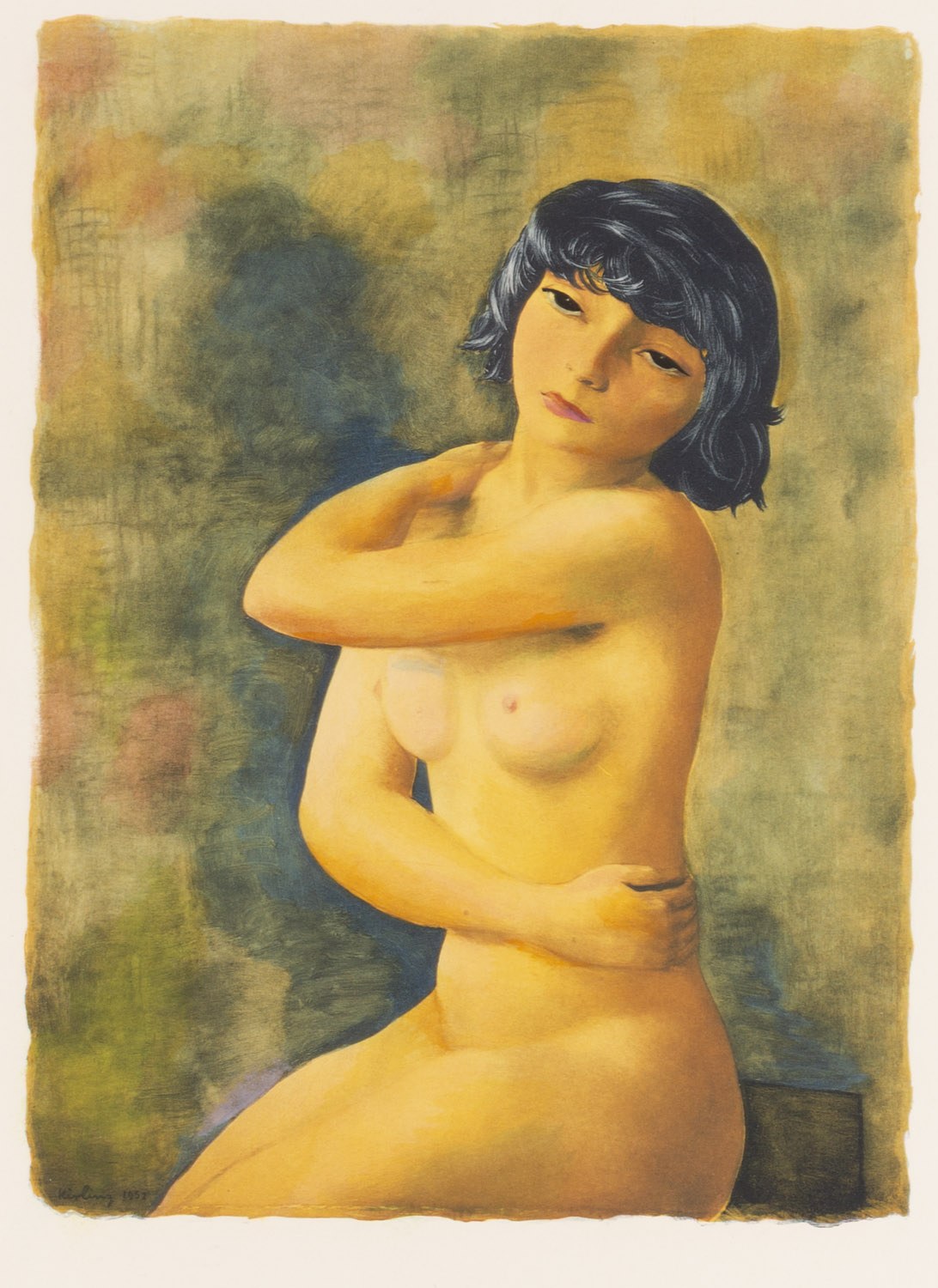
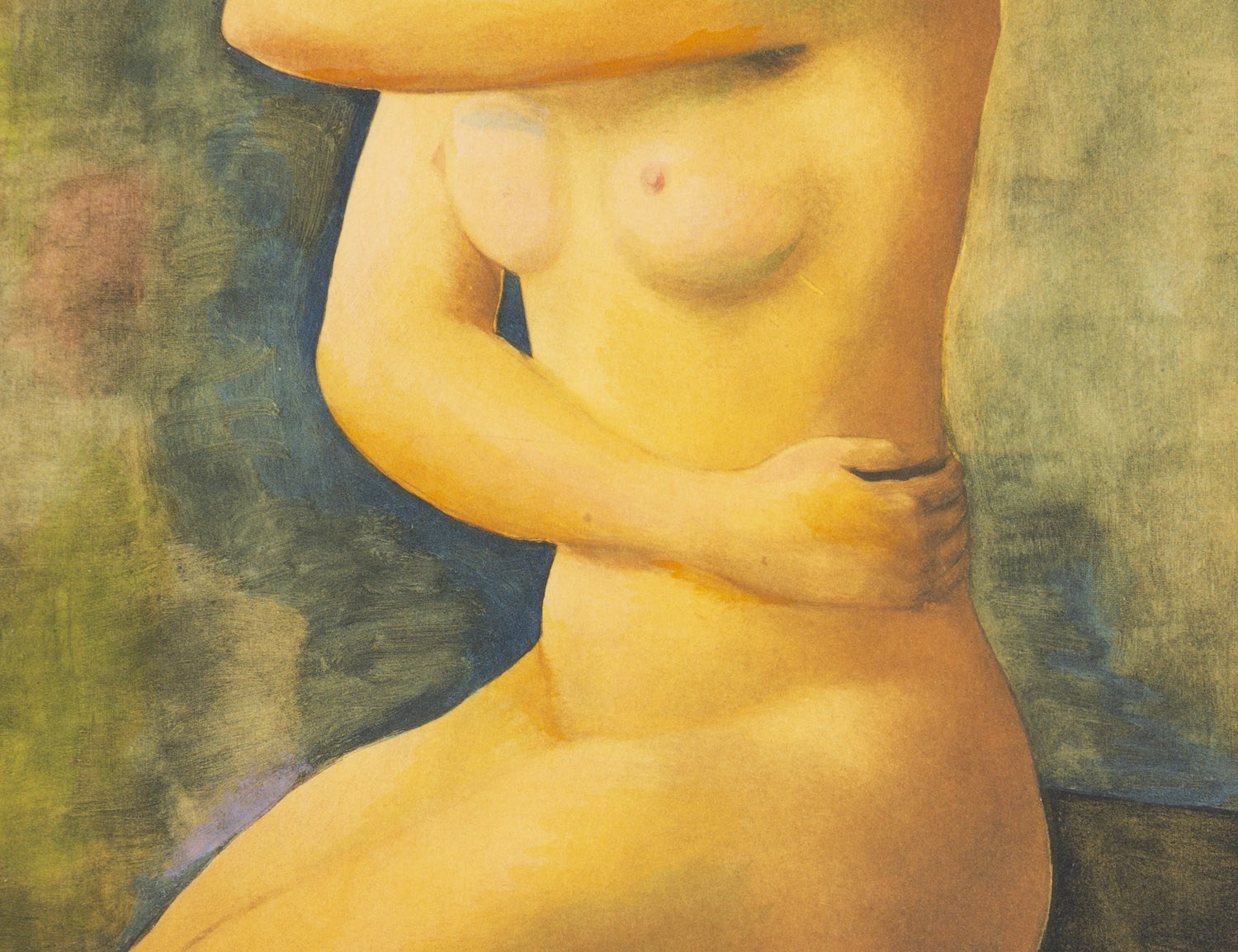
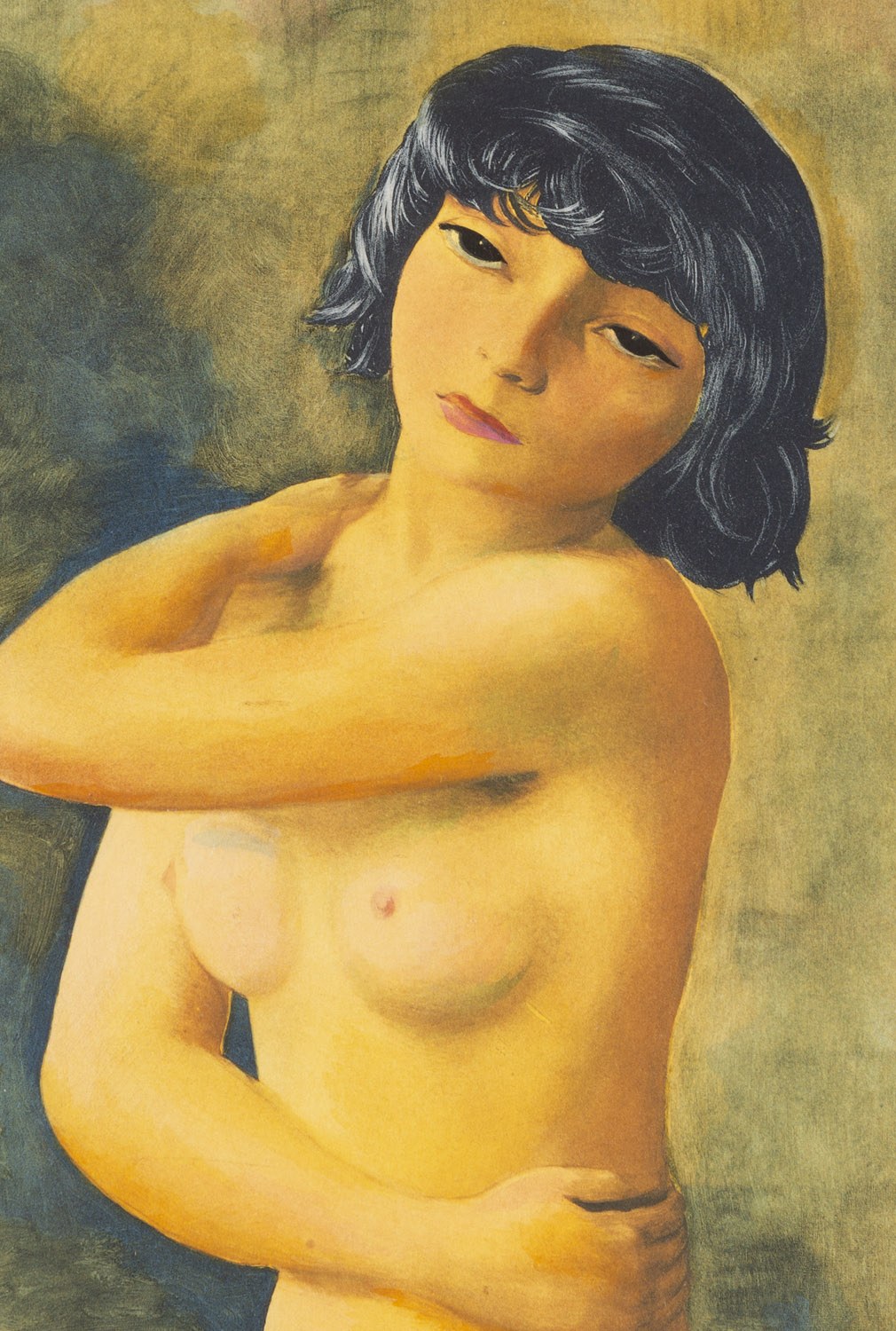
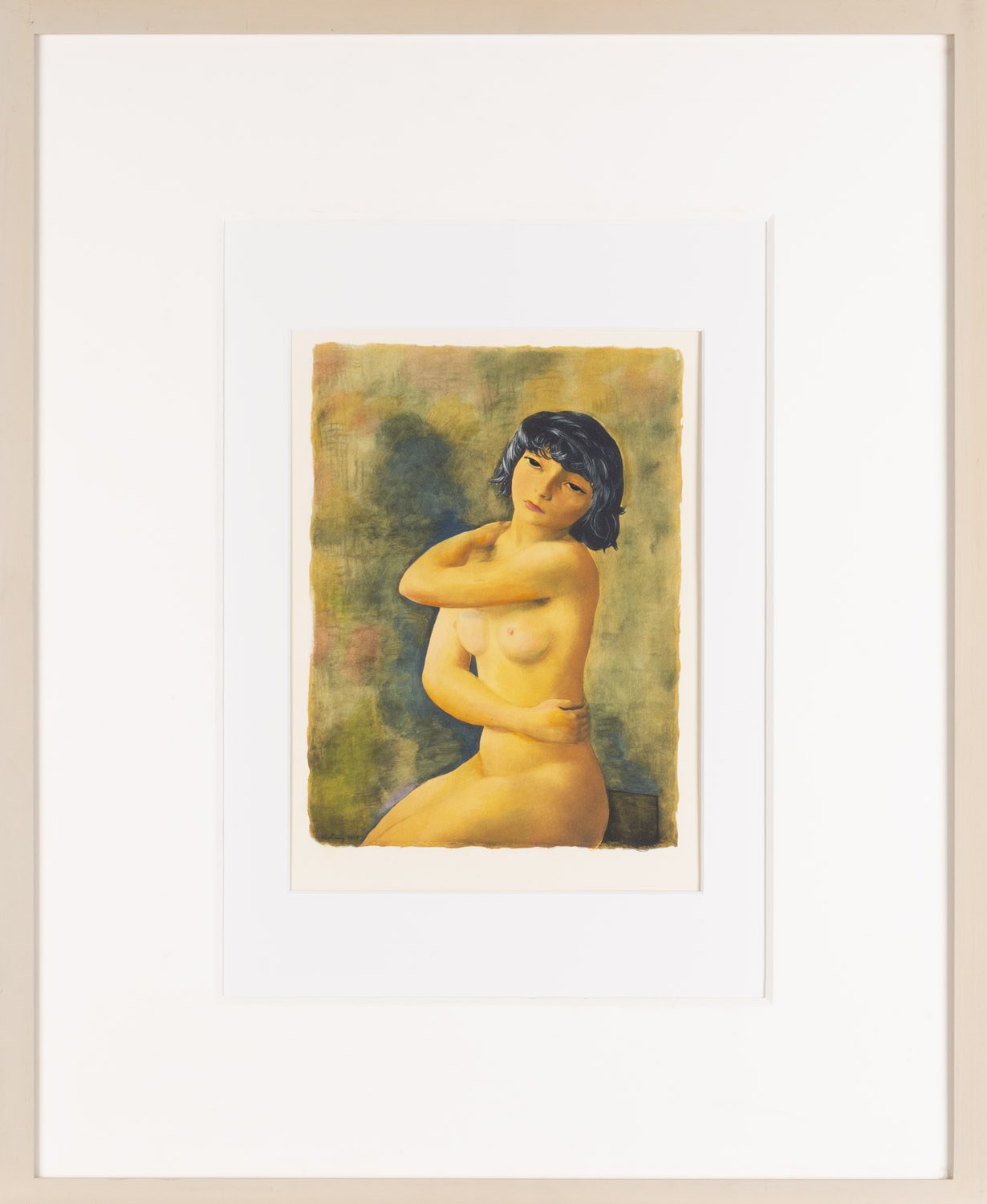
Dimensions: 30 x 22 cm (inside the mat)
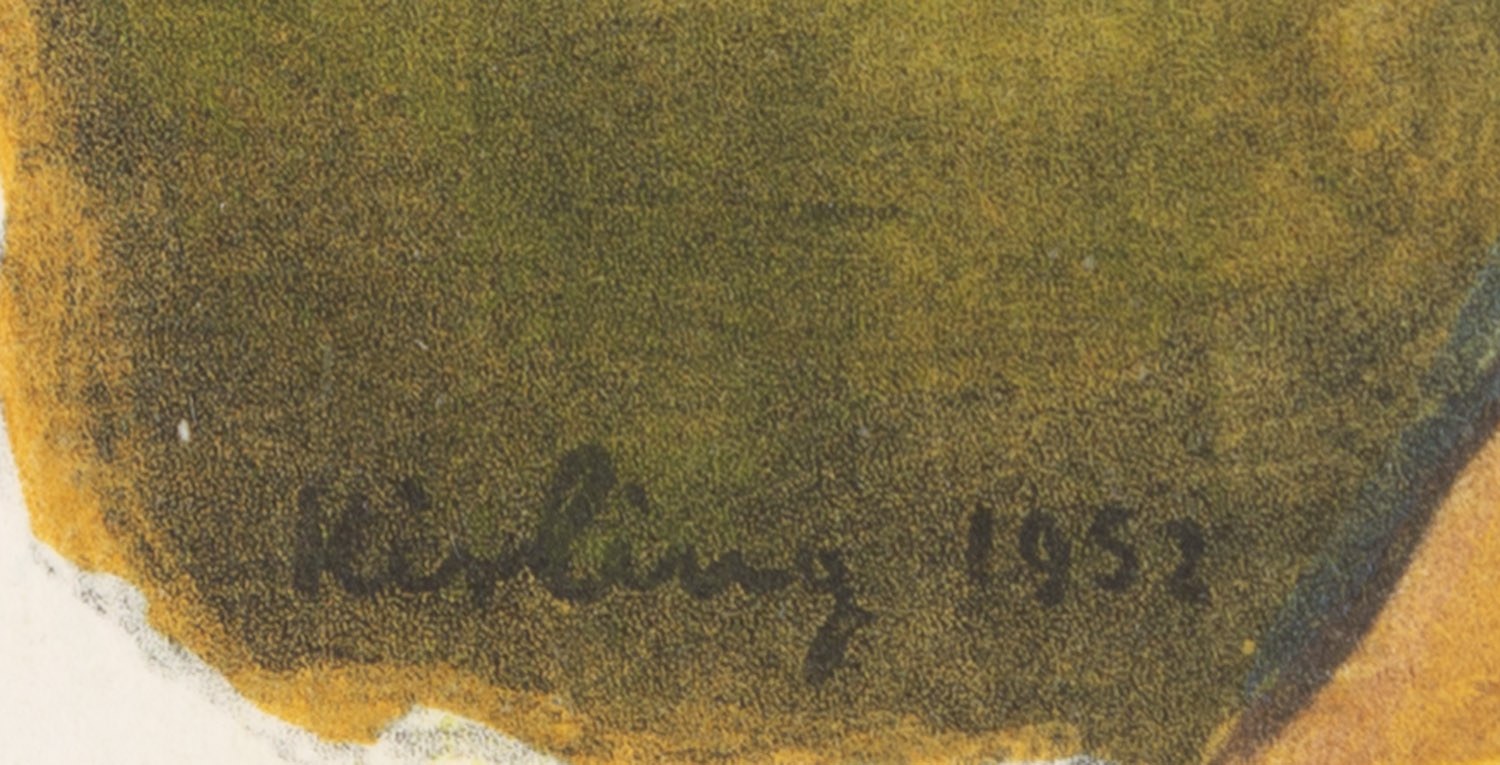
signed and dated on the plate, lower left: 'Kisling 1952'
Biography
From 1907 to 1911, he studied painting at the Academy of Fine Arts in Kraków under Józef Pankiewicz. On Pankiewicz’s advice, he traveled to Paris with Szymon Mondszajn to continue his studies. There, critics André Salmon and Adolf Basler took an interest in his work, and he also received a scholarship from an anonymous patron in Russia. He was nicknamed the “Prince of Montparnasse” due to his social connections and financial success. He maintained friendly relationships with Polish artists: Tadeusz Makowski, Eugeniusz Zak, Ludwik Markus, Roman Kramsztyk, and Mela Muter. He was granted French citizenship for his service in the Foreign Legion during World War I. Wounded during the Battle of Clarency, he spent 1916 convalescing in Spain. During World War II, he enlisted in the French army. In 1940, he traveled via Spain and Portugal to New York. After the war, around 1946, he returned to Sanary-sur-Mer. He was one of the most prominent representatives of the École de Paris during the interwar years. He had many solo exhibitions and frequently participated in group exhibitions abroad as a Polish artist. He was one of the leading representatives of the École de Paris, which brought together artists of Jewish origin who had arrived from Central and Eastern Europe and Russia. “In the early phase of Kisling’s work, from 1912 to 1918, his fascination with the art of Cézanne found expression; in his still lifes and landscapes, the artist synthesized and geometrized forms, layered compositional planes, and introduced an elevated viewpoint that condensed the pictorial space. (…) Influenced by his contacts with the Cubists, he painted landscapes of southern France in a geometric style borrowed from the paintings of Picasso and Braque from around 1909. He sought a decorative formula in which synthesized architectural forms harmonize with the organic forms of nature. (…) In his landscapes, he captured shapes in silhouette, while lending colors an intensity comparable to the Fauvist palette. In 1917–18, in addition to the views of Saint-Tropez—characterized by a bleached-out palette and an ethereal quality—he created landscapes with a deeper expressiveness evoked by a range of sharp, strong, and contrasting colors; these compositions, bordering on abstraction and concentrated in their expression, were painted in impasto with diagonal brushstrokes. Some harbor scenes featuring sailboats and deserted waterfronts alluded to the poetics of “metaphysical painting.” In his landscapes, Kisling also drew on sixteenth-century compositional schemes, depicting vast, stage-like landscapes with evocatively rendered spatial depth”—Irena Kossowska