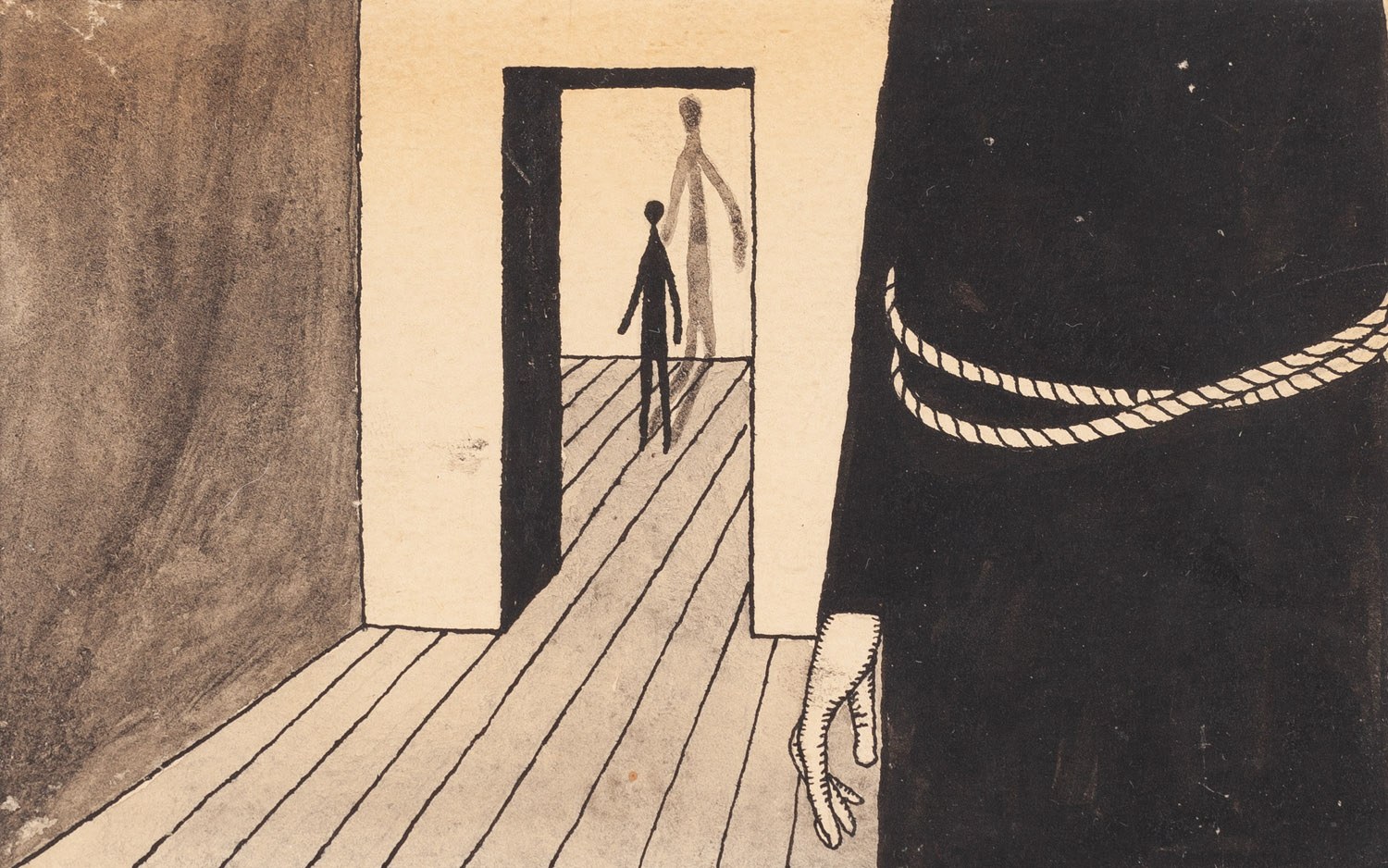
Dimensions: 10 x 14 cm
Condition
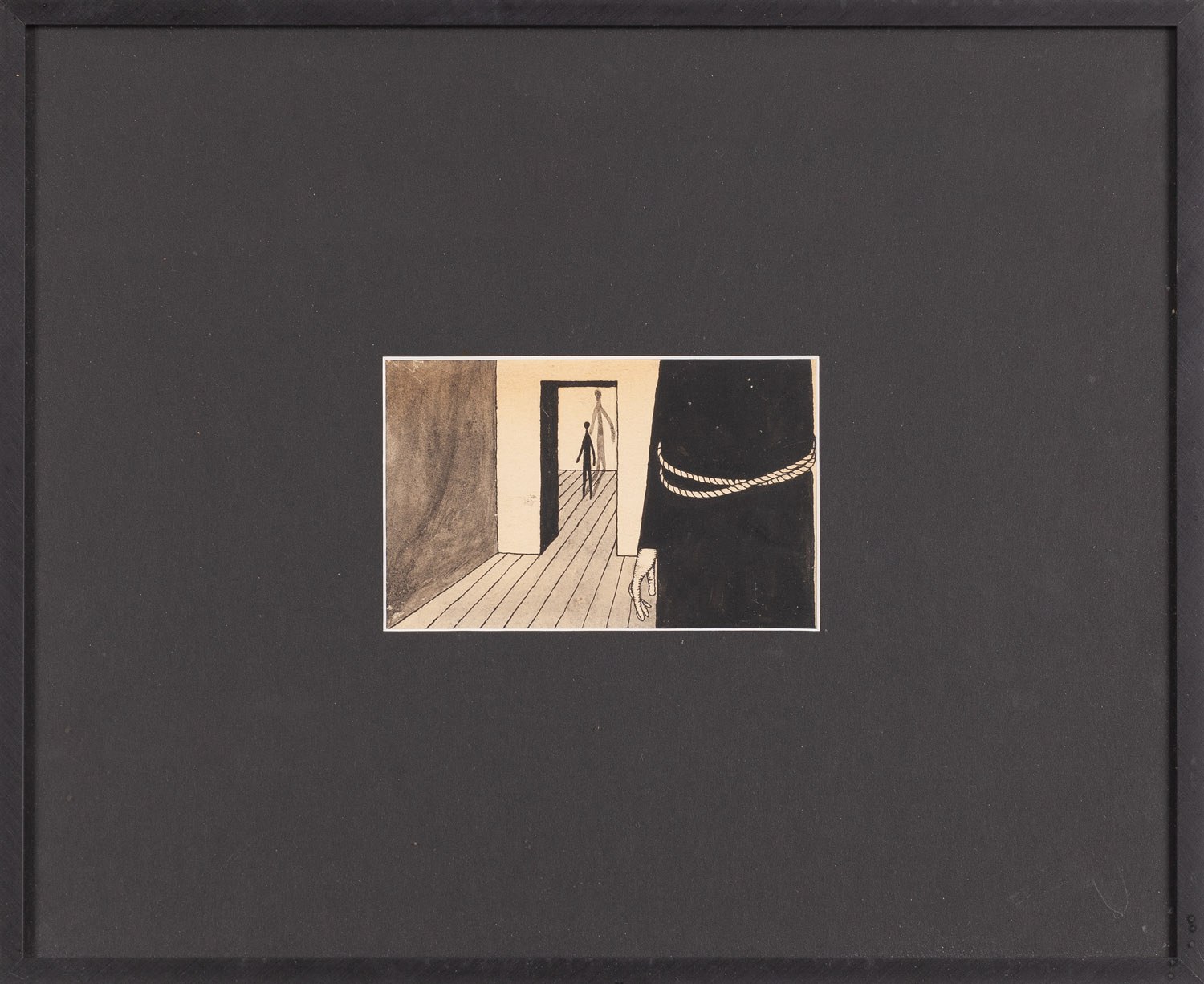
framed work
Biography
During the war, he attended the Kunstgewerbeschule in Kraków. After the war, he studied at the Academy of Fine Arts in Kraków. In the 1950s, he moved to Warsaw. He began exhibiting in 1962. Initially, he was associated with the circle around the Krzywe Koło Gallery. After its closure in 1966, together with the critics Wiesław Borowski, Anka Ptaszkowska, and Mariusz Tchorek, as well as artists Tadeusz Kantor, Henryk Stażewski, and Zbigniew Gostomski, he co-founded the Foksal Gallery in Warsaw, where he exhibited his works on numerous occasions (15 solo exhibitions, the last one in February 2004), with a hiatus from 1970 to 1984. From 1970 onward, he lived with Henryk Stażewski in a studio on the top floor of an apartment building on Świerczewskiego Street (now Solidarności Avenue). He also had numerous exhibitions in other Polish and international galleries (including, in 2003, at the Anton Kern Gallery in New York). A representative of the avant-garde, from the 1970s onward, the hallmark of his work was a blue adhesive tape placed on his pieces at a height of 130 cm. Popular in artistic circles, he was the subject of many anecdotes. Edward Krasiński’s body of work is a highly complex, fleeting, and elusive phenomenon. Its most important aspect was, in fact, the artist’s own life and his creative attitude toward reality, which was expressed through “living in art.” He constantly influenced the world with his personality, irony, and humor, subtly challenging and questioning traditional forms of artistic expression and their meanings. Edward Krasiński’s works are held in the collections of, among others, the Centre Georges Pompidou in Paris, the National Museums in Warsaw, Kraków, and Wrocław, the Museum of Art in Łódź, and the National Gallery in Prague.