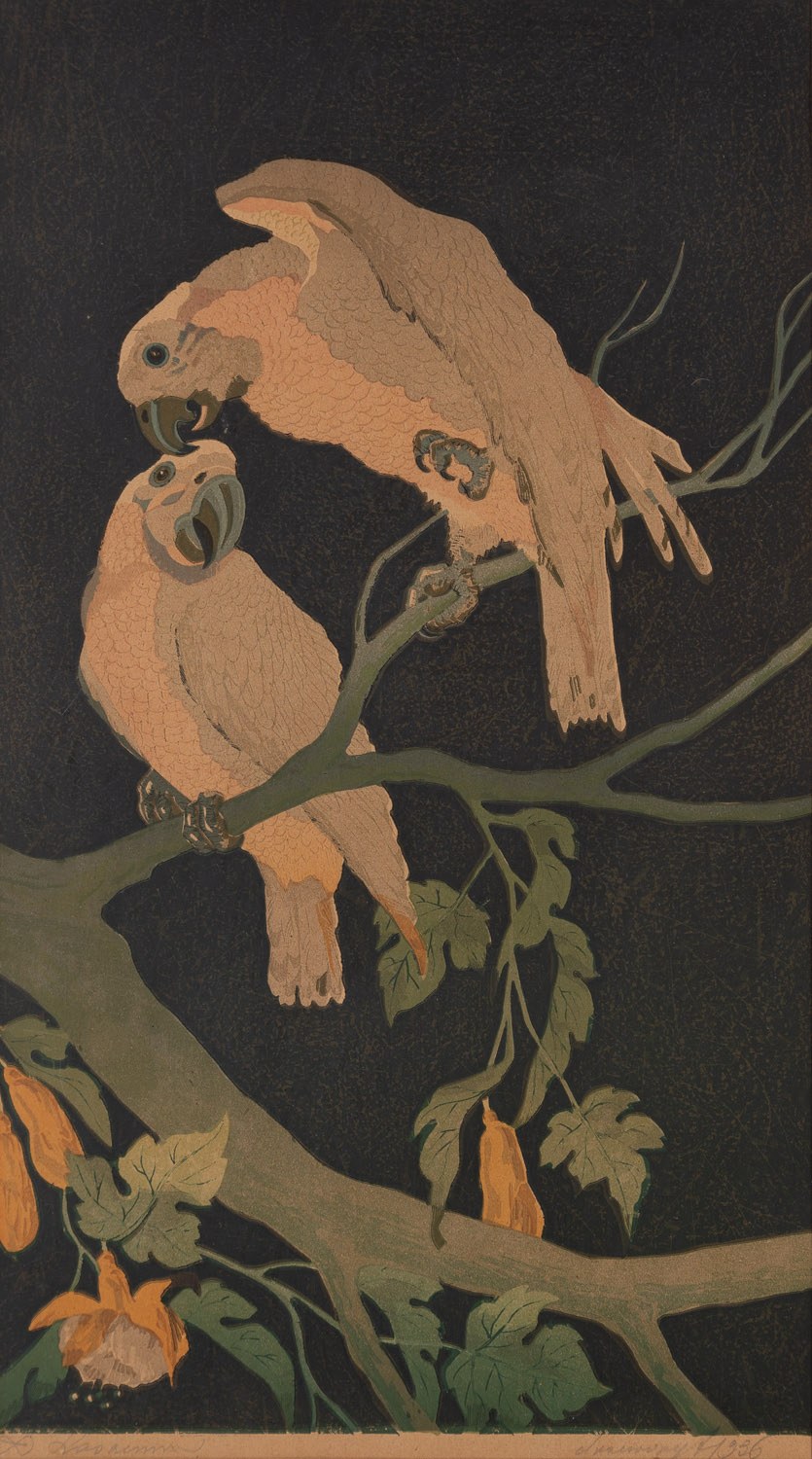
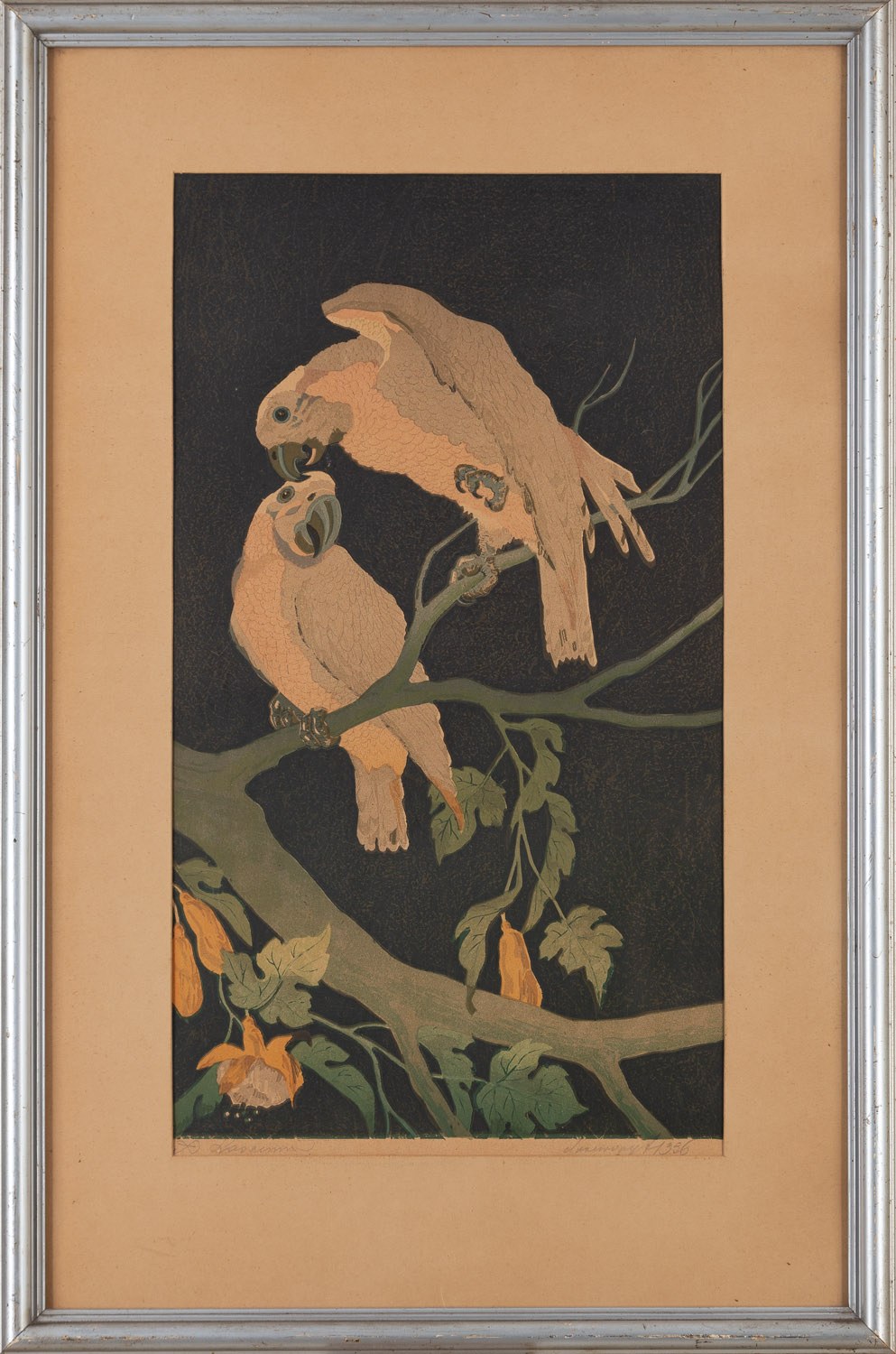
Dimensions: 42 x 24 cm (inside the mat)
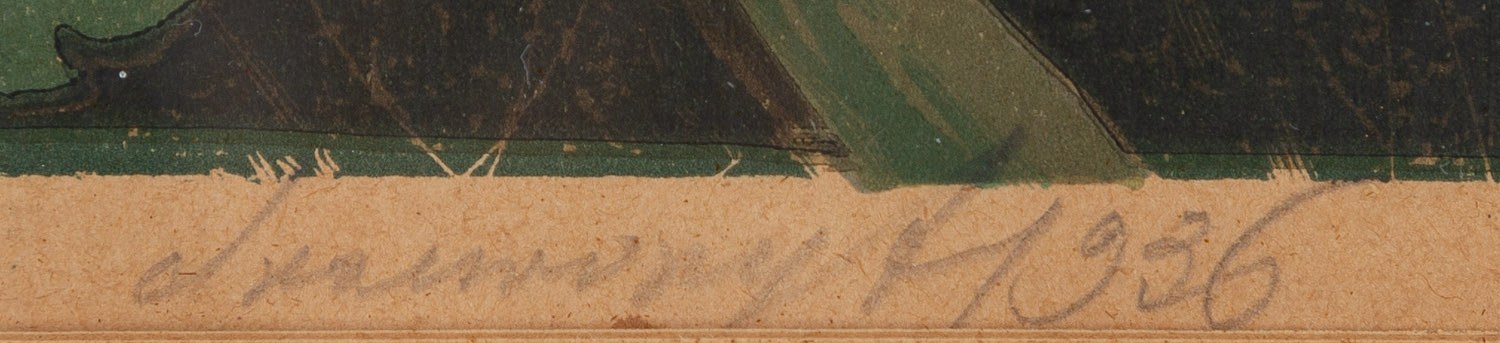
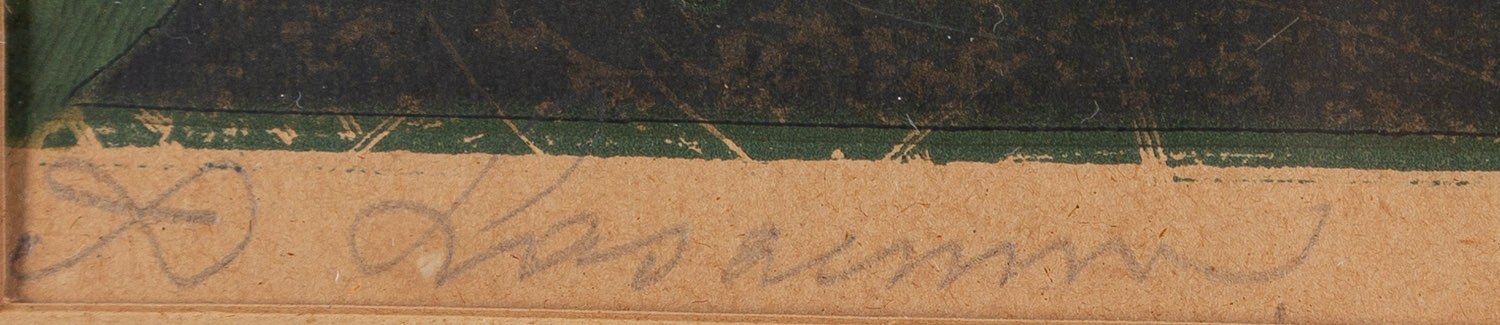
Signed, dated, and inscribed at the bottom in pencil: 'A. Laszenko | woodcut 1936'
Condition
Work mounted
Provenance
Juliusz Heinzl Collection
Biography
After graduating from the Cadet Corps School in Poltava (1900), he enrolled at the Konstantinovskaya Artillery Officers’ School in St. Petersburg, from which he graduated in 1904. At the same time, he studied painting at the St. Petersburg Academy under the guidance of Volkov, Dubovskoy, Makovsky, and Repin. In 1918, he arrived in Poland; he initially lived on the Wola Sosnowska estate in Kujawy, and from 1932 onward, he settled in Włocławek. Between 1903 and 1904, he traveled around the world. He traveled to Egypt almost every year. He visited the Middle East, Tunisia, and Morocco, and also journeyed up the Nile deep into Africa, reaching what was then the Belgian Congo in 1906, and in 1909 to Eritrea and the borders of what was then Abyssinia. He also traveled to Asia, toured Europe, and traveled throughout Poland. During his stay in Egypt in 1922, he became acquainted with Howard Carter, the discoverer of Tutankhamun’s tomb, and thanks to this acquaintance, he produced many sketches and notes at the site of the excavations. These numerous journeys were reflected in the subject matter of his works. He painted deserts, oases, camels, donkeys, caravans, views of villages and cities (especially Jerusalem and Cairo), pyramids, Egyptian temples, historic buildings, as well as portraits of locals and scenes from their lives—markets, bazaars, farm work, prayer, and their holidays. He also produced, though far fewer in number, landscapes of his homeland: seascapes, mountain views, and forest scenes. He also painted portraits of his friends and loved ones in Eastern attire. In addition, he worked in color woodcut and lithography.