


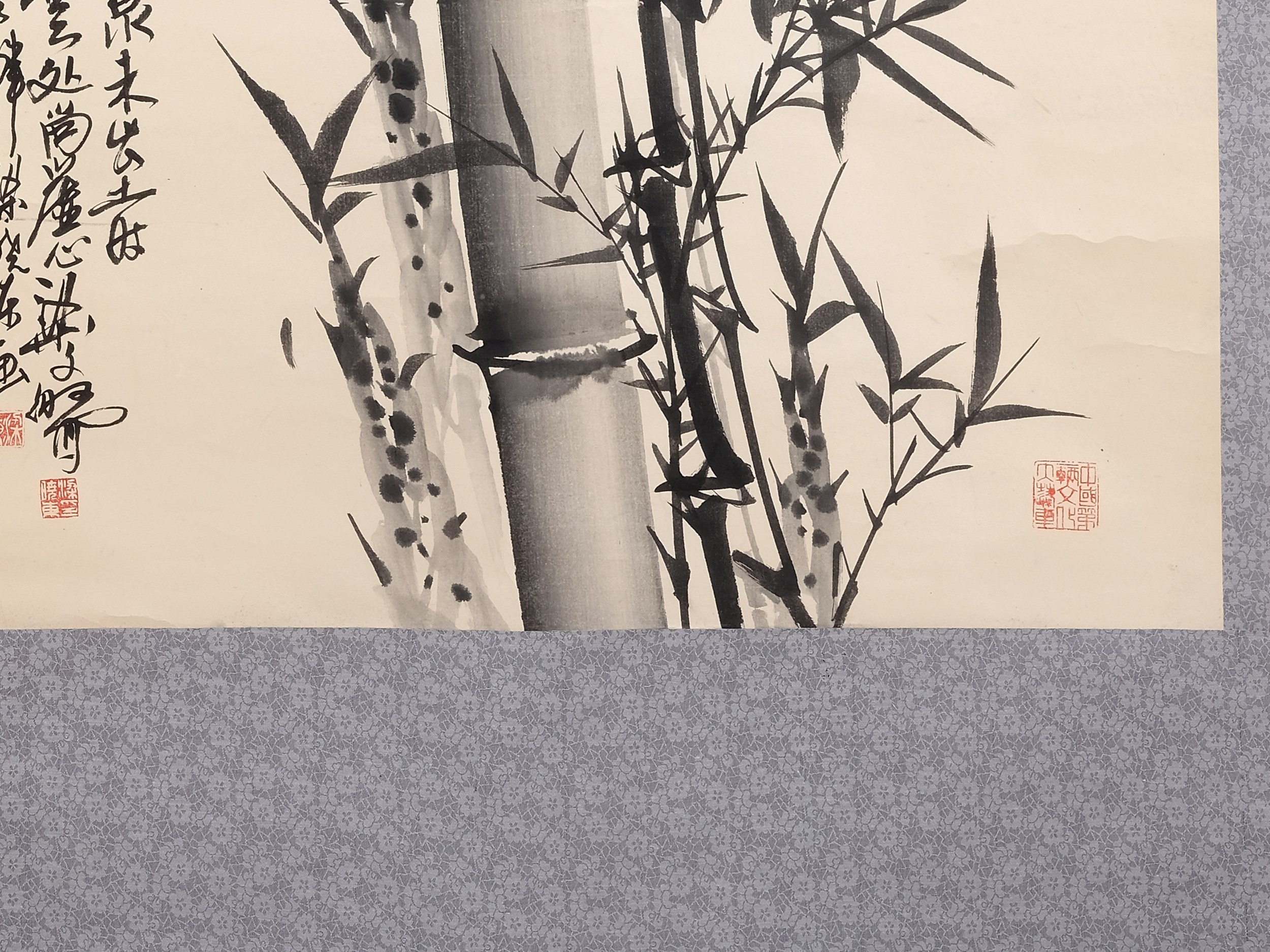

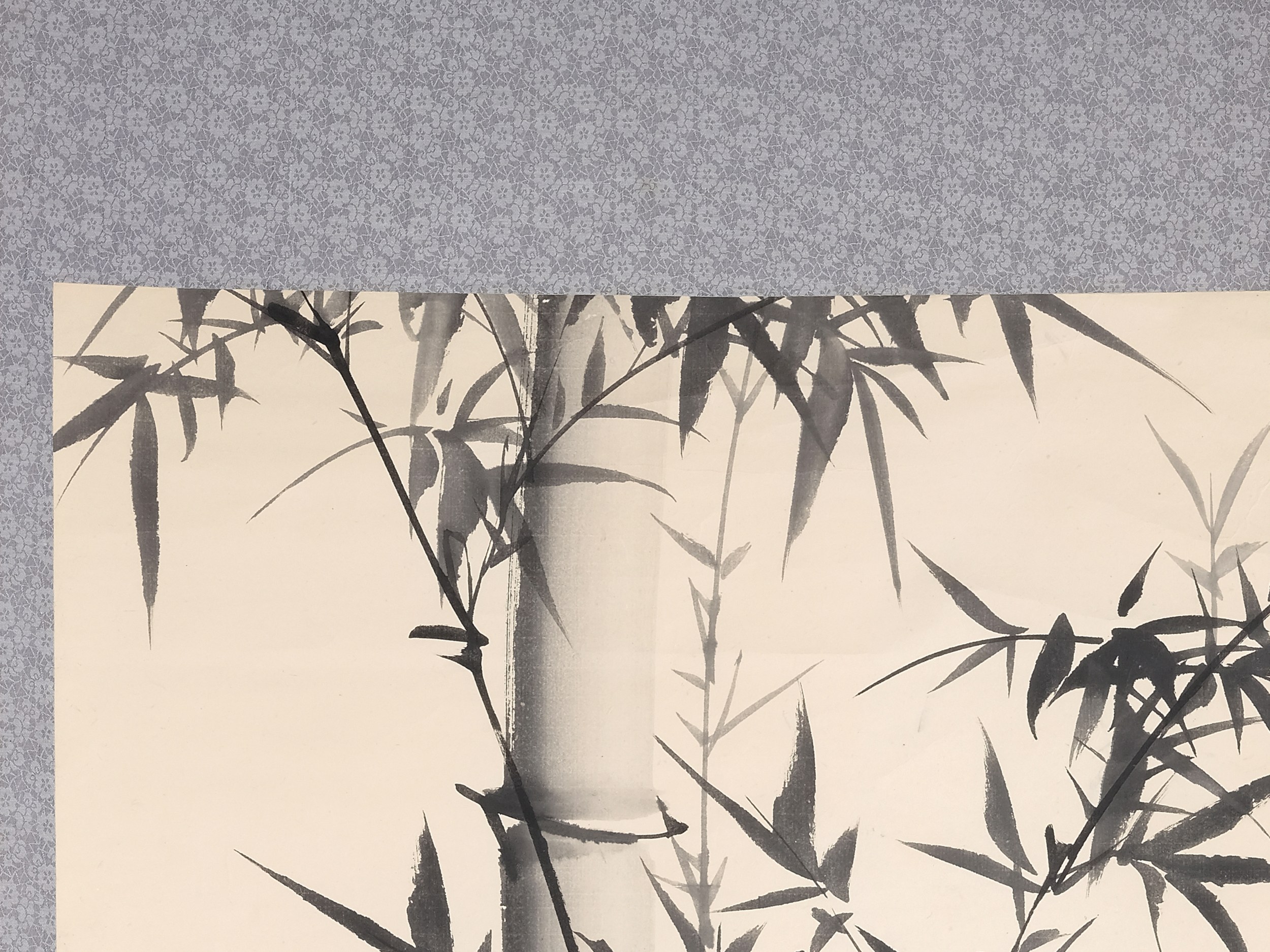
Scroll with bamboo
Japan
20th century
Watercolor on paper mounted on silk
Watercolor 132.8 x 65.3 cm, total 196 x 72.5 cm
Signed & stamped
Wooden rod
The scroll is conceived less as a permanent exhibition piece than as a medium for viewing limited to a specific time. It is unrolled, read, and rolled up again, unfolding step by step in space and time. Image, calligraphy, and seal form an inseparable unity and invite quiet, meditative contemplation. The scroll is not intended as a realistic depiction, but as an expression of inner attitude, spiritual cultivation, and harmony between humanity and nature.
Sumi-e (ink painting) follows the ideal of reduction to the essential. With a few controlled brushstrokes, the aim is not to capture the external form, but rather the essence, energy, and spirit (qi) of a motif. Empty spaces are just as meaningful as the drawn lines. Sumi-e combines painting with philosophical thought and is closely linked to Zen ideas of mindfulness, concentration, and the present moment.
In East Asian artistic tradition, bamboo possesses a multifaceted symbolism. It stands for steadfastness, resilience, and adaptability, as it bends in the wind without breaking. At the same time, it is regarded as a symbol of inner purity, modesty, and moral integrity. With its evergreen appearance, bamboo also embodies vitality and renewal and is often understood as an expression of an ideal life in harmony with nature.










Viimeksi katsotut
Kirjaudu sisään nähdäksesi kohdeluettelon
Suosikit
Kirjaudu sisään nähdäksesi kohdeluettelon