
Dimensions: 97.5 x 130 cm
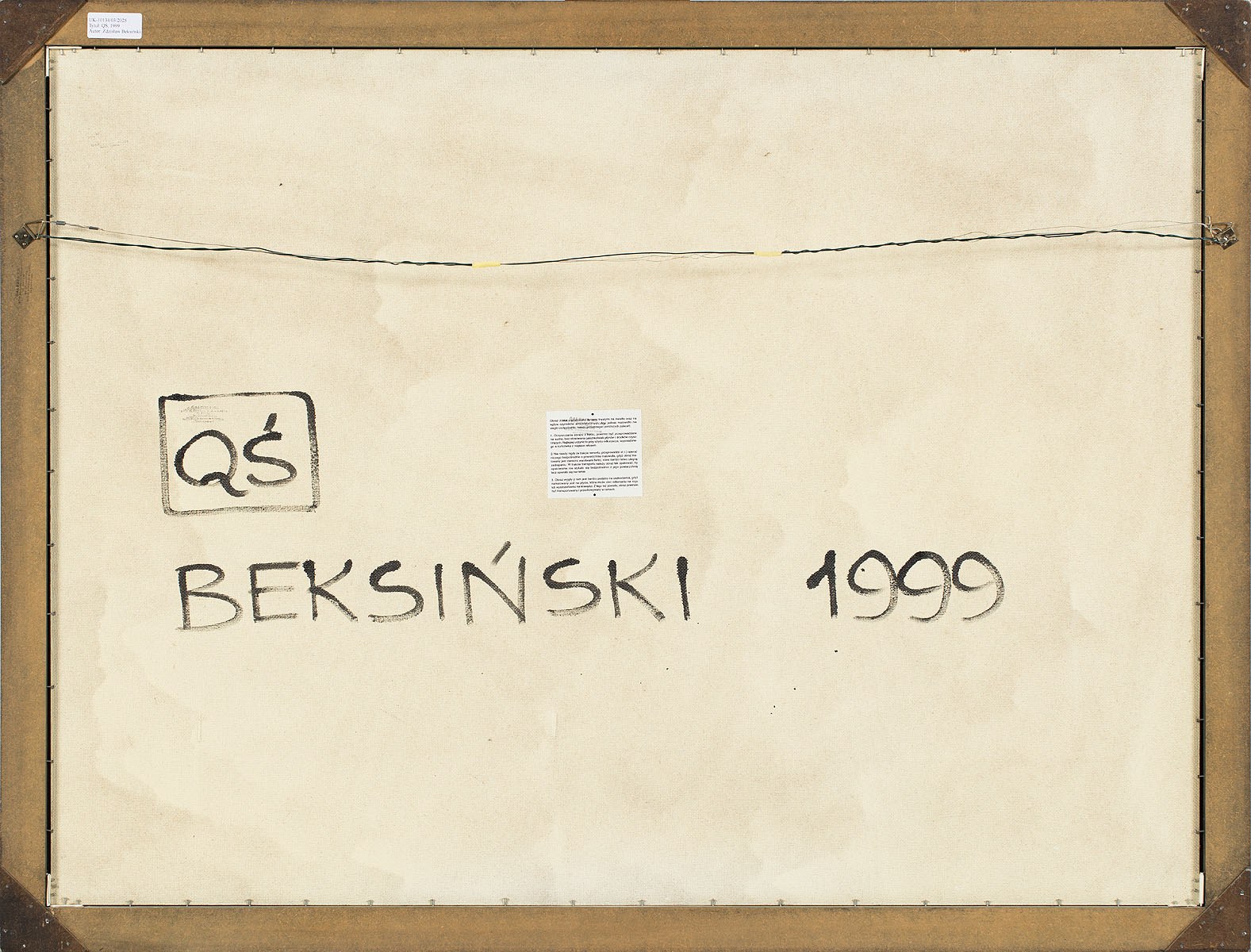
Signed: signed and described on the reverse: QŚ / BEKSIŃSKI 1999
Provenance
Warsaw, private collection (since 2021)
Exhibited
Warsaw, Museum of Fantastic Art, Beksinski in Warsaw, 26.06-05.09.2021.
Reproduced
Beksinski in Warsaw [exhibition catalog], published by Spatium Art, Warsaw 2021, p. 75. Chudzik A. [ed.], Beksinski 1, BOSZ ART series, BOSZ Publishing House, Olszanica 2018, p. 62.
Behind the essence of Zdzislaw Beksinski's work is the complex human psyche and the drama of existence. His grim, even catastrophic visions are united by a specific poetic mood and a unique painterly language. The human-like phantoms that appear in them, the strange, decaying buildings or fantastic landscapes laced with dread, express the depth of sadness, loneliness and inner suffering. Depicted in suspension, in timelessness, they are as if by eternity doomed to a process of decay, aging, dying. "Such truth, such tragedy, such authenticity in describing the monstrosity of life few artists can achieve. For a human work of art will not be authentic until it bathes in the tears of its creator," Piotr Dmochowski wrote about the artist (Dmochowski P., "The struggle for Beksinski," MD Publishing House, Kielce 2016, p. 217).
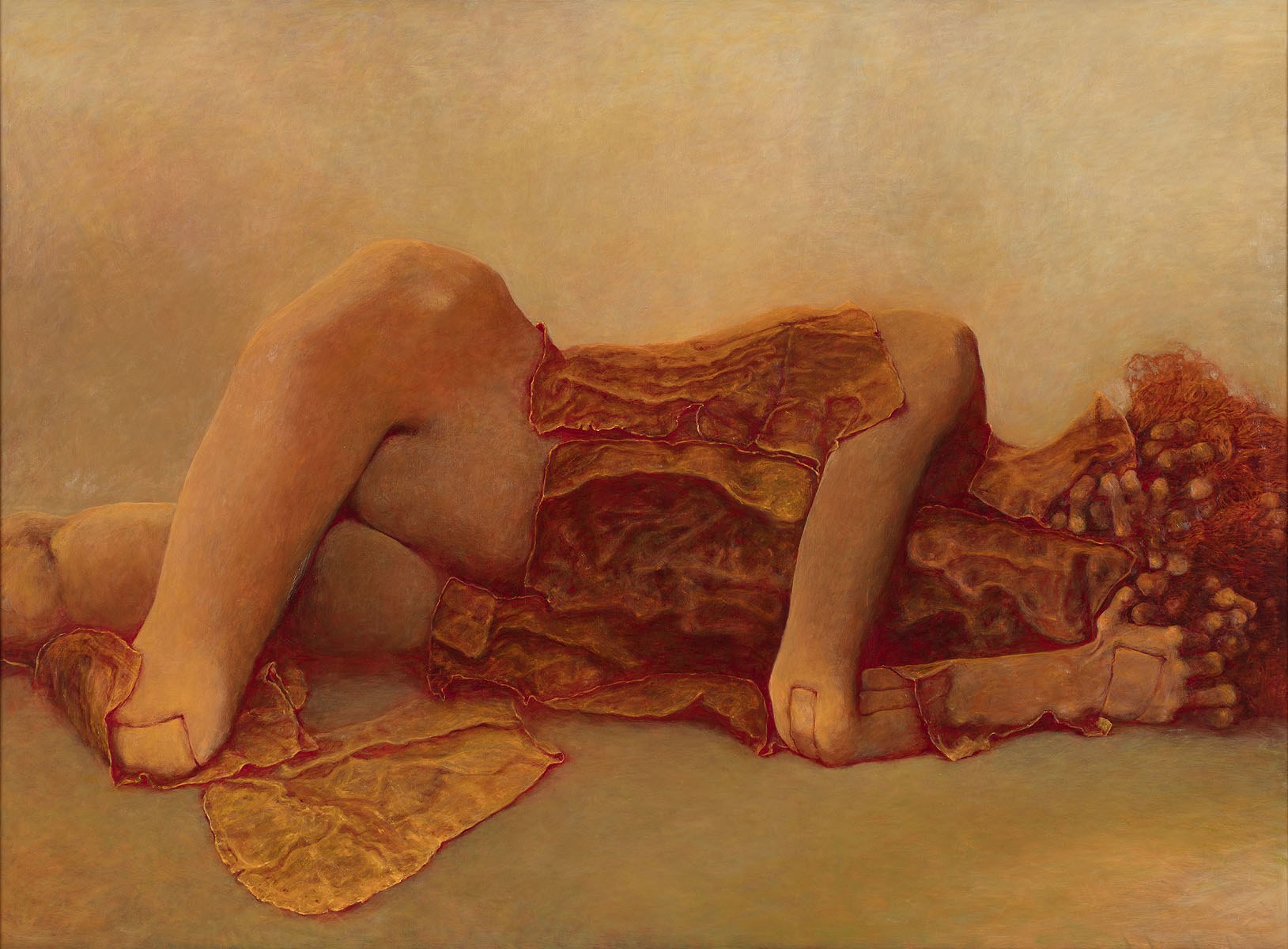
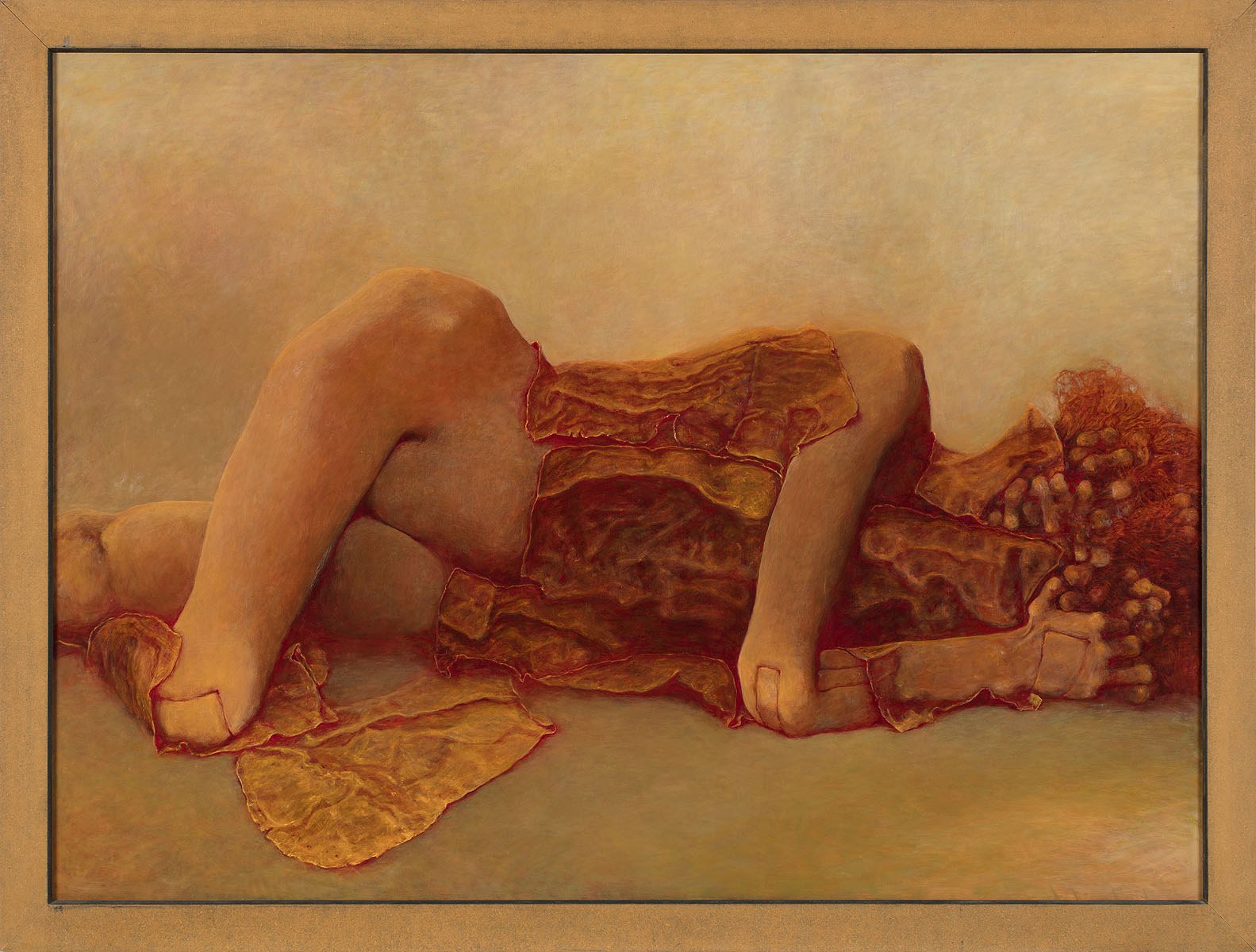
A similarly poignant atmosphere is conveyed by the 1999 composition "QŚ". The abandoned, deformed figure lies in an undefined space, as if outside of time and the world. Her body, organic and decomposing, remains motionless, forever frozen in a state of destruction. A hand raised towards the place where the face should be intensifies the impression of emptiness, despair and inability to communicate. There is no narrative, anecdote or symbol here - what matters most is the impression.
In the spirit inherent in Beksinski's art, the painting builds its dark mood through a limited, almost monochromatic palette of extinguished reds and yellows and a haze effect that blurs the boundaries of space and leaves the viewer alone with the drama of the depicted figure. The figure does not defy its own destiny - it remains motionless, as if it has always been subjected to the inexorable rhythm of decay and passing. It is a vision without hope, a tragic and pessimistic experience in which the viewer participates, sharing the loneliness and despair of the frozen figure. Yet in this silence, in the calm of inevitability, a melancholy poeticism smoulders - a subtle beauty that grows out of the catastrophic vision, giving it a deeply lyrical dimension.