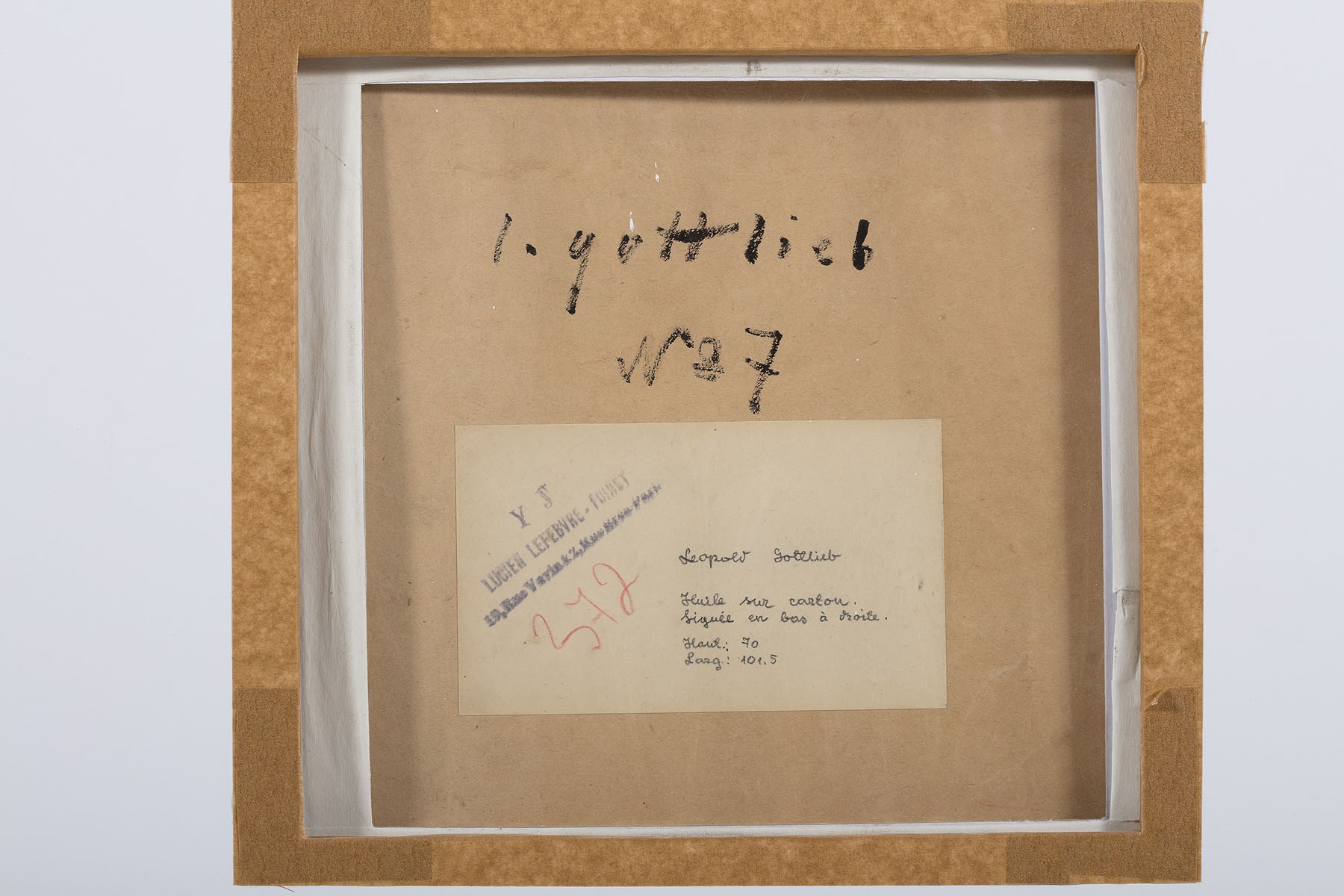
Dimensions: 70 x 101.5 cm
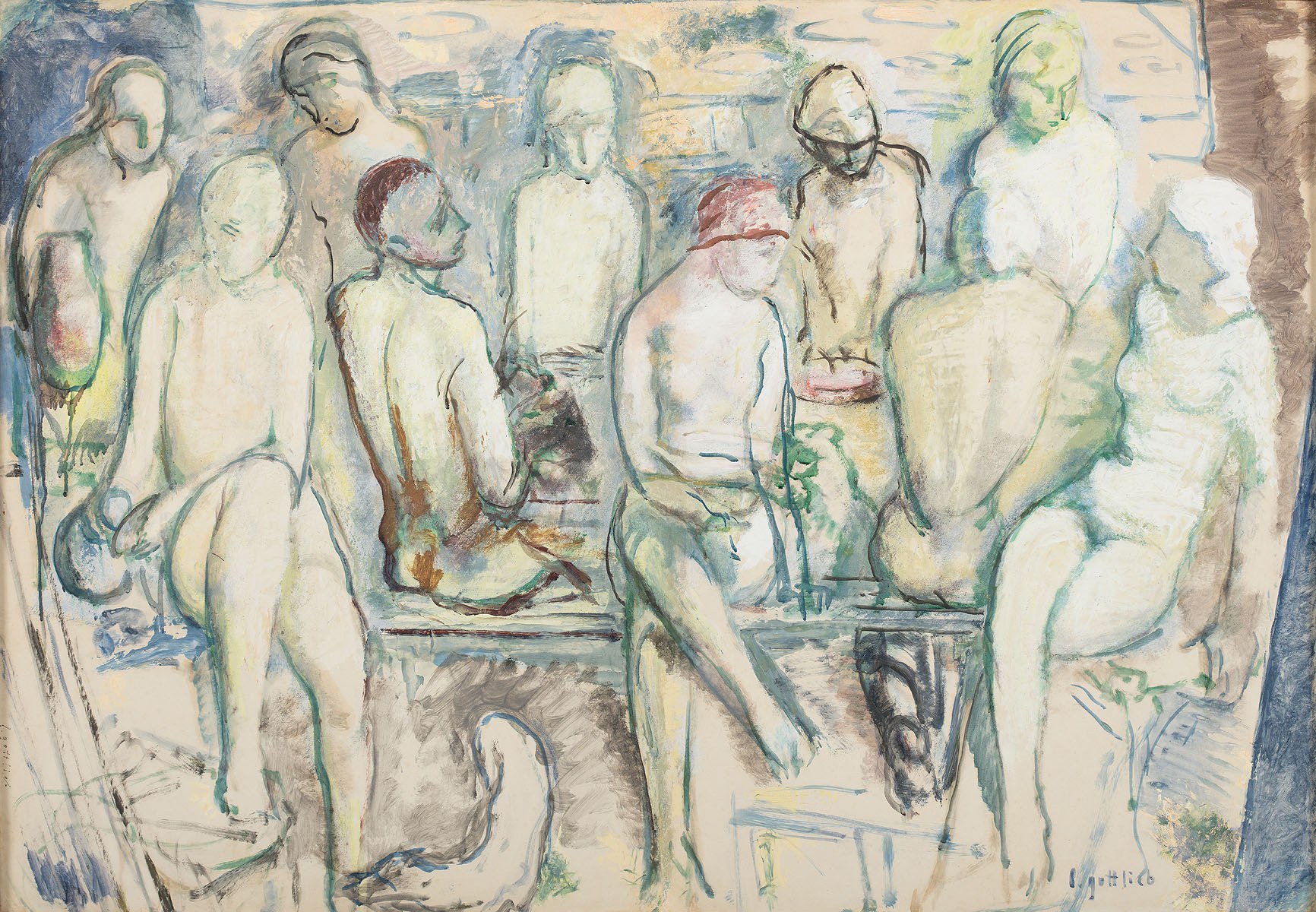
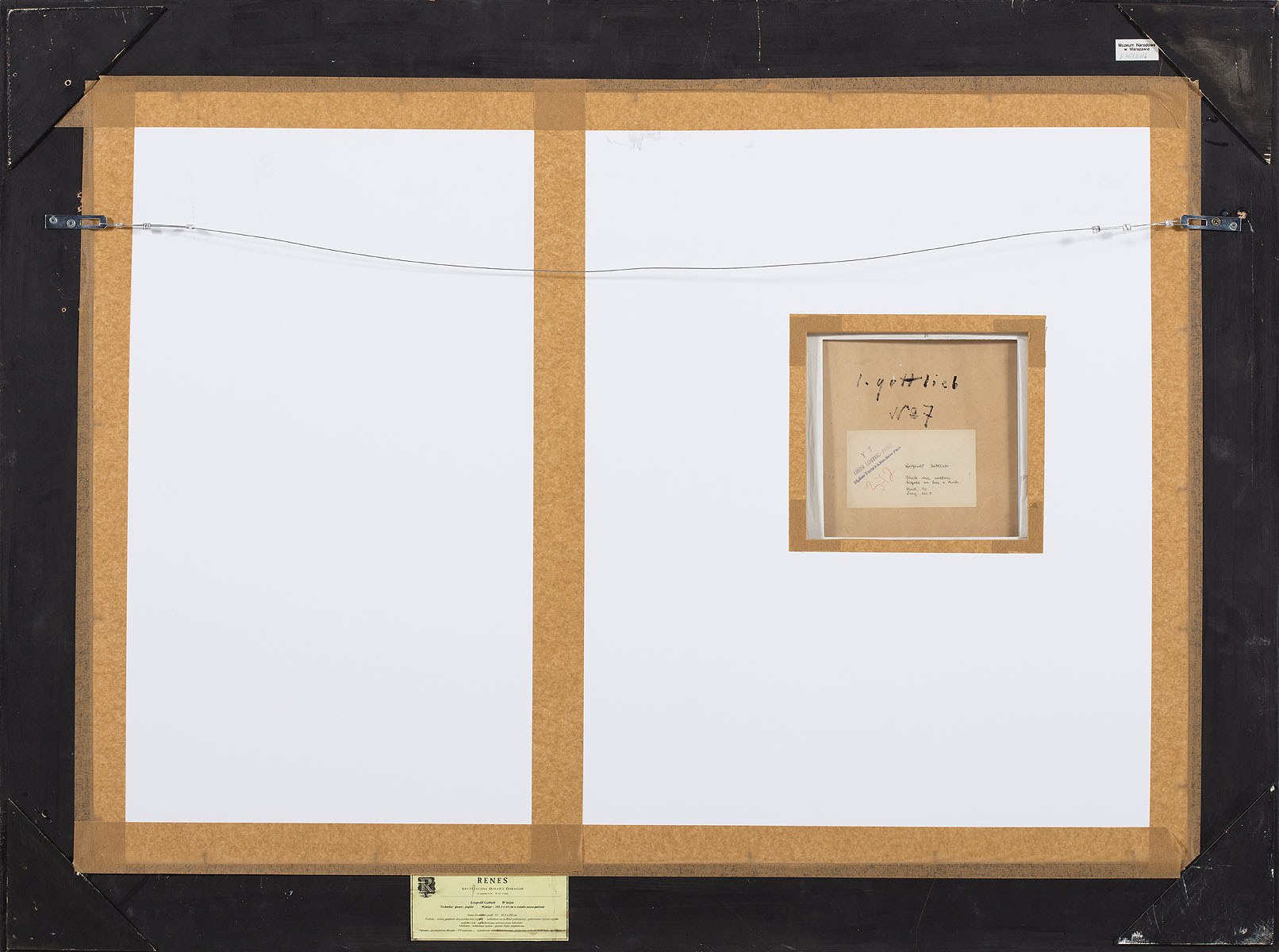
Signature: signature p.d.: l.gottlieb and left side: l. gottlieb
Provenance
Warsaw, private collection. Polswiss Art, auction 06.10.2015, item 30.
Developing over three decades, Leopold Gottlieb's work underwent a natural evolution, shaped by new experiences and contact with the Parisian avant-garde. The initial interest in portraiture receded in the 1920s in favor of representations showing mundane everyday life, elevated to the status of a universal ritual. The artist then focused on creating elaborate, multi-figure scenes of work or meals at the table: "The era, the time - it doesn't exist here. All these fishermen, bakers, florists (...) are eternal people: not yesterday, not today. They seem not to work, but to fulfill in concentration and joy some eternal rituals. And these poor revelers, often gathered around the table, resemble to an illusion the austere evangelical supper" (Teslar J., On the Painting Creativity of Leopold Gottlieb "Pion" 1935, No. 27 [92], p. 6). During this period, the painter's earlier Young Poland style was replaced by a synthetic approach, based on light, cubic deformation of models. After 1927, Gottlieb radically narrowed his color palette to a few basic tones - blues, pinks and browns - complemented by a dominant white.
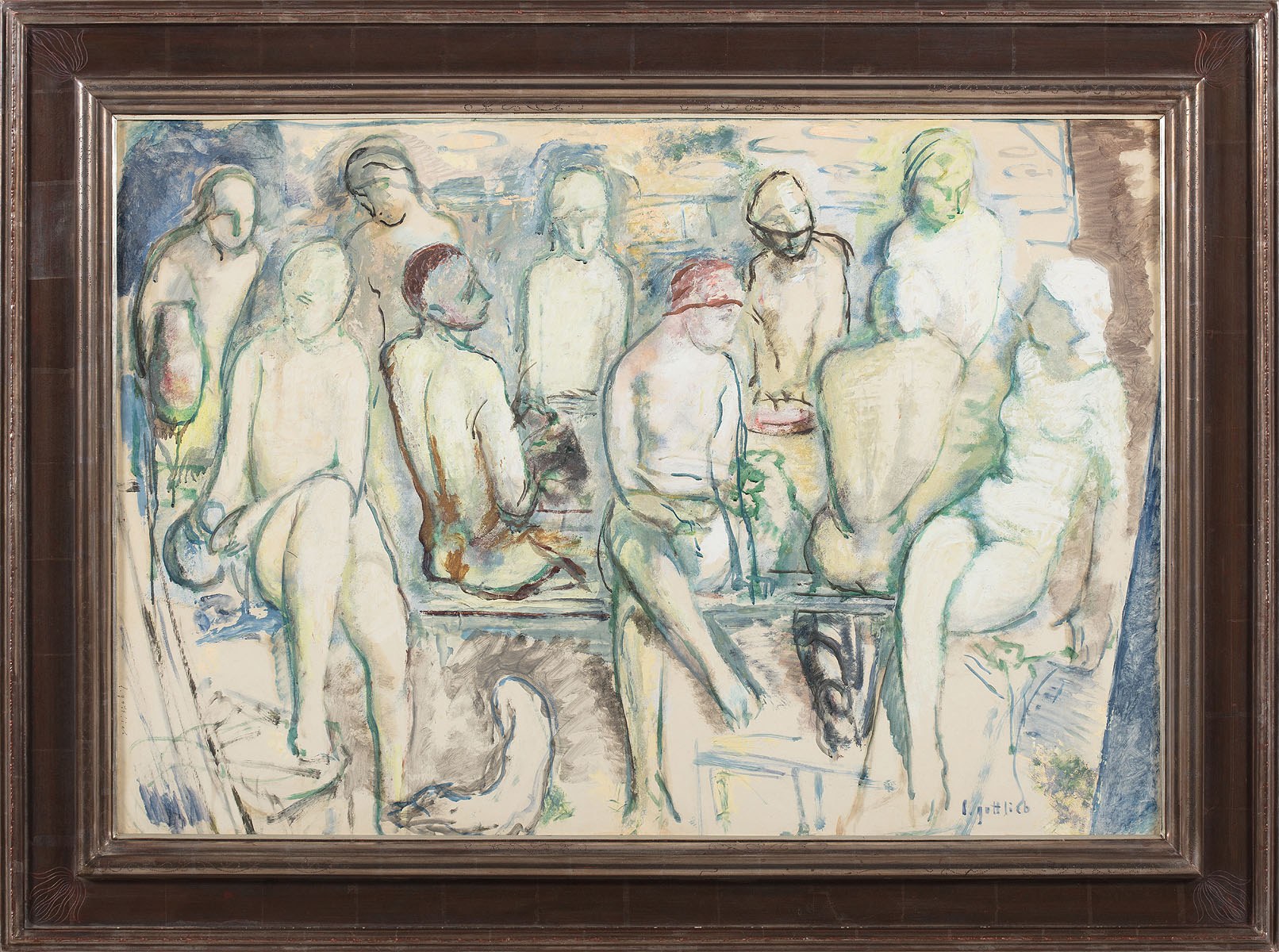
The featured painting "In the Bathhouse" is a representative example of the mature, so-called "white" phase in the artist's work. The work depicts a group of figures framed in a rhythmic arrangement around a long table. The silhouettes are treated sketchily, reduced to rounded, expressively over-stylized masses with conventionally marked facial features. The soft, blurred contours and synthesis of forms make the figures seem to emerge from the bright background like oneiric phantoms. The subtle color palette is based on light, pastel tones of white and blue, which are enlivened by punchy, intense accents of red, brown and green. The almost monochromatic color scheme and harmonious illumination of the composition give the work a decorative character and an aura of mysticism. The offered composition is a mature culmination of Gottlieb's many years of artistic search, being a representative example of his late, peak stage of creativity, in which the artist's painterly vision reached its fullest and most poetic form.